


The Dog Park Isn't for Every Dog. 9 Signs Yours Would Rather Be Anywhere Else.
Not every dog is built for the chaos of a dog park, and forcing it can do real harm. Here are the medical, temperament, and training signs it's a hard pass, sorted so you can find yours fast.

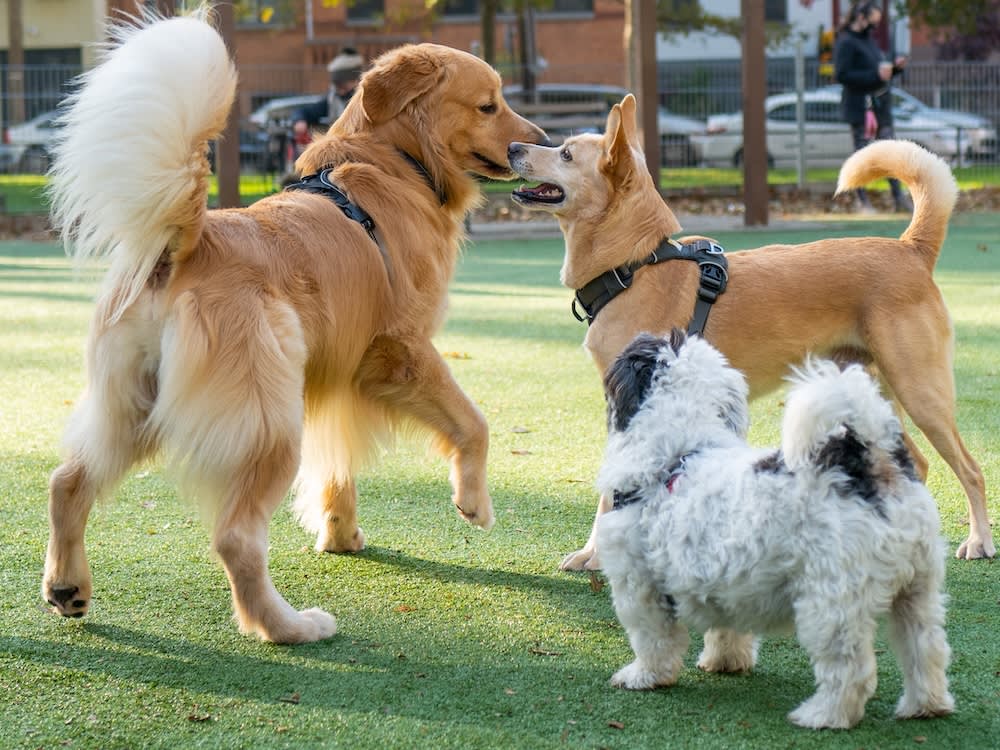
The dog park has a reputation as the default good time for every dog, a place any pup should love. But think about how many people adore a massive, loud, unpredictable festival, and how many would rather be almost anywhere else. Dogs are the same. Some genuinely thrive in the free-for-all. Plenty don’t, and pushing a dog who doesn’t into that environment can backfire in ways that last.
A dog park is a loud, crowded, unpredictable place, and that suits confident, socially fluent adult dogs. For a lot of dogs, it’s stressful at best and unsafe at worst. There’s no shame in deciding it’s not your dog’s scene.
To make this easy to scan, the signs below are grouped three ways: medical reasons your dog shouldn’t go yet, temperament reasons the park isn’t a fit, and a handling issue that has to come first. If your dog checks any of these boxes, the park can wait.
Medical reasons to skip it (for now or for good)
1. Your dog isn’t fully vaccinated. This is the non-negotiable one. Puppies generally aren’t fully protected until around 16 weeks, and an under-vaccinated dog is exposed to serious, contagious diseases at a park, parvovirus above all, plus kennel cough and intestinal parasites that can be dangerous to a young pup with a sensitive stomach. A few minutes of fun isn’t worth that gamble.
2. Your dog isn’t spayed or neutered. Beyond avoiding accidental litters, an intact dog can change the dynamics of a group of dogs in ways that raise tension. If there’s a reason your dog isn’t altered yet, choose a different outlet until they are.
3. Your dog is a puppy or adolescent. It’s tempting to think early dog-park exposure builds a social butterfly, but it often does the opposite. Puppies are highly impressionable and don’t need much encouragement to learn rough play. One bad encounter, a scary older dog, a pile-on, can seed lifelong problems like leash reactivity or fear of other dogs. Socialization for a young dog needs to be positive and controlled, and a dog park guarantees neither.
4. Your dog is a senior with stiff joints. Even a dog who once loved the park may age out of it. As joints get creaky, wrestling with young dogs who never run out of gas stops being fun. Older dogs also tend to get pickier about their company, which is fair, most of us do too.
Temperament reasons it’s a hard pass
5. Your dog is genuinely anxious. Tossing a shy or nervous dog into the deep end rarely coaxes them out of their shell; it usually confirms the world is scary. Watch for tucked tails, cowering, freezing, a lowered head, attempts to escape, or repeated lip licking. Those are your dog asking to leave.
“If a nervous dog is getting steamrolled by pushier dogs, that’s not confidence-building, it’s damage,” says Jordan Ellis, a dog trainer. “I’d rather see an anxious dog build social skills on a calm walk alongside one steady, easygoing adult dog who won’t pressure them, than thrown into a crowd.”
6. Your dog is reactive. If your dog can’t keep their cool around other dogs, the park isn’t the place to work on it. Signs to watch for include mouthing or “play” biting that’s actually too much, mounting other dogs excessively, and blowing past other dogs’ clear signals to stop. A reactive dog can get overwhelmed fast and lash out, which puts everyone at risk. That doesn’t mean your dog is bad or doesn’t deserve fun; it means the fun needs to look different.
7. Your dog would rather hang out with people than dogs. Some dogs simply prefer human company, and that is completely okay. If your dog doesn’t enjoy other dogs even one-on-one, a packed park full of them is the opposite of a treat. Forcing sociability on a dog who’s told you they’d rather not is a recipe for a miserable outing.
8. Your dog keeps humping, or keeps getting humped. People love to read mounting as puppy romance, but it’s frequently a sign of overstimulation and stress, not affection. A dog who does this repeatedly at the park is often telling you they’re overwhelmed and would do better with structured, one-on-one playdates than with a crowd.
The handling issue that comes first
9. Your dog’s recall is shaky. If your dog won’t consistently return when you call or respond to a basic cue, it’s very hard to keep them safe or head off a conflict before it escalates. This one is fixable with training, and until it’s solid, the park is more liability than playground. Your dog is still a very good dog with a little homework to do.
Even if your dog’s a regular, know when to leave
Some warning signs aren’t about your dog at all, and they mean it’s time to go, even on a good day. Head out if:
- Your dog keeps bolting for the gate, tucking out of sight, or pressing into you for help. A dog who repeatedly runs back to you may not be having fun, they may feel bullied and be coming back for backup.
- You spot an owner who isn’t controlling their dog, or who’s ignoring the rules.
- Another dog is being reactive or aggressive.
- Something just feels off. Trust your gut.
It’s also worth knowing how to safely break up a scuffle before you ever need to, because the moment to learn is not mid-fight.
Better options than the park
A dog who’s wrong for the dog park isn’t a dog who’s doomed to boredom. There are richer, calmer ways to burn energy and build skills:
- A relaxed walk with one similarly mellow dog.
- A well-vetted doggie daycare that manages groups thoughtfully.
- An agility or obedience class with structure.
- A one-on-one playdate with a known, compatible friend.
- Sniff walks, alone or with a buddy, that let your dog use their nose and decompress.
The next time you head to the park, watch your dog’s face and body for a beat before you commit. If they look like they’d rather be home, believe them, apologize, and take them somewhere they can actually relax. A quiet walk where they get to sniff the grass and listen to the birds may be their idea of a perfect afternoon, and there’s nothing wrong with that.
References
Dr. Solis is a board-certified veterinary dermatologist with over twelve years of clinical experience. She advises on skin conditions, allergies, and grooming practices that affect coat and skin health. All dermatology and allergy content at The Pet Times is reviewed by her team before publication.
Meet our experts ↗Keep reading
 TrainingYour Dog Nibbles You Like Corn on the Cob. Two Experts Disagree About What to Do.Dr. Nina Kohl · 8 min
 TrainingThe Algorithm Rewards Bad Dog Training. Here Are 10 Tells.Dr. Mara Chen · 7 min
 TrainingIt's Not the Job Stressing Your Dog Out. It's the Replay.Dr. Lena Park · 6 min
 TrainingYour Dog Isn't Lonely. Point a Camera at Them and Find Out.Dr. Nina Kohl · 8 min
 TrainingYour New TV Is Half the Reason Your Dog Won't Stop Barking at ItDr. Nina Kohl · 8 min
 TrainingYour Dog Isn't Being Rude to Strangers. They're Scared.Dr. Lena Park · 7 min