
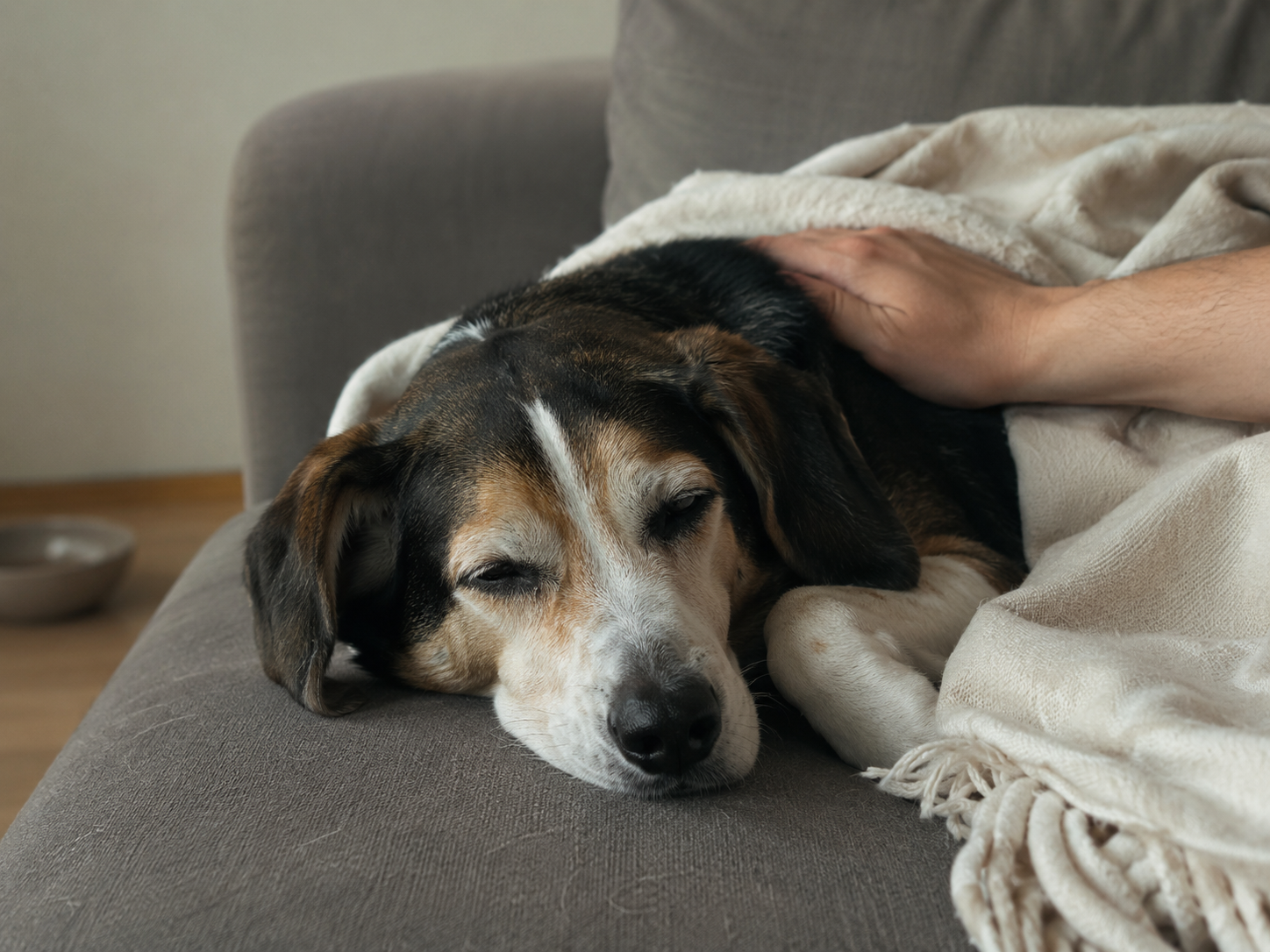
Your dog is fine at breakfast and by dinner they are vomiting, moping, and leaving unpleasant surprises by the back door. It looks exactly like the “stomach bug” you had last winter, and it raises two immediate questions: is this something they caught from you, and how long do you wait before it becomes a vet trip? The reassuring news is that most of these episodes are short, self-limiting, and treatable at home. The useful news is that there is a simple timeline, roughly two days, that tells you when a routine upset has crossed into something that needs a professional.
What a “stomach bug” actually is in a dog
“Stomach bug” is a catch-all for sudden, short-lived gastrointestinal upset, usually vomiting and diarrhea. In dogs it has several possible drivers, and they are not all infections. Viruses and bacterial infections are common causes, and so are intestinal parasites, all of which tend to spread more easily where lots of dogs share space, though a dog anywhere can pick one up.
But a big share of cases are not infectious at all. Stress can do it. Vets call the classic version stress colitis, acute diarrhea that follows a stressful event like boarding, a move, or a thunderstorm, with no virus or bacteria involved. Dietary indiscretion, the polite term for eating something they should not have, is another frequent trigger.
The important background fact: the majority of these acute cases are self-limiting or clear up with simple supportive care. Most dogs are back to normal quickly. The job of an owner is to support the easy cases and recognize the few that are not.
Can you and your dog trade bugs? Mostly no
Short answer: the human stomach viruses you are picturing do not jump to your dog. Those infections are largely species-specific, and transmission between people and pets is very rare in either direction. So if your kid had a rough 24 hours and now the dog is sick, it is far more likely a coincidence or a shared exposure than a handoff.
The nuance is that the same categories of germs can sicken both of you independently. Raw or undercooked meat can cause foodborne illness in a dog just as it can in a person. And a dog that eats raw meat can spread bacteria from their mouth, saliva, or bowl onto surfaces around the house, which is a hygiene concern worth taking seriously in homes with young kids, elderly, pregnant, or immunocompromised members.
Between dogs, it is a different story: some causes, especially parasites and certain viruses, do pass from dog to dog.
The symptoms, and the ones that change the plan
The usual signs of a canine stomach bug:
- Vomiting, once, twice, or several times
- Diarrhea or soft stool, with or without the vomiting
- Reduced or absent appetite
- Lethargy or lower energy
- Blood or mucus in the stool
- Panting, from discomfort or dehydration
- Nausea signs like drooling, lip-licking, or repeated swallowing
Any of these is worth a vet’s attention if it persists, and a few raise the priority immediately. Blood in the stool or vomit, an unvaccinated dog (raising the specter of parvovirus), a very young puppy or senior, known access to a toxin, or a dog who simply seems very sick rather than just off, none of those are wait-and-see situations.
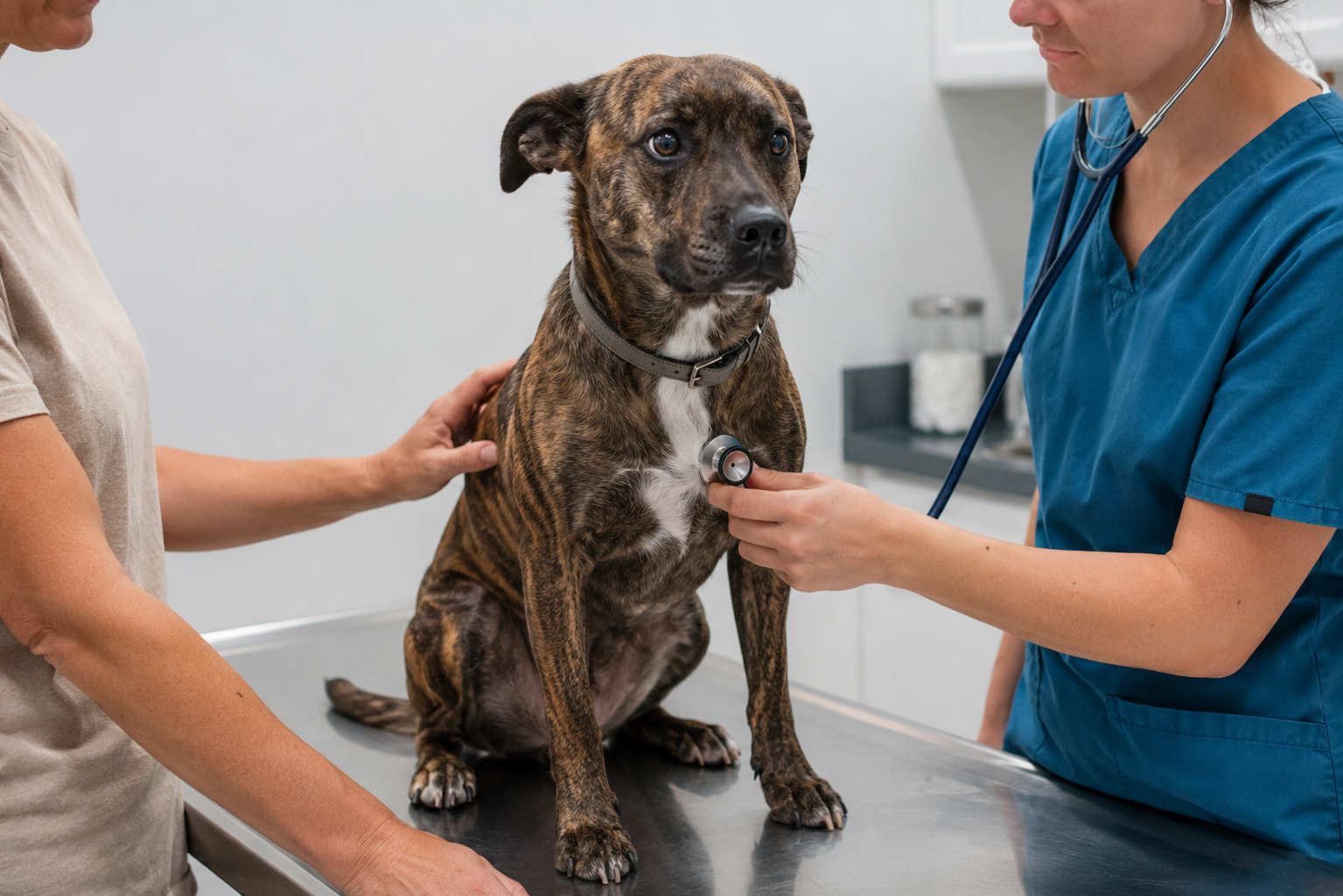
“The number I give people is two days,” says Dr. Lena Park. “A single bout of vomiting in a bright, bouncy dog who still wants water, I’m comfortable watching that overnight. But once you’re past about forty-eight hours, or you see blood, or the dog is flat and won’t hold down water, that’s not a stomach bug to ride out anymore. Bring them in and let us find out why.”
Why the two-day line matters
It is not arbitrary. The faster a real problem gets addressed, the faster and safer the recovery, and letting symptoms grind on for days invites dehydration, the most common complication of vomiting and diarrhea. Your vet can also run the tests that separate benign from serious: a fecal check for parasites, and screening for dangerous infections like parvovirus in unvaccinated dogs. Bring a rough timeline of when symptoms started and how they have changed; patient history genuinely helps narrow the cause. In many mild cases the exact culprit is never pinned down, and that is fine, because once the scary causes are ruled out, treatment looks similar regardless.
How stomach bugs get treated
It scales with severity. A dog with mild, brief symptoms may need nothing, or just a day or two of a bland diet, the canine equivalent of crackers and ginger ale. A sicker dog may need more:
- Supportive care. Fluids under the skin or by IV to correct dehydration, and sometimes a short fast of eight to twelve hours to let the gut rest.
- Diet changes. After a brief fast, a bland diet of lean meat with rice, potato, or plain pumpkin, or a balanced prescription GI diet made for short-term use. The homemade versions are not nutritionally complete, so they are a few-day bridge, not a new normal.
- Medications. Anti-nausea drugs to control vomiting, and sometimes probiotics to help the gut flora recover afterward.
Lowering the odds
You cannot prevent every episode, but you can shrink the risk. Keep core vaccinations current, which is your best defense against the serious viral causes like parvovirus. Watch what your dog scavenges on walks. Handle raw meat carefully and clean bowls and surfaces. And in multi-dog settings, remember that parasites and some viruses move dog to dog, so a sick dog should be kept separate and their waste cleaned promptly.
The bottom line
Dogs get stomach bugs, most are mild, and you almost certainly did not give yours to your dog. Support the easy cases with rest, water, and maybe a bland diet, and hold the two-day rule in your head: past forty-eight hours, or any time you see blood, severe symptoms, or a genuinely sick dog, it is time for the vet. That single timeline turns a stressful mess into a manageable one.
References
- Marks, Stanley L., et al. “Enteropathogenic Bacteria in Dogs and Cats: Diagnosis, Epidemiology, Treatment, and Control.” Journal of Veterinary Internal Medicine, vol. 25, no. 6, 2011, pp. 1195-1208, https://doi.org/10.1111/j.1939-1676.2011.00821.x.
- Stavisky, J., et al. “A Case-Control Study of Pathogen and Lifestyle Risk Factors for Diarrhoea in Dogs.” Preventive Veterinary Medicine, vol. 99, no. 2-4, 2011, pp. 185-192, https://doi.org/10.1016/j.prevetmed.2011.02.009.
- Ackermann, Nicola, et al. “Outbreak of Severe Vomiting in Dogs Associated with a Canine Enteric Coronavirus, United Kingdom.” Emerging Infectious Diseases, vol. 28, no. 3, 2022, https://doi.org/10.3201/eid2803.211215.
- American Animal Hospital Association. “AAHA Canine Vaccination Guidelines.” Accessed 2 July 2026, https://www.aaha.org/resources/2022-aaha-canine-vaccination-guidelines/.