


Your Dog Sounds Congested: The Clock Tells You More Than the Cause
Nasal congestion in dogs runs from a harmless sniffle to a nasal tumor. You cannot diagnose it by ear, but you can triage it, and the two things that decide urgency are how long it has lasted and what comes with it.

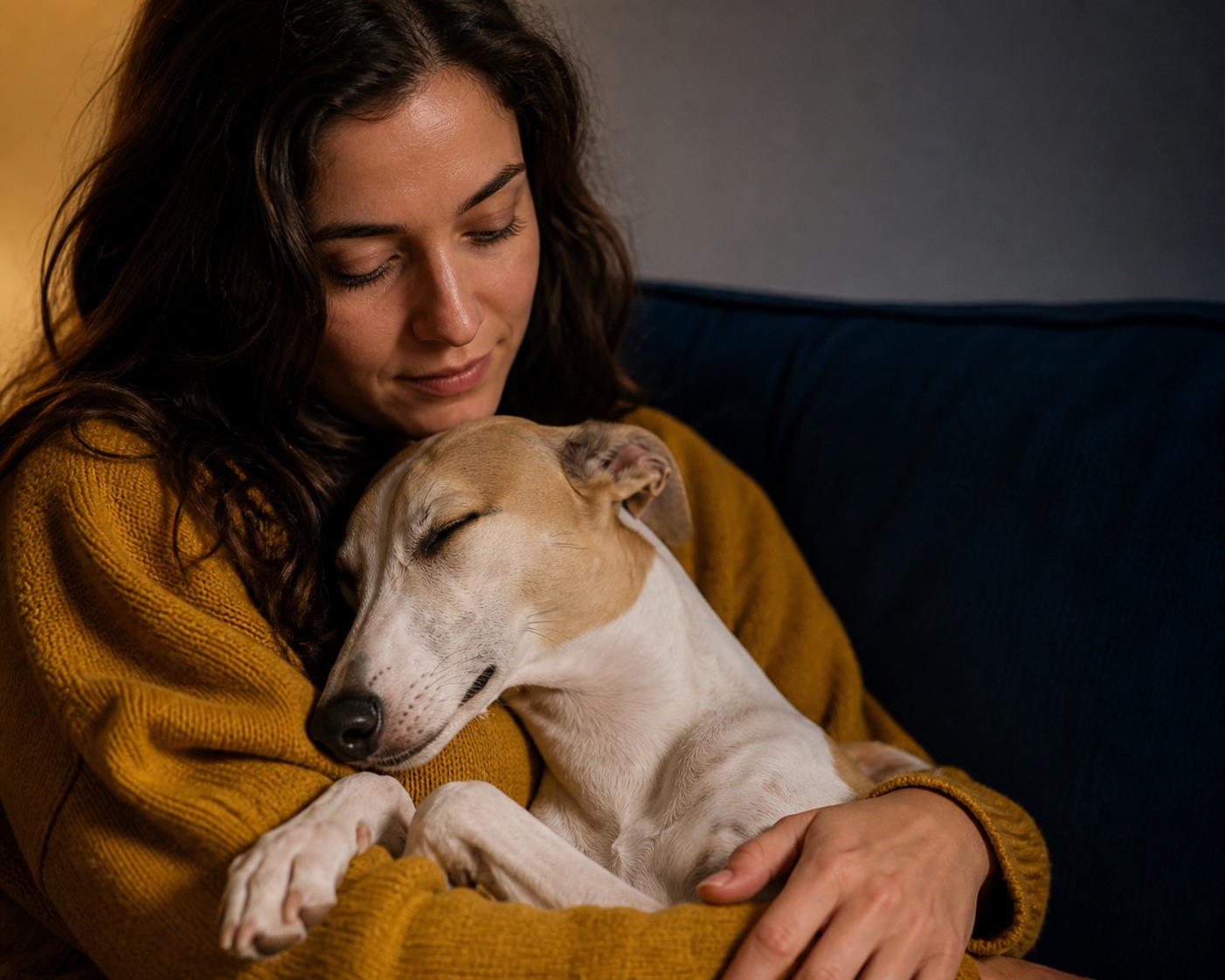
The snuffly, snorting soundtrack a dog can produce is genuinely alarming the first time you notice it, and the internet does not help, because the list of causes runs from “a little pollen” all the way to “a nasal tumor.” Here is the part that actually calms things down: you are not supposed to diagnose it by ear, and you cannot. Two dogs can make the identical wet, rattling sound from completely different causes.
What you can do, reliably, is triage it. And the two variables that decide how worried to be are not the exact sound at all. They are how long it has lasted and what else is happening alongside it. Master those two and you will know whether you are watching a self-limiting sniffle or something that needs a vet this week. This article is built around that clock, not around a menu of causes.
First, what “congested” actually is
Nasal congestion happens when the tissues lining the nose swell, a condition called rhinitis, often with some discharge. That swelling narrows the airway, which is what produces the noise: wheezing as air squeezes through, gurgling or rattling if fluid is partly blocking the nose, plus sneezing, snoring, reverse sneezing, and the occasional hard gulp as a dog swallows drainage. Wiping the nose clears a little discharge but does not fix the underlying swelling. None of these sounds, on their own, tells you the cause. They just tell you the nose is inflamed.
The triage table: duration times red flags
This is the tool to actually use. Find your dog’s row.
| How long it has lasted | With no red-flag signs | With any red-flag sign |
|---|---|---|
| A few days | Watch at home; most cases resolve | Call your vet; do not wait out the week |
| About a week | Call your vet to discuss even if mild | Vet visit promptly |
| More than a week | Vet visit; lingering congestion needs a look | Vet visit promptly; possible workup |
| Sudden and severe at any point | Same-day vet | Emergency, go now |
The red-flag signs that push any row into the right-hand column:
- Bloody nasal discharge
- Labored breathing or constant panting
- Frequent coughing
- Facial swelling
- Evidence of pain
- Loss of appetite or lethargy
- Inability to sleep comfortably
- Discharge from only one nostril (a clue that points toward a foreign object, a tooth-root problem, or a mass)
That last one is worth singling out because it is easy to miss and genuinely informative: two-sided congestion is more often infection or allergy, while a persistent one-sided problem raises the odds of something local that needs investigating.
When a dog sounds congested, I am running a mental list that stretches from a little seasonal allergy to a tooth-root infection or a nasal mass. That is exactly why I coach owners on duration and red flags instead of the sound. A few sniffly days do not worry me. Congestion that drags past a week, or shows up with blood, one-sided discharge, or facial swelling, earns a real workup, and I would rather see that dog sooner than later.
What is usually behind it
You do not need to identify the cause yourself, but knowing the range helps you answer your vet’s questions. Congestion in dogs commonly traces to:
- Allergies. Seasonal environmental allergies trigger rhinitis, usually with clear-to-whitish discharge or congestion alone.
- Kennel cough (canine infectious respiratory disease complex). A contagious mix of viruses and bacteria that usually runs its course in about seven to 10 days; vaccination limits it.
- Fungal or other infections. Picked up from environmental spores, these tend to be more stubborn and severe than kennel cough. They are uncommon, though Golden Retrievers seem more susceptible.
- Anatomy. Flat-faced breeds like Bulldogs, Pugs, and Boston Terriers are often congested for life due to nasal structure. For these dogs, know their baseline and watch for changes from it.
- Dental disease. The roots of the upper teeth sit just under the nasal passages, so a tooth-root infection can cause congestion and even spread into the nasal cavity.
- Foreign objects. A dog that sniffs everything can inhale a grass blade or seed, causing sudden, often one-sided irritation, sneezing, and sometimes infection.
- Tumors. Masses can grow inside the nose and block it, sometimes with bloody discharge or facial swelling. Some are benign; cancerous ones may need chemotherapy or radiation.
The home tip that saves a diagnosis: record it
Congestion is frustrating to diagnose partly because it often quiets down at the vet’s office, right when they need to hear it. So before your appointment, take a phone video of your dog at their noisiest, ideally capturing the breathing, any reverse-sneezing episodes, and whether discharge comes from one nostril or both. That clip narrows the possibilities faster than any description, and it is the single most useful thing you can bring. Depending on what your vet suspects, they may recommend watchful waiting, symptomatic treatment, or diagnostics like head radiographs, a CT scan, or rhinoscopy (a sedated look inside the nose with a tiny camera that can also take samples or remove debris).
Safe home care, and the one hard rule
For mild cases your vet may okay some simple home steps:
- Steam. Sit with your dog in a small bathroom with a hot shower running for 10 to 15 minutes. The steam opens the passages and loosens secretions so they drain.
- Warm, smellier food. A dog whose stuffed nose has dulled their appetite often eats better with a little warmed canned food mixed in, since the stronger aroma cuts through.
The hard rule: never give your dog human antihistamines, decongestants, or cold medicines unless your vet specifically directs it. Many are toxic to dogs and can cause heart problems, seizures, or death. This is not a place to improvise from your own medicine cabinet.
Lowering the odds in the first place
- Keep vaccinations current to prevent contagious causes.
- Steer your dog clear of dogs that are coughing, sneezing, or otherwise sick.
- Avoid known triggers if your dog has environmental allergies.
- Brush your dog’s teeth and follow your vet’s dental advice, since dental disease is an under-appreciated cause of congestion.
The bottom line
A congested dog is common and usually harmless, but you cannot tell the harmless cases from the serious ones by the sound. Use the clock and the company it keeps instead: short-lived congestion with no red flags can be watched at home, while anything lasting past about a week, or arriving with bloody or one-sided discharge, facial swelling, labored breathing, or lethargy, deserves a vet visit. Bring a video, know your flat-faced dog’s baseline, and never reach for human cold medicine on your own.
References
- Merck Veterinary Manual. “Disorders of the Nose in Dogs.” https://www.merckvetmanual.com/dog-owners/lung-and-airway-disorders-of-dogs/disorders-of-the-nose-and-sinuses-in-dogs
- Vangrinsven, Emilie, et al. “Assessment of the Nasal Microbiota in Dogs With Fungal Rhinitis Before and After Cure and in Dogs With Chronic Idiopathic Rhinitis.” BMC Microbiology, 2021. https://doi.org/10.1186/s12866-021-02219-w
- Cornell University College of Veterinary Medicine, Riney Canine Health Center. “Nasal discharge, sneezing and reverse sneezing.” https://www.vet.cornell.edu/departments-centers-and-institutes/riney-canine-health-center
- Pet Poison Helpline. “Decongestants.” https://www.petpoisonhelpline.com/poison/decongestants/
Common questions
Should my dog be put on medication for congestion?
Never give human decongestants or cold medicines unless your vet specifically tells you to. Many are toxic to dogs and can cause heart problems, seizures, or death. Most dogs recover from congestion without any medication.
Can puppies get congested as well?
Yes, and they can get sicker faster than adults because of their immature immune systems and smaller bodies, so a congested puppy warrants a lower threshold for calling the vet.
Are certain breeds more prone to congestion?
Flat-faced breeds like Bulldogs, Pugs, and Boston Terriers are prone to chronic congestion because of their nasal anatomy. For them, a baseline of snorting is normal; a change from that baseline is what to watch.
Not a substitute for your vet. Our guidance is educational. For urgent symptoms, contact a vet or emergency clinic right away. Editorial standards
Dr. Chen is a small-animal veterinarian who leads health and safety coverage at The Pet Times. She writes and reviews the bulk of our illness, condition, and safety content, translating clinical guidance into clear, practical advice owners can act on at home.
Meet our experts ↗Keep reading
 Health & Wellness"The Great Pretender": How Addison's Disease Hides in DogsDr. Ravi Mehta · 8 min
 Health & WellnessOne Raw Fish Can Kill a Dog in Two Weeks. Most Owners Have Never Heard of It.Dr. Ravi Mehta · 6 min
 Health & WellnessYour Dog Isn't Peeing on the Rug to Spite You. Read the Pee Instead.Dr. Amara Solis · 7 min
 Health & WellnessYour Dog Threw Up Clear Liquid. The Color Barely Matters, the Timing Does.Dr. Amara Solis · 8 min
 Health & WellnessYour Dog's Eye Is Swollen. The Worst Thing You Can Do Is Wait.Dr. Mara Chen · 7 min
 Health & WellnessThere's Nothing in Your Medicine Cabinet That Helps a Dog in PainDr. Lena Park · 10 min