


Your Dog Isn't Peeing on the Rug to Spite You. Read the Pee Instead.
Two owner instincts about dog UTIs, wait it out and reach for cranberry, are both backwards. The thing that actually settles it is a lab looking at your dog's urine.

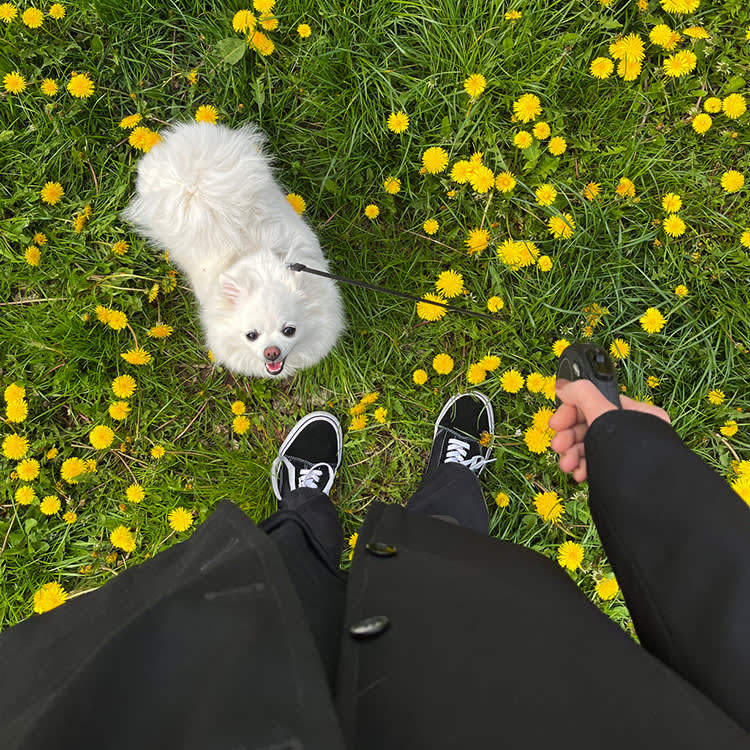
You find the wet spot, you sniff it, and your heart sinks: pee, indoors, from the dog who has been housetrained since puppyhood. Maybe there’s a little blood. Over the next few hours come the constant trips to the door and the endless squatting that produces almost nothing. Two thoughts usually follow, and both of them tend to point you the wrong way. The first is “she’s being difficult, she’ll settle down.” The second is “I’ll grab some cranberry and wait it out.” Hold both of those, because the thing that actually answers the question is neither patience nor a supplement. It’s a lab looking at your dog’s urine.
What a UTI actually is, and why the guessing fails
A urinary tract infection is exactly what it sounds like: an infection somewhere in the urinary system. It’s usually bacterial, though fungi, yeast, and even parasites can be culprits. Most often the trouble sets up in the bladder, producing bacterial cystitis, an inflamed bladder wall. That inflammation is what convinces your dog they need to pee every five minutes, and it’s why the accidents are not defiance. They are a dog who physically cannot hold it.
The reason home diagnosis is so slippery is that the urinary tract doesn’t advertise honestly. Some dogs have bacteria in their urine and no symptoms at all. Others have alarming symptoms and, on testing, no infection, but something else driving the same picture. Looking at the urine with your own eyes, or matching symptoms to a checklist online, gets you a guess. It does not get you a diagnosis, and treating a guess is how dogs end up on the wrong medication.
Why “wait it out” and “cranberry” are backwards
Waiting is risky because a lower-tract infection can climb. When bacteria travel up from the bladder to the kidneys, an uncomfortable problem becomes a genuinely sick dog. So the instinct to give it a few days is the opposite of what a suspected UTI calls for.
Cranberry is the other reflex, borrowed from human wellness aisles, and the evidence in dogs simply doesn’t support it as a treatment. No home remedy has been shown to cure a canine UTI. Reaching for a supplement while an infection brews wastes the window when a short, targeted course of the right antibiotic would have cleared it cleanly.
Read the symptoms as decision signals
Rather than a symptom checklist to memorize, think of these as signals telling you how fast to move. A dog with bladder-level infection typically shows frequent urination that produces only small amounts, straining, painful urination, blood in the urine, cloudy or foul-smelling urine, extra licking of the genital area, and indoor accidents. Uncomfortable, worth a prompt vet visit, but not usually an emergency.
The picture changes if the infection reaches the kidneys, a condition called pyelonephritis. Now you may see lethargy or weakness, fever, a drop in appetite, vomiting, and belly pain. That is a sicker dog and a faster trip to the vet. The jump from the first list to the second is the reason “wait it out” is a gamble you don’t need to take.
What causes them, and who’s prone
Most UTIs start as an ascending infection: bacteria, often from fecal contamination, travel up the urethra into the bladder. Several things make that easier. Matted or dirty fur around the genitals, or a dog who licks the area constantly because of skin allergies, creates a damp, bacteria-friendly environment. Female dogs have shorter urethras than males, giving bacteria a shorter climb, and some have anatomical folds that trap urine. Bladder stones can harbor bacteria and cause infection after infection until they’re removed. Incomplete bladder emptying, from spinal issues, tumors, or other problems, lets urine stagnate. And a compromised immune system, whether from diabetes, kidney disease, Cushing’s disease, or certain medications, lowers the body’s defenses. Procedures like catheterization can introduce bacteria too, which is why vets weigh that risk carefully.
Why the culture is the hero of this story
Here’s the test that actually earns its keep: a urine culture. A sterile urine sample goes to a lab to see whether bacteria grow, usually paired with a sensitivity test that identifies which antibiotics will kill them. It’s slower, results take about three to five days, which feels like forever when your dog is uncomfortable, but it’s the difference between treating the actual bug and treating a hunch.
Because of that wait, vets often start with a faster in-house urinalysis, which checks for blood, white blood cells, and bacteria under the microscope. If it points to a likely UTI, treatment may begin right away, with the culture still run to confirm the diagnosis and fine-tune the drug. Depending on your dog’s age and history, bloodwork to screen for diabetes or kidney trouble may come along for the ride.
Treatment has gotten smarter, and shorter
Antibiotics are the mainstay for a bacterial UTI, and the way vets use them has shifted toward precision and restraint. The International Society for Companion Animal Infectious Diseases publishes the guidelines most vets follow, and for a simple, uncomplicated bladder infection the current thinking favors first-line drugs like amoxicillin or trimethoprim-sulfamethoxazole and notably short courses, sometimes just three to five days rather than the two-week regimens of the past. Kidney infections still call for longer treatment.
That restraint is deliberate. Overusing antibiotics can cause its own health problems and make future infections harder to treat, which is exactly why those symptom-free cases of bacteria in the urine aren’t automatically medicated. Killing bacteria that are simply loitering, in a dog who is otherwise fine, isn’t always the right call, and blindly treating every odd urine sample works against your dog in the long run.
While your dog recovers, keep water freely available, watch that symptoms are fading quickly, and flag any new ones. Most uncomplicated infections respond within a day or so. Even so, have the urine rechecked at the end of the course to confirm the infection is truly gone rather than merely quieted.
Prevention you can actually do
Some UTIs happen no matter what, so don’t shoulder guilt if one appears. But a few habits lower the odds: keep fresh water available to encourage drinking and flushing, offer frequent bathroom breaks so urine doesn’t sit, keep the genital area of long-haired dogs trimmed and clean, manage chronic conditions like diabetes, and, for dogs with recurring stones or urinary issues, follow any prescription diet your vet recommends. The theme is simple: dilute, empty, and stay clean.
A UTI can take a happy dog and turn them into a piddling, miserable mess in a hurry, but most are straightforward, a bit of testing and a short antibiotic course, once you stop guessing and get the urine checked. Your dog, and your rugs, will thank you for moving fast.
What newer research adds
The biggest change in dog UTIs isn’t a new drug, it’s a new philosophy: antimicrobial stewardship. Updated veterinary guidance increasingly emphasizes shorter antibiotic courses for simple infections, culture-guided drug choices, and, importantly, not treating asymptomatic bacteria in the urine in many cases. For you as an owner, that reframes what “good care” looks like. A vet who runs a culture and prescribes a brief, specific course, or who chooses to monitor rather than medicate a symptom-free finding, isn’t cutting corners. They’re following the current evidence, which says the smartest way to protect your dog from future infections is to use antibiotics precisely, not reflexively.
This article covers a medical topic and is meant to inform, not replace a visit to your veterinarian. If you suspect your dog has a UTI, have them examined and tested.
References
- Weese, J.S., et al. “International Society for Companion Animal Infectious Diseases (ISCAID) guidelines for the diagnosis and management of bacterial urinary tract infections in dogs and cats.” The Veterinary Journal, 2019.
- ISCAID. Antimicrobial Use Guidelines.
- American Animal Hospital Association. Antimicrobial stewardship and companion animal urinary tract infections.
Common questions
Can I tell if my dog has a UTI just by looking at their urine?
No. Visible changes can hint at a UTI, but plenty of dogs with an infection have normal-looking urine, and plenty with odd-looking urine don't have one. Only a lab test settles it.
Can a dog's UTI be treated at home?
No home remedy is proven, cranberry included. A bacterial infection can escalate quickly, so the right move is a vet visit for testing and, if needed, the correct antibiotic.
Can a UTI be a sign of something bigger?
Sometimes. Recurrent or stubborn infections can point to bladder stones, diabetes, kidney disease, Cushing's disease, anatomical quirks, or a weakened immune system, which is why repeat UTIs get a fuller workup.
Not a substitute for your vet. Our guidance is educational. For urgent symptoms, contact a vet or emergency clinic right away. Editorial standards
Dr. Solis is a board-certified veterinary dermatologist with over twelve years of clinical experience. She advises on skin conditions, allergies, and grooming practices that affect coat and skin health. All dermatology and allergy content at The Pet Times is reviewed by her team before publication.
Meet our experts ↗Keep reading
 Health & WellnessYour Dog Is Panting at 3 a.m. Here's How to Know If It's Nothing.Dr. Mara Chen · 7 min
 Health & WellnessHer Dog Collapsed on the Sidewalk. What Looked Like a Stroke Usually Isn't.Dr. Ravi Mehta · 8 min
 Health & WellnessYour Dog Sounds Congested: The Clock Tells You More Than the CauseDr. Mara Chen · 8 min
 Health & WellnessThe 'Miracle' Antibiotic for the Mystery Dog Illness Isn't a Cure. It's a Last Resort.Dr. Lena Park · 6 min
 Health & WellnessThat Goose-Honk Cough Is a Warning. Here's What a Collapsing Trachea Really Needs.Dr. Ravi Mehta · 9 min
 Health & WellnessBlood in Your Dog's Pee: What the Color, Timing, and Stream Are Telling YouDr. Amara Solis · 9 min