


The Bug Spray in Your Bag Could Poison Your Dog. Reach for These Instead.
DEET can cause vomiting and seizures in dogs, so human repellent is out. Here are the vet-approved, dog-safe mosquito sprays that actually work, plus the one rule that keeps a mixed dog-and-cat home safe.

Affiliate disclosure. This article contains affiliate links. We may earn a small commission if you buy through a link, at no extra cost to you. How we handle recommendations.

The mosquito buzzing around your backyard is not just an itchy annoyance. For a dog, it is the delivery system for heartworm, a parasite that is genuinely dangerous and, in recent years, spreading into places it never used to reach. So repelling mosquitoes is a real health measure, not just a comfort one.
But here is the trap most people walk into: they reach for the bug spray they already own. And the spray in your bag was almost certainly made for humans, which means it is one of the more dangerous things you could put on your dog.
Why human bug spray is off-limits
The problem ingredient is DEET, the workhorse of nearly every human repellent. It is fine on people. On dogs, it is toxic and can cause vomiting, seizures, and skin, eye, or gastrointestinal problems.
The instinct to share your own bug spray with your dog is understandable and genuinely risky. DEET is not formulated for animals who lick their own coats. If it’s a human repellent, keep it on the human. Your dog needs a product built for their body, applied the way the label tells you.
That is the first rule: no DEET, ever, on a dog.
What “dog-safe” actually means
Instead of DEET, most dog-safe sprays lean on essential oils like lemongrass, which are natural repellents. Understandably, a lot of owners get nervous here, because plenty of essential oils are dangerous around pets. The key is dilution. Reputable dog sprays contain oils diluted to a level strong enough to bother bugs but gentle enough for a dog’s skin.
Three safety rules make the difference between a helpful product and a trip to the vet:
- Follow the label exactly. Never spray directly onto skin, eyes, genitals, or open wounds. Application instructions exist for a reason.
- Never DIY it. Commercial sprays achieve a careful, hard-to-replicate dilution. Mixing your own from full-strength oils is a common way to poison a dog. Don’t.
- Respect a mixed-pet household. This is the big one. Even oils that dogs tolerate are toxic to cats, in essentially any amount, both if licked and on the skin. If your cat grooms your dog or rubs against them after you’ve applied a spray, the cat is at risk. If you live with both, you need a product chosen with that in mind (see the multi-pet pick below).
With that framework, here are the picks worth your money.
The best dog-safe mosquito sprays
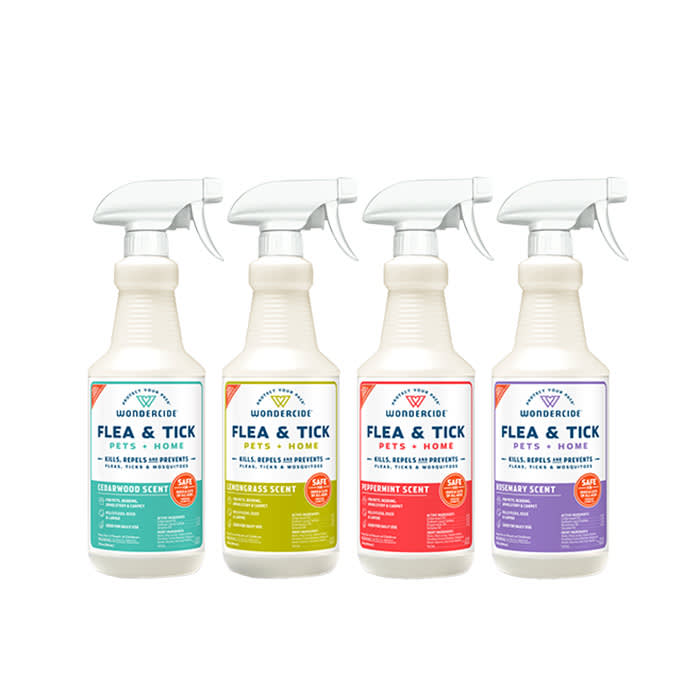
Wondercide Flea, Tick & Mosquito Spray
Wondercide earns the top spot on both performance and pedigree. The brand exists because of a scare: founder Stephanie Boone started developing natural pest control after her dog, Luna, got sick from a conventional pesticide. That origin shows in the formula, a natural blend designed to repel mosquitoes, fleas, and ticks in one bottle. It is the most versatile option here and the one I’d hand a first-time buyer. Best for owners who want a single, reliable, all-around repellent from a company that has been doing this a long time. Purchase link: Wondercide
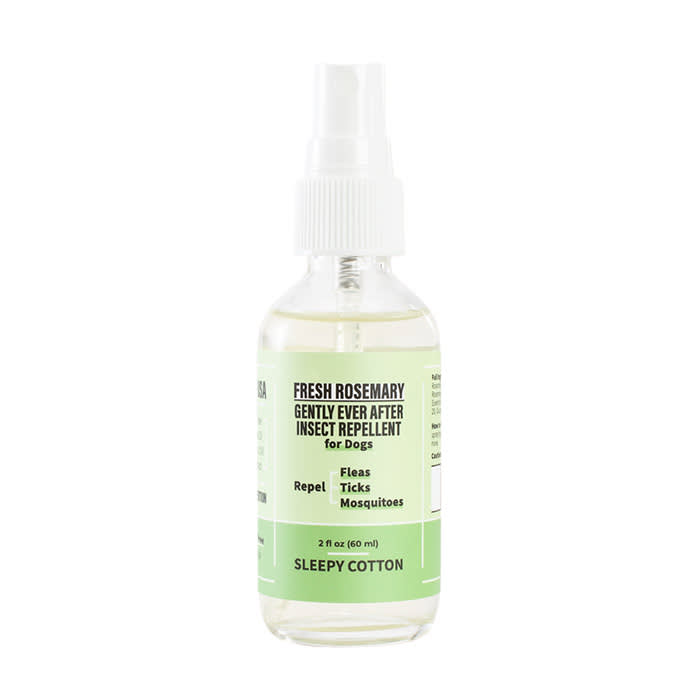
Gently Ever After
If a cat and a dog share your floors, start here, because this is the trickiest household to get right. Gently Ever After is the only option built around cedarwood and cat-tolerant oils, which makes it a concern for cats only in very large quantities rather than tiny ones. Two things to keep straight, though. It is still not meant to be applied to a cat; it is a dog spray that is safer to use around cats. And the brand also sells a lavender version that is not cat-safe at all, so read the bottle and grab the right one. Best for homes where a cat and a dog groom each other. Purchase link: Gently Ever After
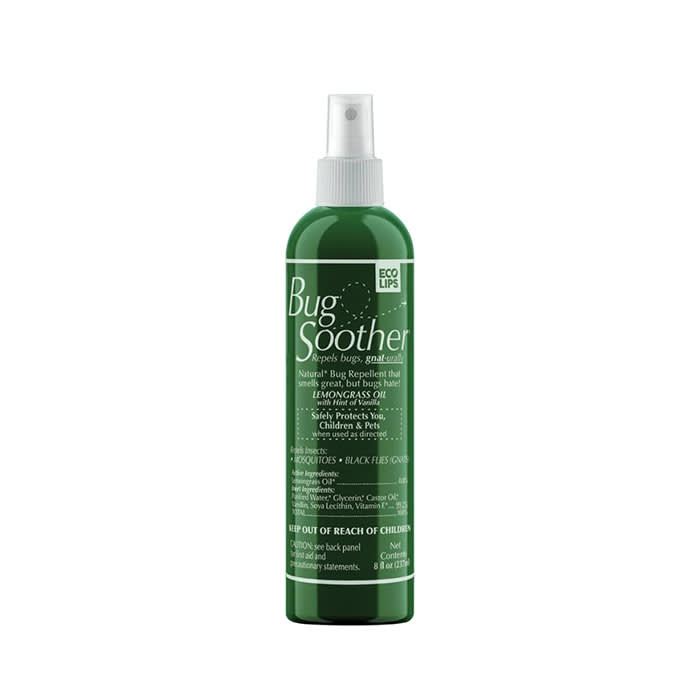
Bug Soother Spray
Mosquitoes are bad; gnats inspire a special kind of backyard rage, for you and your dog both. Bug Soother is the answer to swarming season. It is fully dog-safe and pairs a pleasant vanilla scent with lemongrass to fend off both mosquitoes and gnats, and it smells nice enough that you’ll probably use it on yourself, too. Best for buggy, marshy yards where gnats are the daily nuisance. About $24. .
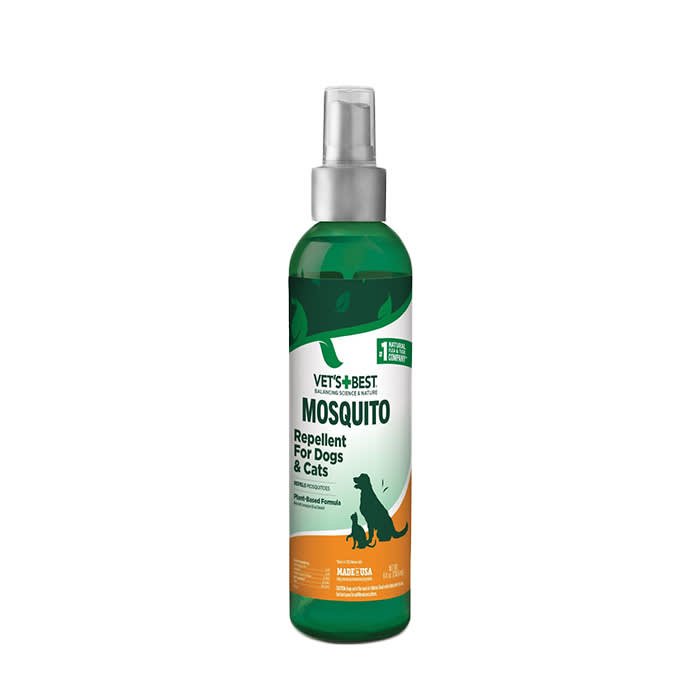
Vet’s Best Mosquito Repellent for Dogs & Cats
Want a repellent that also reinforces flea and tick defense? Vet’s Best is the triple-threat. Its lemongrass-forward formula has held up well against biting insects, and it is labeled safe for dogs 12 weeks and older, and gentle enough for the people in your household ages two and up. One honest caveat: it repels, it does not replace your dog’s actual flea-and-tick prevention. Treat it as an added layer over the real treatment, not a swap for it. Best for households that want one bottle to pull double duty on walks. Purchase link: Vet’s Best
The most important layer isn’t a spray
Worth repeating, because it is where the real danger lives: none of these sprays protect against heartworm. They cut down on bites, which is worth doing, but a single infected mosquito is all it takes to transmit the parasite. Year-round heartworm preventive medication from your vet is the actual shield. The sprays are the extra jacket you put on over it.
What’s new since this was written
The reason to take mosquitoes seriously has only grown. The latest surveillance shows canine heartworm continuing to climb and, more worryingly, spreading into new territory. Texas has moved into the top spot for the highest heartworm incidence in the country, and hot spots have flared in places without a historical problem, including parts of Florida, the Carolinas, and southern Illinois, with unexpected upticks as far north as the Pacific Northwest and New England. Estimates put more than a million dogs in the U.S. currently heartworm-positive.
The drivers are a mix: gaps in preventive use, infected dogs relocating between states, expanding populations of wild carriers, and a warming climate that gives mosquitoes a longer active season. The practical message for you is simple. Wherever you live, do not assume heartworm is somebody else’s regional problem. Keep the year-round preventive going, and let a good repellent handle the bites on top of it.
Because this covers medication and toxicity, treat it as guidance and confirm the right heartworm preventive and any new product with your own veterinarian.
References
- American Heartworm Society. “Heartworm Incidence Maps.” heartwormsociety.org
- American Veterinary Medical Association. “Texas tops nation in heartworm cases.” avma.org
- ASPCA Animal Poison Control Center. “Essential Oils and Pets.” aspca.org
- U.S. Environmental Protection Agency. “DEET.” epa.gov
Common questions
Can I use dog mosquito spray on my cat?
No. Dog-safe sprays rely on diluted essential oils that dogs tolerate but cats cannot. No amount is considered safe for cats, so never apply a dog product to a cat.
Can I make my own dog-safe bug spray with essential oils?
No. Commercial sprays use extremely diluted oils that are almost impossible to replicate safely at home. A DIY mix using undiluted oils can easily reach toxic levels. Don't attempt it.
Can dogs get heartworm from mosquitoes?
Yes. A single infected mosquito bite can transmit heartworm larvae, and untreated heartworm disease can be fatal. Signs include coughing, fatigue, weight loss, trouble breathing, and a swollen belly. See a vet promptly if you notice them.
Not a substitute for your vet. Our guidance is educational. For urgent symptoms, contact a vet or emergency clinic right away. Editorial standards
Dr. Mehta is a board-certified veterinary nutritionist who evaluates pet food formulations, ingredient quality, and the science behind dietary trends. He writes and reviews all nutrition content at The Pet Times, including our food rankings and feeding guides.
Meet our experts ↗Keep reading
 Product PicksMost Dog Sweaters Are for You. Here's How to Tell If Your Dog Actually Needs One.Dr. Lena Park · 4 min
 Product PicksRescue Workers Swear by This Collar. Most People Use It Wrong.Dr. Nina Kohl · 7 min
 Health & WellnessThe Coyote Vest Is a Punchline Until It's All That's Between Your Dog and a CoyoteDr. Lena Park · 6 min
 Product PicksYour Dog Can't Walk Out. A Pocket-Sized Sling Can Carry Them.Tom Hadley · 4 min
 Product PicksNo One Is Checking Your Dog's Toys. Here's the 60-Second Test That DoesTom Hadley · 8 min
 Product PicksJuly 5 Is the Busiest Day at the Shelter. Here's the Fireworks Kit That Keeps Your Dog Home.Dr. Lena Park · 8 min