


No One Is Checking Your Dog's Toys. Here's the 60-Second Test That Does
Dog toys sit in a regulatory blind spot: the FDA doesn't touch them and safety agencies only act when a toy endangers a person. That leaves the inspection to you. Here's how to fail a bad toy before you buy it.

Affiliate disclosure. This article contains affiliate links. We may earn a small commission if you buy through a link, at no extra cost to you. How we handle recommendations.
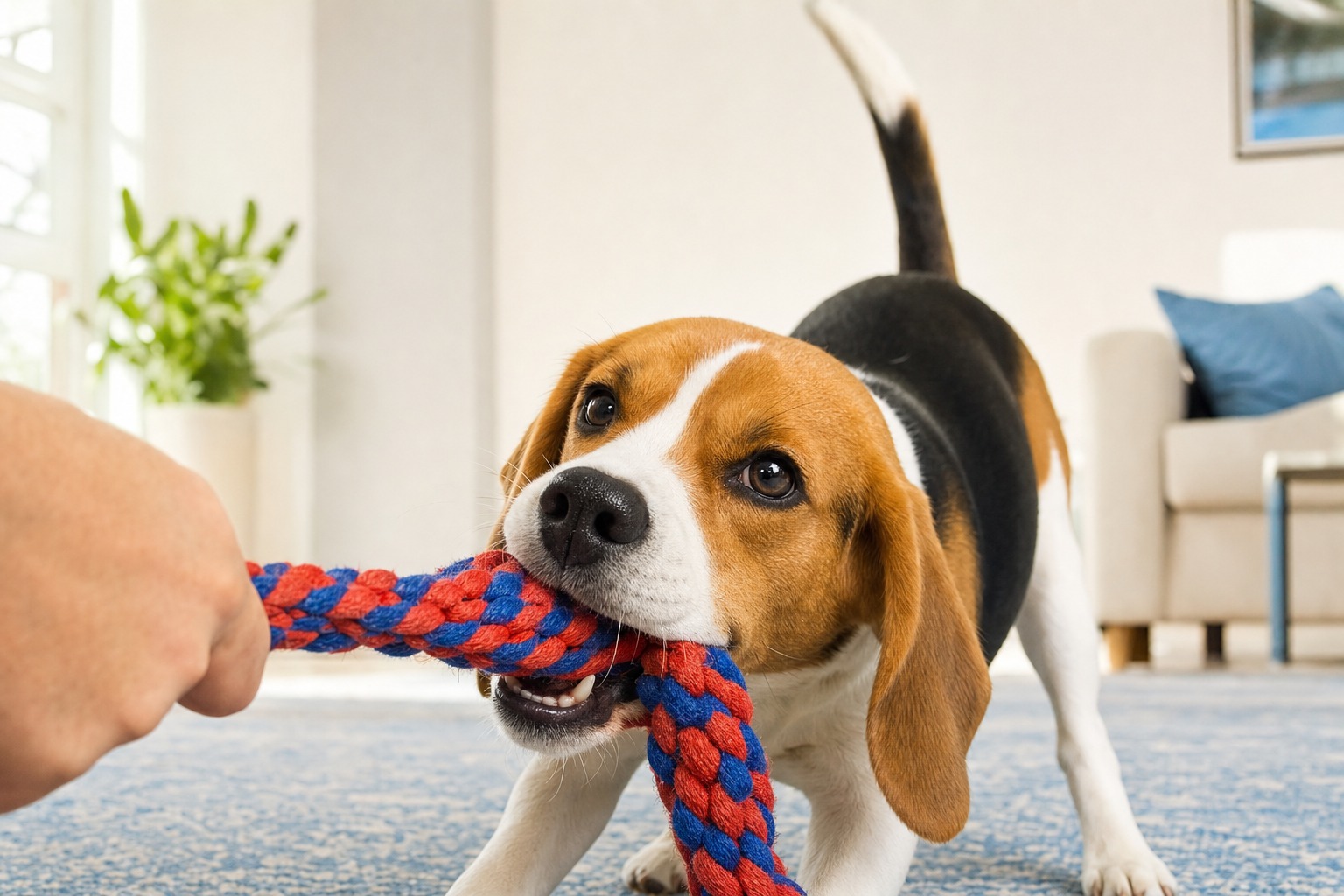
Here is an assumption worth dismantling before you buy your dog another toy: that somebody, somewhere, checked it. The children’s-toy aisle has conditioned us to believe products for the vulnerable get tested, flagged, and recalled. For dog toys, that safety net mostly does not exist. The FDA’s authority stops at food and treats. The Consumer Product Safety Commission acts only when a pet toy can be proven to endanger a person. No federal law requires a manufacturer to test a chew for lead before selling it. Which means the one inspector standing between a badly made toy and your dog’s throat is you. The good news: with the right sixty-second routine, you are a surprisingly good inspector. This article is built around that routine, because a brand list goes stale but a test you can run in your own hands does not.
The blind spot, made concrete
The gap is not theoretical. Children’s toys must meet strict CPSC standards that cap lead and ban certain phthalates outright. Dog toys, items a dog holds in its mouth for hours, face none of those restrictions. The CPSC itself has been plain that it lacks the resources to regulate pet products unless a human is hurt. So when you see a headline about a recalled “toy,” it is almost always a children’s product pulled for violating the mandatory kids’ standard. There is no equivalent mandatory standard for the chew you just tossed your Labrador.
People assume someone is vetting these the way they’d vet a toddler’s toy, and that’s just not how it works. The commission’s mandate is to protect people. If a chew is dangerous to your dog but harmless to you, it can sit on a shelf indefinitely. Manufacturing runs largely on the honor system, and for less scrupulous companies it’s trial by error, sometimes with errors they already know about and ignore.
That is the mindset shift the rest of this depends on. Stop outsourcing the safety judgment to a regulator who was never assigned the job, and start making it yourself, at the point of purchase.
The 60-second pre-buy test
Run this on any toy before it goes home, ideally in the store. It catches the large majority of genuinely dangerous toys.
Smell it. A strong chemical odor signals residual solvents, dyes, or coatings. Conscientious toys do not reek. If it hits you at arm’s length, put it back.
Attack the attachments. Grab any plastic eyes, noses, bells, or the squeaker housing and pull, twist, and pry the way a determined dog will. Anything that comes loose is a choking and obstruction hazard in waiting. Small, firmly-attached-looking pieces are exactly what surface later in emergency X-rays.
Size it against the mouth. Hold the toy up to your dog’s actual mouth. If it is small enough to slip toward the back of the jaw, it is small enough to lodge in the throat. Bigger than the widest gape is the rule.
Press for hardness. Push a thumbnail into it. If it will not give at all, if it is hard enough that you would not want it swung into your own kneecap, it is hard enough to fracture a tooth. Genuinely safe chews yield slightly under pressure while still resisting tearing.
Check the dye and the fabric. Brightly dyed fabrics can leach color when wet, and fabric dyes are not tested for consumption. Avoid anything treated with fire retardant or stain guard, which can carry formaldehyde and similar chemicals.
Five moves, under a minute. A toy that clears all five is a reasonable bet; a toy that fails any one is not worth the risk, whatever the packaging promises.
A quick material cheat sheet
The test above works better once you know what each common material tends to hide. Use this as the reasoning behind the press-and-sniff:
| Material | Main risk | What to look for |
|---|---|---|
| Hard nylon / hard plastic | Tooth fractures | Should give slightly under a thumbnail; reject rock-hard |
| Soft PVC / vinyl | Phthalates, BPA | Chemical smell, extreme flexibility, no material disclosure |
| Painted or dyed anything | Lead, cadmium, chromium in pigment | Bright paint that scratches off; wet-rub test for dye transfer |
| Latex / natural rubber | Some lead-laden imports; allergy | Buy from transparent brands only |
| Cheap plush | Small parts, stuffing obstruction | Weak seams, glued-on eyes, squeaker you can extract |
Why the packaging can’t be trusted
The reason the hands-on test beats reading the box is that the box is marketing, often misleading marketing. Glossy, reassuring packaging is cheap to produce and legally unaccountable. Even “made in the U.S.” is not a safety guarantee: the lesson of past pet-food recalls is that raw materials frequently go untested, and animals got sick and died as a result. Bring the same skepticism to toys, and let your senses, not the label, cast the deciding vote. One useful modern tell: check whether a product carries a California Proposition 65 warning, which is triggered by chemicals like lead. It is not a ban, but it is a disclosure the honor system does not otherwise require.
The material risks worth knowing
A few hazards deserve understanding so the test above has weight behind it.
Heavy metals. Testing over the years has repeatedly found mainstream dog toys tainted with lead, cadmium, and chromium, sometimes in pigments, sometimes in recycled materials. These metals can leach out as a dog licks and chews, accumulating in the body over time. Some lead-laden toys are made from latex, a material sometimes recommended in place of plastic, which can itself contain phthalates and BPA.
Size-blind toxicity. There is very little toxicity data tailored to dogs by body size. A dose presumed safe for a 40-pound child could be dangerous for a five-pound Chihuahua, and nobody is filling that data gap for you.
The tennis ball problem. There is a well-known cautionary case of a young, large-breed dog that choked to death on a tennis ball, the kind of “harmless” toy people hand over without a thought. For big dogs, tennis balls are a double risk: a whole ball can block the airway, and the abrasive felt sands down tooth enamel with repeated chewing. Use a properly sized, dog-specific ball and supervise.
Suction traps. Avoid balls with a single air hole, which can create a dangerous suction seal on a dog’s tongue. Skip sticks, stones, and soft plastics that shear into swallowable chunks.
Match the toy to your specific dog
Safety is not only about the toy; it is about the pairing. Dogs do not really chew so much as tear and shear, the way they would handle prey, using the premolars and molars set farther back in the jaw. Any toy that reaches those grinders is a potential casualty. So the right toy depends less on your dog’s size than on their style. A 160-pound gentle-mouth can happily carry a plush around, while a five-pound terrier can be a relentless shredder. Choose for how your dog plays. Life stage matters too: a teething puppy, a rambunctious adolescent, and a senior with worn teeth all need different things.
Brands that have earned trust
A hands-on test is your first line of defense, but a few companies have built real reputations for safe, well-made toys, and they are a good place to start browsing:
Kong
Heads up. Colorado-based, with all rubber products made in the U.S. The original Kong is a treat-holding, nearly indestructible toy with an unpredictable bounce; the Kong Flyer is an excellent soft-rubber disc. On their squeaky line, the silenced squeaker stays safely enclosed. Strong pick for power chewers.
Nina Ottosson
Heads up. Wooden and composite puzzles built on the idea that dogs enjoy working for their food. Power chewers often learn that brains beat brute force. Widely available in the U.S.
P.L.A.Y.
Heads up. A San Francisco company making eco-friendly plush toys filled with non-toxic materials and built from 100 percent post-consumer recycled plastic bottles. The playful “Barking Brunch” collection is a favorite. As with any plush, supervise and retire it once seams start to give.
West Paw Design
Heads up. A Montana company focused on environmentally friendly production. Its Zogoflex material is tough yet flexible, recyclable if returned to the company, and advertised as free of any known sources of lead, cadmium, mercury, latex, natural rubber, phthalates, hormones, BPA, or asbestos.
A note on “smart” toys
Treat-dispensing cameras, motorized chasers, and app-connected toys have flooded the market, and they bring the standard risks plus a few of their own: hard plastic housings and small electronic components that are not meant to be chewed but often are. A high-tech toy is not automatically a safe one. Run the same sixty-second test, and never leave a dog alone with anything containing batteries or a cracked hard shell.
The running checklist
- Skip single-air-hole balls, sticks, stones, heavily dyed toys, fire-retardant or stain-guard-treated toys, and soft plastics.
- Always supervise play.
- Size every toy to your dog and reject any that reach the back molars.
- Match toys to your dog’s play style, not just their size.
- Keep a variety on hand and rotate them to hold interest.
- Retire anything cracking, shedding pieces, or losing seams.
- And never let a toy stand in for time with you, which is the one thing no toy replaces.
References
- U.S. Consumer Product Safety Commission. “Toy Safety.” https://www.cpsc.gov/FAQ/Toy-Safety
- U.S. Food and Drug Administration. “Animal Health Literacy.” https://www.fda.gov/animal-veterinary/animal-health-literacy
- Preventive Vet. “How to Tell If a Dog Toy Is Toxic or Safe.” https://www.preventivevet.com/dogs/how-to-find-safe-non-toxic-dog-toys
Common questions
What's the fastest way to tell if a dog toy is unsafe?
Do a hands-on check before it reaches your dog: sniff for harsh chemical smells, tug on eyes, squeakers, and seams, size it against your dog's mouth, and press it to judge whether it's hard enough to crack a tooth. Anything that fails, skip.
Are tennis balls safe for dogs?
For large dogs, they carry real risk on two fronts: a whole ball can lodge in the throat as a choking hazard, and the abrasive felt can wear down enamel over time. Supervise closely and choose a properly sized, dog-specific ball instead.
Tom Hadley writes about training and behavior, helping owners understand what their pets are trying to tell them. His work covers everyday manners, decoding common behaviors, and the small changes at home that make dogs and cats easier to live with.
Meet our experts ↗Keep reading
 Product PicksThis Montana Factory Grinds Up Your Dog's Old Toy and Makes You a New OneSara Lim · 8 min
 TrainingStop Handing Your Dog a Boring Kong. Stuff It Like This.Dr. Amara Solis · 7 min
 TrainingYour Dog Is Bored, Not Heartbroken. Build These 7 Activity Stations.Dr. Nina Kohl · 7 min
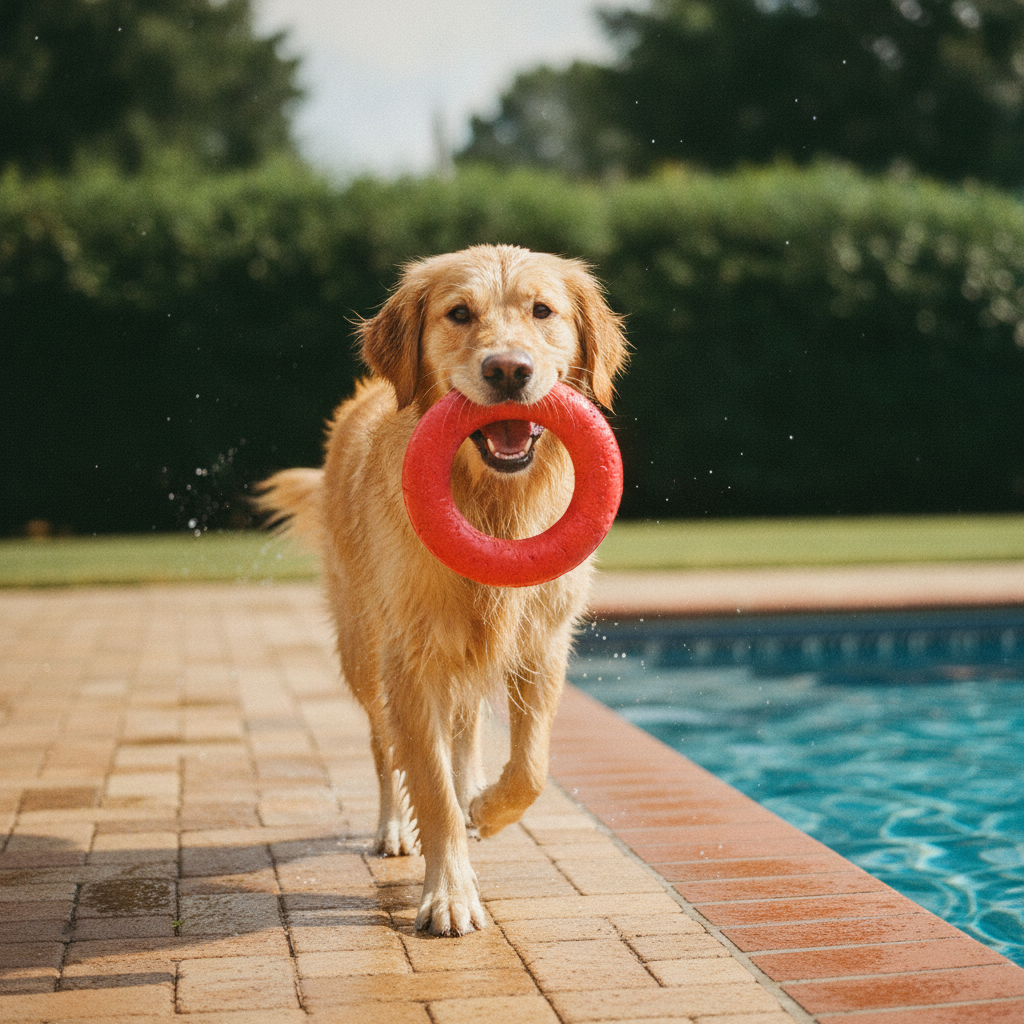 Product PicksA Pool Toy Fails for Three Reasons. 10 That Don't, Plus the Safety Rule Nobody MentionsNina Vasquez · 6 min
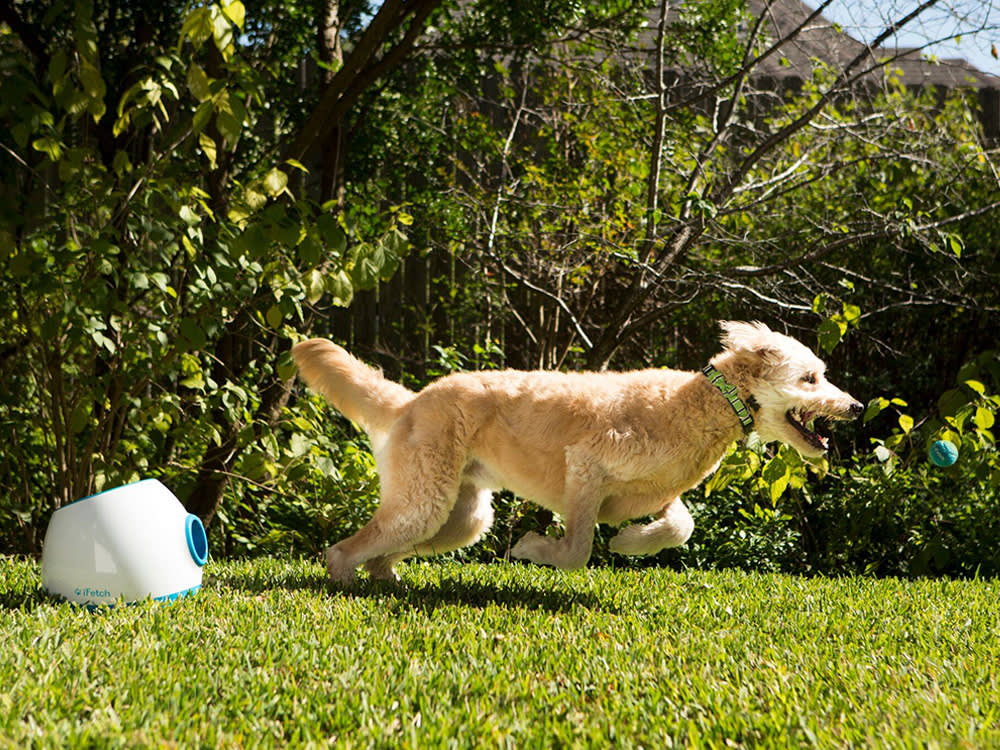 Product PicksThe Ball Launcher That Started With a Kid Dodging HomeworkMarcus Webb · 5 min
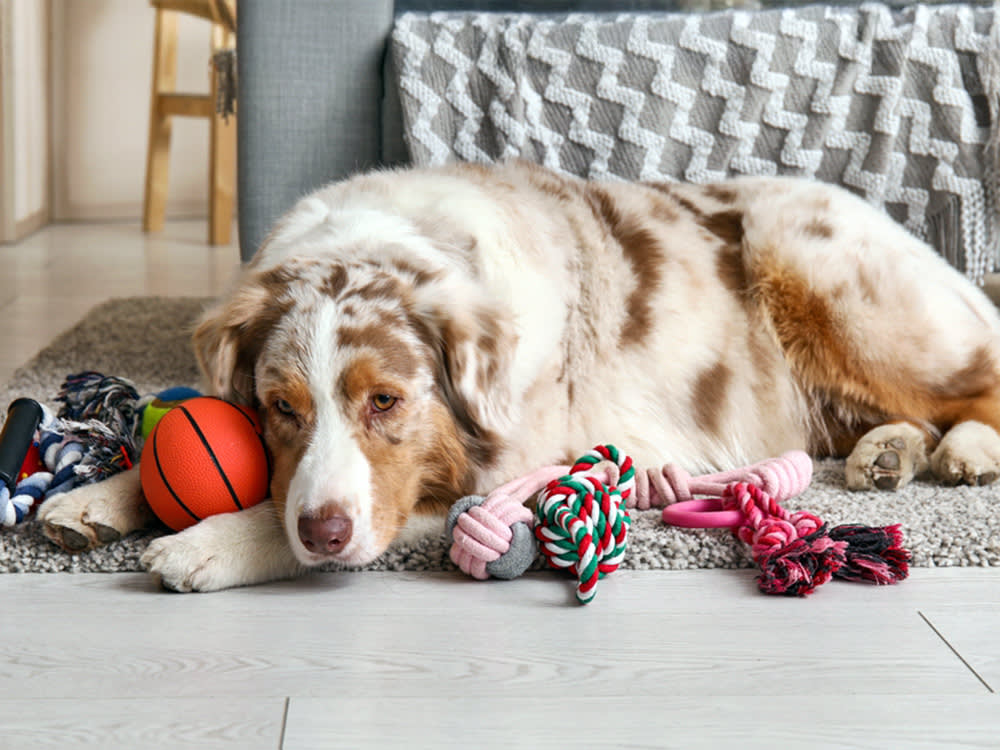 TrainingOne in Three Toy-Obsessed Dogs Couldn't Calm Down. That's the Number That Matters.Dr. Ravi Mehta · 8 min