


Your Dog Is Bored, Not Heartbroken. Build These 7 Activity Stations.
Most behaviorally healthy dogs handle alone time fine. The ones who get bored need something to do. Activity stations let your dog entertain itself while you're out, and ease your leaving-guilt too.

Affiliate disclosure. This article contains affiliate links. We may earn a small commission if you buy through a link, at no extra cost to you. How we handle recommendations.
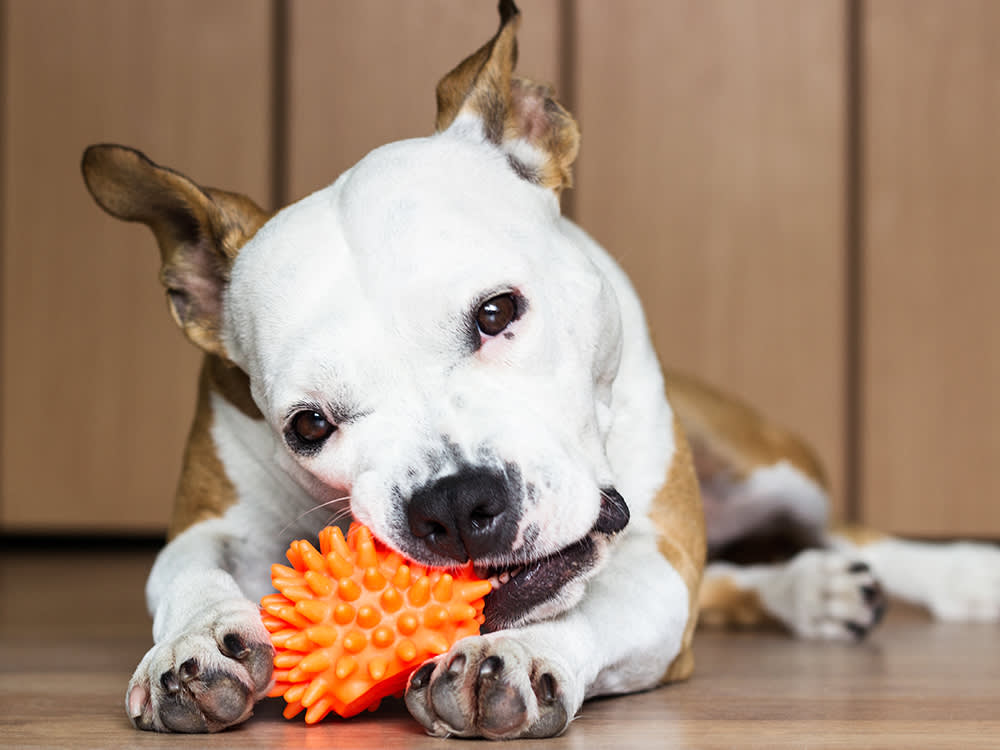
Leaving your dog at home is one of the small, quiet guilts of pet ownership. Here’s the reassuring part: most behaviorally healthy dogs are genuinely fine on their own. They relax and sleep through a good chunk of the day while we’re off stressing about deadlines.
I’m setting aside the dogs this doesn’t apply to, dogs too young to handle long stretches alone, or those wrestling with separation anxiety or another condition that makes your absence truly distressing. Those dogs need a different plan, and often a professional. I’m talking about the ordinary, well-adjusted dog who copes fine with your workday but would still, obviously, rather you stayed home.
For those dogs, the question is simple: beyond food, water, and a comfy spot to nap, what can you leave them to do? Some are content to snooze the day away or hang with a compatible dog buddy. Others need a little help finding something interesting to occupy themselves. That’s where activity stations come in.
What an activity station actually is
An activity station is exactly what it sounds like: a designated spot set up for a solo activity your dog can do without you. Scatter a few of them around distinct areas of your home and your dog gets to make choices and have fun on their own terms. Think of it as designing boredom out of the day rather than hoping it doesn’t show up.
A dog left with nothing to do will invent a job, and it’s usually one you won’t like. Give them legitimate outlets and most of the so-called misbehavior just evaporates. Enrichment isn’t a luxury for dogs, it’s a basic need we tend to forget about the moment we walk out the door.
One honest caveat before the ideas: this kind of enrichment won’t cure separation anxiety, fix a fear of sirens or traffic, or stop nonstop barking or destructive chewing rooted in a real behavioral problem. Those need targeted help. What activity stations can do is make ordinary alone time genuinely more fun.
7 activity stations to build
What works depends on your home’s layout and your dog’s interests and abilities. Beyond that, you’re limited mostly by safety and imagination.
The tug station
Some stations couldn’t be simpler: a stretchy tug toy fastened to a wall hook with a carabiner. A little give in the toy helps, since there’s no one on the other end providing resistance. The toy has to be genuinely safe, with no risk of choking, entanglement, or shredding, and this station isn’t right for dogs who’d get obsessive or frustrated. To spark interest, give the toy a shake before you leave, then let your dog take it from there. A dab of peanut butter makes it more tempting.
The batting station
A close cousin for dogs who’d rather swat than tug. As long as your dog won’t get tangled or try to swallow it, a hanging toy with multiple dangling parts can happily occupy a dog who loves to use their paws.
The snack station
Give your dog something safe to chew or work at. This doesn’t mean buying a mountain of new stuff, rotate their durable favorites and add the occasional new treat. Stuffable toys shine here. A classic KONG packed and frozen buys a long, focused session, and food-dispensing toys your dog has to nudge and roll, like the KONG Wobbler, a West Paw Toppl, or a Buster Cube, turn a meal into a project. Skip anything that poses a choking hazard, steer clear of rawhide and rope toys for an unsupervised dog, and ask your vet what else could be risky when you’re not there to watch.
The hide-and-seek treats station
Turn a room or two into a foraging ground. Hide treats while your dog waits elsewhere, give a cue like “find your treats,” and head out. Teaching that cue is easy if you start obvious and build up: place food in plain sight at first, tap your toe beside each piece until your dog catches on, then gradually make the hunt harder. Puzzle toys designed for hidden food work well for this too.
The toy basket station
A basket of toys is only interesting if the contents keep changing. Cycle toys in and out, sneaking in something new every so often, so your dog never quite knows what’s on offer that day. If they have a couple of ride-or-die favorites, keep those in the mix.
The solo fetch station
Fetch feels like a two-player game, but some dogs learn to play it alone with a ball and a ramp, or a launcher like the iFetch. You need enough clear space for them to chase without crashing into furniture. Start by resting the ball up on the ramp’s high end so it rolls off by itself, which gets your dog used to chasing a “thrown” ball, then teach them to nudge it back up there themselves. It takes patience, and no dog will ever prefer it to real outdoor fetch with you, but plenty genuinely enjoy it. (Skip this one for dogs so fetch-obsessed they’d run themselves ragged.)
The sniffari window station
Here’s one the old playbooks skip: dogs get real enrichment from watching and smelling the world. Set up a safe, stable perch by a window with a view of a yard, a bird feeder, or a busy sidewalk, and you give your dog low-effort stimulation that can hold their attention for a surprising while. Pair it with a snuffle mat scattered with kibble nearby, and you’ve turned a quiet corner into a foraging-and-observation post. Just make sure the perch is sturdy and the window itself is secure.
Safety governs all of it. Never use anything that could strangle or trap your dog, stick to toys that can handle your particular dog’s chewing, and avoid rawhide or rope a dog could choke on. When you’re not sure, stash the toy until you’re home.
Getting your dog to actually use them
Don’t expect a dog to embrace a station just because you built it, however lovingly. The “build it and they will come” idea almost never holds for dogs. They have to be shown what to do and learn that the station is worth their time. Each type needs its own bit of teaching, but the same three rules cover all of them: roll out a single station before adding more, build up gradually rather than rushing to full engagement, and make each one enticing with the right gear or a smear of peanut butter.
The payoff is real. Activity stations are an antidote to the boredom of a long day alone, and they turn that time from merely “fine” into genuinely “fun,” which happens to relieve a good deal of your guilt on the way out the door.
Dr. Kohl is a board-certified veterinary dentist with a particular interest in preventive oral care. She reviews all dental health content at The Pet Times and contributes practical guides on home dental routines, professional cleaning, and oral disease prevention.
Meet our experts ↗Keep reading
 TrainingOne in Three Toy-Obsessed Dogs Couldn't Calm Down. That's the Number That Matters.Dr. Ravi Mehta · 8 min
 TrainingYour Dog Isn't 'Bad With Toys.' Nobody Taught Them the Game.Dr. Lena Park · 7 min
 TrainingStop Handing Your Dog a Boring Kong. Stuff It Like This.Dr. Amara Solis · 7 min
 TrainingYour Dog Doesn't Love the Squeak. They Love Making It Stop.Dr. Ravi Mehta · 7 min
 TrainingYour Dog Isn't Rejecting Your Gift. They're Finishing a Hunt.Dr. Nina Kohl · 7 min
 Product PicksBacon-Scented Bubbles Are Real, and My Dogs Completely Lost ItSasha Ford · 4 min