


Your Dog Isn't 'Bad With Toys.' Nobody Taught Them the Game.
Shredding a plush in two minutes flat isn't a character flaw, it's a missing lesson. Six moves that turn a serial toy-killer into a dog who actually plays.

Affiliate disclosure. This article contains affiliate links. We may earn a small commission if you buy through a link, at no extra cost to you. How we handle recommendations.
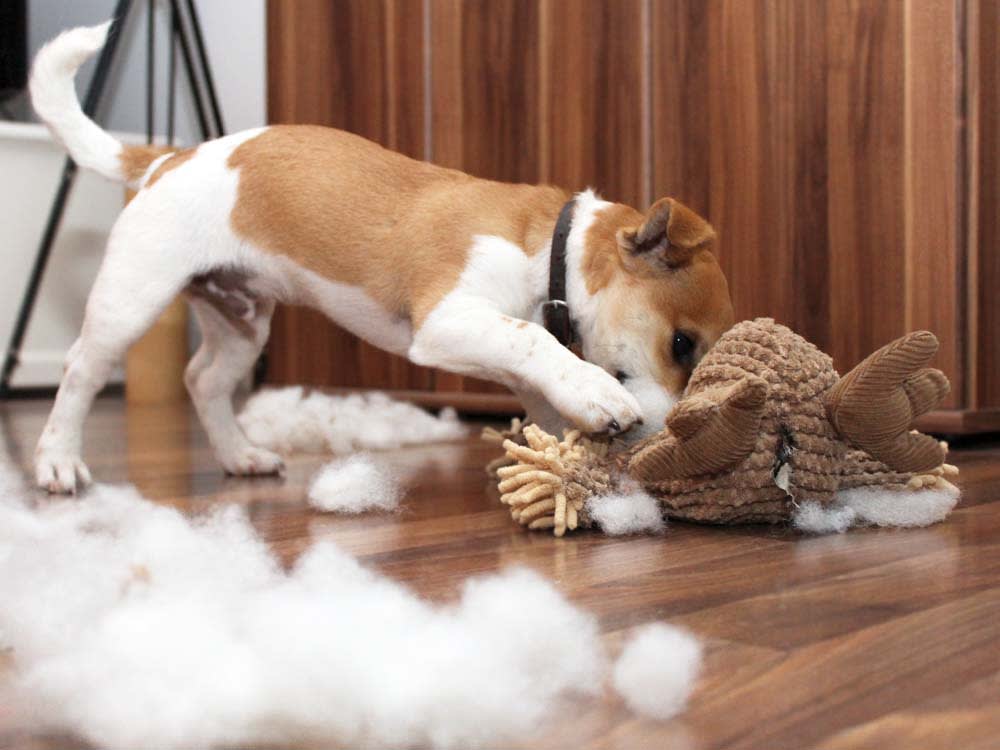
You spend twenty bucks on a cute plush, hand it over, and watch it become a crime scene of stuffing before you have finished reading the tag. It is maddening, it is expensive, and it makes a lot of people quit toys altogether.
But your dog is not spiteful, and they are not broken. They simply never learned that a toy is the equipment for a game, not a small animal to be dispatched. That is a teachable distinction, and once your dog gets it, the same toys can last for months instead of minutes.
The dogs people call ‘toy destroyers’ usually just have one setting, and it’s kill. Nobody ever showed them the other setting, which is play. Your job isn’t to suppress the chewing, it’s to give the chewing a job and the toy a purpose.
1. Teach that a toy is gear for a game with you
A toy your dog finds on the floor is a puzzle with one obvious answer: take it apart. A toy that appears when the two of you play fetch, tug, or a floor-level chase becomes something else, a shared activity your dog wants to repeat.
So start by playing. Drag it, toss it, let them pounce and win. When your dog connects the object to the fun of doing something with you, the object itself stops being the target. While that connection is still forming, put the toy away between sessions so your dog cannot practice the old habit when you are not looking.
2. Manage the environment while they learn
Do not leave a half-trained dog alone with a temptation you know they will fail. During the teaching phase, toys are supervised items. You are not being a killjoy, you are refusing to set your dog up to rehearse the exact behavior you are trying to replace.
Think of it the way you would a puppy and a shoe rack: you do not wait for the mistake and then get upset, you close the closet door until the lesson lands.
3. Pull the toy the instant demolition starts
Here is the mechanism that does the heavy lifting. Offer the toy. If your dog plays with it gently, they keep it, and you add attention or praise so gentleness pays. The moment they switch into demolition mode, picking at a seam or clamping down to shred, the toy quietly disappears.
Give it right back so they get another chance to be careful. If they blow three chances, the toy is done for the day. Some dogs learn to soften up in three tries. Others need this repeated over several days. Either way, the lesson your dog absorbs is clean and consistent: rough handling makes the good thing vanish.
4. Give the chewing a legal outlet
Chewing is a real, healthy canine need, and some dogs have it in spades. The goal is never to stamp it out, only to aim it at the right target. Keep a couple of genuinely tough, chew-appropriate items in rotation so your dog has somewhere to put those jaws.
Durable rubber and nylon chews are usually the safe workhorses here. A classic stuffable rubber toy like the KONG Classic or a Nylabone Power Chew gives hard chewers a satisfying job without the shrapnel risk. Rawhide is worth avoiding, and while some dogs do fine with real bones, antlers, hooves, or pig ears, others crack teeth or swallow sharp shards, so run any of those past your vet first and supervise.
5. Save the soft stuff for tired time
Plenty of dogs adore a squishy fleece toy, and plenty of dogs also treat one like a chew treat. The trick is timing. Offer the cuddly toy when your dog is genuinely wiped out, after a long hike or a hard play session, because a tired dog is far more likely to snuggle a fleece thing than field-strip it. If they start to chew, it goes away. If they treat it tenderly, it stays.
6. Rotate multiples, and match the toy to the chewer
Handing a dog several identical toys at once often lowers the destruction, oddly enough. Give one, and when they get interested, toss a second, then a third. Spreading their attention across a small pile seems to drop the perceived value of any single toy, so no one item gets the full demolition treatment.
While you are at it, be honest about your dog’s chew style and buy accordingly. A gentle mouther can enjoy a soft plush for ages. A power chewer needs toys rated for exactly that, and a delicate toy handed to a heavy jaw is not a training failure, it is a mismatch you set up at the store.
What’s new since this was written
Toy makers have leaned hard into “indestructible” marketing, but there is no such thing, and testing labs keep proving it. The useful update for owners is a shift in how the pros think about durability. Rather than chasing a single unbreakable toy, trainers now talk about matching a toy’s toughness to how your specific dog destroys things, a chart-your-chewer approach, and pairing that with the management and game-teaching above. The toy is only half the fix. The other half is the lesson.
Spend a little time teaching the game, manage the temptation while it sinks in, and give the real chewing a proper home, and you can get off the twenty-dollars-every-Tuesday treadmill for good.
Dr. Park is a board-certified emergency and critical care specialist. She reviews our health and safety content for clinical accuracy and contributes guides on recognising urgent conditions. Her focus is helping owners act quickly and correctly when it matters most.
Meet our experts ↗Keep reading
 TrainingOne in Three Toy-Obsessed Dogs Couldn't Calm Down. That's the Number That Matters.Dr. Ravi Mehta · 8 min
 TrainingStop Handing Your Dog a Boring Kong. Stuff It Like This.Dr. Amara Solis · 7 min
 TrainingYour Dog Is Bored, Not Heartbroken. Build These 7 Activity Stations.Dr. Nina Kohl · 7 min
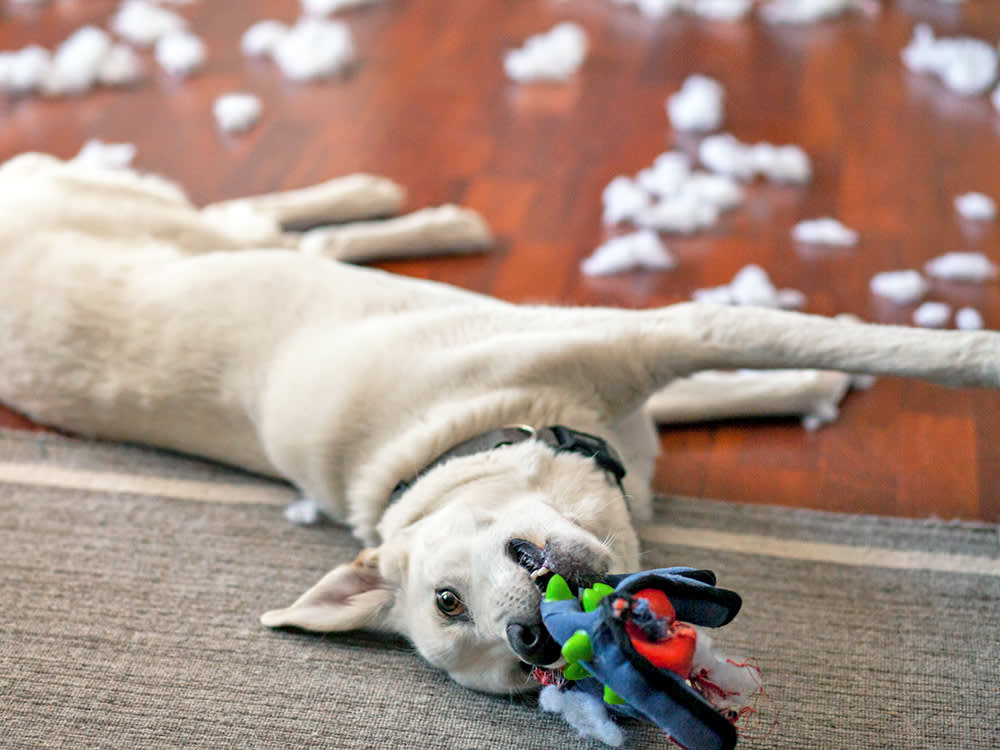 TrainingYour Dog Isn't Rejecting Your Gift. They're Finishing a Hunt.Dr. Nina Kohl · 7 min
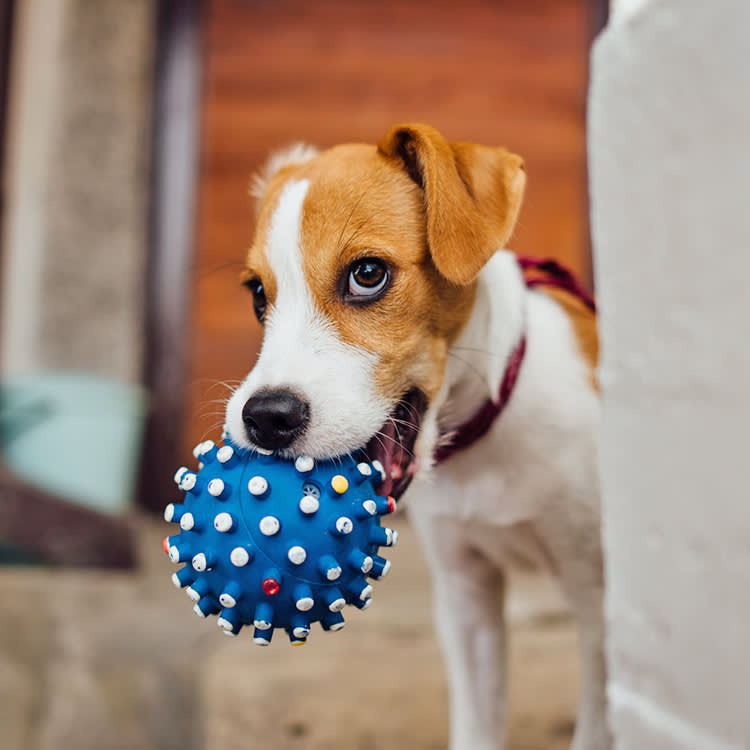 TrainingYour Dog Doesn't Love the Squeak. They Love Making It Stop.Dr. Ravi Mehta · 7 min
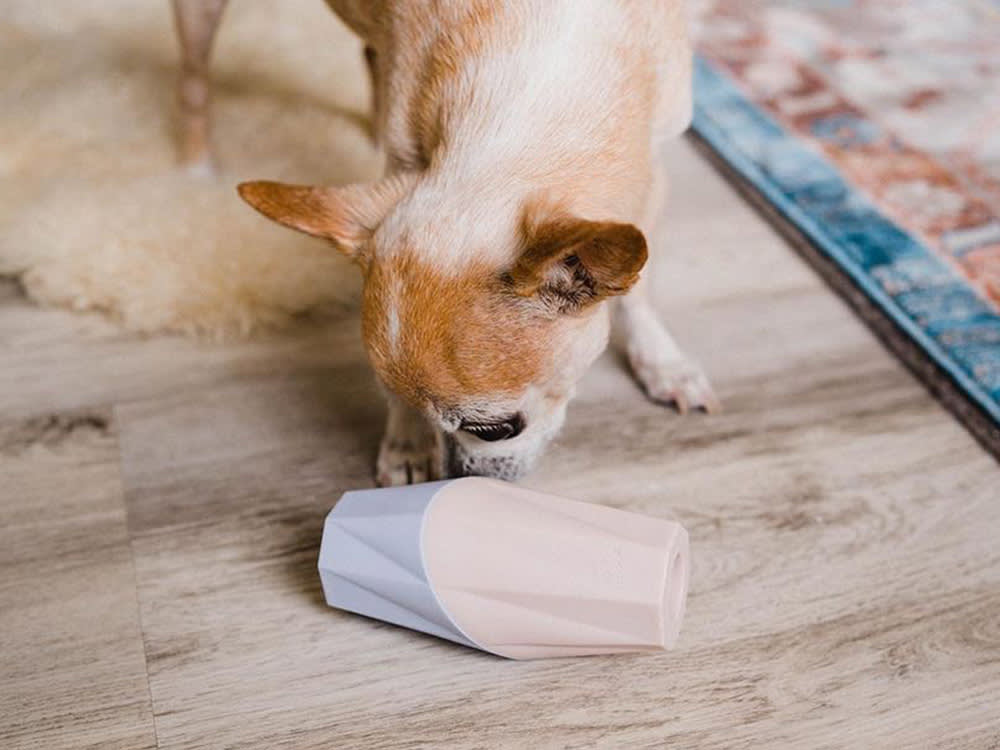 Product PicksYour Dog Doesn't Need Another Puzzle. They Might Need the Opposite.Sasha Ford · 7 min