


Halloween Looks Like the Safe Holiday for Dogs. It's Quietly One of the Worst.
No fireworks, no tree to topple. Halloween seems tame next to July 4th or Christmas. But between the candy bowl, the constant doorbell, and the open front door, it's one of the sneakiest-dangerous nights of the year for a dog. Six real risks, and how to defuse each.

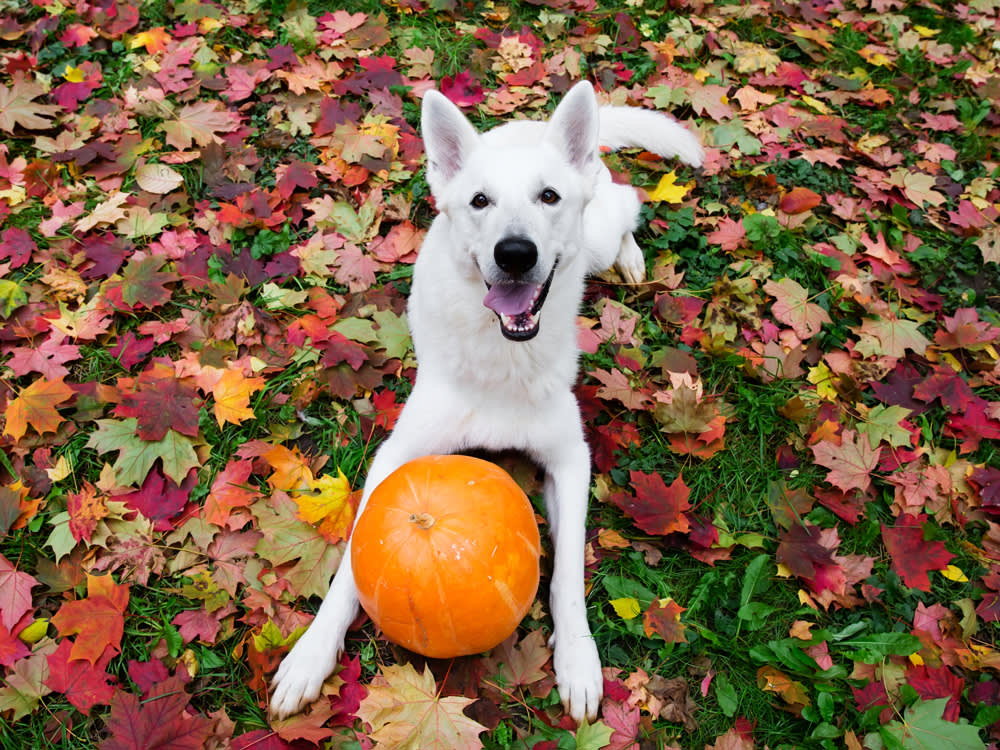
Halloween gets a pass. Compared with the Fourth of July’s fireworks or Christmas’s toppling tree and tangle of ribbon, it feels like the low-stakes holiday for a dog. No booms, no obvious hazards, just some costumes and a bowl of candy.
That reputation is exactly what makes it dangerous. Because while you are not watching for trouble, Halloween stacks up a very specific set of hazards: a bowl of toxic food at dog height, a front door that opens every ninety seconds, a parade of strangers in unsettling shapes, and a dog whose stress and curiosity are both running high. The good news is that every one of these risks has a clean fix. Here are the six that actually matter, roughly in the order they land dogs at the emergency vet.
1. The candy bowl is the real emergency
This is the big one, and it is worth leading with because it drives the night’s worst outcomes. Halloween candy is a minefield for dogs. Chocolate can cause vomiting, diarrhea, tremors, and dangerous heart effects. Xylitol, the sugar substitute hiding in sugar-free gum and many candies, is even more dangerous and can crash a dog’s blood sugar fast. Add caffeine, macadamia nuts, grapes and raisins, and anything laced with cannabis, and a normal candy haul becomes a collection of toxins.
The scale is not trivial. The ASPCA Animal Poison Control Center fielded more than 451,000 calls about toxic exposures in 2024, up nearly 4 percent from the year before, with chocolate accounting for around 13.6 percent of exposures and food-and-drink items, including xylitol-containing gum, making up another 16.1 percent. And dogs are the classic offenders here, because unlike a cat who nibbles and wanders off, a dog will polish off an entire chocolate bar or a tray of brownies in one go.
The fix: keep all candy, wrappers included, completely out of reach, not just pushed to the back of the counter. Brief the kids that the loot bag is off-limits to the dog. And know your number: the ASPCA Animal Poison Control Center is at (888) 426-4435 if your dog gets into something.
The chocolate call is the one I brace for every Halloween. It’s rarely the dog being naughty. It’s a bag left on the floor for ten minutes while everyone’s at the door. Treat the candy the way you’d treat a bottle of pills, up high, out of sight, and you’ve prevented the most common Halloween emergency before it starts.
2. The open front door is an escape hatch
Here is the risk almost nobody plans for. On Halloween the front door opens over and over, often with the whole household distracted, and a spooked or curious dog can slip out into the dark unnoticed. A frightened dog loose at night, among crowds and traffic, is a genuinely bad situation.
The fix is boring and effective: keep your dog secured well away from the door for the evening, ideally behind a closed interior door or gate, not just “nearby.” And make sure their ID tag is current and their microchip registration is up to date before the night arrives, so that if the worst happens, the odds of a fast reunion are as high as possible.
3. The doorbell marathon is a stress test
Even a dog who never leaves the house can have a miserable Halloween. A steady stream of strangely dressed strangers ringing the bell for hours is deeply unsettling, and stressed dogs can behave out of character, including reacting fearfully or defensively toward visitors.
The fix: give your dog a calm retreat. Set them up in a quiet room away from the front door with a long-lasting chew or a food-dispensing toy to work on, and run music or white noise so the endless doorbell and chatter fade into the background. If you know your dog struggles with this kind of thing, talk to your vet well ahead of time about options to keep them comfortable, rather than improvising on the night.
4. Costumes: fit and comfort over the photo
If you dress your dog up, do it on their terms. Most dogs would honestly rather not wear a costume, so the first rule is never force one on a dog who clearly hates it. No photo is worth your dog’s misery, and a small festive touch like a bowtie on the collar gets you the spirit without the struggle, since most dogs are already used to wearing a collar.
If your dog is game, safety comes down to fit. A costume that is too tight is constricting and uncomfortable; one that is too loose can snag, tangle, or rub. Either way, a poorly fitted costume can leave a dog unable to move normally and unhappy. Steer clear of dangly accessories that a dog can grab and swallow, because a chewed-off costume piece can cause a gastrointestinal obstruction serious enough to need surgery. And never leave a costumed dog unattended. You can also make the costume a good thing by pairing it with a treat or a walk, so putting it on predicts something the dog enjoys.
5. Leave the dog home for trick-or-treating
It is tempting to bring the dog along on the neighborhood rounds, but for most dogs it is a bad idea. The crowds, the children, the unfamiliar people in masks and costumes carrying props, all of it can rattle a dog who is perfectly fine in ordinary settings, and a rattled dog may bolt or snap. Dogs are especially thrown by full-body costumes like ghosts, where the human outline they rely on to read a person disappears entirely.
The fix: only consider taking your dog out if they have a flawless track record with strangers and crowds, and even then, use a fixed leash no longer than about eight feet (never a retractable one), plus bright, reflective gear so drivers and revelers can see your dog in the dark. For everyone else, the porch and a stuffed chew is the better night.
6. Decorations and jack-o’-lanterns
The last cluster of hazards is the seasonal decor itself. A real candle inside a jack-o’-lantern is a double risk: dogs are drawn to the flicker and warmth and can burn themselves or knock the whole thing over and start a fire. Swap in battery-powered LED candles or glow sticks, and then keep those out of reach too, because a chewed glow stick or swallowed LED is its own problem. And a note on the pumpkin itself: plain, fresh pumpkin is perfectly safe for dogs, but a jack-o’-lantern that has been sitting out and gone moldy is not, so don’t let your dog snack on the decoration, and call your vet if they get into a spoiled one.
The bottom line
Halloween earns its easygoing reputation right up until you look at what the night actually asks of a dog: resist a bowl of poison, ignore a door that keeps opening onto the dark, and stay calm through hours of costumed strangers at the bell. None of that is beyond a normal dog, but none of it happens by accident either. Lock down the candy, secure the door, build your dog a quiet den, keep costumes comfortable and supervised, leave them home for the trick-or-treat rounds, and go flameless on the pumpkin. Do that, and the scariest thing about your dog’s Halloween is the decorations.
Common questions
Should I take my dog trick-or-treating?
For most dogs, no. Crowds, costumes, masks, and props unsettle even normally social dogs, and the mix can trigger a bolt. Only consider it if your dog has a rock-solid history with strangers and is on a fixed (non-retractable) leash with reflective gear.
How do I keep my dog calm during trick-or-treating?
Set them up in a quiet room away from the door with a long-lasting chew or a food-stuffed toy, and play music or white noise to muffle the constant doorbell and voices. For anxious dogs, talk to your vet in advance about calming options.
Is it safe for dogs to eat pumpkin?
Plain, fresh pumpkin is safe and even good for dogs. Moldy pumpkin is not, so keep carved jack-o'-lanterns that have been sitting out away from your dog and call your vet if they eat any that has started to spoil.
Not a substitute for your vet. Our guidance is educational. For urgent symptoms, contact a vet or emergency clinic right away. Editorial standards
Dr. Nair is a veterinarian focused on diet and feeding. She covers everyday nutrition, treats, and the many "can they eat this?" questions owners ask, grounding each answer in what is actually safe and sensible for dogs and cats.
Meet our experts ↗Keep reading
 Health & WellnessThe 'Naked Dog' Trend Is Fine. Losing the ID Is the Real Risk.Dr. Nina Kohl · 6 min
 Health & WellnessA Dog Diaper Is a Last Resort, Not a Shortcut. Here's How to Use One Right.Dr. Priya Nair · 9 min
 Health & WellnessBlue-Green Algae Killed Two Dogs in a Week. The Deadly Part Is How Fast It RunsDr. Ravi Mehta · 5 min
 FoodSkittles Aren't the Candy That'll Send Your Dog to the ERDr. Lena Park · 6 min
 Health & WellnessThe Vape Itself Won't Poison Your Dog. The Little Bottle Next to It Will.Dr. Priya Nair · 4 min
 Health & WellnessThe Old Advice Was to Starve the Pancreas. The Evidence Says Feed It.Dr. Ravi Mehta · 7 min