


The Vape Itself Won't Poison Your Dog. The Little Bottle Next to It Will.
The cloud of vapor is a distraction. The real nicotine danger to your dog is the concentrated refill liquid and the sweet pouches on your nightstand.

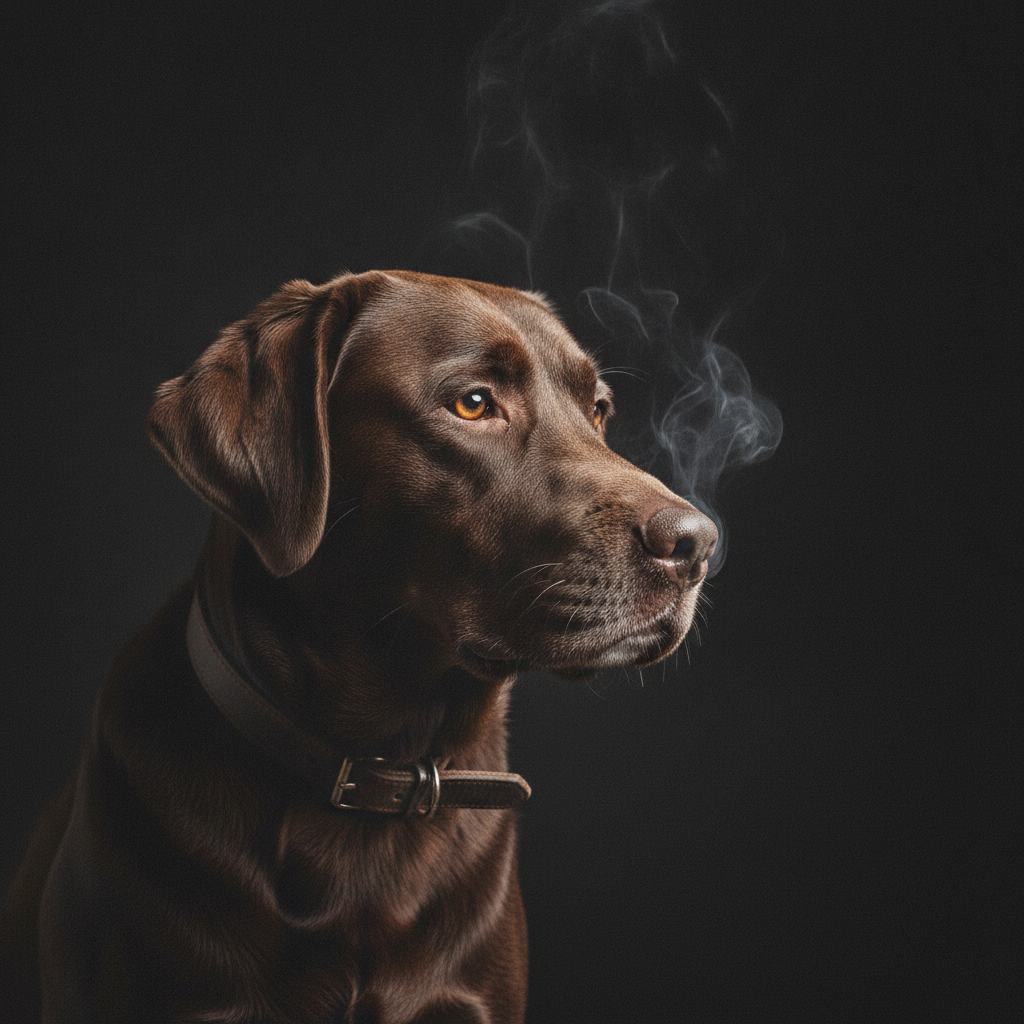
Most people worry about the wrong part of vaping. They picture the cloud, the secondhand haze drifting toward the dog on the couch, and wonder if breathing it is bad. Breathing it is not great. But it is not what lands dogs in the emergency room. The thing that actually hurts them is smaller, quieter, and usually sitting right there on the coffee table: the refill bottle, the spare pod, the tin of pouches.
Here is the uncomfortable math. A refill vial of e-liquid is a concentrated dose of nicotine engineered to last a heavy user days or weeks. To a curious dog, it is a sweet-smelling snack. And nicotine is one of the fastest-acting poisons a dog can get into at home.
Why the refill, not the vapor, is the emergency
Toxicologists estimate that somewhere around 9 to 12 milligrams of nicotine per kilogram of body weight is enough to kill half the dogs exposed to it. That sounds abstract until you look at a bottle of e-juice, where the nicotine is measured in milligrams per milliliter and a single small vial can carry many multiples of a lethal dose for a medium dog. A ten-pound terrier does not need to drink the bottle. A few good licks of spilled liquid, or a chewed-open cartridge, can be plenty.
Flavor is what turns a stored bottle into a hazard. E-liquids come in cotton candy, cinnamon roll, mango, and dessert flavors, and dogs are drawn to exactly that sweetness. The casing and the little juice containers are chewable, too, so a dog can crack one open and swallow both the plastic and the contents.
Nicotine is one of the few household poisons where speed matters more than dose. By the time an owner is Googling symptoms, the dog is often already showing them. I would much rather someone call me and be wrong than wait an hour to be sure.
Signs tend to arrive within 15 to 30 minutes, because liquid nicotine is absorbed through the mouth and gut far faster than a dried cigarette would be. Watch for drooling, vomiting, diarrhea, agitation or restlessness, a heart rate that is too fast or too slow, an irregular rhythm, tremors, wobbliness, weakness, and in severe cases seizures, collapse, or labored breathing. This is not a poison you manage at home. Home care is not realistic even for small exposures.
The new hazard nobody warned you about: pouches and gum
When e-cigarettes first appeared, the whole conversation was about liquid. The market moved. Nicotine pouches and gums are now everywhere, tucked into pockets and left on nightstands, and they introduce a second problem the old advice missed.
Many nicotine pouches and gums are sweetened with xylitol. Xylitol is separately, dangerously toxic to dogs. It can cause a crash in blood sugar and, at higher exposures, liver failure. So a dog that raids a tin of pouches can face a double hit: nicotine and xylitol at the same time. That combination is worse than either alone, and it is the exact scenario a lot of pet owners have never been told about.
The takeaway is not that these products are uniquely evil. It is that they are small, sweet, portable, and easy to leave within reach, which is precisely the profile of the things dogs get into.
What to actually do
Treat nicotine like you would treat any real household poison. Store refill bottles, pods, pouches, and gum the way you would store medication: sealed, up high, behind a door, never in a bag left on the floor or a jacket slung over a chair. Clean up spills immediately, because even a small puddle of concentrated liquid is a problem.
If you think your dog has gotten into any of it, do not wait to see how they do. Call your veterinarian, the nearest emergency clinic, or the ASPCA Animal Poison Control Center at (888) 426-4435 right away, and bring the packaging so the team can read the nicotine strength off the label. With nicotine, the dogs who do well are almost always the ones whose owners moved fast.
What newer research adds
The picture has shifted since the early “is vaping bad around pets” articles. Two changes matter for owners. First, the concentration problem is better understood: it is not the puff of vapor but the stored, undiluted liquid that drives the serious poisonings vets see, which is why so much current guidance focuses on where you keep the refills rather than whether you vape in the house.
Second, the rise of nicotine pouches and gums has added the xylitol wrinkle. Poison control resources now flag these products specifically, because a dog that eats a pouch may be dealing with two toxins at once. If your household has switched from cigarettes to pouches thinking it is tidier and safer, it may be safer for you and more hazardous for the dog, simply because pouches are so easy to leave lying around.
References
- Pet Poison Helpline. “Nicotine Poisoning in Pets.” https://www.petpoisonhelpline.com/poison/nicotine/
- ASPCA. “Can Vaping Products Harm My Pet? ASPCA Poison Control Experts Explain.” https://www.aspca.org/news/can-vaping-products-harm-my-pet-aspca-poison-control-experts-explain
- VCA Animal Hospitals. “E-cigarettes and Pet Safety.” https://vcahospitals.com/know-your-pet/e-cigarettes-and-pet-safety
- MSPCA-Angell. “Nicotine Toxicity in Pets.” https://www.mspca.org/angell_services/nicotine-toxicity/
Common questions
What are the signs of nicotine poisoning in dogs?
Signs usually appear fast, often within 15 to 30 minutes: drooling, vomiting, diarrhea, agitation, a racing or irregular heartbeat, tremors, weakness, and in serious cases seizures or trouble breathing. Because it moves so quickly, this is not a wait-and-see situation.
What should I do if my dog eats a vape or nicotine pouch?
Call your veterinarian, the nearest emergency hospital, or the ASPCA Animal Poison Control Center at (888) 426-4435 right away. Do not try to treat it at home. Bring the packaging so the team can see the nicotine strength.
Not a substitute for your vet. Our guidance is educational. For urgent symptoms, contact a vet or emergency clinic right away. Editorial standards
Dr. Nair is a veterinarian focused on diet and feeding. She covers everyday nutrition, treats, and the many "can they eat this?" questions owners ask, grounding each answer in what is actually safe and sensible for dogs and cats.
Meet our experts ↗Keep reading
 Health & WellnessYour Dog Licking Your Feet Is Harmless. The Cream on Your Skin Isn't.Dr. Ravi Mehta · 6 min
 LivingA Woman Left Her Dog at the Airport. The Breed Ban That Set It Up Is the Real Story.Jordan Ellis · 4 min
 Health & WellnessYour Tick Meds Won't Catch Them AllDr. Lena Park · 6 min
 Health & WellnessSkip the Tomato Juice. The Real Skunk Fix Is Chemistry.Dr. Ravi Mehta · 6 min
 Health & WellnessThe Marrow Bone Trap: Why That Ring Shape Lands Dogs in the ERDr. Ravi Mehta · 4 min
 TrainingYou're Petting Dogs Wrong. Here's How to Ask FirstDr. Nina Kohl · 6 min