


Your Dog's Runny Nose Is Usually Nothing. The Color Tells You When It Isn't.
A little clear drip is almost always harmless. Thick, bloody, or one-sided discharge is a different conversation. Here's how to read your dog's nose, what causes the run, and the red flags that mean call the vet.

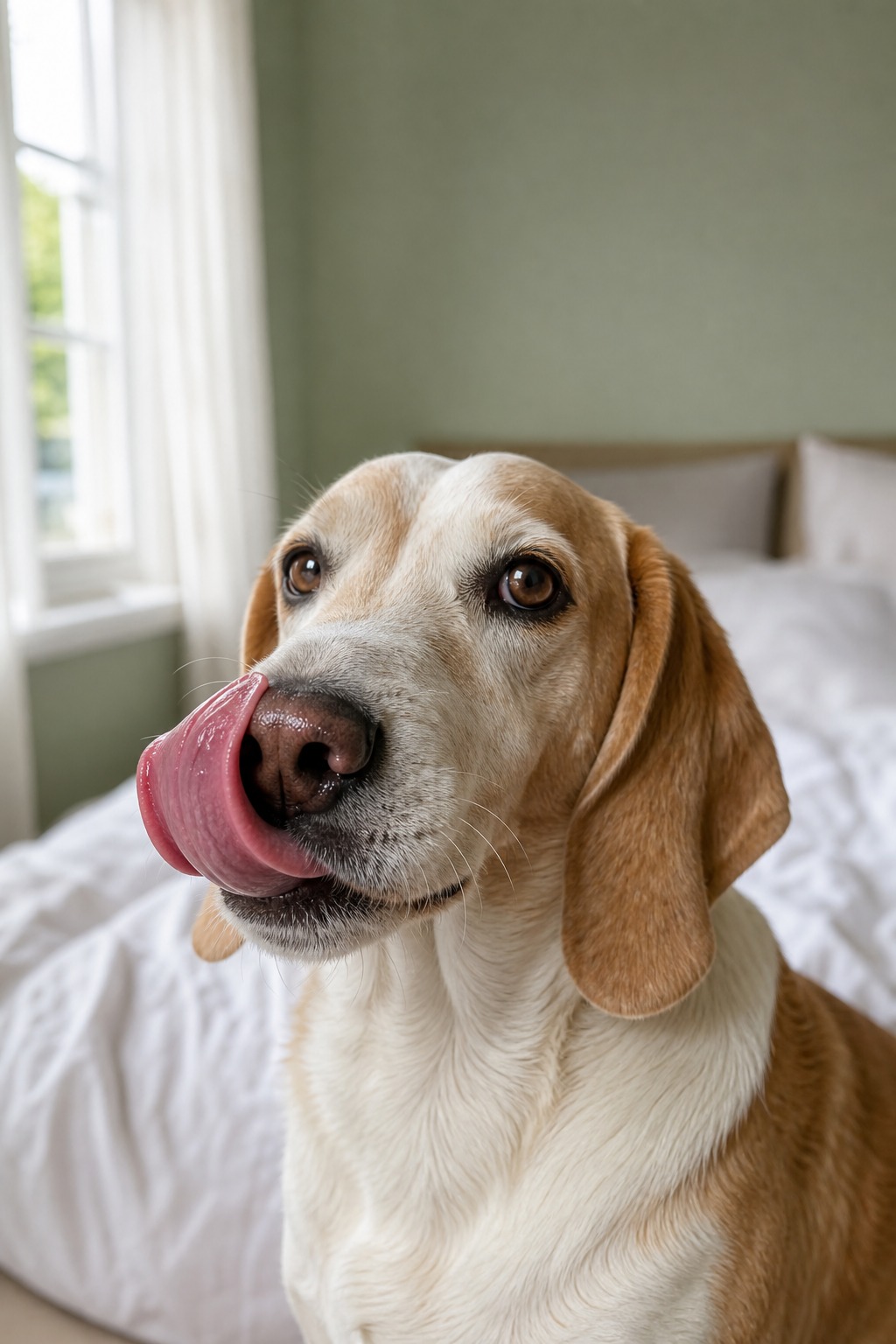
If you’ve ever looked at your dog and felt the urge to reach for a tissue the way you would for a sniffly toddler, you’re in good company. The good news is that a little drip usually deserves a shrug, not a panic. The trick to knowing which is which isn’t the fact that the nose is running. It’s what is running out of it, how long it’s been going, and whether your dog seems otherwise fine. Learn to read those three things and you’ll almost always know whether you’re dealing with a nuisance or a reason to call your vet.
A typical runny nose in a dog is thin, clear, and comes with a dog who’s still eating, playing, and acting like themselves. Discharge that’s thick, colored, bloody, coming from only one nostril, or paired with other symptoms like coughing or lethargy is the version that earns a professional look. Everything below is really about telling those two stories apart.
What a runny nose actually looks like
The symptoms are rarely subtle. Your dog will have fluid at the nose, and most are downright generous about smearing it across your sleeve, the couch, and the nearest wall. Beyond the obvious dampness, a runny nose can travel with a few companions:
- More frequent nose licking
- Sneezing
- Reverse sneezing
- Increased swallowing
- Congestion or wheezing
- Coughing
- Gagging
With a mild case, those extras stay occasional and low-key. A dog who is constantly gagging or coughing in a way that won’t quit is telling you this is probably more than a simple drip, and it’s worth getting checked.
What causes it
The nose does more than sniff. Along with being your dog’s primary tool for reading the world, it warms and humidifies air on the way to the lungs, and it’s lined with cells that make mucus to trap dust, bacteria, and other airborne debris. Anything that irritates that lining or sets off an infection can turn the drip on. The common culprits break down like this.
Allergies
Because dogs investigate everything nose-first, they inhale pollen, dust, dirt, and cells shed by other living things. The body flags those particles as intruders and ramps up secretions to flush them. Sometimes that response is disproportionate, producing outsized inflammation and far more discharge than the trigger warrants.
Viral infections
Dogs catch contagious bugs from other dogs, sometimes from ones showing no symptoms at all. The catch-all name for these infections, canine infectious respiratory disease complex (CIRD), spans many different viruses and often mimics a human cold. Most dogs who pick up a viral upper-respiratory bug get only mild symptoms and are back to normal in about seven to 10 days.
Bacterial infections
Certain bacteria, such as Bordetella bronchiseptica, fall under that same CIRD umbrella. They can act alone or pile on top of a viral infection. Again, many dogs clear these themselves, but some develop worsening symptoms that need treatment.
Fungal infections
The usual fungal offender behind a runny nose is aspergillosis. Aspergillus spores live in soil, and dogs encounter them constantly, but occasionally the immune system fails to shut one down, more often in immunocompromised dogs and long-nosed breeds. Once established, a nasal fungal infection can be stubborn and hard to treat.
Foreign objects
Sniffing along the ground, dogs sometimes inhale small objects, a splinter of wood, a fleck of plastic, a blade of grass, straight into a nasal passage. Material can also get lodged there during a bout of vomiting. The body responds with intense inflammation and, often, a secondary infection. A classic tell is sudden, violent sneezing or pawing at one side of the face.
Dental problems
The roots of a dog’s upper teeth sit right below the nasal passages, so a tooth-root infection can inflame the nose enough to cause swelling and discharge. In advanced cases, infection erodes the bone around the root and breaks into the nasal cavity, a painful connection called an oronasal fistula.
Tumors
Dogs can grow tumors anywhere in the nasal cavity. These tend to cause chronic discharge that may be bloody, and they often enlarge gradually, blocking one or both nasal passages and obstructing airflow over time.
When a runny nose means “call the vet”
If the drip clears up in a few days and your dog is otherwise their normal self, you generally don’t need to involve your veterinarian. What you’re watching for is discharge that changes character, lingers, or comes with your dog feeling off. Get in touch with your vet if you notice any of these:
- Mild discharge that drags on past 10 days
- Bloody discharge
- Discharge heavy enough to interfere with breathing
- Loss of appetite
- Fever
- Swelling of the nose or face
- Signs of pain
- Lethargy
A dog with a mild allergy sniffle or a light cold should still seem fundamentally fine, bright, active, and eating. When a runny nose is the tip of something bigger, it’s usually because one of those red flags is riding along with it. And if something just feels wrong to you even without a textbook symptom, that instinct is worth a phone call.
The single most useful thing an owner can tell me over the phone is the color and the count. Clear and both nostrils points me one way. Thick, bloody, or stubbornly one-sided points me somewhere else entirely, and that’s the case I want to see sooner rather than later.
How a runny nose gets treated
Treatment tracks the cause and the severity. Plenty of dogs shake off a routine viral or bacterial bug on their own, no medication needed. The more serious causes can call for a bigger toolkit:
- Medications. Allergy drugs, antibiotics, or antifungals, matched to whether the problem is allergic, bacterial, or fungal.
- Skull radiographs or a CT scan. Imaging to look for bone involvement from cancer or a severe infection.
- Rhinoscopy. Often paired with a CT scan, this uses a small video scope, with the dog under anesthesia, to see deep inside the nose. It can retrieve foreign objects, hunt for tumors, and take biopsies.
- Surgery. Reserved for severe dental infections, tumors, or persistent fungal disease. Fungal infections can be so entrenched that the only fix is to open the sinuses, flush everything out, and pack antifungal medication directly against the tissue.
If that list sounds alarming, keep perspective: while some dogs do need serious care, most snotty pups resolve without any of it. Your vet’s job is to figure out which camp your dog is in and build a plan to match.
What you can safely do at home
At-home options are limited, but they help. Wiping the muzzle and gently clearing away any crust makes your dog more comfortable right away. For stubborn dried-on bits, hold a warm, damp washcloth against the nostrils for a minute or two to soften them before wiping. If your dog is congested, sit with them in a closed bathroom while a hot shower runs, and let the steam build and loosen things up.
One firm rule: do not share your own cold medicine. Human runny-nose and allergy products are not formulated for dogs, and some are outright dangerous, even fatal. Never hand your dog anything from your own cold-and-allergy cabinet unless a veterinarian has told you the exact product and dose.
Can you prevent it?
You can’t stop a dog from sniffing the world, so prevention is really about avoiding the infections that cause the worst runny noses. That starts with staying current on vaccines, since several of the core canine vaccines target the very respiratory viruses that produce nasal discharge and worse.
It also means being aware of your dog’s company. Keep them away from dogs who are sick or recovering, steer clear of crowded boarding kennels, and skip daycare during a known outbreak. Take extra care with puppies who aren’t fully vaccinated, because their immature immune systems tend to hit harder than an adult dog’s. And when your own dog is sick, isolate them, both to help them rest and to avoid being the reason a bug rips through the neighborhood dog crowd. With most of these infections, keeping a recovering dog apart from others for roughly two weeks after symptoms clear is a sensible standard.
What’s new since this was written
Since the mid-2020s, a wave of what got nicknamed “atypical” or “mystery” canine respiratory illness pushed veterinary groups to sharpen their guidance on coughing, congestion, and nasal discharge. The reassuring bottom line that emerged is that most cases still fit within the familiar CIRD picture and resolve on their own, and there was no confirmed single new super-bug behind the scare. The practical update for owners is about vaccines and vigilance: staying current on Bordetella and canine influenza protection, and treating a dog who is coughing plus off their food as a same-week vet visit rather than a wait-and-see, are the moves veterinarians emphasize now. If your region is in the middle of an outbreak, it’s a good time to skip high-density dog settings until it passes.
None of that changes the core message. A mild, clear, short-lived runny nose in an otherwise happy dog is rarely a big deal. Just keep an eye on the color, the duration, and how your dog is feeling overall, and let those three things tell you when it’s time to call.
References
- Aetiology and Diagnosis of Persistent Nasal Disease in the Dog: a Retrospective Study of 42 Cases — Journal of Small Animal Practice
- Computed Tomography as an Aid in the Diagnosis of Chronic Nasal Disease in Dogs — Journal of Small Animal Practice
- Kennel Cough / Infectious Respiratory Disease in Dogs — MSD Veterinary Manual
- Canine Respiratory Illness (CIRDC) guidance — American Veterinary Medical Association
Common questions
Is a runny nose in dogs always a sign of illness?
No. A mild, clear runny nose can be completely normal. As dogs sniff and breathe, they take in dust and particles, and a little discharge is simply the nose flushing that material out. It doesn't automatically mean infection.
Are some breeds more prone to a runny nose?
Yes. Flat-faced (brachycephalic) breeds tend to have more nasal discharge because their nasal passages are shorter, narrower, and more crowded, which makes drainage and airflow less efficient.
Not a substitute for your vet. Our guidance is educational. For urgent symptoms, contact a vet or emergency clinic right away. Editorial standards
Dr. Mehta is a board-certified veterinary nutritionist who evaluates pet food formulations, ingredient quality, and the science behind dietary trends. He writes and reviews all nutrition content at The Pet Times, including our food rankings and feeding guides.
Meet our experts ↗Keep reading
 Health & WellnessEvery Dalmatian Carries a Broken Gene. Fixing It Meant Adding a Pointer.Dr. Ravi Mehta · 8 min
 Training8 Disgusting Things Your Dog Does. Only 3 Are Worth Worrying About.Dr. Ravi Mehta · 9 min
 Health & WellnessThere's an Actual Number for 'My Dog Drinks Too Much Water'Dr. Lena Park · 7 min
 Health & WellnessYou Cannot Tell a Lump Is Harmless by Touching ItDr. Mara Chen · 7 min
 Health & WellnessYou Found a Lump on Your Dog. Here's the One Thing You Can't Do About It.Dr. Nina Kohl · 8 min
 Health & WellnessThe Dog Cancer Vaccine Trial Finished. Here's What It Actually Showed.Dr. Amara Solis · 5 min