


The Growl Is the Good Part. Don't Punish It.
Resource guarding looks like aggression and gets treated like disobedience. Both reactions make it worse. Here's what your dog is actually saying, and what to do instead.

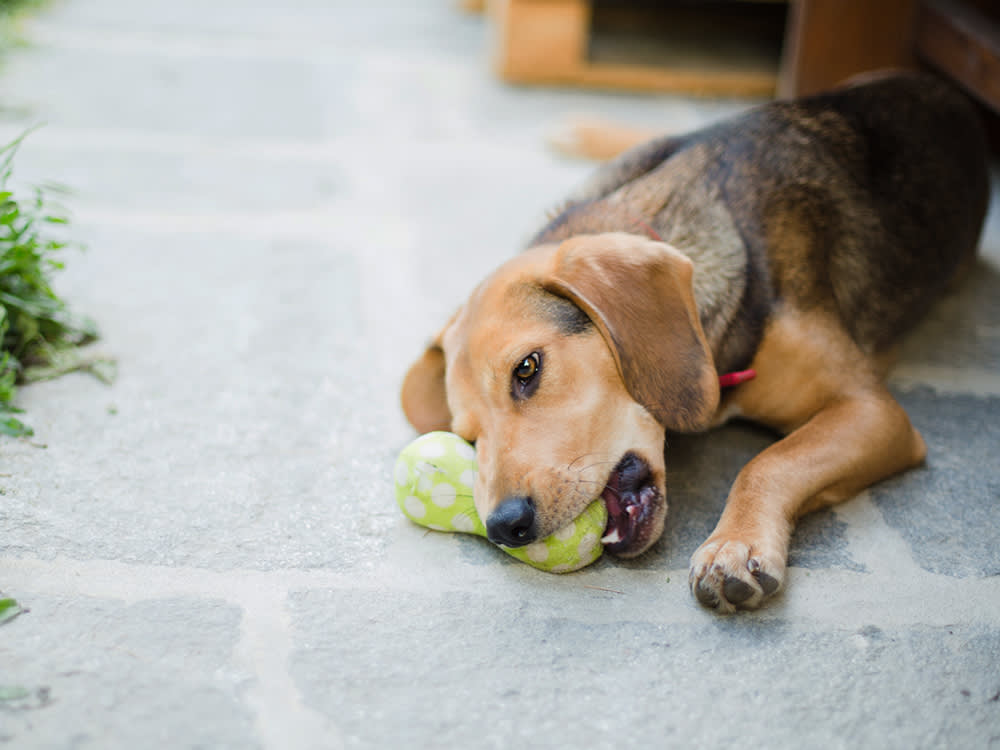
Here is the moment that decides everything, and most people get it exactly backwards. Your dog is chewing something they love. You walk closer. They freeze, lower their head over the object, and let out a low growl. Your instinct says: correct that. Show them who is in charge. Take the thing away.
Do that, and you have just taught your dog that the growl did not work. Next time they may skip it and go straight to the snap.
The growl is not the problem. The growl is your dog telling you, in the clearest language they have, that they are uncomfortable and would like you to not do the thing you are about to do. That is a gift. A dog who warns is a dog you can read. The goal of everything below is to keep that line of communication open while you change how your dog feels, because a dog who has been punished into silence is far more dangerous than one who grumbles over a bully stick.
What guarding actually is (and why it is not aggression)
Resource guarding is any behavior a dog uses to hang on to something they value: food, a chew, a toy, a stolen sock, a spot on the couch, sometimes even a person. It runs along a spectrum. On the mild end it is a dog turning their body to shield a treat, eating faster when you approach, or carrying the prize into another room. On the serious end it is a stiff body, a hard stare, a raised lip, a snap, or a bite.
The word people reach for is “aggressive,” and it is the wrong word. True aggression tends to be unpredictable and untethered to any obvious cause. Guarding is the opposite: it is predictable and specific. You usually know exactly which items and which situations set it off, and there is a fairly reliable sequence of warnings before things escalate.
When people call me about an ‘aggressive’ dog, the first thing I ask is whether they can predict when it happens. If the answer is ‘only around the food bowl’ or ‘only with the pig ear,’ that is not a temperament problem. That is a dog protecting something, and protecting things is a solvable problem.
That distinction matters because the two require completely different plans. Guarding responds beautifully to the right approach. It gets worse under the wrong one.
The part almost everyone gets wrong
There is a stubborn piece of folklore that says you should regularly stick your hand in your dog’s bowl, or pick the bowl up mid-meal, so the dog “learns to accept it.” It sounds reasonable. It does the opposite of what you want.
Think about it from the dog’s side. Their food, the most valuable thing in their day, keeps getting interfered with by the very hands that deliver it. You are not proving the hands are safe. You are proving the hands are a threat. Some of the most serious guarders are dogs who were taught to be that way by well-meaning owners following this advice.
The same logic applies to grabbing things out of your dog’s mouth. Every time you snatch a prize, you confirm their fear: things get taken, so I had better defend them harder. You are not winning the standoff. You are funding the next one.
So the first rule is subtraction. Stop reaching into the bowl. Stop hovering. Stop confiscating. You are not giving in; you are removing the daily lessons that built the habit.
Why your dog does this
Guarding is normal dog behavior, not a betrayal of your bond, and it comes from a few overlapping places. Some of it is genetic; certain dogs are simply wired to hold on to what is theirs. Some of it is learned history: a dog who repeatedly lost valued items, whether to another dog or to a person, has essentially been trained that guarding is the only thing that works. Household changes can trigger it, especially the arrival of a second dog who takes, takes, takes. And scarcity leaves a mark. A dog who once went without food, or who competed for a single toy, may keep guarding long after the bowls are always full, because the worry outlasts the shortage.
None of these is about dominance. Your dog is not staging a coup. They are saying: I am not certain this will still be here if I let my guard down.
What owners miss
Here is a finding that should make all of us more humble. When researchers surveyed dog owners and compared their reports against video of the same dogs, they found that owners frequently failed to recognize their own dog’s guarding, especially the quiet forms. A body that goes still, a meal that speeds up, a subtle freeze as you pass, those early signals sail right past most of us until the behavior has grown loud enough to frighten someone.
That is worth sitting with. If the mild signs are the ones we miss, and punishing the loud signs teaches dogs to hide them, we can accidentally engineer a dog who looks “fine” right up until they are not. Learning to spot the small stuff, and treating it as useful information rather than defiance, is half the battle.
What actually works
The real fix is not dominance and it is not desensitizing your dog to being pestered. It is changing the underlying feeling, so your approach predicts good things instead of loss. Trainers call it counterconditioning and desensitization; you can just think of it as flipping the meaning of your footsteps.
Start with management while you work. Feed your dog somewhere they will not be crowded, behind a closed door or a baby gate if needed. Put high-value chews away except during training. Let them keep, in peace, the things they are inclined to guard. Removing the daily rehearsals is not a workaround; it is part of the treatment.
Then change the association, slowly and from a distance. Stand outside the range where your dog reacts and toss a genuinely great treat toward them, something far better than what they already have. The message you are building is simple: a person coming near my stuff makes even better stuff appear. Only when your dog looks relaxed and even hopeful at that distance do you move a step closer, and you never rush to the hardest version (reaching for or lifting the item) until many easier reps have gone smoothly.
Trade, do not take. When you need something out of your dog’s mouth, offer something better and let them choose to drop the first thing for it. Pair it with a cheerful “drop it” cue over time, and you build a dog who happily spits out the contraband because letting go has always paid.
And reward the calm you want to see. When your dog has a chew and stays loose while you move around the room, that is the exact moment worth a quiet treat. You are telling them the behavior you like, instead of only reacting to the behavior you don’t.
People expect this to be a battle of wills, and it is the opposite. Every rep should feel boring and generous. If your dog is worried during the session, you are working too close or too fast. Back up, literally, and make it easy again.
How long it takes
There is no universal clock, but some rough guides help. Caught early, in a puppy or young dog, consistent work often turns things around in a matter of weeks. A moderately established habit in an adult usually takes a couple of months of steady practice, ideally with a trainer’s eyes on it. Serious guarding, especially anything that has escalated to biting, is a longer road that combines ongoing management with professional help and sometimes medication.
Some dogs are cured outright. Others keep the impulse but learn to manage it, the way a person can notice an urge and choose not to act on it. Both are wins. The point is safety and a household everyone can relax in, not perfection.
When to get help, and it is not a failure
Bring in a certified professional or a veterinary behaviorist if your dog has bitten or broken skin, if children live in or visit the home, if the guarding is generalizing to more and more objects, or if the escalation is fast and gives you little warning. None of that is a verdict on you or your dog. It is the same logic as calling a specialist for anything else that carries real risk: the smart move is the early one.
Plenty of families also decide, with a mild guarder, to simply live with it. If you know your dog does not want company while they eat their dinner, and you give them that space, you can have a perfectly happy life together. Guarding does not have to be eliminated to be safe. It has to be understood.
What newer research adds
The old picture of guarding as a stubborn dominance problem has not aged well. Recent survey work through large dog-behavior studies frames it instead as a common, largely emotional behavior that owners routinely under-detect, which is why early recognition now gets the emphasis it does. Researchers have also started separating the different jobs guarding does, distinguishing dogs who grab and flee from dogs who eat frantically from dogs who stand and defend, because those patterns may call for slightly different handling.
The throughline in the current thinking is the same one running through this article. Guarding is information. The behaviors that suppress the information, punishing the growl, forcing the interaction, taking things to prove a point, are the ones that make dogs less safe, not more. Change how your dog feels, protect their warnings, and you get a dog who trusts that good things happen when you walk over, which is the whole game.
References
- Jacobs, J. A., Coe, J. B., Pearl, D. L., Widowski, T. M., & Niel, L. (2018). Factors associated with canine resource guarding behaviour in the presence of dogs: A cross-sectional survey of dog owners. Preventive Veterinary Medicine.
- Jacobs, J. A., Coe, J. B., Widowski, T. M., Pearl, D. L., & Niel, L. (2017). Ability of owners to identify resource guarding behaviour in the domestic dog. Applied Animal Behaviour Science, 188, 77-83.
- American Veterinary Society of Animal Behavior. Position Statement on the Use of Dominance Theory in Behavior Modification of Animals.
- ASPCA. Food Guarding and Resource Guarding in Dogs.
Common questions
Is my dog being aggressive when they guard food or toys?
Not in the way most people mean. Resource guarding is a specific, predictable behavior tied to something the dog values. It has a clear trigger and usually a warning phase (freezing, a hard stare, a growl) before anything escalates. It is a communication problem, not a character flaw, and it is one of the more treatable behaviors when handled correctly.
Should I put my hand in my dog's bowl to show them it's okay?
No. This is the single most common piece of bad advice about guarding. Repeatedly reaching into a dog's food or hovering over their bowl teaches the dog that people are a threat to their meal, which is exactly the belief you are trying to undo. Toss a better treat toward the bowl from a comfortable distance instead.
When should I call a professional?
Get a certified behavior professional or veterinary behaviorist involved if your dog has ever bitten or broken skin, if there are children in the home, if the guarding is spreading to more and more items, or if the dog goes from calm to snapping with little warning. This is a safety decision, not an admission of failure.
Dr. Chen is a small-animal veterinarian who leads health and safety coverage at The Pet Times. She writes and reviews the bulk of our illness, condition, and safety content, translating clinical guidance into clear, practical advice owners can act on at home.
Meet our experts ↗Keep reading
 TrainingYour Dog's Joy Sends 86,000 People to the ER Every YearDr. Nina Kohl · 8 min
 TrainingYour Dog Isn't Trying to Be 'Alpha.' The Science Buried That Idea.Dr. Amara Solis · 7 min
 TrainingDogs Don't Forgive After a Fight. What They Do Is SmarterDr. Ravi Mehta · 5 min
 TrainingYour Dog Nibbles You Like Corn on the Cob. Two Experts Disagree About What to Do.Dr. Nina Kohl · 8 min
 TrainingYour Two Dogs Used to Be Best Friends. Here's Why That Cracked, and Why It Won't Just Pass.Dr. Mara Chen · 6 min
 TrainingThe Most Dangerous Dog Isn't a Breed. It's the One Nobody's Reading.Dr. Mara Chen · 7 min