


One Word, Two Jobs: Why 'Socializing' at the Dog Park Backfires for Puppies
'Socialize your dog' has quietly come to mean two opposite things. The dog park does one of them well and sabotages the other. Knowing which is which protects your dog for life.

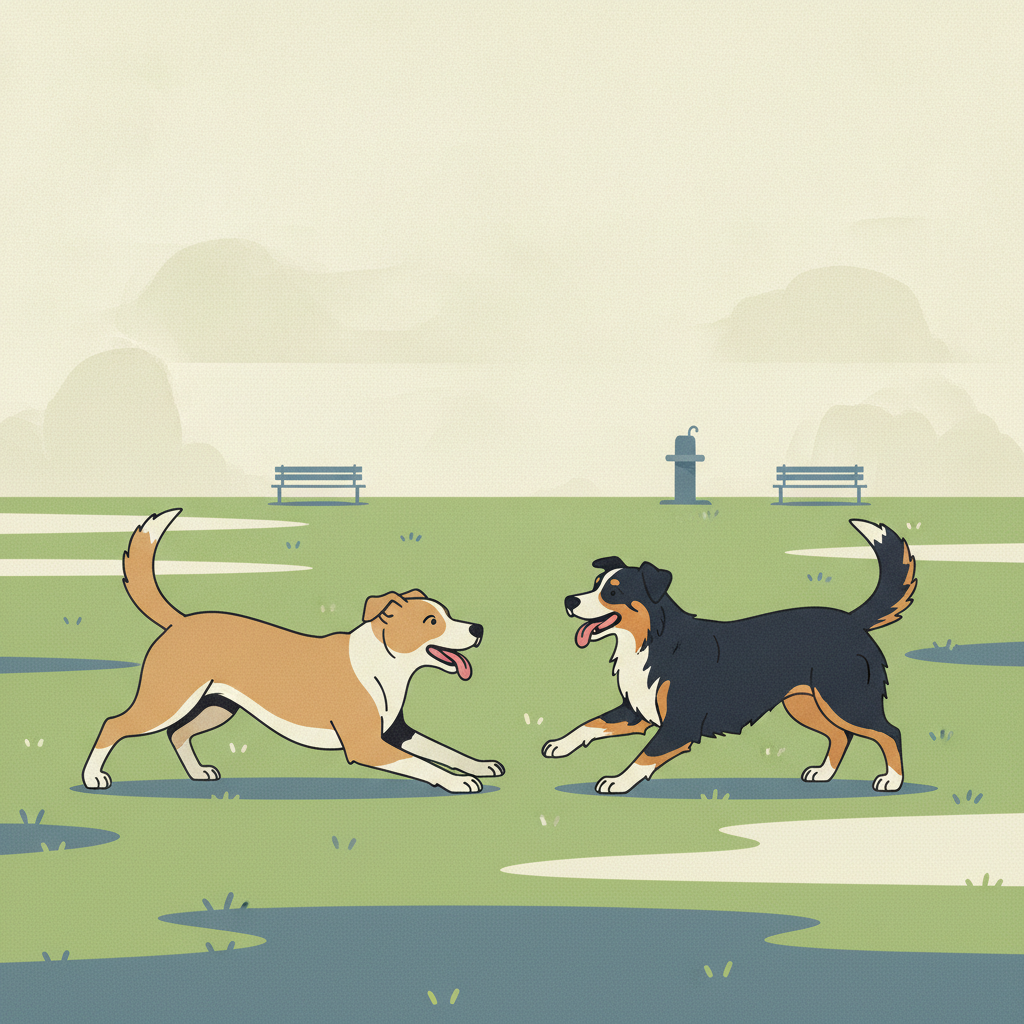
A reader recently wrote in mid-argument with her husband: he wants to take their two-year-old to the dog park “for socialization,” she’s read that you can only socialize puppies, and they want to know who’s right. The honest answer is that they’re both right, because they are using one word for two completely different jobs. Almost every dog-park debate is really this confusion in disguise.
“Socialize” has split into two meanings that point in nearly opposite directions. One is a narrow developmental process with a hard deadline. The other is just having a social life. The dog park is excellent for the second and genuinely harmful for the first. Sorting out which one you mean tells you exactly what to do.
Meaning one: socialization, the developmental window
In behavior science, socialization is specific. It means deliberately exposing a puppy to the world, new people, dogs, surfaces, sounds, vehicles, during a sensitive period that runs roughly from three to about 14 weeks of age. In that window, a puppy’s brain is wired to file new experiences as “normal and safe” with very little effort. After it closes, the same lessons are slow and incomplete.
Think of it like learning a language in early childhood versus as an adult. A child soaks up a first language effortlessly and thoroughly. An adult can still learn one, but rarely with the same ease or fluency. Puppy socialization is that early-childhood window for the language of daily life: skateboards, doorbells, vacuum cleaners, men in hats, other dogs, the vet’s floor.
And this is not a soft, optional nicety. The American Veterinary Society of Animal Behavior is blunt about the stakes: behavioral problems, not infectious disease, are the number one cause of death for dogs under three years of age. Dogs are far more likely to be surrendered or euthanized for fear and aggression than to die of a virus they caught as a puppy. Getting socialization right during the window is, quite literally, one of the most protective things you can do for a dog.
The catch with the window is that quality beats quantity, decisively. The goal is lots of good experiences, not the maximum number of experiences. One frightening encounter during the sensitive period can do more lasting damage than a dozen pleasant ones can undo. Which is exactly the problem with the dog park.
Why the dog park is the wrong place to socialize a puppy
The dog park is the highest-variance environment you could pick for a developing puppy. You cannot control who else shows up, how those dogs play, whether their people are paying attention, or whether the next interaction will be gentle or overwhelming. It is far too easy for another dog to overdo it, sometimes aggressively, more often just from raw exuberance, and flatten a puppy who is still deciding whether other dogs are safe. That single bad experience, landing squarely in the sensitive period, can seed a lifetime of wariness.
There is a second reason, on the medical side. The AVSAB and most veterinary behaviorists specifically advise keeping under-vaccinated puppies out of high-traffic, unsanitized dog areas like public dog parks, where disease status is unknown. The right venues for puppy socialization are controlled: well-run puppy classes that require proof of vaccination, and small, hand-picked playdates with known, gentle, appropriately-playing adult dogs.
So for the puppy, the answer is clear: not the dog park.
Meaning two: a social life, which adult dogs can have
Now the husband’s actual goal. He doesn’t want to rewire a puppy’s brain; he wants his two-year-old not to get “rusty” with other dogs. That is the second meaning of socialize, simply engaging in social interactions, and adult dogs can absolutely do it. A dog who enjoys other dogs and plays appropriately is a fine candidate for the dog park, with caveats.
This is where the wife’s “you can only socialize puppies” is technically true but beside the point. You can’t redo the developmental window, but you don’t need to. You’re maintaining and exercising an existing social skill, not building one from scratch.
A quick test before you go
The dog park works for an adult dog when two things line up: the dog is a good fit, and the park is a good park. Run both checks.
Is your dog a good candidate? Yes if they actively seek out other dogs, read play signals well, take and give appropriate breaks, and recover quickly from a tense moment. No, or not yet, if they freeze, bully, get bullied, guard toys, or come home wired and reactive. Not every dog enjoys the dog park, and that is completely normal. Some dogs are happiest with one or two familiar friends and a long walk.
Is the park a good one? Look for enough space that dogs can spread out and leave a crowd, ideally acres with room to walk, not a cramped pen where dogs feel cornered. Look for owners who actually watch and manage their dogs rather than scrolling on a bench. A big, well-supervised park with an easy exit is a different animal from a tiny, chaotic one.
The bottom line
There is no single answer to “is the dog park good for socializing my dog,” because socializing isn’t one thing. If you mean the developmental window for a puppy, the dog park is the wrong, even risky, tool, and the stakes are high enough to take seriously. If you mean giving a sociable adult dog a social life, the dog park can be great, as long as your dog enjoys it and the park is well-run. Decide which job you’re doing, and the right move stops being a debate.
References
- “Position Statement on Puppy Socialization.” American Veterinary Society of Animal Behavior, avsab.org/wp-content/uploads/2018/03/Puppy_Socialization_Position_Statement_Download_-_10-3-14.pdf.
- “Puppy Socialization: Stop Fear Before It Starts.” American Veterinary Society of Animal Behavior / dvm360, www.dvm360.com/view/avsab-position-puppy-socialization-should-start-vaccinations.
- “The Importance of Socialization in Puppy Raising.” Penn State Extension, extension.psu.edu/importance-of-socialization-in-puppy-raising-series-part-1.
Common questions
Can you socialize an adult dog?
Not in the technical sense. True socialization happens during a developmental window that closes around 14 weeks. But adult dogs can absolutely build and maintain a social life, learning to enjoy and get along with other dogs, which is what most people actually mean.
Should I take my puppy to the dog park to socialize them?
No. The dog park is the wrong tool for puppy socialization. It is unpredictable, mixes unknown dogs and vaccination statuses, and one overwhelming encounter during the sensitive period can set up lifelong fear. Use structured puppy classes and small, curated playdates instead.
Is the dog park good for my adult dog?
It can be, if your dog genuinely enjoys other dogs and plays appropriately, and if the park is well-run with enough space. It is optional, not mandatory. Plenty of well-adjusted dogs are happier skipping it.
Claire Sutton writes about life with pets, from the first days home to the small daily routines that make a household work. Her reporting spans people-and-pet relationships, training basics, and the practical side of bringing a new animal into the family.
Meet our experts ↗Keep reading
 TrainingEveryone in Your Life Is Quietly Undoing Your Dog's TrainingDr. Nina Kohl · 8 min
 TrainingThere Are 6 Dog-Parenting Styles. The Research Only Likes One.Dr. Mara Chen · 7 min
 TrainingYour Dog Has a Perfect Recall. It's Just Not to the Word 'Come.'Dr. Lena Park · 7 min
 TrainingYour Dog Doesn't Need a Longer Walk. It Needs These 6 Running Games.Dr. Amara Solis · 6 min
 TrainingYour Dog Ignores Its Name. Maybe It's Time to Let Them Pick a New One.Dr. Mara Chen · 5 min
 FoodYour Dog Has a Favorite Food. You're Probably Paying Them in Their Fourth.Dr. Mara Chen · 7 min