


Yes, Dogs Have Panic Attacks. Comforting Them Isn't the Whole Fix.
A panicking dog is drowning in stress hormones, and soothing the moment is only step one. The real goal is teaching your dog to recover faster, and that changes how you handle the shaking, the pacing, and the 3 a.m. episodes.

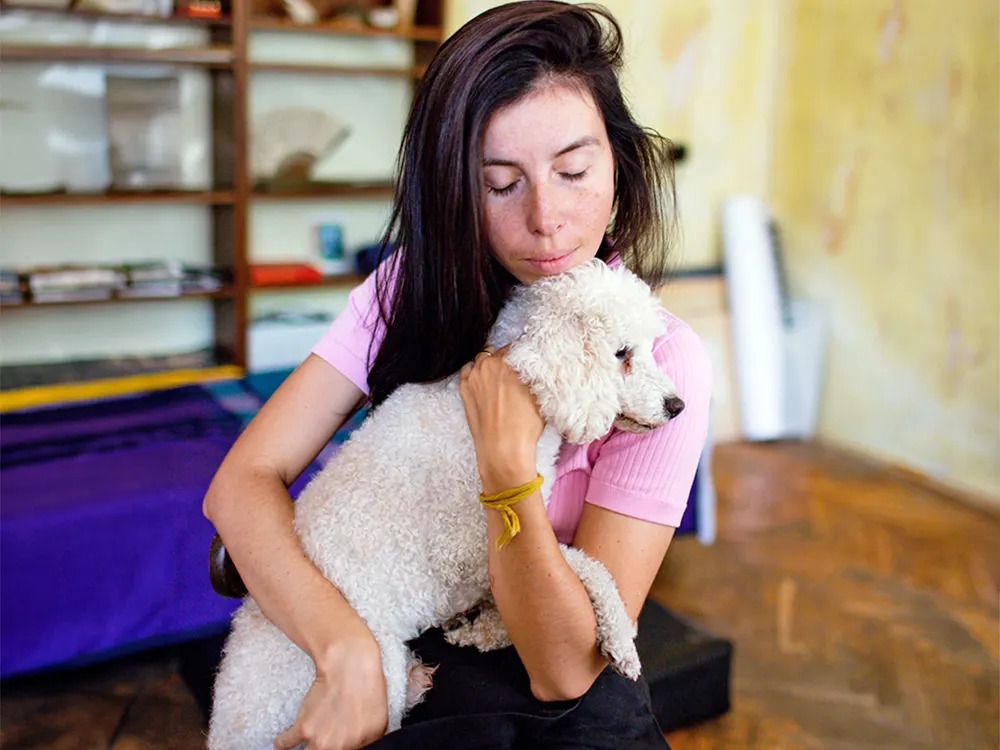
There’s a particular kind of helplessness in watching your dog fall apart in front of you. The shaking, the frantic panting, the wide eyes fixed on you like you’re supposed to have an answer. Your instinct is to fix it right now, to hold them until it passes. That instinct is good. It’s also incomplete.
Here’s the idea worth carrying through this whole piece: soothing a panic attack in the moment is step one, not the plan. A dog mid-panic is flooded with stress hormones and can barely process the world, so calming the episode matters. But the goal that actually changes your dog’s life isn’t a quieter tonight. It’s a faster recovery next time, and the time after that, until an episode that used to wreck a whole evening becomes a few minutes your dog can move through on its own. Everything below is organized around that shift, from what a panic attack is, to why it happens, to how you build resilience instead of just riding out the storm.
What a panic attack actually is
A dog in the grip of a panic attack is dealing with a toxic level of stress, a body-wide alarm going off with nothing to fight or flee. In that state, a dog struggles to take in information, to read familiar sights, smells, and sounds, or even to respond to cues it knows cold, including its own name. That’s not disobedience. That’s a nervous system underwater.
The physical signs are unmistakable once you know them. During an episode a dog may be drooling, shaking, pacing or running around restlessly, panting hard, whining or howling, hiding or trying to bolt from the room, clinging to you when clinginess isn’t its usual style, or losing control and peeing or having diarrhea indoors. And the duration is maddeningly unpredictable, some episodes burn out in minutes, others drag on for what feels like forever. In most cases the dog is not actually in danger. It simply, completely, believes it is.
Why it happens
Panic attacks, like the human version, sometimes have an obvious trigger and sometimes seem to come from nowhere. A dog that already carries a lot of baseline anxiety, say, a rescue with a rough or unknown history, tends to be more prone to them and often has fewer built-in coping skills to bounce back. A generally relaxed dog is starting from a stronger position. But plenty of triggers can rattle any dog.
Noise leads the list, and it isn’t close. In a large study of more than 13,000 dogs, noise sensitivity turned out to be the most common anxiety trait of all, affecting nearly a third of the dogs. City life stacks the deck with sirens, construction, and street sweepers, but rural and suburban dogs get their share too, from the obvious triggers like fireworks and thunderstorms to the surprising ones, an appliance’s buzz, a phone’s ring. Some high-frequency household sounds can even be physically uncomfortable for dogs, so dialing down the noise is worth doing when sound is the culprit.
Separation is another heavy hitter. Anxiety around being left alone spiked for a lot of dogs when households shifted back to being empty during the workday, and separation is a especially sneaky driver of panic precisely because no one’s there to see it. The dog panics in an empty house, and the owner never witnesses the episode, only the aftermath.
Pain deserves more credit than it gets. A sudden, frightening pain the dog can’t understand, a cramp, an ache, can spin a dog’s anxiety up into a full attack. Past trauma matters too; something like PTSD is likely underdiagnosed in dogs, in part because we can’t ask a dog about its nightmares. And sometimes it’s simply a mystery, a scent we can’t detect, a bad dream, a nighttime stressor. There’s even emerging evidence of a link between gut health and anxiety in dogs, echoing the gut-brain connection well established in people.
Getting a real diagnosis first
Before anyone calls it a panic attack, the physical suspects need clearing. It’s important to rule out medical causes, epilepsy, high blood pressure, thyroid or adrenal problems, and in rare cases something like a brain tumor, before landing on anxiety as the answer. This is where you can genuinely help your vet: bring documentation. A short phone video of an episode lets a vet see exactly what’s happening instead of working from a secondhand description, and that can sharpen the diagnosis considerably.
The mistake I see is treating every episode as a one-off to get through, when what actually helps is building the dog’s capacity to come back down. We’re not chasing a dog that never gets scared. We’re raising the odds that when something scares them, they can settle in a few minutes instead of losing the whole night to it.
The two-track treatment: settle the body, then build the recovery
Once physical causes are ruled out, real treatment tends to run on two tracks at once, and understanding both is what turns “comforting my dog” into an actual plan.
Track one: medication that lowers the volume
For many dogs, medication does real work, especially when you know the trigger and can dose ahead of a predictable event so the attack lands softer and the dog recovers faster. Commonly used options include trazodone (a medication with sedative properties), clomipramine (sold as Clomicalm), fluoxetine (sold as Reconcile), Sileo (a gel made specifically for noise aversion), and various human medications used off-label under veterinary guidance. Some dogs take medication daily for more severe, ongoing anxiety; for others it’s a temporary bridge while behavior work does its job. This is a conversation for your vet, not a self-serve decision.
Track two: behavior modification that builds resilience
This is the track that delivers the thesis of this whole article. The point of behavior work isn’t to shield your dog from every scary thing forever, it’s to lower the intensity of the physical stress response, grow the dog’s ability to self-regulate, and boost how quickly it bounces back, with less and less help from you over time. A dog that used to lose a day, a week, even a month to an episode learns to take a few minutes to reset instead.
A big part of that is changing what a trigger means to the dog. The classic example: teaching a dog, through careful pairing, that the sound of fireworks predicts something good rather than something threatening, so the emotional response itself starts to shift. For dogs whose panic centers on being alone, the work often looks like rebuilding tolerance from almost nothing, starting with a person walking to the door and coming right back, again and again, until the dog can handle it without spiraling, then slowly extending the time. The through-line is teaching the dog that it’s safe, and that it doesn’t have to panic.
One firm caveat on the how: find a trainer or veterinary behaviorist who works through positive reinforcement, no yelling, no shock collars, and who holds a genuine credential. The wrong methods can make an anxious dog worse.
How to help in the moment, and between episodes
The in-the-moment part is real and worth doing well. It just isn’t the finish line.
Offer comfort. Put yourself in your dog’s paws, they’re as confused and frightened as you’d be mid-panic. Take a breath yourself, then offer steady support. Petting, sitting close, or gently brushing is fine, as long as touch isn’t a trigger for that particular dog.
Don’t punish. It gets you nowhere and it’s unkind. A panicking dog has no idea why you’d be upset, and dogs learn far more through positive reinforcement than through fear.
The between-episodes work is where resilience actually gets built:
Keep a routine. Predictability helps a dog feel in control, and control is the antidote to anxiety. A steady daily rhythm, paired with any prescribed medication, can dramatically cut how often panic strikes.
Get the exercise right. Some dogs are underexercised and wound tight; others are overstimulated and need less input, not more. A good trainer can tell you which camp your dog is in.
Offer a safe space. Many dogs relax in a crate or covered bed they can enter and leave freely, a den to retreat to. The key word is freely; a dog that feels trapped gets more anxious, not less.
Feed the brain. Mental stimulation has been shown to ease anxiety, so keep puzzles, chews, and enrichment toys in rotation.
Consider supplements, with your vet. Before or alongside medication, some owners try calming supplements, run any past your vet first. Common ingredients include L-theanine, melatonin, chamomile, valerian root, L-tryptophan, and CBD. Scent can help too: research points to lavender and chamomile having a soothing effect, so a lavender spray during tense moments is a low-risk thing to try.
When to get help
Call your vet after the very first panic attack you notice. These episodes don’t usually happen once and vanish, and the sooner you start working to reduce their frequency, the better. Set your expectations honestly, too: meaningful progress is measured in months, not days or weeks. And watch your dog’s body language closely, one of the most common mistakes owners make is underestimating how complex their dog’s inner life really is. Your dog reads you constantly. Learning to read them back is where the recovery starts.
Bottom line
Dogs absolutely have panic attacks, and comforting your dog through one is the right instinct. But comfort is step one, not the whole answer. Rule out medical causes with your vet, identify the triggers, and treat on two tracks, medication to turn down the intensity, and positive-reinforcement behavior work to build your dog’s ability to recover. The win isn’t a dog that never gets scared. It’s a dog that gets scared, and then comes back to you faster every time.
This is a topic that touches on real distress, both the dog’s and yours. If your dog’s anxiety feels overwhelming to manage, a veterinarian or a credentialed veterinary behaviorist can help you build a plan that works.
References
Common questions
What triggers a panic attack in a dog?
Common triggers include loud or sudden noises (the single most common canine anxiety trait), separation from their person, pain, and past trauma. Sometimes the trigger is a smell or sound we simply can't perceive, and occasionally no clear trigger is found at all.
Should I comfort my dog during a panic attack?
Yes, as long as touch isn't itself a trigger for that dog. Petting or sitting calmly with them is fine and helps. But comfort in the moment is only part of the plan. The longer-term work is building your dog's ability to recover on its own, usually with a vet's guidance and sometimes medication.
When should I call the vet?
Call after the first episode you notice. Panic attacks tend to recur, and a vet will want to rule out physical causes, epilepsy, blood pressure, thyroid or adrenal problems, before treating it as anxiety. Bringing a video of an episode genuinely helps.
Dr. Kohl is a board-certified veterinary dentist with a particular interest in preventive oral care. She reviews all dental health content at The Pet Times and contributes practical guides on home dental routines, professional cleaning, and oral disease prevention.
Meet our experts ↗Keep reading
 TrainingYes, Dogs Wake Up Grumpy. The Morning Growl Is Information, Not Attitude.Dr. Ravi Mehta · 6 min
 TrainingAggression Is Not Dominance. It's a Request for Distance That You Missed.Dr. Mara Chen · 11 min
 TrainingYour Dog Dreads the Vet. The Fix Starts Long Before You Get ThereDr. Lena Park · 6 min
 TrainingSome Dogs Hate Walks. Dragging Them Only Makes It Worse.Dr. Ravi Mehta · 8 min
 TrainingYour Dog's Panic at the Vet Isn't the Price of Care. It's a Fixable ProblemDr. Nina Kohl · 8 min
 LivingYour Dog Doesn't Hate Fall. It Hates Your Calendar.Dr. Mara Chen · 8 min