


Your Teenage Dog Didn't Forget Their Training. Science Explains What Happened
Adolescence is the riskiest stretch of a dog's life for the bond you share, and the stage most dogs are surrendered. Here is what a landmark study found, why your once-perfect puppy stopped listening, and how to get through it.

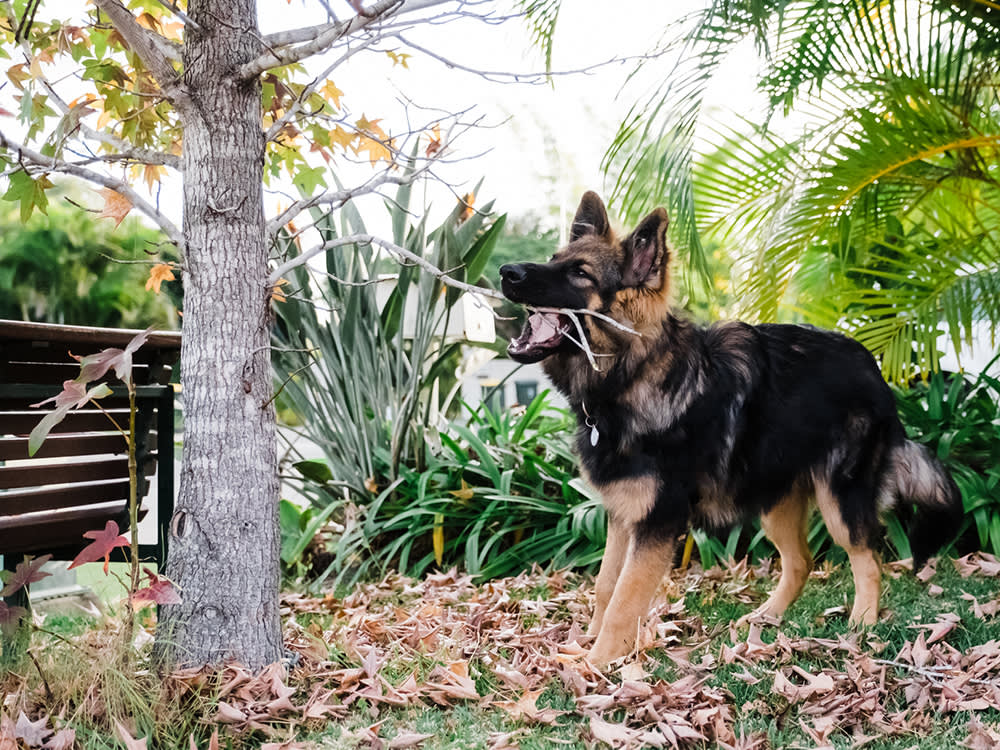
The most important fact about canine adolescence is not that it is annoying. It is that it is dangerous, in a specific and measurable way: this is the life stage when dogs are most likely to be surrendered to shelters. Not puppyhood, with its chewed shoes and 3 a.m. potty trips. Adolescence. The sweet, biddable puppy turns into a selectively deaf teenager who acts like they have never heard the word “come,” and somewhere in that frustration a lot of bonds quietly break. If you understand why it happens, you are far less likely to be one of those statistics, so let us start with the why.
What the research actually found
For years, “teenage dog” was an affectionate shorthand with no data behind it. Then scientists went looking, and what they found validated every exasperated owner.
A 2020 study published in the Royal Society’s Biology Letters tracked dozens of dogs being raised as future guide dogs and measured their trainability over time. The headline result: responsiveness to basic, already-learned commands dropped noticeably around eight months of age compared with the same dogs at five months. Your dog is not imagining it, and neither are you. There is a real, temporary dip in trainability that lands squarely in adolescence.
The study found something even more interesting underneath that. The dogs who showed the most “teenage” conflict behavior, the ignoring, the testing, were the ones with less secure attachments to their caregiver, and the effect was specific to that person rather than to strangers. The dog who blows you off in the backyard may still snap to attention for the trainer they barely know. And dogs that scored higher on anxiety and fearfulness tended to hit puberty earlier, around five months instead of eight. In other words, adolescence is not just hormones making a dog stubborn. It is a developmental renegotiation of the relationship itself, which is exactly why it feels so personal. It kind of is.
The good news buried in all of that: it is a phase. As the old line goes, snow and adolescence are the only problems that disappear if you ignore them long enough. Knowing it is temporary, and knowing it is not a referendum on your dog’s character or your training, is half the battle.
Where adolescence sits in a dog’s life
To see the phase clearly, it helps to place it on the map of a dog’s whole life.
For roughly the first six to eight months, a dog is a puppy. From around six to eight months until somewhere between 18 months and two years, they are an adolescent. From there until they are about 75 percent of the way through their expected lifespan (which varies a lot by size and breed), they are an adult. The final quarter of life is the senior, or “gray hair,” stage. Adolescence, then, is the bridge between puppy and adult, and it is the stretch most owners find hardest, harder even than puppyhood. That is saying something, given that puppyhood is the one with the potty messes and the sleep deprivation. The difference is that nobody is surprised by a chewed shoe, but almost everybody is blindsided by adolescence, because we rarely think of age as a force shaping behavior at all.
The four changes to brace for
Adolescence does not announce itself with a single symptom. It shows up as a cluster of predictable changes, and naming them in advance makes each one far less alarming.
1. Sudden independence. The shadow puppy who never wanted to be more than a foot from you starts wandering off, exploring further, and caring much less about keeping you in sight. It can feel like rejection, like the dog needs you less or loves you less. They do not. They are following their nose and flexing new confidence, and they need you exactly as much as ever. (You may need to read that twice. So might they.)
2. Selective deafness. This is the one the study measured. Cues your dog knew cold get slow responses, half responses, or a blank stare that suggests genuine unfamiliarity with both the word and the behavior. After months of a gleeful puppy galloping to “Come!”, the silence is demoralizing. Do not take it personally and do not conclude the training failed. It did not. The well-trained puppy almost always becomes the well-trained adult, even though the adolescent in the middle resembles neither.
3. A new wave of fear. Somewhere around their first birthday, a lot of dogs go through a passing stretch of heightened nervousness, a developmentally normal “fear period.” A confident dog may suddenly balk at people in hats or sunglasses, or flee a shrieking toddler, or hesitate at a park they used to love. Most dogs pass through it without lasting effects, the way kids outgrow the monster under the bed. You help by staying calm, never forcing an interaction, and pairing whatever spooks them with something wonderful like high-value treats or a favorite toy. That counter-conditioning keeps a passing wobble from hardening into a lasting fear.
4. Other dogs stop giving them a pass. This change happens between dogs, not between you and your dog, and it is one of the most useful to understand.
Why the older dog suddenly “turns on” the youngster
If you have an adult dog at home, you may witness a scene that looks like a betrayal and is actually an education.
Well-socialized adult dogs typically indulge puppies completely. They will let a baby dog climb on them, bite their ears, steal their toys, and interrupt their naps without complaint. This is the famous “puppy license,” and it is real. But once the puppy hits early adolescence, around five or six months, the adult dog revokes it. Suddenly the older dog growls when the youngster pounces on their head, swats them with a paw, or delivers a quick, highly inhibited nip over the muzzle. To an owner, especially one who filmed the sweet earlier version, this looks alarming. It is not. It is desirable. There is no better teacher of canine manners than a socially skilled adult dog setting clear, fair boundaries.
Humans do exactly this. When a baby grabs your earrings, you barely react. When a seven-year-old does it, they get a gentle word about appropriate behavior. Ideally that instruction is kind and fair, for young humans and young dogs alike. The crucial word is “gently.” A good adult dog guides the adolescent, never terrifies or hurts them. It is appropriate for an adult to warn with a growl or an inhibited nip; it is not appropriate to attack or genuinely frighten the youngster, and a young dog should be protected from excessive force however unexpected.
The flip side matters just as much: a young dog who spends all their time with an adult who never sets limits misses this education entirely. Those dogs never learn that other dogs expect manners, never practice inhibiting rude behavior, and can get a harsh correction (or worse) the first time they meet an adult dog who is not so permissive. A well-chosen adult dog offering firm, gentle boundaries is an asset, not a problem.
How to survive it without losing the bond
This is the part that protects you from the shelter statistic. Adolescence is a test of the relationship, and the research is clear that the dogs who come through it best are the ones whose people stayed steady. Here is what steady looks like.
Lower your expectations on purpose, temporarily. Your dog has a busy, distractible adolescent brain that is genuinely flooded by the world. They are not ignoring you to spite you; they often do not have the bandwidth to attend to you the way they did as a puppy, and the way they will again as an adult. Give them grace.
Keep training, but make it easier and more rewarding. Shorten sessions, raise the value of your rewards, reduce distractions, and go back a step rather than fighting for the version of a cue your dog “should” already know. Reps in easy conditions rebuild reliability faster than battles in hard ones. Keep a long line on a dog whose recall has temporarily evaporated, so “come” never gets the chance to fail, and manage the environment so your adolescent cannot rehearse the behaviors you do not want.
Protect the attachment. Since the study tied the worst teenage behavior to less secure bonds, the move is to invest in the relationship, not to crack down on it. Harsh, punitive responses to a testing adolescent tend to backfire, fraying exactly the bond that is doing the protective work. Patience here is not softness; it is strategy.
And hold onto the timeline. When your dog enters young adulthood, the cooperation comes back, and it comes back to an owner whose patience kept the relationship strong rather than to one who spent a year at war. Adolescence is only a phase. The love is not.
References
- Asher, L., England, G.C.W., Sommerville, R., and Harvey, N.D. “Teenage dogs? Evidence for adolescent-phase conflict behaviour and an association between attachment to humans and pubertal timing in the domestic dog.” Biology Letters, Royal Society (2020). Available via PMC.
- Wallis, L.J., et al. “Aging Effects on Discrimination Learning, Logical Reasoning and Memory in Pet Dogs.” (On age-linked behavioral change.)
- American Society for the Prevention of Cruelty to Animals. “Pet Statistics: Shelter Intake and Surrender.” ASPCA.
Sara Lim leads our Product Picks coverage, testing and comparing the things pets and their owners actually use. From everyday essentials to home-and-style finds, she focuses on honest, useful recommendations rather than hype.
Meet our experts ↗Keep reading
 First DaysBefore You Get a Second Dog, Let Your First Dog Cast the Deciding VoteClaire Sutton · 6 min
 First DaysThe 'Low-Maintenance Dog' Is a Myth. These 12 Breeds Just Forgive Beginners.Jordan Ellis · 9 min
 First DaysThe 20-Minute Task That Gets a Lost Dog HomeTom Hadley · 9 min
 Living12 Questions a Shelter Won't Volunteer, But Will AnswerDr. Priya Nair · 6 min
 First DaysThe Ride Home Is Your New Dog's First Lesson. Don't Blow It.Dr. Lena Park · 6 min
 First DaysThe Best Dog for a Senior Isn't a Breed, It's a Match. How to Find YoursDr. Amara Solis · 8 min