


The Ride Home Is Your New Dog's First Lesson. Don't Blow It.
The first car trip with a newly adopted dog is about two things at once: keeping them physically safe, and giving them a calm first impression of you. Here's every way people do it, ranked from safest to genuinely dangerous.

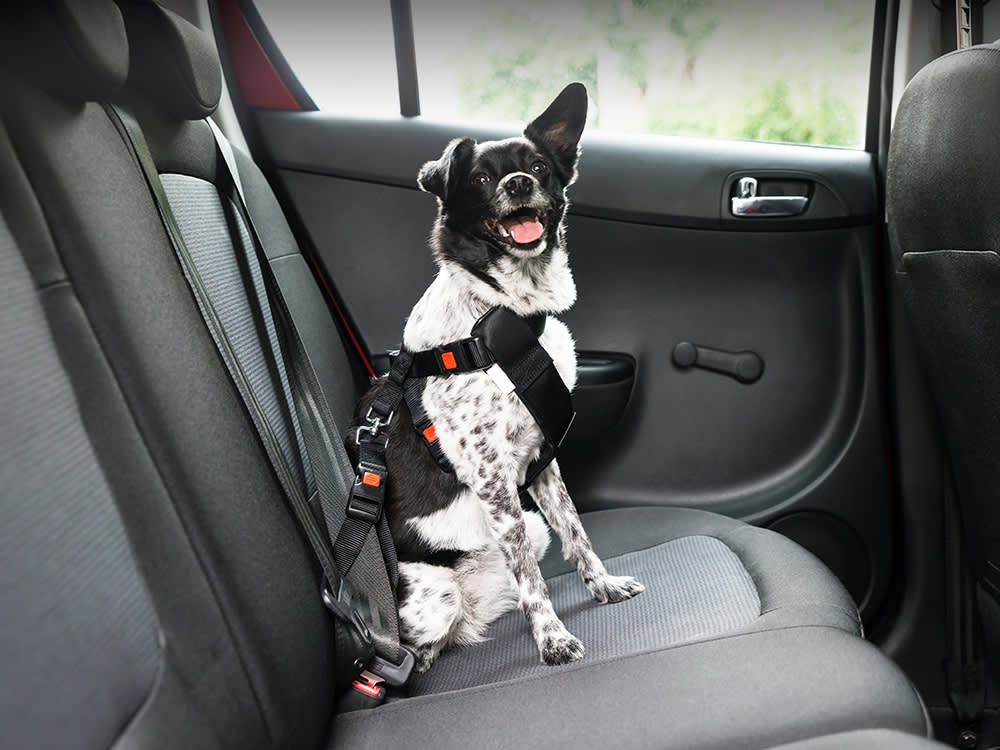
The drive home from the shelter or breeder feels like a small logistical detail, the boring part before the good part. It is not. For your newly adopted dog, that car ride is one of the very first things that ever happens between the two of you, and it is happening while they are already overwhelmed, unsure, and reading you for cues about whether you are safe. So the ride is doing double duty. You are trying to keep a dog physically protected in a moving vehicle, and you are quietly making a first impression that can set the tone for every trip after it.
The good news is that the safest choices are also usually the calmest ones. Below are the ways people actually transport a new dog home, laid out from the methods that protect your dog to the ones that put them at real risk, so you can start this relationship on the right paw.
The safest options
In a crate
A secured crate is one of the safest ways for a dog to travel, and it is hard to beat for a first trip. Beyond crash protection, it contains the mess a nervous new dog may produce, the vomit, drool, urine, or shed fur that stress can bring on, so it stays off your upholstery and off the dog. The one caveat: some dogs panic in a crate or find confinement so distressing that forcing it does more harm than good. If your dog is clearly terrified of the crate, do not make the ride home the battle where you insist on it.
Restrained with a crash-tested harness and seat belt
A proper dog seat-belt harness, or a short zipline tether attached to one, keeps your dog from becoming a projectile in a sudden stop or crash and stops them from roaming the car. It works for most dogs, including many who cannot handle a crate, and only a few really object to it. It also has an emotional bonus: a tethered dog can still snuggle up against a passenger, which is exactly the comfort a scared dog heading into the unknown often needs. This is my default recommendation for the ride home, provided you have a passenger to sit beside them.
Behind a dog guard
A barrier that seals off the cargo area or back seat is a solid long-term setup. It keeps the dog from roaming into the front and from flying into the windshield in a collision, and many dogs settle comfortably behind one. If you can bring a second person to sit with the dog, even better, but a guard is safe enough to use even if you are driving solo.
The risky middle ground
Held by a passenger
There is a real upside here: for a dog who likes contact, being held feels secure, and close physical touch can genuinely speed up bonding. But it comes with a serious limit. A person’s arms cannot keep a dog from becoming a projectile in a crash or hard stop, no matter how tightly they hold on. So while it is comforting, it is not truly safe, and it should never, ever be the driver doing the holding.
Loose on the seat
Many dogs are perfectly content riding on the seat, and most look relaxed doing it. The problem is what happens in an emergency: an unrestrained dog on the seat is at real risk in a short stop or collision, and can distract the driver besides. If a dog is going to ride loose despite the risks, the back seat is safer than the front.
On the floor
Down in the footwell, a dog is better off than up front and a touch better off than loose on the seat, but they are still unsecured, so the risk does not disappear. There is a useful tell here, though: a dog who chooses the floor is often seeking a smaller, more enclosed space where they feel secure, which is a strong hint that a crate would suit this particular dog well, now or down the road.
The one to never do
In the back of a pickup truck
This is the worst option, full stop, and the danger is highest for a brand-new dog who barely knows you yet. Almost anything can spook a frightened new dog into trying to leap or escape from an open truck bed. Shelter dogs usually come with little known history, so you have no way of knowing whether a truck bed feels familiar or utterly terrifying to them. Do not risk it. There is no version of this that is safe for a new dog.
Read your dog, not just the rules
Safety ranking aside, the ride home is also your first chance to learn your dog. A dog who melts into a passenger’s side wants closeness; a dog who wedges themselves onto the floor wants a den. Neither is wrong, and both are information you can use to make the next hundred car trips easier. Keep the car calm and quiet, skip the loud music and the drive-through celebration, and let this first trip be boring in the best way. Boring, from your new dog’s point of view, is exactly what safe feels like.
What newer research adds
The big shift in car safety is that “a harness” is no longer specific enough. Independent crash testing, most notably by the nonprofit Center for Pet Safety, has shown that many pet harnesses and carriers sold as “safety” gear fail in a real collision, while a smaller set of crash-tested, certified models hold up. If you are buying a restraint for the ride home and beyond, look specifically for a crash-tested harness or a rigid, anchored crate rather than assuming any product with straps will protect your dog. The ranking above still holds, secured beats loose, and loose beats a truck bed, but among secured options, certified gear is the upgrade worth paying for.
References
- Center for Pet Safety. “Crash Test Ratings and Certified Pet Travel Products.” Center for Pet Safety.
- American Veterinary Medical Association. “Traveling with your pet FAQ.” AVMA.
Dr. Park is a board-certified emergency and critical care specialist. She reviews our health and safety content for clinical accuracy and contributes guides on recognising urgent conditions. Her focus is helping owners act quickly and correctly when it matters most.
Meet our experts ↗Keep reading
 First DaysThe 3-3-3 Rule Is Two-Thirds Made UpDr. Mara Chen · 10 min
 First DaysThe 'Low-Maintenance Dog' Is a Myth. These 12 Breeds Just Forgive Beginners.Jordan Ellis · 9 min
 Living12 Questions a Shelter Won't Volunteer, But Will AnswerDr. Priya Nair · 6 min
 First DaysForget the Socialization Window. An Adult Shelter Dog Is the Safer BetClaire Sutton · 6 min
 First DaysYour Teenage Dog Didn't Forget Their Training. Science Explains What HappenedSara Lim · 8 min
 Health & WellnessThe '1 Dog Year = 7 Human Years' Rule Is Made Up. Here's the Real Math.Dr. Mara Chen · 9 min