


Forget the Socialization Window. An Adult Shelter Dog Is the Safer Bet
Nervous that a grown rescue dog missed some make-or-break early window? The opposite is true: with an adult, the temperament you can see is the temperament you get. Here is how to evaluate one at the shelter.

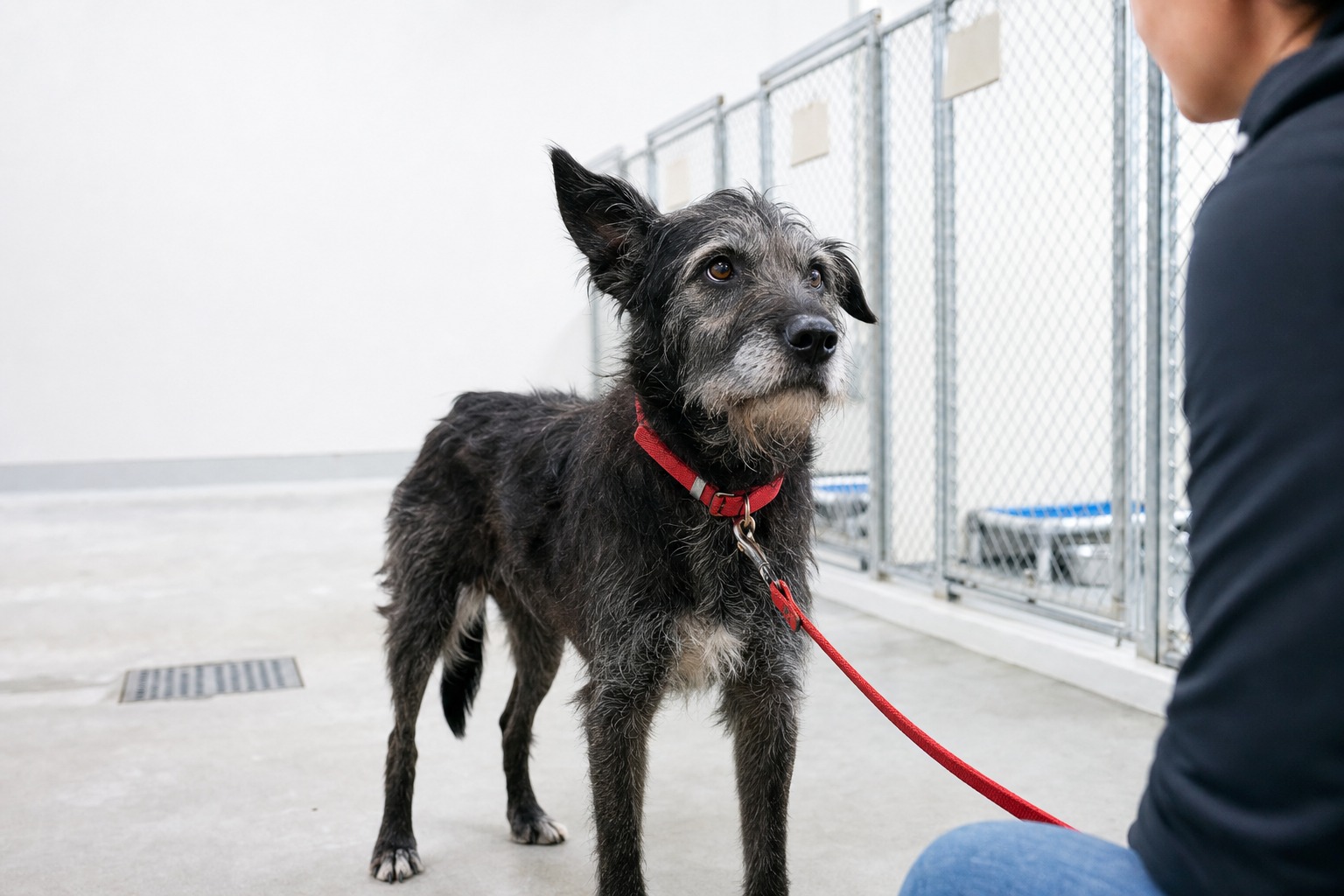
Reader question: We want to give an adult shelter dog a home instead of getting a puppy, but we are nervous about socialization. We keep hearing the first eight weeks of a dog’s life are make-or-break, and we will not know anything about a shelter dog’s early months. How can we be sure the dog we pick will turn into a good family pet?
First, a round of applause, because choosing an adult rescue is wonderful news for dogs everywhere. Now let me take the worry that is driving your question and turn it completely upside down, because it is pointed at the wrong target. You are anxious that an adult dog’s unknown past makes them a riskier choice than a puppy. In reality, the adult dog is the less risky choice, and the very thing you are nervous about, not knowing their early life, matters far less than the thing you can plainly see: who they already are.
The “make-or-break window” is real, but it is not the whole story
Let us deal with the eight-weeks myth head-on, because it is doing a lot of damage to good dogs.
It is true that a dog’s earliest months matter, and that a sensitive period for socialization in early puppyhood shapes how comfortably a dog meets the world. But “matters” is not “determines.” Genetics plays an enormous role in who a dog becomes, and personality is built by a constant back-and-forth between genes and experience that keeps unfolding for years. That long developmental runway is exactly what makes a puppy a gamble: there is so much living left to do before you know who they will be. With an adult dog, most of that living has already happened. What you see is largely what you get, and “what you get, visible and assessable, right now” beats “a hopeful guess about a blank slate” for most families looking for a reliable companion.
Here is the part that should put the myth to rest entirely: most dogs carry a genetic inheritance resilient enough to become wonderful companions even when their early life was far from ideal. Dogs are remarkably adaptable. A rough start is not a life sentence, and a perfect puppyhood is not a guarantee. The idea that only a dog raised in your home from eight weeks can become a good family dog is simply false.
What a family dog actually needs to know (it is a short list)
Owners often disqualify a lovely dog over skills the dog can easily learn. So separate the must-haves from the trainable.
The genuine non-negotiables are short. A family dog needs to be reliably house-trained, able to greet people without launching at them, and able to walk on a leash without dragging you down the block. That is close to the whole list, and the good news is that adult dogs are perfectly capable of learning all of it. Many arrive with a head start, already house-trained and already knowing the basics: sit, wait at the door, hop into a car, offer a paw. Older dogs absolutely learn new tricks. So do not write off a dog you adore because they have not mastered every skill yet. Skills are coachable. Temperament is the thing you are really shopping for, and in an adult, temperament is on display.
How to evaluate a dog at the shelter
This is the practical heart of your question, so here is a real checklist for a shelter visit, plus the flags to weigh.
Before you meet any dog, lean hard on the staff and foster assessments. These people have watched the dog eat, sleep, and react to other animals and strangers for days or weeks, which is information you cannot gather in a twenty-minute meet. For every dog you are considering, ask specifically: How are they with other dogs? With strangers? With kids, if you have them? With handling, like having their paws or ears touched? And then actually listen. If staff tell you a dog is shy, needs a home without other pets, or does best without young children, believe them. That is not a flaw to fix on the fly; it is a match question.
When you meet the dog, watch how they move through the encounter, but drop the fantasy of love at first sight. Many wonderful dogs are reserved with a stranger in a stressful shelter, and a dog who is clearly bonded to a staff member or foster and would rather stay with them than leave with you is showing you something great: that they form strong attachments. Those dogs very often bond fast and fully to their new family within days. Use this loose green/yellow/red framework as you watch:
- Green flags: loose, wiggly body language; willingness to take a treat from your hand; recovers quickly from a startle; re-approaches you on their own after a moment; soft eyes and an easy, open mouth.
- Yellow flags (worth a slow, honest conversation, not an automatic no): initial shyness that thaws with time; mild leash pulling; not yet house-trained; over-the-top, jumpy excitement. These are trainable or situational, but go in clear-eyed.
- Red flags (take seriously and get professional input before committing): stiffening, freezing, or growling when approached or touched; refusing food they would normally want; guarding food or toys hard; a staff note about a bite history that does not fit your household. None of these means the dog is bad, but they may mean the dog is not the right first family dog for you.
Buy yourself more information before you commit
If the shelter setting makes you nervous about judging a dog accurately, you have a powerful option: do not judge from the shelter at all.
Fostering is the single best way to reduce surprises. A foster trial lets you watch a dog be a dog in an actual home, your home or someone’s, where their real personality emerges in a way it simply cannot behind kennel bars. A shelter is nothing like a living room, so no dog, puppy or adult, shows you their full range there. Fostering buys you the time and the realistic setting to learn who a dog truly is and whether you fit, with a built-in exit if you do not. Many shelters offer foster-to-adopt programs precisely for hesitant adopters like you.
The honest bottom line
So here is the short answer to your question. A great relationship with a dog depends on far more than the age at which it begins, and an adult dog’s known, visible temperament is a feature, not a liability. The socialization window you are losing sleep over is real but oversold, and it is outweighed by the resilience built into dogs as a species and by everything an adult dog is already showing you about themselves. Shelters are full of lovely, formed, wonderful adult dogs. Lean on the staff, watch for the flags, foster if you can, and one of those grown-up dogs is almost certainly the family member you have been looking for.
References
- Serpell, J. and Duffy, D.L. “Aspects of Juvenile and Adolescent Environment Predict Aggression and Fear in 12-Month-Old Guide Dogs.” Frontiers in Veterinary Science (2016).
- American Veterinary Society of Animal Behavior. “Position Statement on Puppy Socialization.” AVSAB.
- ASPCA. “Adopting a Shelter Dog.” ASPCA.
Claire Sutton writes about life with pets, from the first days home to the small daily routines that make a household work. Her reporting spans people-and-pet relationships, training basics, and the practical side of bringing a new animal into the family.
Meet our experts ↗Keep reading
 First DaysIf Your Dog Needed Emergency Surgery Tomorrow, Could Your Sitter Say Yes?Claire Sutton · 7 min
 First DaysThe Best Dog for a Senior Isn't a Breed, It's a Match. How to Find YoursDr. Amara Solis · 8 min
 First DaysYour Teenage Dog Didn't Forget Their Training. Science Explains What HappenedSara Lim · 8 min
 First DaysThe 8 Questions That Make Your Dog's First Vet Visit CountDr. Lena Park · 6 min
 First DaysThe 20-Minute Task That Gets a Lost Dog HomeTom Hadley · 9 min
 Health & WellnessThe '1 Dog Year = 7 Human Years' Rule Is Made Up. Here's the Real Math.Dr. Mara Chen · 9 min