


A Giant Dog Shed on His Fries. The Internet Fight Missed the Real Rule.
A viral Reddit clash over a huge, no-service-dog in a fast-food restaurant became a referendum on 'dog people.' But the argument sailed right past what the ADA actually lets a business ask, and do.

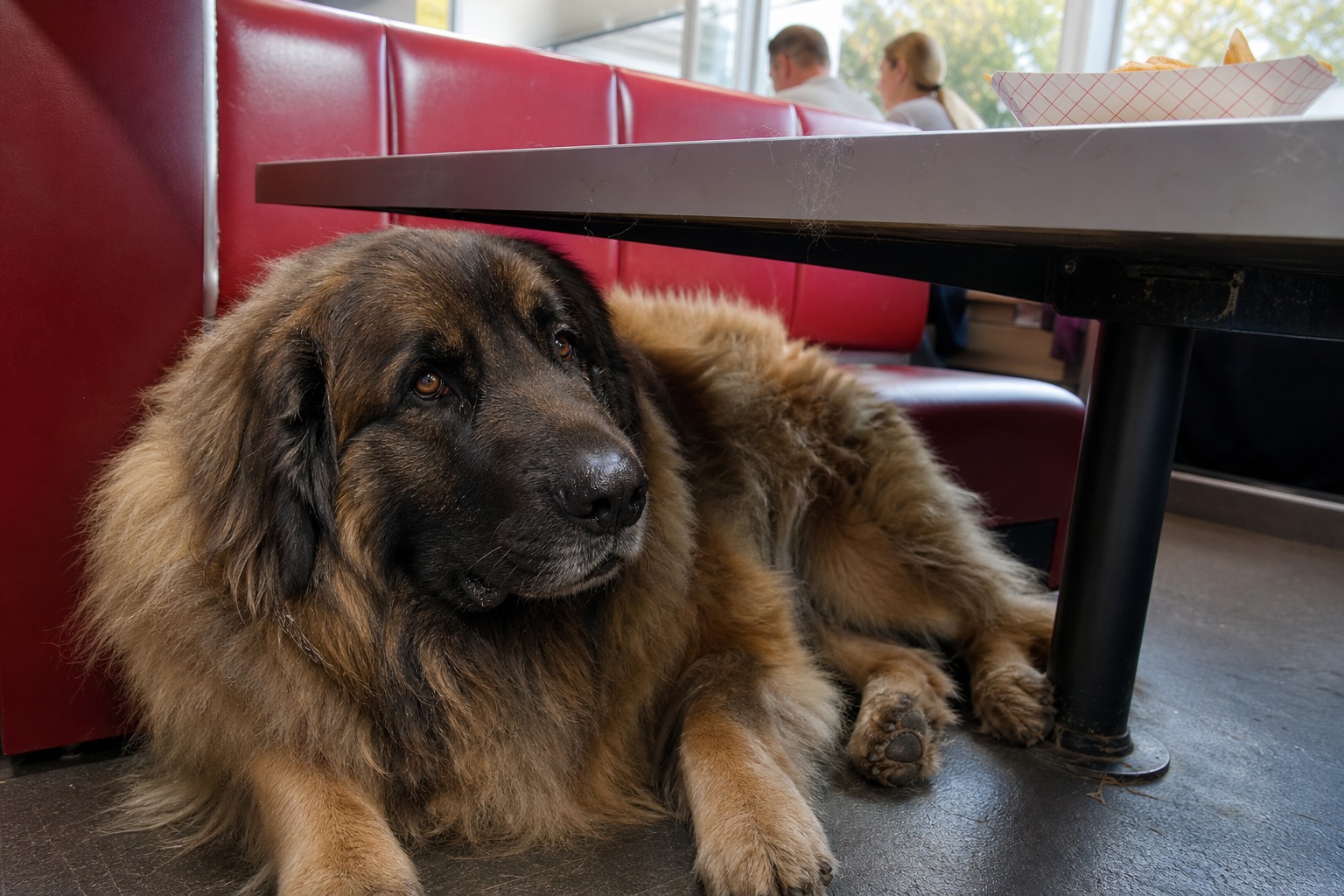
Here’s the answer the thousands of people arguing about it never quite landed on: a restaurant with a no-pets policy can ask a non-service dog to leave, and being an animal lover has nothing to do with it. That’s the whole legal core of a fight that swallowed a corner of the internet, and it’s worth knowing before the next one starts.
The blowup
A man posted to Reddit about walking back to his table at a fast-food spot to find a giant, long-haired dog, a Tibetan Mastiff type, parked nearby and its hair drifting onto his food, including, memorably, onto his fries. He asked the dog’s owner to move or step outside. She refused and told him he was free to move himself. After a few minutes of going nowhere, he flagged an employee, who asked the woman to leave. She left, he wrote, only after calling him every name she could reach for and accusing him of hating animals.
Unsure whether he’d been the jerk, he took it to r/AmItheAsshole, the forum built for exactly this kind of “was I wrong?” question. The crowd mostly sided with him. People with severe allergies and asthma thanked him; others made the broader point that you can adore dogs and still see loose animals in a food-service space as a real health issue.
What the law actually says
Strip away the vibes and this is straightforward. The dog wasn’t a service animal, and the venue banned pets outright, so staff had every right to show the pair the door. They did.
Where it gets genuinely tricky, and where a lot of well-meaning people get it wrong, is service dogs, because the rules there are narrow and often misunderstood. Under the Americans with Disabilities Act, if it isn’t obvious what a dog does, staff may ask only two questions: is the dog a service animal required because of a disability, and what work or task has it been trained to perform. That’s the entire allowed script. Businesses cannot demand a doctor’s note, ask about the person’s disability, require an ID card, vest, or certificate, or make the dog demonstrate its skills. There is no official national registry for service dogs, so any “registration” a business tries to require is a rule the ADA doesn’t recognize.
That balance exists for a reason. Plenty of people rely on service dogs for invisible disabilities, and they already face suspicion and interrogation trying to move through public space. The two-question limit protects them from having to prove or explain a medical condition to a stranger with a clipboard. So the same framework that let this restaurant remove one shedding pet also shields a legitimate service-dog handler from being grilled at the door.
The part everyone skipped
One detail cut against the poster: he’d left his own dog out in the car, engine running for the air conditioning, while he ate. Commenters flagged it, and they weren’t wrong. Leaving a dog in a parked car is risky even with the air conditioning on, since it can fail, and in a number of states it can be illegal outright. It’s a good reminder that “I love dogs” and “I made a safe choice for a dog” aren’t the same sentence, a tension the poster himself seemed to feel; he mentioned volunteering at two animal rescues and just not wanting fur on his lunch.
The takeaway that actually helps
The etiquette question underneath the legal one is simpler and more honest: does your dog actually want to be there?
“People assume bringing the dog along is a treat for the dog, and sometimes it just isn’t,” says Dr. Lena Park. “A loud, crowded room full of strangers and food smells is a lot of pressure for a lot of dogs. Before you take yours somewhere pets aren’t really expected, ask whether they’re relaxed or just tolerating it. A dog who’d rather be home on the couch isn’t being spoiled by staying there.”
If your dog isn’t a trained service animal, the safe and gracious move is to check a business’s policy first, keep them out of spaces where food is served unless they’re clearly welcome, and read your own dog for whether the outing is a gift or an ordeal. It’s less satisfying than winning an argument on the internet, but it keeps everyone, including the dog, out of the crossfire.
Marcus Webb writes about the gear, gadgets, and everyday choices that make life with a pet easier. His coverage runs from product picks to training and the causes worth paying attention to, always with an eye on what actually earns a place in your home.
Meet our experts ↗Keep reading
 LivingThe Kelces Lost Two Wolfhounds in Two Years. That's the Deal With Giant Dogs.Sasha Ford · 6 min
 TrainingYour Husky Isn't Arguing With You. It's Doing the Job It Was Bred For.Dr. Ravi Mehta · 6 min
 LivingYour Dog Misses Your Ex. Don't Call Him.Dr. Nina Kohl · 5 min
 LivingYour Dog Isn't a Character Judge. But Their Cold Shoulder Still Means Something.Sasha Ford · 6 min
 LivingA Judge Called a Dog 'Immediate Family.' Now Read the Fine Print.Claire Sutton · 5 min
 LivingThe 'Best Family Dog Breed' Is a Myth. Here's What Actually Predicts a Great OneClaire Sutton · 6 min