


Frostbite Can Cost Your Dog an Ear Tip. The Damage Hides for Days.
Frostbite in dogs is a cold-weather emergency that stays invisible for days and gets worse if you warm it wrong. Here's the safe way to respond.

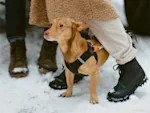
Here is the part about frostbite that catches people off guard: by the time it looks bad, the injury already happened. Frostbite is not like a cut, where you see the damage as it happens and react. The tissue freezes quietly, the skin can look almost normal at first, and the real extent of the harm can take days to surface. That delay is the whole problem, because the window to help your dog is early, before anything obvious appears.
So this piece is built around the timeline, not a symptom checklist. Knowing that frostbite is a slow-motion injury changes how you handle a cold walk, what you do in the first ten minutes after you notice something, and why the “helpful” instinct to rub a cold ear or blast it with a hair dryer is one of the fastest ways to make it worse.
What is actually happening when a dog gets frostbite
When your dog is out in freezing cold, their body does something smart and self-protective: it pulls blood away from the surface and the far corners, the ear tips, tail, nose, and paws, to keep the core and vital organs warm. That is the right call for survival, but it leaves those extremities with very little warm blood flow. If the cold continues, the fluid in and around the cells in those starved areas can freeze, and freezing tears cells apart. That is frostbite.
Because the ears, tail, paws, and nose are the first places the body sacrifices, they are also the first places to freeze. They are thin, poorly insulated, and often damp, which is exactly the wrong combination in the cold.
The frustrating thing about frostbite is that the surface can look fine while the tissue underneath is already injured. I’d rather a client call me over a pale ear tip that turns out to be nothing than wait for it to blister, because by then we’ve lost the head start.
The timeline is the emergency
Frostbite does not run on a single clock, but the pace can be alarming. The circulation changes that begin the process can start within about five minutes of continuous cold exposure. In genuinely harsh conditions, low temperature plus wind plus wet, frostbite can set in within 15 to 30 minutes. Milder cold takes longer, sometimes hours.
Then comes the lag. Even after the tissue is injured, the clinical signs can take several days to fully appear, especially on something small like a tail tip or ear margin. Skin that looked only slightly off on the walk can, over the following days, redden painfully as it thaws, then blister, then in severe cases turn dark blue to black as the tissue dies and eventually sloughs off. This is why “he seemed fine when we got home” is not reassurance. The damage clock and the appearance clock are not the same clock.
What frostbitten skin looks and feels like
If you are checking your dog after cold exposure, run your hands over the vulnerable spots and look for:
- Skin that is pale, gray, or blue rather than its normal pink
- Coldness and a brittle, stiff feel to the area
- Pain when you touch the spot
- Swelling
- Blisters or skin that looks ulcerated
- Later, patches of blackened or clearly dead skin
The ears, tail, nose, paws, and genitals are the highest-risk zones because they have the least fur and the most exposed blood vessels. A dog’s nose is often wet and hairless, which makes it vulnerable when it presses against frozen surfaces. Ears are thin and vascular with little coat to protect them, and they take the brunt of wind. Paws are in constant direct contact with ice and snow.
The first ten minutes: what to do, and what makes it worse
If you suspect frostbite, the goal is to get your dog warm safely and get them to a vet. Handle the hierarchy in the right order, because hypothermia, a dangerously low core body temperature, outranks a frozen ear. If your dog is shivering hard, weak, or their whole body is cold, treat the whole-body cold first by wrapping them in warm, dry blankets and placing towel-wrapped warm water bottles against their body.
For the frostbitten area itself, you can gently rewarm it with warm, not hot, water. The right range is 104 to 108 degrees Fahrenheit, which should feel comfortable, not stinging, if you put your own hand in it. Soak the area or apply warm wet compresses, then pat it dry carefully. Keep your dog wrapped and warm on the way to the clinic.
Now the list that matters just as much, the things that turn a bad situation into a worse one:
- Do not rub the area or rub your dog down with towels. Friction on frozen tissue causes more damage.
- Do not use hot water. Overheating already-injured skin can burn it, doing more harm than no water at all.
- Do not use direct dry heat like a heating pad, space heater, or hair dryer.
- Do not rewarm an area you can’t keep warm. If it might refreeze on the way to the vet, wait. A thaw-refreeze cycle injures tissue far more severely than staying cold.
- Do not give any human pain reliever. Many are toxic to dogs. Pain control comes from the vet.
How vets treat it, and what recovery looks like
At the clinic, your vet will stabilize the whole dog first, treating shock or hypothermia, then manage the frostbite. Because thawing tissue is genuinely painful, dogs are usually given pain medication. Antibiotics are common, since damaged skin is prone to secondary bacterial infection. Diagnostics can include bloodwork, clotting times, and an ECG. Treatment may involve warming, IV fluids, wound care, bandaging, and medications for pain, infection, and circulation. In severe cases, where tissue has died, amputation of an ear tip, tail, or toe is sometimes necessary.
Prognosis tracks severity. Mild frostbite often heals with little lasting damage. More severe cases can leave permanent disfigurement or scarring, and the worst require surgical removal of dead tissue. The point that should land for any owner: the milder end of that range is where you want to be, and getting there is mostly about limiting exposure and reacting early.
Preventing it is almost entirely about time and coverage
The single most effective prevention is boring and it works: limit how long your dog is out in the cold. Beyond that, keep walks short in deep cold, and watch for cold stress, shivering, whining, limping, lifting paws, or reluctance to keep going, as your signal to head in. Check paws for cracks, cuts, and ice balls between the toes, and consider boots for cold surfaces. Rinse paws after walks to remove ice-melt chemicals and road salt. Bundle small and short-coated dogs in a coat. Avoid clipping fur too short in winter, and make sure your dog is fully dry after a bath before going out. Never leave a dog in a parked car in the cold, and steer clear of frozen ponds and lakes, where thin ice is a drowning risk for both of you.
Cold-tolerant breeds are not exempt. Even huskies and malamutes have limits and can get frostbite. Hairless breeds like the Chinese Crested and American Hairless Terrier, plus very young, senior, or lean dogs, sit at the high end of the risk scale.
What newer research adds
The way vets think about cold injury in dogs has widened in recent years. Beyond classic frostbite, there is growing documentation of solar and thermal injuries at the other extreme, but on the cold side, the practical emphasis has shifted toward prevention and early recognition rather than dramatic rewarming, because the evidence keeps showing that aggressive or repeated warming, especially any thaw-refreeze cycle, worsens outcomes. Veterinary emergency guidance now leans hard on the “warm it once, keep it warm, get to a clinic” approach rather than field heroics.
There is also more attention to the dogs quietly at higher risk: those with heart disease, diabetes, or hormonal conditions that reduce circulation to the extremities. If your dog has one of these, their margin in the cold is smaller than a healthy dog’s, and it is worth being conservative with winter exposure. None of this replaces a vet’s judgment on your specific dog, but it points the same direction: the best frostbite outcome is the one you prevent.
References
Common questions
What are the first signs of frostbite on a dog?
Skin that looks pale, gray, or bluish and feels cold and brittle to the touch, often on the ear tips, tail, nose, or paws. Pain, swelling, blisters, and later blackened skin can follow. The full extent may not show for several days.
What should I not do if my dog has frostbite?
Do not rub the area, do not use direct dry heat like a hair dryer or heating pad, do not use hot water, and do not give human pain medication. Do not rewarm an area you can't keep warm, because refreezing causes worse damage.
Which dogs are most at risk for frostbite?
Hairless and thin-coated breeds, small dogs, puppies, seniors, and dogs with heart disease, diabetes, or other conditions that reduce blood flow to the extremities. Any dog can get frostbite with enough cold exposure.
Not a substitute for your vet. Our guidance is educational. For urgent symptoms, contact a vet or emergency clinic right away. Editorial standards
Dr. Mehta is a board-certified veterinary nutritionist who evaluates pet food formulations, ingredient quality, and the science behind dietary trends. He writes and reviews all nutrition content at The Pet Times, including our food rankings and feeding guides.
Meet our experts ↗Keep reading
 Health & WellnessEvery Second You Spend on Snakebite First Aid Is a Second Your Dog Is DyingDr. Ravi Mehta · 8 min
 Health & WellnessThe Most Dangerous Vomit Is the One That Never Comes UpDr. Mara Chen · 8 min
 Health & WellnessThe Skin-Pinch Test for Dehydration Fails on the Dogs Who Need It MostDr. Amara Solis · 8 min
 Health & WellnessYour Dog's Panting Isn't the Problem. Panting With No Job to Do Is.Dr. Ravi Mehta · 8 min
 Health & WellnessThe Sidewalk Salt Burning Your Dog's Paws Can Also Poison ThemDr. Amara Solis · 8 min
 Health & WellnessYou Can't Fix a Bleeding Dog at Home. You Can Win Them the Drive to the Vet.Dr. Ravi Mehta · 6 min