


One Great Dog Trip in Every State (Without Botching the Logistics)
A state-by-state guide to the best places in America to travel with your dog — plus the planning rules that separate a great dog trip from a stressful one, including the national-park leash trap most people miss.

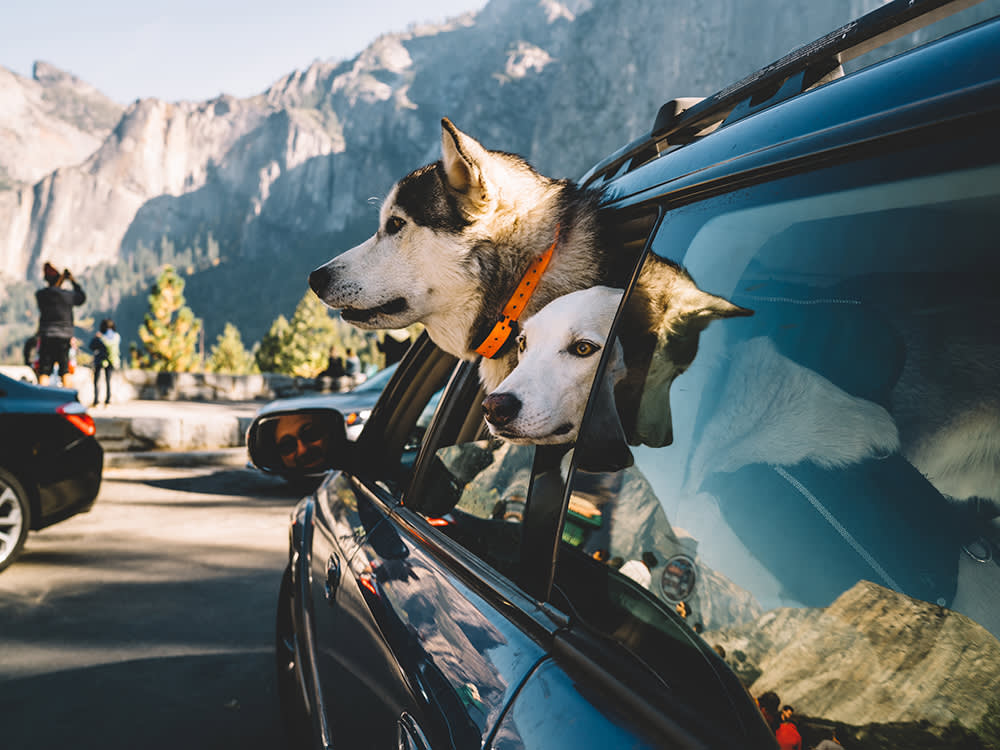
Most “dog-friendly travel” lists answer the wrong question. They tell you where dogs are allowed, which is not the same as where a dog actually has a good time. A place that merely tolerates your dog — a patio that permits one leashed animal in a far corner — isn’t a destination, it’s a concession. The trips worth driving for are the ones built around what a dog is genuinely good at: covering ground, reading a landscape through their nose, being outside in any weather, and turning strangers into temporary friends.
So this guide does two things the usual list skips. First, one real destination per state, chosen because bringing your dog improves the trip rather than complicating it. Second — and this is the part that actually determines whether a trip goes well — a short, honest field guide to the logistics, including the single rule that catches more dog owners off guard than any other.
The national-park trap, and other rules that decide your trip
Before the states, the planning reality, because it overrides almost everything below.
National parks are mostly not dog destinations, and this surprises people every season. The National Park Service follows a “B.A.R.K.” standard — dogs must be on a leash no longer than six feet, and at most parks they’re restricted to developed areas: paved roads, campgrounds, parking lots, and a small number of named trails. The wild backcountry you’re picturing is usually off-limits to dogs entirely, to protect wildlife and the dogs themselves. That’s why several state entries below name the specific dog-legal trails rather than the park as a whole. National forests and recreation areas, by contrast, tend to be far more permissive — often the better target if open trail is what your dog wants.
Build the trip around three non-negotiables: confirmed dog-legal trails or beaches (call ahead or check the park’s own site, not a third-party list), a place to sleep that takes dogs without burying the fee in fine print, and a backup plan for the hours you can’t bring the dog in. Get those three right and the rest is detail.
Pack for the dog you have, plus one bad day: water and a collapsible bowl, more food than the trip technically needs, waste bags, a copy of vaccination records (some lodgings and some state lines ask), a current ID tag, and a recent photo on your phone in case you’re separated. The trips that go wrong with dogs are almost always a logistics failure, not a behavioral one.
With that out of the way, here’s where to point the car.
Alabama
Little River Canyon National Preserve allows leashed dogs on all trails and in the visitor center. Treats at the information counter are reportedly common.
Alaska
Wrangell-St. Elias National Park (an area the size of six Yellowstones) allows unleashed dogs on its trails. Bring a thick-coated dog, or bring a jacket for the one you have. Note that bears and moose are also present on those trails.
Arizona
Sedona’s Red Rock Country offers dog-friendly jeep tours alongside miles of trails through sandstone formations that photograph well regardless of who’s in frame.
Arkansas
Canoe sections of the Ouachita River, particularly the ten-mile stretch from Oden to Rocky Shoals. Deep pools, shaded banks, and almost no crowds.
California
Carmel-by-the-Sea has a leash-free beach and a town that genuinely caters to dogs, cafes, inns, and shops that don’t just allow dogs but seem designed around them.
Colorado
Aspen’s Smuggler Mountain Road offers high-altitude trail access alongside a town with outdoor dining that doesn’t bat an eye at a dog under the table.
Connecticut
The Hanging Hills of Meriden offer deep gorges, reservoir views, and the sort of wooded terrain that gives dogs something interesting to investigate for hours.
Delaware
Cape Henlopen State Park allows dogs year-round with some seasonal restrictions. The American Discovery Trail begins here; the first few miles along the coast are worth doing for the scenery alone.
Florida
Key West (historically called Bone Island) maintains its reputation as one of the most dog-forward tourist destinations in the state, with a high concentration of pet-welcoming inns, guest cottages, and open-air restaurants.
Georgia
Atlanta’s BeltLine Eastside Trail runs two miles through converted rail corridor with a density of foot traffic and other dogs that makes it a genuinely social outing.
Hawaii
A note on logistics first: dogs face quarantine requirements entering Hawaii. That said, shelters on Kauai, Maui, and the Big Island offer day-trip programs with approved dogs, a way to spend time with an animal without the complications of bringing your own.
Idaho
Ketchum’s Bald Mountain Trail and the network of alpine walks throughout Sawtooth National Recreation Area are well-suited to dogs who like elevation and cold-water streams.
Illinois
Camp Dogwood, operating out of facilities near Lake Delton, Wisconsin, offers six hundred acres of off-leash fields and lakefront focused on bonding over competition. Chicago itself has a strong network of dog-friendly patios and parks.
Indiana
Indiana Dunes State Park’s ten trails cross tall dune formations, lakeshore beach, and marshland, varied enough that the same walk doesn’t repeat itself.
Iowa
One of the better states for rail-trail cycling with a dog. The Wabash Trace Nature Trail runs 63 miles from Council Bluffs to Blanchard.
Kansas
Somerset Ridge Vineyard in Kansas City is a pesticide-free, dog-welcoming winery with outdoor seating and the kind of afternoon pace that suits dogs well.
Kentucky
Red River Gorge in the Daniel Boone National Forest allows dogs on trails and offers sandstone arches and cliff bands that make for dramatic scenery.
Louisiana
City Park in New Orleans has designated off-leash areas alongside lagoons and oak alleys, a contained environment for a dog in a city better known for its nightlife.
Maine
Acadia National Park allows leashed dogs on most of the carriage roads and some hiking trails. Bar Harbor’s village is welcoming by New England standards.
Maryland
Assateague Island National Seashore allows leashed dogs on its ocean beach year-round, the wild ponies are a memorable complication.
Massachusetts
Cape Cod’s off-season (September through May) is ideal for dogs: beaches allow them, crowds have thinned, and the weather is cool enough for long walks.
Michigan
Pictured Rocks National Lakeshore on Lake Superior allows leashed dogs on its trails, with views of sandstone cliffs and waterfalls that hold up regardless of season.
Minnesota
Boundary Waters Canoe Area Wilderness allows dogs in the canoe country, a legitimately remote experience for dogs who’ve been trained to stay in a canoe.
Mississippi
Gulf Islands National Seashore’s Davis Bayou area allows leashed dogs on trails and in picnic areas alongside the marshland.
Missouri
Ha Ha Tonka State Park combines karst topography, lake access, and castle ruins, a combination of terrain types that gives dogs a lot of sensory variety.
Montana
Glacier National Park allows leashed dogs on paved roads and in campgrounds, though not on most backcountry trails. The scenery makes up for the trail restrictions.
Nebraska
Niobrara National Scenic River allows dogs on its canoe-friendly stretches, with river access and pine ridge terrain that most dogs find extremely engaging.
Nevada
Lake Tahoe’s Nevada side has more dog-friendly trail access than the California side, with several beaches that allow leashed dogs year-round.
New Hampshire
White Mountain National Forest allows leashed dogs on most trails. The Presidential Range offers serious elevation for dogs who are fit enough to handle it.
New Jersey
Cape May at the southern tip of the state allows dogs on its beaches from October through April, with a Victorian-era town that has a higher than average density of dog-welcoming shops.
New Mexico
Bandelier National Monument allows leashed dogs on its main loop trail through ancient cliff dwellings, a historically significant and visually unusual walk.
New York
The Catskills offer extensive trail access for dogs, and the Hudson Valley’s density of dog-welcoming breweries and restaurants makes for a practical long-weekend destination.
North Carolina
Asheville’s trail network and dog-friendly downtown, breweries with patios, restaurants with outdoor seating, make it one of the more complete dog destinations in the Southeast.
North Dakota
Theodore Roosevelt National Park allows dogs in campgrounds and on paved roads. Bison sightings require a reliable recall command.
Ohio
Cuyahoga Valley National Park allows leashed dogs on most trails, including the towpath trail running along the Ohio and Erie Canal.
Oklahoma
Ouachita National Forest crosses into Oklahoma from Arkansas and offers hundreds of miles of trail access with water features throughout.
Oregon
Cannon Beach allows leashed dogs on its beach year-round, with Haystack Rock as a backdrop that needs no improvement.
Pennsylvania
Delaware Water Gap National Recreation Area allows leashed dogs on trails along both the New Jersey and Pennsylvania sides of the river.
Rhode Island
Narragansett Town Beach allows dogs outside the summer season. The seawall walk at Breakers in Newport is dog-permitted year-round.
South Carolina
Hunting Island State Park allows leashed dogs on its trails and undeveloped beach, a rarity in a state where most beach access is restricted.
South Dakota
Badlands National Park allows leashed dogs on paved roads and in campgrounds. The landscape is unlike anything in the eastern half of the country.
Tennessee
Great Smoky Mountains National Park allows leashed dogs on paved roads and two specific trails: the Gatlinburg Trail and the Oconaluftee River Trail.
Texas
Barton Creek Greenbelt in Austin provides year-round trail access with swimming holes that most dogs require no encouragement to use.
Utah
Arches National Park allows leashed dogs on paved areas and two specific trails. The landscape repays the logistics of getting there with a dog.
Vermont
Stowe’s network of recreation paths and the surrounding Green Mountains offer year-round trail access, with fall foliage timing that makes October the optimal visit.
Virginia
Shenandoah National Park allows leashed dogs on roughly a third of its trails (more than most national parks) with Skyline Drive providing a drive-through option when trails aren’t accessible.
Washington
Olympic National Park allows dogs on the beach areas of its coastline, a raw, wide stretch of Pacific shoreline that most dogs seem genuinely affected by.
West Virginia
New River Gorge National Park allows leashed dogs on most trails, with whitewater scenery and bridge infrastructure that makes for dramatic backgrounds.
Wisconsin
Door County’s network of state parks allows leashed dogs, and the peninsula’s density of towns with outdoor dining makes it practical to stay for several days.
Wyoming
Grand Teton National Park allows leashed dogs on paved roads, in campgrounds, and on two specific trails. The mountain backdrop does the heavy lifting visually.
Notice the pattern across the list: the best dog destinations are rarely the marquee national parks, where leash rules and trail bans do the most to limit a dog’s day. They’re the state parks, national forests, recreation areas, beach towns, and rail-trails — the places designed around open access rather than wilderness preservation. Aim there, confirm the dog rules directly with the destination before you commit, and prepare for the dog you have. Do that, and the destination takes care of itself.
References
- “Pets — Plan Your Visit.” National Park Service, www.nps.gov/subjects/pets/index.htm.
- “B.A.R.K. Ranger Program.” National Park Service, www.nps.gov/subjects/pets/bark-ranger.htm.
- “Know Before You Go: Bringing Pets to National Forests.” USDA Forest Service, www.fs.usda.gov/visit/know-before-you-go.
- “Pet Travel: Taking Your Pet Within the United States.” USDA Animal and Plant Health Inspection Service, www.aphis.usda.gov/pet-travel.
Marcus Webb writes about the gear, gadgets, and everyday choices that make life with a pet easier. His coverage runs from product picks to training and the causes worth paying attention to, always with an eye on what actually earns a place in your home.
Meet our experts ↗Keep reading
 LivingIn LA, the Real A-Listers Have Four Legs. Plan Accordingly.Nina Vasquez · 9 min
 LivingA Woman Left Her Dog at the Airport. The Breed Ban That Set It Up Is the Real Story.Jordan Ellis · 4 min
 LivingBiking With Your Dog Goes Wrong on the Pavement, Not the BikeTom Hadley · 6 min
 LivingThe Flight Is the Easy Part of Flying With Your DogDr. Ravi Mehta · 6 min
 LivingDog-Friendly Colorado Hotels: Read the Pet Policy First (14 That Get It Right)Nina Vasquez · 7 min
 First DaysThe Ride Home Is Your New Dog's First Lesson. Don't Blow It.Dr. Lena Park · 6 min