


Your Dog Has Diarrhea but Seems Totally Fine. Watch the Dog, Not the Poop.
The runny stool is not the emergency signal. The dog is. Here's how to read whether your dog's diarrhea is a wait-and-watch situation or a call-the-vet-now one, what to feed, and why the old 'starve it out' advice is quietly changing.

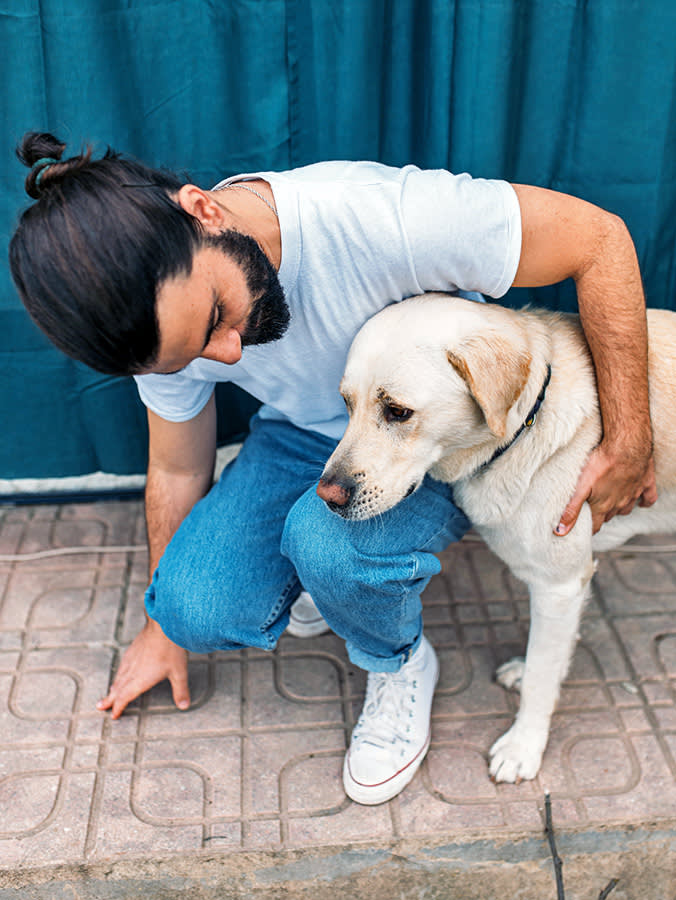
A dog with sudden diarrhea sends a lot of owners into a spiral, usually while staring at the yard trying to decode the puddle. I want to redirect that attention, because you are studying the wrong thing.
The stool tells you a little. The dog tells you almost everything. A dog who is bright-eyed, still hungry, drinking normally, and ready to play happens to have loose stool. A dog who has gone flat, quit eating, is vomiting, or is passing blood has a problem, regardless of what the poop looks like. Vets see enormous numbers of diarrhea cases, and most are mild and self-limiting. The skill worth having is not poop analysis. It is knowing which dog is in front of you.
Here is how to read that, and what to do about it.
First, the reassuring picture
If your dog suddenly has diarrhea that is not bloody, is not relentless and explosive, and is not paired with other symptoms, and your dog is otherwise acting like themselves, you are most likely in wait-and-watch territory. This is the “acting fine” scenario, and acting fine is a genuinely meaningful clinical signal. Monitor at home, support them gently, and there is a good chance things settle within a couple of days.
The one non-negotiable is that monitoring means monitoring. “Acting fine” is a snapshot, not a guarantee. If the diarrhea worsens instead of easing, if blood appears, or if your dog’s energy or appetite drops, the situation has changed and so should your plan.
The mistake I see is people fixating on the stool while the dog is quietly telling them what they need to know. A wagging, eating, curious dog with a soft stool is a very different patient from a quiet dog who turns their nose up at dinner, even if the poop looks identical. Trust the animal’s overall demeanor over the mess on the grass.
What usually causes it
When there are no other symptoms, a handful of everyday culprits are behind most cases.
Diet. Dogs have famously sensitive stomachs. A stolen bite off your plate, a raid on the trash, or an abrupt switch to a new food can all trigger loose stool. This is why food changes should always be gradual, mixed in over several days, and why “no people food and lids on the garbage” prevents more diarrhea than any medication.
Food allergies or intolerances. A true food allergy involves the immune system, often shows up as ear or skin trouble too, and tends to build gradually against proteins like chicken, beef, dairy, lamb, egg, fish, or soy. An intolerance, like lactose intolerance, does not involve the immune system and tends to hit soon after the offending food.
Stress. Dogs reroute a real amount of gut function through their nervous system. A move, a new pet, separation anxiety, or a thunderstorm can loosen stool by speeding up the gut, disrupting the brain-gut signaling, and reducing blood flow to the intestines. Stress colitis is a real and common thing.
Parasites or infection. Especially in puppies, parasites are a frequent cause. They irritate the intestinal lining, hijack nutrient absorption, and pull extra water into the gut. This is one reason a new puppy with diarrhea deserves a lower threshold for a vet visit and a stool test.
When to stop watching and call
Contact your veterinarian if any of these show up. These are the lines that separate a home situation from a clinical one:
The diarrhea lasts more than 24 to 48 hours. You see blood, either bright red or dark and tarry, or mucus. New symptoms appear: vomiting, lethargy, fever, belly pain, bloating, or loss of appetite. The diarrhea becomes very frequent or explosive, which risks fast dehydration. There is any chance your dog swallowed a foreign object or a toxin. And critically, the safe window shrinks for the vulnerable: puppies, seniors, small breeds, and dogs with conditions like diabetes or thyroid disease, or on medication, or immune-compromised, should be seen sooner rather than later, even for what looks like mild diarrhea.
A quick dehydration check you can do at home: healthy gums are moist and slick, so tacky or dry gums, sunken eyes, heavy panting, or skin that is slow to spring back when gently tented are all signs your dog needs fluids and a vet.
Home care that helps
If you are in the reassuring picture, a few gentle measures support recovery.
Hydration comes first. Keep fresh water available and refresh it often to make it appealing. Plain, unsalted bone broth or the water from cooked white rice can tempt a reluctant drinker. Skip Pedialyte unless your vet specifically recommends it, and never the flavored kind.
A bland diet does the heavy lifting. The standard is boiled plain chicken, no skin, no seasoning, shredded small, mixed with soft-cooked white rice at roughly one part chicken to two parts rice. Lean ground turkey cooked and well drained, mixed with a little plain canned pumpkin and white rice, works too. Other gentle swaps include boiled egg and rice, cottage cheese with mashed potato, or fish with sweet potato. Serve small, frequent portions rather than one big bowl, and reintroduce your dog’s normal food gradually over a couple of days as the stool firms up. No salt, no oil, no seasoning.
Probiotics can shorten the mess. A canine-specific probiotic like FortiFlora helps restore the gut’s bacterial balance, and a prebiotic such as inulin or a spoon of plain pumpkin feeds the good bacteria. There is decent evidence these speed the return to normal.
Skip the human medicine cabinet. Do not give any over-the-counter remedy, including Pepto-Bismol or Imodium, without your vet’s specific approval and dose. Some are unsafe for certain dogs and breeds.
What newer research adds
Two pieces of veterinary thinking have shifted, and they are worth folding into the advice above.
First, the long fast is falling out of favor. The old instinct was to pull all food for 24 hours to “rest the gut.” Newer guidance leans the other way, toward getting gentle, easily digestible food back in relatively soon, because the gut lining actually heals better when it has mild nutrition to work with. A short pause after a bout can still make sense, but a prolonged, hungry fast is no longer the reflex it once was, especially for small dogs and puppies who cannot afford to skip meals. When in doubt about how long to hold food, ask your vet rather than defaulting to a full day.
Second, antibiotics are being deliberately pulled back. Recent expert guidelines conclude that most uncomplicated acute diarrhea in dogs is self-limiting and does not need antibiotics, and that overusing them can actually disrupt the gut microbiome and fuel resistance. So if your dog has straightforward diarrhea and is otherwise well, do not be surprised or disappointed if your vet sends you home with diet advice and a probiotic instead of a prescription. That restraint is current best practice, not your vet skimping. Antibiotics are being saved for the cases that genuinely need them, like a dog who is systemically ill.
References
- Candellone, Alessia, et al. “Acute Diarrhea in Dogs: Current Management and Potential Role of Dietary Polyphenols Supplementation.” Antioxidants, vol. 9, no. 8, 2020, p. 725, https://doi.org/10.3390/antiox9080725.
- Gómez-Gallego, Carlos, et al. “A Canine-Specific Probiotic Product in Treating Acute or Intermittent Diarrhea in Dogs.” Veterinary Microbiology, vol. 197, 2016, pp. 122–128, https://doi.org/10.1016/j.vetmic.2016.11.015.
- European Network for Optimization of Veterinary Antimicrobial Treatment (ENOVAT). “Guidelines for the antimicrobial treatment of acute diarrhoea in dogs and cats.” 2024.
- Unterer, Stefan, et al. “Effect of Probiotic Treatment on the Clinical Course and Microbiome in Dogs with Acute Diarrhea.” PLOS ONE / Veterinary literature, 2018.
Common questions
How long is too long for dog diarrhea?
Call your vet if diarrhea lasts more than 24 to 48 hours, or sooner if other symptoms show up or blood appears. Puppies, seniors, small dogs, and dogs with existing health conditions have a much shorter safe window and should be seen earlier.
Can I give my dog Pepto-Bismol or Imodium?
Only with your vet's okay. Pepto-Bismol contains an aspirin-like ingredient that is not safe for every dog, and Imodium is dangerous for certain breeds and situations. Never dose from the human medicine cabinet on your own.
What can I feed a dog with diarrhea?
A bland meal of boiled plain chicken or lean ground turkey with white rice, in small frequent portions, is the standard. Plain canned pumpkin or plain boiled potato can stand in. Skip all salt, seasoning, oil, treats, and table food until the stool firms up.
Not a substitute for your vet. Our guidance is educational. For urgent symptoms, contact a vet or emergency clinic right away. Editorial standards
Dr. Park is a board-certified emergency and critical care specialist. She reviews our health and safety content for clinical accuracy and contributes guides on recognising urgent conditions. Her focus is helping owners act quickly and correctly when it matters most.
Meet our experts ↗Keep reading
 Health & WellnessYour Dog's Gas Is Mostly Swallowed Air. Fix That FirstDr. Amara Solis · 8 min
 Health & WellnessCan Dogs Catch Your Flu? Canine vs. Human Influenza ExplainedDr. Lena Park · 8 min
 Health & WellnessYour Dog Is Having a Seizure. Here's Exactly What to Do in the Next 90 SecondsDr. Mara Chen · 6 min
 Health & WellnessThat Red Rash on Your Dog's Belly Is Trying to Point SomewhereDr. Nina Kohl · 6 min
 Health & WellnessDogs Detect Cancer With 90% Accuracy. So Why Isn't One in Your Vet's Office?Dr. Lena Park · 9 min
 Health & WellnessA Dog Who Eats Rocks Can Be in Surgery by TomorrowDr. Ravi Mehta · 7 min