


A Dog Who Eats Rocks Can Be in Surgery by Tomorrow
Most bad habits give you time. This one doesn't. A swallowed stone can block or tear a dog's gut within a day, so the smart order is to handle the danger first and hunt for the reason second. Here's both.

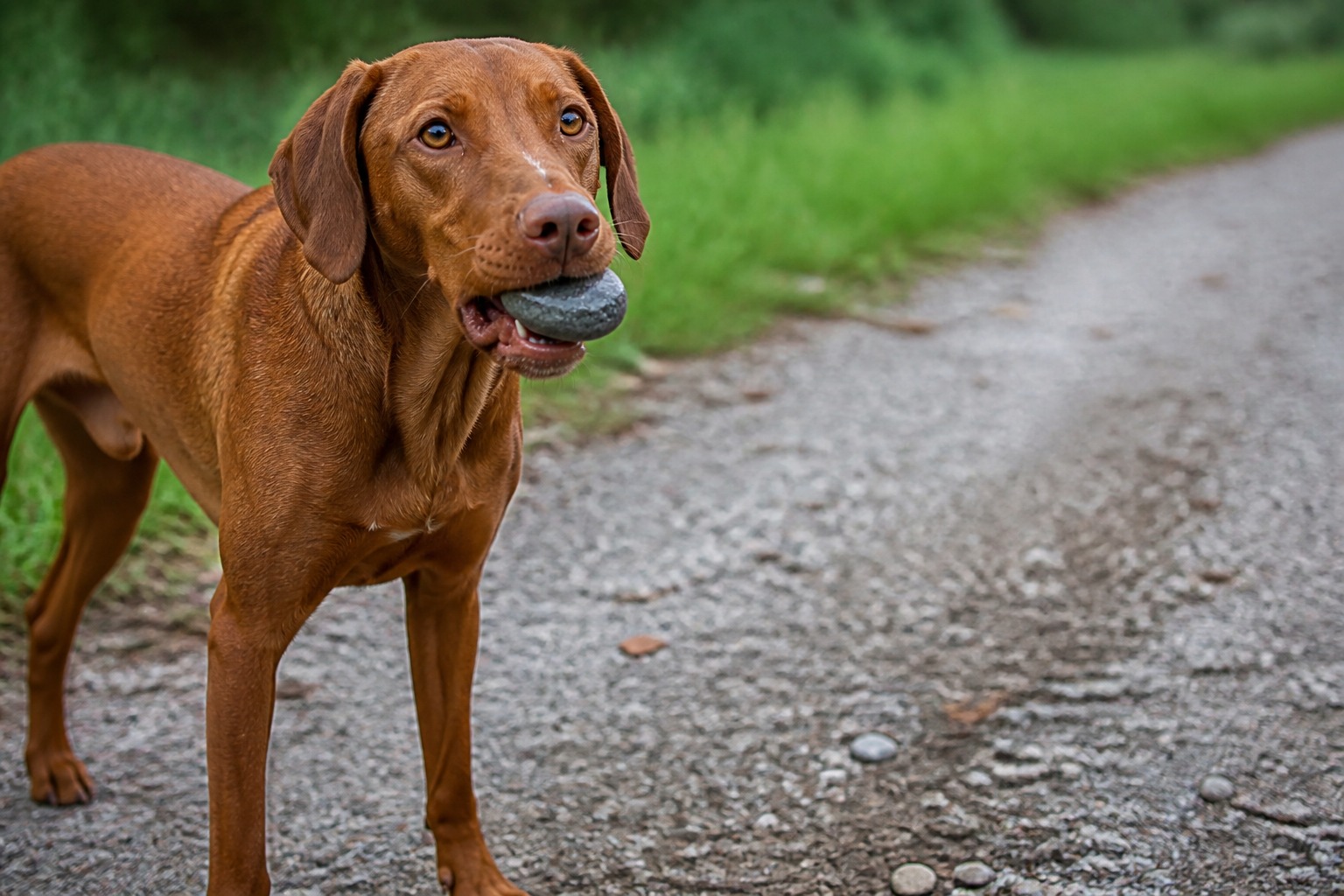
Plenty of dog problems let you take your time. A dog who eats rocks does not, and that’s the single most important thing to understand about this behavior. Chewing and swallowing stones sits in a different risk category from chewing shoes or raiding the trash, because a rock can crack a tooth, jam the gut, or slice through the intestinal wall, and any of those can turn into emergency surgery on a very short clock. So the right sequence is blunt: neutralize the immediate danger, then figure out why your dog is doing it. This piece covers both, in that order.
Eating non-food objects is a behavior called pica, and rocks are one of its more hazardous forms. Occasional curiosity about a stone is normal dog stuff. A dog who repeatedly picks up, chews, or swallows rocks is not just being weird, they’re flagging a behavioral or medical issue, and doing something genuinely dangerous while they do it.
Why the danger comes first
Before the causes, understand exactly what a swallowed rock can do, because it explains the urgency.
Broken teeth. Grinding on stone cracks and fractures teeth, sometimes badly enough to need a repair or an extraction under anesthesia.
Intestinal obstruction. Stomach acid can’t dissolve rock. A dog who swallows several small stones, or one big one, can develop a blockage. A stone lodged in the gastrointestinal tract may need surgery to remove, and a sharp one can perforate the intestinal wall, which pushes you into a more complicated operation to cut out and repair the damaged section. An untreated obstruction or perforation can be fatal.
Pain on the way through. Even a rock that technically “passes” can hurt the whole trip, scraping down the esophagus, through the intestines, and out the other end.
Constipation from the small stuff. We picture boulders, but fine gravel and sand, from a driveway, a litter box, or a beach, cause their own problem. Once these tiny particles reach the colon, the body pulls water out of the surrounding material, leaving hard, gritty stool that’s difficult and painful to pass.
That’s why “he seems fine” isn’t reassurance. Call your vet whenever you know or suspect your dog swallowed a rock, and describe the size, because the window where a vet can induce vomiting or intervene simply is much shorter than the window before a blockage announces itself.
Now the causes
Once the immediate risk is handled, work out what’s driving it. Rock-eating shows up in dogs of every age and breed, and the reasons split into medical and behavioral.
Nutritional gaps and absorption problems. Some dogs instinctively crave dirt and stone when they’re short on key minerals like iron or zinc. That shortfall can come from a poorly balanced diet, raw and homemade diets are especially prone when they aren’t formulated correctly, or from digestive diseases like exocrine pancreatic insufficiency and inflammatory bowel disease that block nutrients from being absorbed. Anemia, from blood loss, bone-marrow disease, or immune causes, is a well-known trigger for pica.
Boredom and curiosity. Dogs explore with their mouths. A rock with an odd scent or texture invites a taste, and a dog without enough appropriate chew outlets may turn to stones to scratch the chewing itch.
Medication side effects. Steroids like prednisone, prescribed for all sorts of conditions, crank up thirst and hunger. That ramped-up appetite can spill into eating things that aren’t food.
Anxiety and stress. Stress drives repetitive behaviors, including chewing and pica. Thunderstorms, fireworks, a change in the environment, or underlying separation anxiety can all push a dog toward gnawing on, and sometimes swallowing, rocks.
Teething. Puppies teethe roughly from five weeks to six months, and chewing soothes sore gums. Puppies also make poor choices, so a teething pup without good chew toys may settle on the worst possible option.
Rock-eating rarely travels alone, either. The same drive can show up as eating feces, metal objects like coins or nails (dangerous especially when the metal contains zinc), fabric such as socks and bedding, paper and cardboard, or plastic and rubber.
What newer research adds
Veterinary thinking has shifted toward treating persistent pica as a symptom to be investigated, not a quirk to be scolded away. When a dog suddenly develops a rock or dirt habit, clinicians increasingly reach for bloodwork and a gut workup early, because a meaningful share of these cases trace back to something fixable, iron-deficiency anemia, a malabsorptive gut disease, an endocrine problem, and the pica often fades once the underlying issue is treated. The practical takeaway for you: a new, intense urge to eat rocks deserves a diagnostic look, not just a training plan. Behavior modification matters, but it works best once you’ve ruled out a body that’s trying to fix a deficiency the wrong way.
Treating it
The fix depends on whether the root is medical or behavioral, which is exactly why the vet visit isn’t optional.
Address the medical side. Your vet may run bloodwork or other diagnostics to catch nutritional deficiencies or underlying disease that needs medication, treatment, or a diet change. Feed a complete-and-balanced diet that meets AAFCO standards for your dog’s life stage as the baseline.
Lower the stress. Dogs thrive on predictability, so build a consistent routine. For a dog with separation anxiety, work with a vet or veterinary behaviorist on triggers and a desensitization plan, and have a game plan ready for storms, fireworks, and other known stressors.
Restrict access. Some dogs will gnaw rocks purely for the fun of it, so committed owners get physical about limiting access: clear rocks from the yard and landscaping where you can, keep leash walks tightly supervised with detours around gravel, and use a basket muzzle when needed to block ingestion while still letting your dog pant and drink.
Redirect the energy. Physical exercise and mental stimulation cut the urge. Tire your dog out with regular activity, fight boredom with toys and food puzzles, offer age-appropriate chews (especially for teething pups), and teach a solid “drop it” so you can get an unsafe object out of their mouth and reward the trade.
With most bad habits I tell owners we have time to be thoughtful. Rocks are the exception. If a dog swallowed a stone, I want the phone call now, while I can still do something simple, not tomorrow when it’s a surgical belly. And once the crisis is handled, I’m running bloodwork, because a dog eating gravel is sometimes a dog whose body is hunting for iron it can’t get from dinner.
The bottom line
Rock-eating earns a fast response twice over: first because a swallowed stone is a mechanical emergency waiting to happen, and second because the behavior is often a signal that something, in the diet, the gut, or the mind, needs attention. Handle the danger immediately, then get to the cause. Don’t wait for your dog to grow out of it.
References
- Merck Veterinary Manual. “Behavioral Problems of Dogs: Pica.” merckvetmanual.com. Accessed July 2026.
- Bamgbose, T., et al. “Pica in Dogs: Overview, Owners’ Perception, and Intestinal Perforative Cases.” Journal of Veterinary Medicine and Animal Health, 2020.
- Pedrinelli, Vivian, et al. “Analysis of Recipes of Home-Prepared Diets for Dogs and Cats.” PLOS ONE, vol. 12, no. 5, 2017, e0176464. https://doi.org/10.1371/journal.pone.0176464
- American Animal Hospital Association. “Foreign Body Ingestion and Gastrointestinal Obstruction.” aaha.org. Accessed July 2026.
Common questions
My dog swallowed a rock but seems fine. Do I still call the vet?
Yes. A dog can look normal for hours while a stone sits in the stomach or starts moving into the intestine. Early on, a vet may be able to induce vomiting or monitor with imaging; once an obstruction or perforation develops, you're into surgery. Call and describe the rock's size.
Why does my dog eat dirt too?
Dirt-eating overlaps heavily with rock-eating: boredom, stress, and, importantly, medical drivers like anemia or an iron deficiency. If your dog is suddenly eating dirt or rocks, it's worth a vet visit to check for an underlying cause.
Not a substitute for your vet. Our guidance is educational. For urgent symptoms, contact a vet or emergency clinic right away. Editorial standards
Dr. Mehta is a board-certified veterinary nutritionist who evaluates pet food formulations, ingredient quality, and the science behind dietary trends. He writes and reviews all nutrition content at The Pet Times, including our food rankings and feeding guides.
Meet our experts ↗Keep reading
 Health & WellnessMost Dog Shaking Is Harmless. Here's the Kind That Isn't.Dr. Amara Solis · 8 min
 Health & WellnessThe CBD-for-Seizures Pitch Is Way Ahead of the ScienceDr. Ravi Mehta · 7 min
 Health & WellnessThe 'Miracle' Antibiotic for the Mystery Dog Illness Isn't a Cure. It's a Last Resort.Dr. Lena Park · 6 min
 Health & WellnessCooked Salmon Is a Gift. Raw Fish From a Lake Can Kill Your Dog.Dr. Priya Nair · 5 min
 Health & WellnessOne Raw Fish Can Kill a Dog in Two Weeks. Most Owners Have Never Heard of It.Dr. Ravi Mehta · 6 min
 Health & WellnessYour Dog Isn't Peeing on the Rug to Spite You. Read the Pee Instead.Dr. Amara Solis · 7 min