


Punch the Monkey Made Everyone Ask: Do Dog Moms Reject Puppies Too?
The viral abandoned macaque raised a question closer to home. Maternal rejection happens in dogs, rarely, for cold evolutionary reasons, and it leaves fingerprints you can work with.
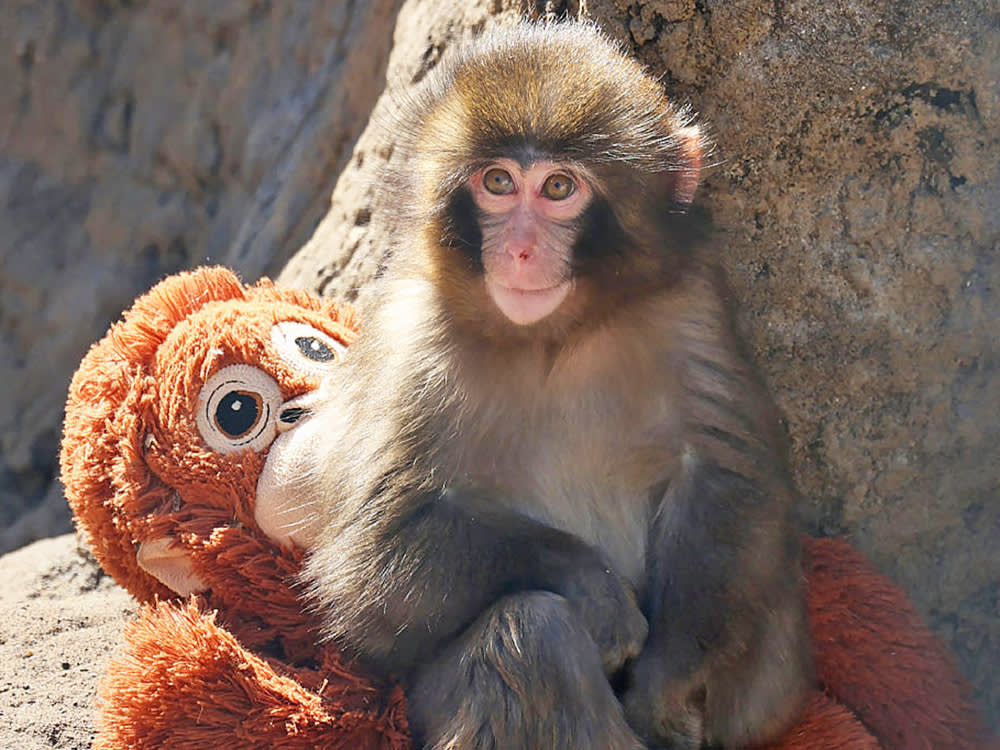
In early 2026, the internet adopted a baby macaque named Punch. Born at Japan’s Ichikawa City Zoo and abandoned by his mother, Punch spent his days clinging to a stuffed orangutan for comfort while videos of him being shoved around by the troop turned millions of viewers into anxious long-distance guardians.
Amid the collective heartbreak, a lot of dog people quietly looked at the animal snoring on their couch and wondered the same thing: does that happen to puppies? Do dog mothers ever just… opt out?
The short answer is yes, rarely. The longer answer is more interesting, because the why behind canine maternal rejection is colder and more calculated than the word “abandonment” suggests, and the aftermath is something adopters of those puppies can actually do something about.
The norm is devotion bordering on obsession
Rejection makes headlines precisely because the baseline is so different. A typical dog mother spends the first three weeks of her puppies’ lives in near-total attendance, reluctant to step away for more than moments at a time, and the American Kennel Club notes this intensity makes biological sense: newborn puppies arrive unable to see, hear, or walk, and they cannot regulate their own body temperature. For those first weeks, the mother is the entire life-support system.
Which is what makes the exceptions so jarring. They exist: a mother who ignores the whole litter, or, more commonly, singles out one puppy and simply stops caring for it. Canine cognition researchers describe whole-litter abandonment as decidedly uncommon, with the single-pup version being the likelier form, and rescue workers see the pattern occasionally in very young, unprepared mothers, where inexperience seems to short-circuit the maternal program before it starts.
The cold math behind leaving one behind
Why would an animal built for devotion walk away from one of her own? Researchers studying these cases point to something that looks harsh from a human angle and pragmatic from an evolutionary one: triage.
A mother dog who pushes one puppy away is often running a resource calculation we’d rather not think about. If she reads that puppy as unlikely to survive, concentrating her milk and warmth on the others raises the whole litter’s odds. It’s not cruelty. It’s arithmetic under scarcity.
The honest caveat is that science has limited visibility here. Because nobody would ever engineer maternal rejection in a lab, researchers rely on the scattered natural cases, which keeps the evidence thin. In primates like Punch’s species, documented drivers include the mother’s age, health, and inexperience. In dogs, perceived puppy health looms largest in single-pup cases, and the assessment is not always right; plenty of “rejected” puppies turn out perfectly healthy once humans step in with bottles and heat lamps.
One small mercy, for anyone haunted by the videos of Punch being dragged around his enclosure: littermates are unlikely to pile on the way macaques do. The more probable canine outcome is indifference, a puppy ignored rather than bullied.
What early loss does to a puppy
Losing maternal care during the neonatal window is a genuine developmental hit, on two fronts at once. Physically, a newborn cut off from nursing and warmth faces immediate survival risk, and rescue-raised orphans start life behind on nutrition and immune support. Psychologically, the early weeks are when a puppy’s social operating system installs, and research backs how much the mother shapes it: a study published in PNAS following guide-dog litters found that maternal style, how intensely a mother hovered, nursed, and licked, measurably predicted her puppies’ temperament and problem-solving as adults.
Dogs who missed out on normal mothering often carry recognizable fingerprints into adulthood. Shelter workers and adopters describe the cluster: velcro-grade separation distress, out of proportion to anything an adopter did wrong, and infantile comfort behaviors that never switched off, most famously sucking or kneading on blankets and soft toys the way a nursing puppy works at its mother. A grown dog who follows you to the bathroom, cries at a closed door, and falls asleep suckling a pillowcase is often telling you a story about his first month.
None of this dooms a dog. It just explains him.
Raising, or adopting, the puppy who got left
If you bottle-raise an orphan or adopt a dog with this history, the leverage point is socialization, because the psychological window stays open longer than the physical one. The developmental period for social learning extends well past weaning, which means humans get a real second chance to build what the mother did not.
The method matters, though. The goal is a steady drip of positive, low-stakes encounters with people, dogs, surfaces, and sounds, engineered so the puppy succeeds, not a firehose. Flooding an already-fragile puppy with overwhelming novelty backfires; slow, deliberate, choice-driven exposure compounds. Let the puppy investigate, retreat, and return. Confidence is built in laps.
And yes, the stuffed orangutan strategy translates. A consistent comfort object, a soft toy or blanket that smells like safety, gives an anxious young dog a portable anchor, exactly the role Punch’s plushie served. It looks like indulgence. It is actually infrastructure.
What’s new since this was written
Punch’s own story, for the record, bent toward good news. By March 2026, Ichikawa City Zoo reported he was clinging to his plushie less and spending real time socializing with adult monkeys, with zoo leadership saying the number of troop members he got along with was growing by the day, and the zoo pushed back on the “bullying” framing that fueled the viral wave. His fame has been a mixed blessing, though: the zoo has since dealt with visitors behaving badly, including two people arrested after one entered the macaque enclosure in costume, and a separate incident in June 2026 in which a visitor aimed a laser pointer at Punch, which the zoo publicly condemned.
The arc is worth holding onto, because it mirrors what the dog research says: early rejection is a bad start, not a sentence. With patient social exposure and one well-chosen stuffed orangutan, the abandoned baby usually finds the troop.
References
- American Kennel Club. Canine Mother Separation From Puppies.
- Bray, E. E., et al. (2017). Effects of maternal investment, temperament, and cognition on guide dog success. PNAS.
- The Guardian. Why do mother animals abandon their offspring?
- The Japan Times. Punch, the viral baby monkey, isn’t being bullied, Ichikawa City Zoo says.
- CNN. Punch the monkey is finally making friends and fitting in.
Dr. Solis is a board-certified veterinary dermatologist with over twelve years of clinical experience. She advises on skin conditions, allergies, and grooming practices that affect coat and skin health. All dermatology and allergy content at The Pet Times is reviewed by her team before publication.
Meet our experts ↗Keep reading
 LivingA Wolfdog Is Not a Fluffier Husky. Nobody Can Tell You What You Actually Own.Dr. Ravi Mehta · 8 min
 TrainingThat Repeated Bark Isn't Random. Your Dog Is Saying One Specific Thing.Dr. Ravi Mehta · 7 min
 TrainingYour Dog Knows You're Coming Home. It's Smelling Time Pass.Dr. Mara Chen · 5 min
 TrainingYelling at Your Dog Lands in Their Body, Not Just Their EarsDr. Mara Chen · 5 min
 TrainingYour Dog Licking Itself Is Normal. Until One Spot Becomes a Full-Time Job.Dr. Amara Solis · 7 min
 TrainingYour Dog Growls When You Pet Them. Don't Punish It, Read It.Dr. Mara Chen · 7 min