


Declawing Isn't a Manicure. It's Ten Amputations, and the Law Is Catching Up
A cat's claw grows from the last bone of each toe, so removing it means cutting off that bone. Here's what declawing actually does, why it doesn't fix the behavior people want it to, and the states that have now banned it.

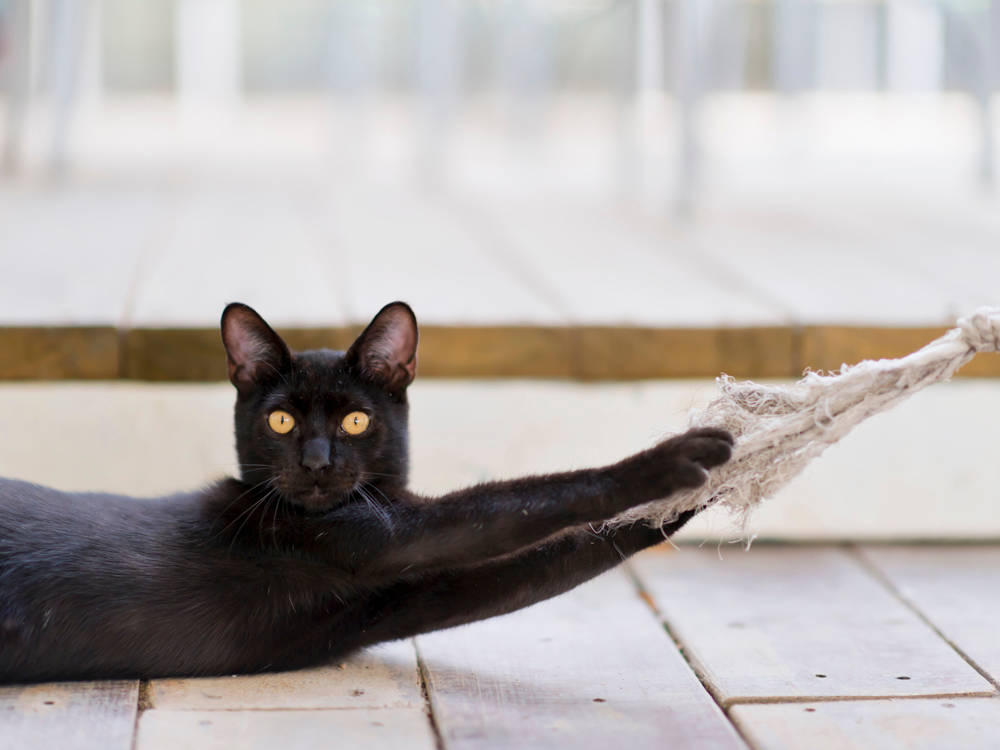
People who declaw their cats rarely think of it as surgery. The mental picture is something like an aggressive manicure, a tidy solution to shredded couches. That picture is wrong in a way that matters, because a claw is not a fingernail. It grows from, and is attached to, the last bone of each toe, which means removing it is an amputation of that bone, roughly equivalent to cutting off the end segment of each of your fingers and toes. Could a person live without those tips? Yes. Would they choose it to stop scratching the furniture? Of course not. That gap, between what declawing feels like it is and what it actually does, is what this piece is about, along with the fact that the law has increasingly decided the debate.
What the surgery actually removes
Start with the anatomy, because it reframes everything. A cat uses its claws to hunt, stretch, mark, and groom, and each claw is anchored to the final bone of the toe, the distal phalanx. The medical name for declawing is onychectomy, and the standard version amputates all or most of that last bone on every toe being declawed, by guillotine clipper or scalpel. So a “declaw” is not one procedure on a cat’s paw; it is ten small amputations. Framing it as nail removal hides the surgery inside a word that sounds cosmetic.
The single biggest misunderstanding I correct is that this is about nails. It is bone surgery. When I explain that we are amputating the last joint of every toe, most owners visibly rethink it, because that is not what they pictured at all. A cat walks on those toes. Taking the ends off is not a small thing, and I do not think the casual name for it does the cat any favors.
The physical toll, immediate and lasting
The harms fall into two buckets: the pain right after and the problems that can persist. Post-operative pain is significant, and because cats are stoic and hide discomfort well, it is easy to underestimate. The longer-term physical effects are still being studied, but the documented list is sobering: chronic pain, nerve damage, bone spurs, improper regrowth of claws, lameness, and back pain. That regrowth problem is its own trap, if a specific piece of bone is not fully removed, a claw can grow back deformed, sometimes forming a painful abscess at the site. In other words, the surgery can fail in a way that leaves the cat worse off than a clean amputation would.
The behavior it’s meant to fix, and doesn’t
Most declaws are done for behavior, to stop scratching or to curb aggression, and this is where the procedure most clearly fails on its own terms. Declawing does not address or stop a cat’s aggression, and in some cases it makes things worse. A cat stripped of its claws can feel less able to defend itself and lash out more, often by biting instead. The psychological research is genuinely mixed, some studies link declawing to increases in unwanted behaviors like litter box avoidance, aggression, and biting, while others find no significant difference, which is part of why controversy persists. But mixed evidence is not a green light. At best the behavioral benefit is unproven; at worst the surgery trades scratching for biting and house-soiling.
And crucially, scratching is not a flaw to be removed. It is a normal, necessary feline behavior: it grooms the claws by shedding old layers, marks territory with scent, and lets a cat stretch its whole body. Trying to eliminate scratching is like trying to eliminate a cat’s need to stretch after a nap. The goal should be redirecting it, not surgically ending it.
Why some vets still perform it
If the case against declawing is this strong, why does it still happen? The honest answer involves hard situations, not villainy. Declawing is sometimes framed as an alternative to worse outcomes for the cat, being put outdoors, rehomed, surrendered to a shelter, or even euthanized, when an owner feels they cannot keep a clawed cat. Advocates also point to surveys where owners reported a better relationship with their cat afterward. Those are real pressures. But they are arguments about a cat’s fate under a difficult owner, not evidence that the surgery is good for the cat, and they sit alongside a clear professional shift: many veterinary schools no longer teach declawing techniques at all, though the ethics of it are still discussed as a topic future vets will have to navigate.
There are narrow, genuinely medical reasons to remove a claw or toe, and those are different from elective declawing. Removing a tumor, or a toe or claw damaged beyond repair, can be legitimate, as can addressing severe, uncontrollable paronychia, an infection of the tissue around the nail, and those cases typically target a specific toe rather than the whole foot. The oft-repeated claim that hairless cats “need” to be declawed to avoid scratching themselves bloody is not true; if a hairless cat is scratching itself raw, the cause is usually an underlying medical issue like a skin infection that should be treated directly. Medical necessity is real but rare, and it looks nothing like a routine furniture-saving declaw.
The tendonectomy trap
People searching for a “gentler” alternative sometimes land on a deep digital flexor tendonectomy, which cuts the tendons so a cat can no longer extend its claws. The claws stay, but the cat cannot protrude them. It is not the humane loophole it appears to be. It carries its own controversy and serious potential complications, and because the claws keep growing while the cat can no longer use or wear them down, they must be clipped and maintained for life, or they will curl into the paw pads. There is still post-operative pain and the risk of infection, lameness, and brittle nails. Cutting tendons is not a soft version of amputation; it is a different set of lifelong problems.
What actually works instead
The good news is that the real fix is behavioral and cheap, and it should be the whole conversation long before surgery is ever considered. Effective, humane options include:
- Deterrents on the furniture, like cat-safe double-sided tape or anti-scratch tape on the surfaces you want to protect.
- Appealing scratching surfaces placed in those same areas, keeping in mind that cats have preferences about location, material, and angle, so offering a few types helps you find the winner.
- Soft nail caps, such as Soft Paws, glued over the claws.
- Regular nail trims to keep the claws blunt.
- Environmental enrichment, so a cat has better outlets for energy, plus gently redirecting scratching to the surfaces you want them to use.
None of these amputate anything, and together they solve the actual problem, which was never that the cat had claws, but that it was using them where you did not want.
What’s changed: the legal ground has shifted
This is no longer only an ethical debate; in much of the U.S. it is becoming a legal one. New York became the first state to ban elective cat declawing in 2019. Since then the list has grown to include Maryland, Virginia, Massachusetts, Rhode Island, and California, along with Washington, D.C., and a number of cities such as Los Angeles, San Francisco, Denver, St. Louis, and Austin. These laws carve out exceptions for genuine medical necessity, the therapeutic health of the cat, while barring the procedure for cosmetic reasons or mere convenience. Outside the U.S., declawing has been banned or heavily restricted for years across much of Europe and in countries including England, Germany, Spain, Australia, and New Zealand.
Surveys of veterinary professionals now show strong majority opposition to elective declawing, which is part of what is driving the legislative wave. If you live in one of these places, the decision may already be made for you, and if you do not, the direction of travel is hard to miss.
The bottom line
Declawing is not a manicure. It is the amputation of the last bone of each toe, with a real risk of chronic pain and behavioral fallout, and it does not reliably fix the scratching or aggression it is meant to address, because scratching is a normal need and aggression has other roots. Genuine medical exceptions exist but are uncommon. With humane, effective alternatives readily available and a growing list of states banning the procedure outright, the case for elective declawing has largely collapsed, in the exam room and increasingly in the statute books.
References
- American Veterinary Medical Association. “Declawing of Domestic Cats.” https://www.avma.org/resources-tools/animal-health-and-welfare/declawing-domestic-cats
- American Association of Feline Practitioners. “Declawing (Onychectomy) Position Statement.” https://catvets.com/
- Animal Legal Defense Fund. “New York Becomes First State to Ban Cat Declawing.” https://aldf.org/article/new-york-becomes-first-state-to-ban-cat-declawing/
- Martell-Moran, Nicole K., et al. “Pain and Adverse Behavior in Declawed Cats.” Journal of Feline Medicine and Surgery, vol. 20, no. 4, 2018. https://journals.sagepub.com/home/jfm
Common questions
Does declawing stop a cat from being aggressive or scratching furniture?
No. Declawing does not address the root of aggression and can make it worse, and scratching is a natural need, not a defect to remove. Behavior and environment are what actually change scratching, not surgery.
What are the long-term effects of declawing?
Beyond immediate surgical pain, possible chronic effects include lasting pain, nerve damage, bone spurs, improperly regrown claws, lameness, and back pain, plus links in some studies to litter box avoidance and biting.
Is declawing illegal?
Increasingly, yes, in parts of the U.S. New York was the first state to ban elective declawing in 2019, and Maryland, Virginia, Massachusetts, Rhode Island, and California have since followed, along with Washington, D.C., and a number of cities. Many countries banned it long ago.
What can I do instead of declawing?
Provide appealing scratching surfaces, use deterrents like double-sided tape on furniture, apply soft nail caps, keep nails trimmed, and add enrichment. These address the real behavior without surgery.
Not a substitute for your vet. Our guidance is educational. For urgent symptoms, contact a vet or emergency clinic right away. Editorial standards
Dr. Mehta is a board-certified veterinary nutritionist who evaluates pet food formulations, ingredient quality, and the science behind dietary trends. He writes and reviews all nutrition content at The Pet Times, including our food rankings and feeding guides.
Meet our experts ↗Keep reading
 LivingDon't Be a Hero. Be a Witness.Leila Torres · 7 min
 LivingKitten Season Never Ends Anymore. Blame the Vet Bill, Not the Weather.Leila Torres · 8 min
 LivingHow the Animal-Rescue Network Beat Helene's FloodwatersNina Vasquez · 5 min
 TrainingPaper Is the Best Cat Toy in Your House. It's Also a Trap.Dr. Ravi Mehta · 7 min
 Health & WellnessYour Indoor Cat Will Never Get Out. Until the Night She Does.Dr. Amara Solis · 6 min
 LivingHis Cat Vanished in Yellowstone. Two Months Later, a Chip Pinged 900 Miles Away.Dr. Lena Park · 5 min