


Cultured Meat Pet Food Stopped Being the Future. It Went on Sale
Lab-grown meat for pets was a someday story for years. Then it quietly went on sale in a London pet shop, hit price parity with premium kibble, and cleared its first regulator. Here's where cultivated pet food actually stands now, and why it may reach your dog's bowl before your dinner plate.

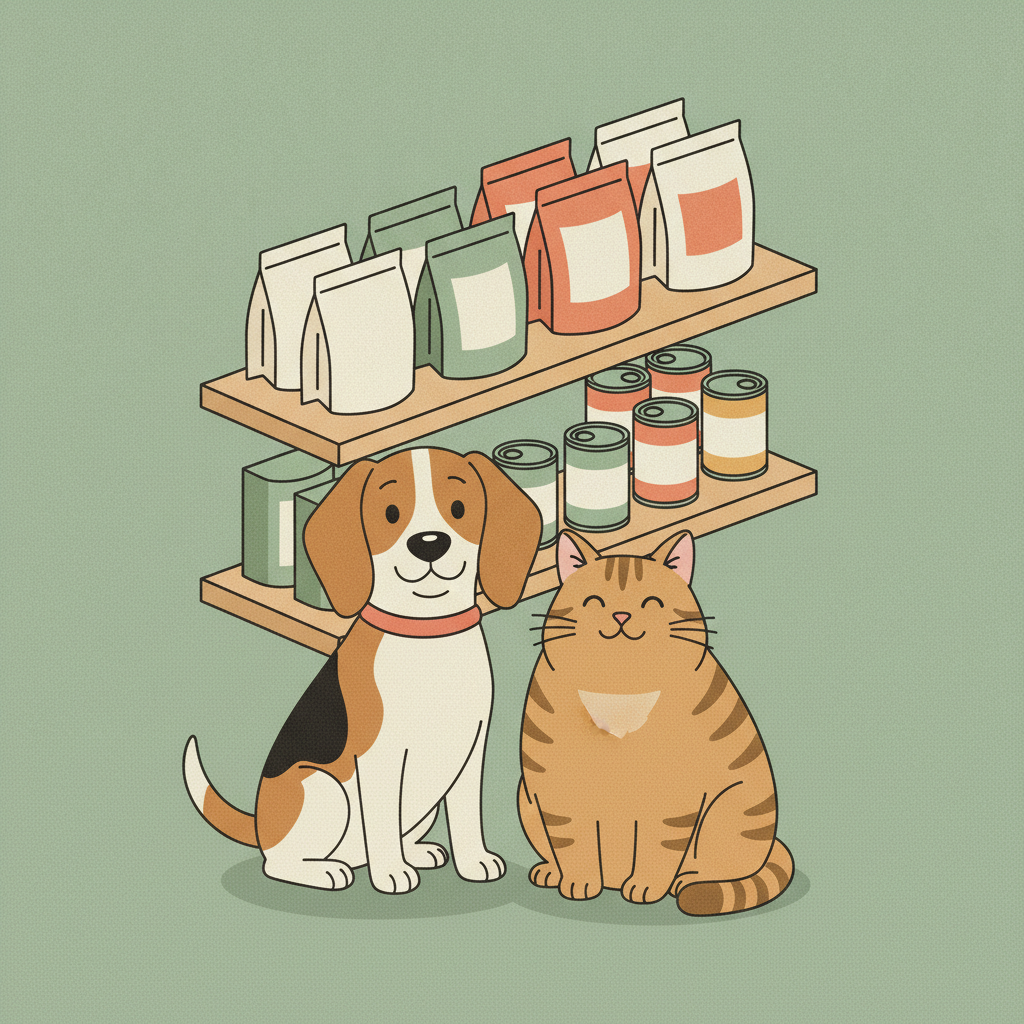
For most of the last decade, cultured meat for pets lived permanently in the future tense. It was the thing that was coming, the breakthrough that was almost here, the bowl your dog would eat from someday. Then, on a Friday in early 2025, a small pouch of dog treats went on sale at a Pets at Home store in Brentford, London, and the tense quietly changed. Cultivated pet food was no longer a someday story. It was a £3.49 product on a shelf.
That single sale reframes the whole conversation. The interesting question is no longer whether lab-grown meat will ever make it into pet food. It already has. The questions that matter now are which animals eat it first, in which countries, and at what price, and the answers are surprising enough to be worth walking through.
Why pets, and not people, are the proving ground
Cultured meat is grown, not slaughtered. You take a small sample of cells from an animal, usually painlessly, place them in a nutrient medium, and let them multiply in a bioreactor until you have real animal tissue that never required raising or killing a living creature. The science is the same whether the end customer walks on two legs or four. What differs is the difficulty, and that difference is exactly why pets are getting there first.
Human diners are picky. They want a cultured chicken breast that looks like a breast and sizzles like a steak, which forces producers to solve the hard problem of building three-dimensional structure and texture. Pets could not care less what their food looks like. A dog or cat judges a meal by smell and taste, not by whether it resembles a cut from a butcher. That removes the single most expensive engineering challenge from the equation. As Dr. Lena Park, a veterinary nutritionist, frames it:
“A pet doesn’t need their food to look like meat. It needs to be nutritionally complete, palatable, and safe. Cultured protein clears those three bars more easily than it clears the texture bar a human chef demands, which is precisely why the pet bowl is the first place this technology becomes ordinary.”
There is a strong environmental argument underneath all of this. If pet food were a country, it would rank around the 60th-highest greenhouse gas emitter in the world, on par with nations like Mozambique or the Philippines, according to a widely cited 2020 analysis. And while much of the meat in pet food is genuinely made from byproducts and cuts people will not eat, the booming demand for “human-grade” pet food is steadily pulling premium meat away from that byproduct stream and into the bowl. Growing protein from cells sidesteps that whole supply chain.
The two things everyone got wrong: price and timing
For years the standard caveat on cultured pet food was that it would arrive late and cost a fortune. Both predictions are aging badly.
On price: BioCraft Pet Nutrition (the company formerly known as Because, Animals, founded by longtime vegan and scientist Shannon Falconer) announced that its cultivated mouse meat, a protein chosen because it mimics what cats would naturally hunt, reached price parity with premium pet food. That is the number that changes everything. The old assumption was that cultured meat would launch as a luxury that only the wealthiest pet owners could justify. Hitting parity with high-end kibble means the premium tier, not the ultra-rich, is the entry point, and that is a far larger market.
On timing: the product is already being sold. UK startup Meatly, working with the plant-based brand THE PACK, put “Chick Bites” on sale at a London Pets at Home in February 2025, the world’s first commercial sale of a pet food made with cultivated meat. The treats pair plant-based ingredients with Meatly’s cultivated chicken, grown from a single sample of cells taken from one chicken egg. The first run was tiny and deliberately so, roughly 750 pouches at £3.49 each, a proof of concept rather than a national rollout. Meatly has since gone further, unveiling what it calls the world’s first cans of cat food made with cultivated chicken.
Where the regulators stand
The reason a London shopper can buy this and an American one cannot yet comes down to regulation, and the map is uneven.
In Europe and the UK, the door has opened. BioCraft secured approval to sell its cell-cultured ingredients into the EU pet food market, having registered as a feed business operator and submitted a full food-safety control plan. Meatly’s UK sale cleared the relevant British review. In the United States, the path runs through the FDA’s Center for Veterinary Medicine, and no cultivated pet food ingredient has cleared it for retail yet, though several companies are actively in that process. Meatly’s parent, Further Foods (owned by Canada’s CULT Food Science), has completed a canine feeding-trial protocol and submitted it to the FDA for its Noochies! line, a key step toward US clearance. Bond Pet Foods, another major US player, delivered two metric tons of its fermentation-produced animal protein to Hill’s Pet Nutrition, generating the kind of real-world production data the FDA needs to evaluate the ingredient. So the American story is “in the pipeline,” while the European one is “on the shelf.”
What this means for your dog or cat right now
If you are reading this in the US, here is the honest status: you cannot buy a cultivated-meat pet food at your local store today, and you should be skeptical of anything marketed as such, because it has not cleared regulatory review here yet. If you are in the UK, you can already get a taste of it, in limited supply, as a treat rather than a complete diet.
For everyone, a few grounded expectations are worth setting. Cultivated meat is not a magic health food; it is a way to produce real animal protein with a smaller environmental footprint and no slaughter, and a good cultivated diet still has to be formulated to be nutritionally complete, just like any other. The first products are treats and limited-run cans, not your pet’s whole diet, and that will be true for a while as production scales. And as with any change to what your pet eats, your veterinarian should weigh in before you switch a primary diet, especially for cats, who are obligate carnivores with strict nutritional requirements.
The honest answer to “is cultured meat the future of sustainable pet food” turns out to be: it stopped being the future the day it went on sale. What is left is the much more practical work of scaling it, pricing it, and clearing it country by country, so that the £3.49 pouch in a London shop eventually becomes the bag of food in everyone’s pantry.
A note on a debated topic: cultivated meat is new, and not every veterinarian or nutritionist agrees on its place in pet diets. This article is informational, not medical advice. Talk to your own vet before making a significant change to what your pet eats.
References
- “Meatly launches cultivated pet treats in the UK.” Petfood Industry. https://www.petfoodindustry.com/sustainable-dog-and-cat-food/news/15736794/meatly-launches-cultivated-pet-treats-in-the-uk
- “World’s first cell-cultivated meat dog treat goes on sale in store in the UK.” Tech.eu, February 6, 2025. https://tech.eu/2025/02/06/world-s-first-cell-cultivated-meat-dog-treat-goes-on-sale-in-the-uk/
- “BioCraft’s cultivated mouse meat reaches price parity with premium pet food.” Petfood Industry. https://www.petfoodindustry.com/ingredient-issues/proteins/news/15676448/biocrafts-cultivated-mouse-meat-reaches-price-parity-with-premium-pet-food
- “BioCraft gains EU approval to sell cell-cultured pet food ingredients.” Petfood Industry. https://www.petfoodindustry.com/nutrition/pet-food-ingredients/news/15741218/biocraft-gains-eu-approval-to-sell-cellcultured-pet-food-ingredients
- “The race to incorporate cultivated meat in pet food.” FoodNavigator, August 1, 2024. https://www.foodnavigator.com/Article/2024/08/01/the-race-to-incorporate-cultivated-meat-in-pet-food/
- Alexander, P., et al. “The environmental impacts of pet food.” 2020. https://www.sciencedirect.com/science/article/abs/pii/S0959378020307366
Sara Lim leads our Product Picks coverage, testing and comparing the things pets and their owners actually use. From everyday essentials to home-and-style finds, she focuses on honest, useful recommendations rather than hype.
Meet our experts ↗Keep reading
 LivingHow to Spot a Genuinely Low-Waste Pet Brand, Using Boba&Vespa as the TestLeila Torres · 5 min
 LivingAdopting Is the Greenest Choice You'll Make About a Pet. The Bowl Is Where It Gets Complicated.Leila Torres · 6 min
 Food"Sustainable" Pet Food Is a Word With No Rules. Here's What It HidesLeila Torres · 8 min
 Health & WellnessForever Chemicals Are in Your Dog and Cat, Too. Here's What Actually Lowers the Load.Dr. Priya Nair · 7 min
 LivingYour Pet Has a Carbon Pawprint. Don't Let It Wreck Your Peace.Leila Torres · 6 min
 LivingYour Dog's Shed Fur Is a Raw Material. Here Are 8 Things to Do With ItJordan Ellis · 6 min