


Adopting Is the Greenest Choice You'll Make About a Pet. The Bowl Is Where It Gets Complicated.
The environmental case for adoption is real, and it is not the one you usually hear. Five reasons rescuing beats buying on sustainability, plus the much bigger footprint waiting for you after you get home.

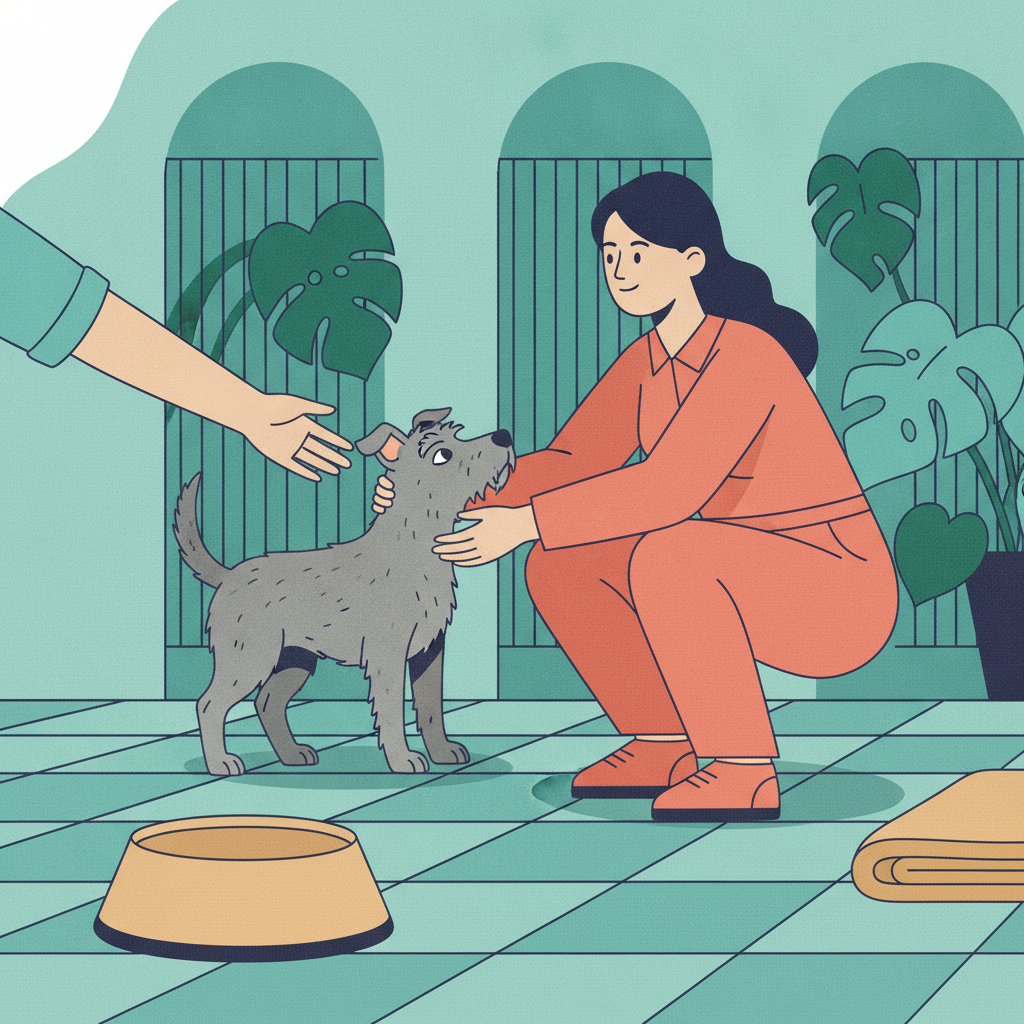
“Adopt, don’t shop” is almost always argued on ethics. There are animals in shelters. They need homes. Be a decent person.
That case is sound, and it does not need help. But there is a second argument sitting right next to it that almost nobody makes carefully, and it deserves better than a bumper sticker: adopting is also, straightforwardly, the lower-impact way to bring a pet into your life. Not because pets are bad for the planet, which is a joyless and not very useful framing, but because you are choosing between an animal who already exists and one who has to be produced, shipped, and sold to you.
Here is the honest version of that math, including the part where it gets uncomfortable.
1. The animal already exists
Every living thing carries an environmental cost. Food, water, land, veterinary care, the whole chain that keeps a body going. That is true of a shelter dog and a breeder dog alike, and there is no version of pet ownership with a zero footprint.
The difference is that a shelter animal’s footprint is a sunk cost. They are here. They are eating and drinking and taking up space in a building whether you show up or not. Adopting them does not add a new animal to the world. It relocates one.
A purchased puppy is different. Somebody bred that litter because there was a buyer. The purchase is the signal that produces the next litter, and the one after that. This is the part of the fast-fashion comparison that actually holds: the problem was never any single garment, it was a demand loop that kept the factory running.
2. The transport footprint is wildly different
This is the lever people never think about, and it is the biggest one in the whole comparison.
Most shelters exist to serve the community around them. The animals in them come, overwhelmingly, from that community. The distance between your rescue dog’s old life and your couch is often measured in miles.
Animals from breeders and pet stores routinely move across states, across the country, and in some cases across oceans. A puppy flown in from another continent has already spent more carbon than they will burn through in years of eating kibble, before you have even met them. Air travel remains one of the most carbon-intensive things a human, or a small dog in a crate, can do.
3. Adoption is the only lever that reduces the population
Spay and neuter is the actual mechanism by which the number of homeless animals goes down, and adoption is how it gets funded and how it gets performed. Nearly every shelter in the country alters an animal before it walks out the door.
Buy a puppy and, statistically, that puppy is more likely to remain intact and to reproduce. Adopt one and the reproductive math ends there. That is not a small effect over a decade.
The numbers are moving in the right direction, which is worth saying out loud. According to Shelter Animals Count, the national database maintained with the ASPCA, roughly 4.2 million dogs and cats were adopted in 2025, a one percent increase over the year before. Around 597,000 animals were euthanized in shelters that year, and the euthanasia rate has fallen from about 10 percent in 2019 to about 8 percent in 2025. Intakes are down too, by about 121,000 animals year over year.
Six hundred thousand is still an enormous number of animals. But the direction of travel is real, and adoptions are the reason.
4. Rescue is a secondhand economy
A shelter is one of the few places in pet ownership that runs on reuse by default.
The animal comes to you already vaccinated, already altered, and often already microchipped, none of which you have to source new. Many shelters will send you home with a collar, a leash, or a blanket from the animal’s stay, which means you have skipped a package, a shipping box, and a trip. Ask. A surprising number will say yes.
Compare that to the standard new-puppy haul: everything bought new, everything shipped, everything in packaging, most of it outgrown within a year.
5. It is a vote, and votes compound
Where your money goes is a statement about the industry you want to exist. Spend it on a rescue and you are funding a local organization that keeps animals alive. Spend it on a large-scale commercial breeding operation and you are funding narrow breeding at volume, which is where the worst welfare outcomes in this industry live.
And if you have a specific breed in mind: wait. Breed-specific rescues exist for nearly every breed, purebreds do turn up in shelters, and the animal you want may already be sitting in a kennel two towns away. Patience is cheaper than a plane ticket, for everyone involved.
“The most sustainable pet is the one who is already here,” says Dr. Priya Nair. “People come to me feeling guilty about the environmental cost of having an animal at all. That is the wrong thing to feel guilty about. Where the animal came from, and what you put in their bowl for the next fifteen years, is where your decisions actually land.”
What’s new: the part of the footprint that dwarfs all of this
Now the uncomfortable bit, and the reason this article does not stop at “adopt and feel good.”
Research published in PLOS ONE by UCLA’s Gregory Okin estimated that dogs and cats in the United States are responsible for a meaningful share of the environmental impact of American animal agriculture, on the order of 25 to 30 percent, driven almost entirely by the meat in their food. The associated greenhouse gas emissions run into the tens of millions of tons of CO₂-equivalent per year.
Read that against everything above. The choice of where your pet comes from is a one-time decision. The choice of what goes in the bowl is a decision you make twice a day for the next decade or more. Over a pet’s life, the bowl is the bigger number, and it is not close.
None of that is an argument against having pets, and it is emphatically not an argument for underfeeding one. Dogs and cats have nutritional requirements that are not up for debate, and cats in particular are obligate carnivores who cannot be made vegan safely. Any change to a pet’s diet on environmental grounds should go through your vet first, full stop.
What it does mean is that the sustainability conversation should not end at the shelter door. The levers that keep working after you get home are the boring ones: buy the right amount of food and stop throwing it away, choose foods that meet AAFCO standards without over-relying on premium cuts of meat, keep your pet at a healthy weight, which cuts both their food footprint and their vet bills, buy fewer, better-made toys and beds, and repair before you replace.
Adopt, and you have made the greenest choice available to you at the start. Then keep making them.
References
- 2025 Annual Data Report — Shelter Animals Count
- U.S. animal shelter statistics — ASPCA
- Okin GS. Environmental impacts of food consumption by dogs and cats — PLOS ONE (2017)
- The environmental price of fast fashion — Nature
- Nutrient requirements of dogs and cats — National Academies Press
- Spay/neuter and shelter population — Humane World for Animals
Leila Torres leads our Living coverage, from home life and travel to the products and rescue stories that come with sharing a life with animals. She edits and writes across the section, with a soft spot for pieces about the bond between people and their pets.
Meet our experts ↗Keep reading
 LivingSome Dogs Aren't Built for Your Apartment. Meet the Farm Dog Who Proves It.Leila Torres · 8 min
 Product Picks7 American-Made Pet Brands Worth Your Memorial Day DollarsLeila Torres · 6 min
 LivingYour Dog's Shed Fur Is a Raw Material. Here Are 8 Things to Do With ItJordan Ellis · 6 min
 LivingHow to Spot a Genuinely Low-Waste Pet Brand, Using Boba&Vespa as the TestLeila Torres · 5 min
 LivingDon't Vacuum Up That Fur. It Can Soak Up an Oil Spill.Leila Torres · 6 min
 LivingYour Dog's Food Bag Isn't Recyclable. That Doesn't Mean It's Trash.Leila Torres · 5 min