


Feline Cancer: What You Can Actually Control, and the 5 Types to Know
You can't prevent every cat cancer, but a few choices measurably move the odds, and early detection changes outcomes. A vet on the levers that matter and the five cancers behind most diagnoses.

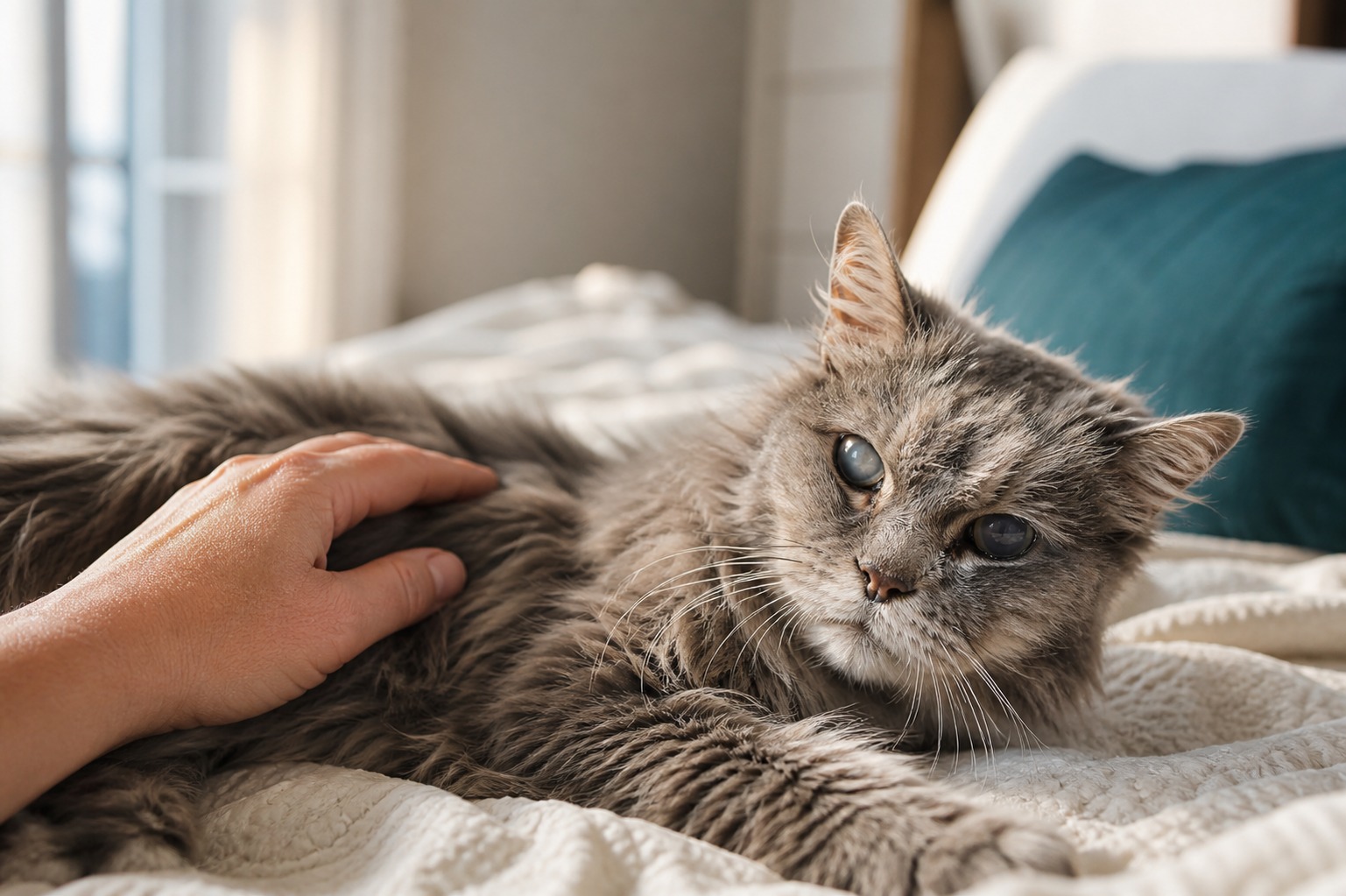
No one wants to picture their cat facing cancer, and it is tempting to skip an article like this entirely. Do not. The reason to read it is not fear, it is leverage. Because while it is true that much about feline cancer is beyond your control, two things are squarely in your hands, and they are the two that change outcomes most: the handful of choices that measurably lower risk, and the habit of catching disease early. So we are going to start there, with what you can do, and then use the five most common feline cancers as a reference for what to watch for.
Lever one: the risk you can actually reduce
Most cancer, in cats as in people, comes from a tangle of genetics, age, and luck that no one can fully steer. But a few risk factors are unusually clear-cut, and acting on them is the closest thing to prevention we have.
Spay early to protect against mammary cancer. Mammary tumors in cats are usually malignant and often spread before they are even noticed. The good news is that timing spay surgery early is powerfully protective: cats spayed before six months of age have roughly a 90 percent reduction in mammary cancer risk, with the benefit shrinking the longer you wait. This is one of the strongest prevention numbers in all of feline medicine.
Keep the home smoke-free. This one is backed by hard data most cat owners have never heard. A landmark case-control study from Tufts University found that cats living with a smoker were more than twice as likely to develop malignant lymphoma, and cats exposed to household smoke for five or more years had roughly triple the risk. Later work linked secondhand smoke to oral squamous cell carcinoma as well, because cats groom the particulate residue off their fur and lick it straight into the mouth. If you needed one more reason to quit or to smoke outside, your cat is it.
Test for and manage feline leukemia virus. FeLV is the single most common infectious cause of cancer in cats and a major lymphoma risk factor. Testing, keeping FeLV-positive cats indoors and separated, and vaccinating at-risk cats are all meaningful.
Mind the sun if your cat is white. White cats and cats who sunbathe against glass are prone to squamous cell carcinoma on the sparsely furred ear tips and nose. Limiting midday sun exposure genuinely lowers that risk.
Lever two: catch it early
The second lever costs nothing but attention. Because prognosis so often hinges on how early a cancer is found, the most valuable thing you can do is know the general warning signs and act on them promptly rather than waiting to “see if it passes.” Book a vet visit if you notice any of these:
- Unexplained weight loss
- Lethargy or a drop in activity
- Persistently bad breath
- Coughing or changed breathing
- Difficulty urinating
- Any new lump, bump, or swelling
- Vomiting
- Non-healing sores
- Behavioral signs of pain
Two habits make early detection routine: run your hands over your cat regularly so you notice new lumps yourself, and do not skip senior wellness exams, since many feline cancers are diseases of older cats and are often first caught during a routine dental cleaning or checkup.
The five most common feline cancers, as a reference
These are the diagnoses that account for the bulk of feline cancer. You do not need to memorize them, but knowing where each tends to show up helps you know what you are feeling for.
Lymphoma is among the most frequently diagnosed. It develops when lymphocytes, a type of white blood cell, multiply abnormally, most often in the gastrointestinal tract but also in the lymph nodes, kidneys, and nasal cavity. Prior FeLV or FIV infection raises the risk. Signs track the location and can include appetite loss, weight loss, lethargy, digestive upset, or breathing changes. Chemotherapy is the mainstay, sometimes with radiation or surgery.
Squamous cell carcinoma is both a skin cancer and the most common oral cancer in cats. It favors the hairless nose tip (nasal planum), the ear tips, around the eyes, and inside the mouth, appearing as lumps, non-healing sores, or ulcers. White cats, sunbathers, and smoke-exposed cats are at higher risk. Because it hits the mouth, routine dental care often catches it first. Surgery is the usual treatment; it is aggressive but tends to progress slowly, and radiation, cryotherapy, or laser therapy can supplement incomplete removal.
Injection-site sarcoma is a tumor that forms in connective tissue where an injection was given, likely driven by inflammation at the site. Vaccines, long-acting antibiotic or steroid shots, and microchips have all been associated with it, and tumors can appear months to years later. The critical thing is proportion.
The incidence is genuinely low, on the order of one to a few cases per 10,000 vaccinated cats, and the diseases those vaccines prevent are common and often fatal. So the answer is never to skip vaccination. The answer is the vet’s 3-2-1 rule: have any injection-site lump biopsied if it is still present three months after the shot, larger than two centimeters, or still growing one month after. Watch, don’t panic, and don’t stop protecting your cat.
Treatment typically combines surgery, radiation, and chemotherapy, with CT or MRI first to map the tumor.
Mammary tumors are usually malignant in cats and tend to spread to lymph nodes or lungs before detection. Signs include swelling of a mammary gland, ulceration or redness of the belly skin, or nipple discharge. Female cats are far more prone, and early spaying, as noted above, is the great preventive. Diagnosis is by aspirate or biopsy; treatment can combine surgery, chemotherapy, and radiation.
Skin cancer covers several tumor types, and a cat’s fur can either flag or hide them. Basal cell tumors, the most common feline skin cancer, are usually benign single cysts or ulcers on the head or neck of older cats (Siamese and Persians are overrepresented) and are handled with surgery. Mast cell tumors, the second most common, are firm, raised, often itchy nodules that are usually benign but can spread, and complete surgical removal is preferred. Melanoma is far rarer in cats than dogs but often malignant when it occurs, appearing on the face or head, or more dangerously in the mouth or eye; surgery is again the treatment, with radiation when clean margins are not possible.
How it is diagnosed and treated
When a mass is found, the vet confirms it with a biopsy or fine-needle aspiration, then stages the cancer, using radiographs, ultrasound, and lymph node samples, to see whether it has spread. Treatment is then tailored to the type, stage, and grade and can include surgery, chemotherapy, radiation, immunotherapy, and palliative care.
Two developments are worth knowing about. Immunotherapy is one of the most active areas in veterinary oncology, and reviews of immunogene therapy trials across tumor types, including feline melanoma, report generally mild side effects with better quality of life and, in some cases, longer survival. And the 2026 AAHA oncology guidelines reflect a broader push toward earlier detection, better pain and palliative care, and more targeted therapies. The practical takeaway has not changed, though. Pull the two levers you control: reduce the risks you can, and catch the rest early.
References
- Overley, B., et al. “Association between ovariohysterectomy and feline mammary carcinoma.” Journal of Veterinary Internal Medicine, 2005. https://onlinelibrary.wiley.com/doi/10.1111/j.1939-1676.2005.tb02739.x
- Bertone, E.R., Snyder, L.A., and Moore, A.S. “Environmental Tobacco Smoke and Risk of Malignant Lymphoma in Pet Cats.” American Journal of Epidemiology, 2002. https://academic.oup.com/aje/article/156/3/268/71617
- Vaccine-Associated Feline Sarcoma Task Force. “The 3-2-1 rule for injection-site masses.” American Association of Feline Practitioners. https://catvets.com/
- “Be Smoke-Free and Help Your Pets Live Longer, Healthier Lives.” U.S. Food and Drug Administration. https://www.fda.gov/animal-veterinary/animal-health-literacy/be-smoke-free-and-help-your-pets-live-longer-healthier-lives
- “2026 AAHA Oncology Guidelines for Dogs and Cats.” American Animal Hospital Association. https://www.aaha.org/resources/2026-aaha-oncology-guidelines-for-dogs-and-cats/
Common questions
How long will a cat live with cancer?
It depends heavily on the type of cancer and how far it has progressed at diagnosis, which is exactly why catching it early matters. Your veterinarian can give a more specific estimate once the cancer is diagnosed and staged.
What are the late-stage signs of cancer in cats?
Late-stage signs often include loss of appetite, decreased activity, difficulty urinating, and changes in behavior. A veterinarian can help you assess quality of life and plan compassionate care.
Not a substitute for your vet. Our guidance is educational. For urgent symptoms, contact a vet or emergency clinic right away. Editorial standards
Dr. Chen is a small-animal veterinarian who leads health and safety coverage at The Pet Times. She writes and reviews the bulk of our illness, condition, and safety content, translating clinical guidance into clear, practical advice owners can act on at home.
Meet our experts ↗Keep reading
 Health & WellnessA Scab Is Not a Diagnosis. It's a Map.Dr. Mara Chen · 7 min
 Health & Wellness"Keep Cats Indoors" Is Only Half the Bird Flu Advice. The Other Half Is the BowlDr. Nina Kohl · 4 min
 Health & WellnessThe 'Rice' Near Your Cat's Tail Is Alive. Here's What to Do.Dr. Lena Park · 6 min
 Health & WellnessThe Cat Loaf Has a Dark Version. It's in the Face, Not the Paws.Dr. Mara Chen · 8 min
 Health & Wellness'Is My Cat Depressed?' Is the Wrong First QuestionDr. Lena Park · 9 min
 Health & WellnessYour Cat Sounds Stuffy. The Noise Isn't the Emergency, the Effort Is.Dr. Ravi Mehta · 7 min