


1,000 Dog Toys and a Killer in the Water: A Closed Colorado Reservoir
A Colorado Springs reservoir where dogs swam for years is now closed after crews pulled out nearly 1,000 toys, toxic algae, and E. coli. The toys made headlines, but the blue-green algae is what actually kills dogs. Here's how to keep yours safe.
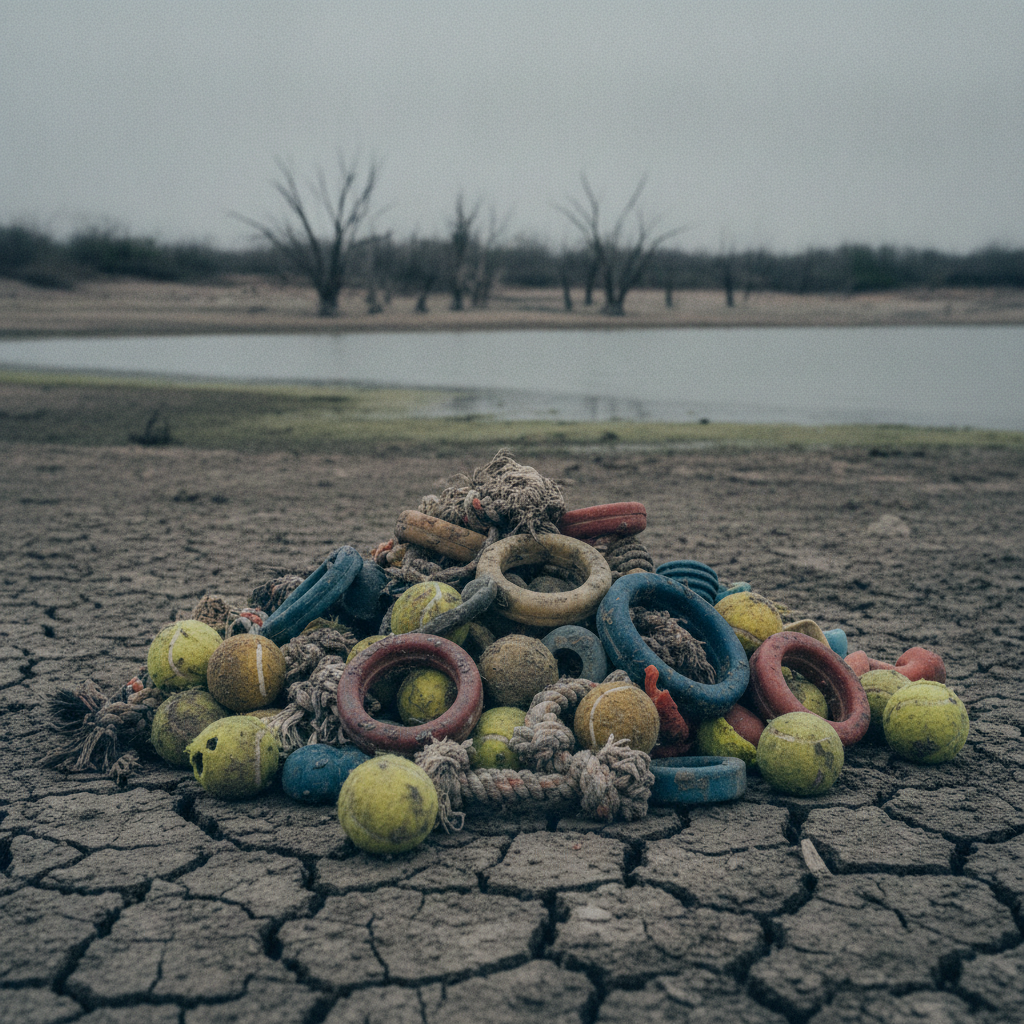
The photo that traveled was the pile of tennis balls: nearly a thousand faded, algae-slicked dog toys hauled out of a Colorado Springs reservoir where dogs had splashed for years. It is a striking image, and it buried the more important part of the story. The toys are a mess. The blue-green algae they were sitting in is a killer. If you take one thing from what happened at South Suburban Reservoir, let it be the water, not the toys.
The threat that actually harms dogs
Blue-green algae is not really algae at all. It is cyanobacteria, and certain blooms produce toxins that are among the fastest-acting poisons a dog can encounter in nature. A dog does not have to drink much. Lapping at contaminated water, or even licking it off their coat after a swim, can be enough.
The timeline is what makes it so dangerous. With the neurotoxic forms, signs can begin within 15 to 60 minutes of exposure: drooling, vomiting, diarrhea, muscle tremors, weakness or collapse, seizures, and difficulty breathing. The liver-damaging forms may take up to a day to show, then progress to liver failure. There is no antidote. Treatment is emergency stabilization and supportive care, and even with fast veterinary intervention the prognosis for a serious exposure is poor. This is a situation where prevention is not one option among several. It is essentially the only reliable protection.
With blue-green algae, minutes matter and there’s no reversal agent, so I tell owners not to wait for symptoms to get worse. If your dog swam in or drank from water with a visible scum and then starts drooling, vomiting, or trembling, treat it as an emergency and get to a vet immediately, ideally calling ahead so they’re ready.
What actually happened at the reservoir
South Suburban is one of two reservoirs in the 318-acre Stratton Open Space, built in 1932 to store raw, untreated drinking water. It was never formally sanctioned for recreation, but for years pet parents let dogs swim off leash there in summer. As of October 21, Colorado Springs Utilities closed it to public access.
The closure was triggered by a 2024 maintenance project that involved draining the reservoir, which is when crews found the nearly 1,000 toys that had accumulated over roughly two decades. But officials were clear that the toys were the symptom, not the disease. The deeper problem is what happens when dogs and people use a small drinking-water reservoir as a swimming hole. As the utility explained, splashing and swimming stir up sediment, which raises the organic carbon and nutrients that feed algae, including toxic cyanobacteria. Dogs in the water also introduce pathogens like E. coli. The reservoir does not hold enough water to dilute these pollutants, and the contamination had forced the utility to pull it from service repeatedly over the years.
The toys added their own wrinkle: sitting in drinkable water for twenty years, they can leach microplastics and PFAS. But a spokesperson stressed that the “bigger issue really is the use of the water,” which the facility simply cannot accommodate. The reservoir is expected to be refilled in 2026, with the water off-limits for swimming and dog play while the surrounding hiking trails and dry-land recreation stay open.
How to decide whether water is safe for your dog
The reservoir is a useful case study because it packs the three most common open-water hazards into one spot: toxic algae, bacterial contamination, and human-made debris. Here is how to think about any body of water before your dog goes in.
- Look for a bloom, and when in doubt, stay out. Avoid any water with a blue-green, pea-soup, or paint-like scum, foam, or mats on the surface, or a musty, foul smell. Blooms are not always obvious and can concentrate at the shoreline where dogs wade. If it looks off, it is not worth the risk.
- Prefer designated dog swimming areas over untreated reservoirs. Purpose-built dog beaches and swim spots are chosen and maintained with animal use in mind. Raw-water reservoirs are not.
- Check for posted advisories. Many parks and health departments flag active algae blooms or bacterial contamination. A quick look before you go is worth it in bloom season, typically warm, calm, late-summer weather.
- Don’t let your dog drink the water they swim in. Bring fresh water so they are not tempted to gulp from the source.
- Rinse your dog off after any natural swim. It removes algae, bacteria, and debris before your dog can lick it off, and it is your last easy line of defense.
The bigger pattern
South Suburban’s closure fits a national trend: utilities and parks departments have grown far more cautious about dogs in drinking-water reservoirs and untreated swimming areas, driven by rising awareness of toxic algae blooms that have sickened and killed dogs across the country, plus growing concern over PFAS and microplastics. For pet parents, the practical takeaway is simple and worth repeating, because it can save a life: seek out water that is meant for dogs, skip anything with visible scum or a bad smell, and when you are not sure, keep them out.
References
- Colorado Springs Utilities. “South Suburban Reservoir Public Access.” https://www.csu.org
- Cornell University College of Veterinary Medicine, Riney Canine Health Center. “Blue-Green Algae Poisoning (Cyanobacteria Toxicosis).” https://www.vet.cornell.edu/departments-centers-and-institutes/riney-canine-health-center/canine-health-topics/blue-green-algae-poisoning-cyanobacteria-toxicosis
- American Animal Hospital Association. “Algae Alert: Understanding the Dangers of Blue-Green Algae for Pets.” https://www.aaha.org/resources/algae-alert-understanding-the-dangers-of-blue-green-algae-for-pets/
- U.S. Environmental Protection Agency. “Harmful Algal Blooms and Cyanobacteria.” https://www.epa.gov/cyanohabs
Not a substitute for your vet. Our guidance is educational. For urgent symptoms, contact a vet or emergency clinic right away. Editorial standards
Dr. Solis is a board-certified veterinary dermatologist with over twelve years of clinical experience. She advises on skin conditions, allergies, and grooming practices that affect coat and skin health. All dermatology and allergy content at The Pet Times is reviewed by her team before publication.
Meet our experts ↗Keep reading
 LivingShelters Say the Same Thing About Lost Dogs: Nobody Has a Usable PhotoMarcus Webb · 8 min
 LivingStop Dog-Proofing Room by Room. Your Dog Doesn't Live in Rooms.Dr. Nina Kohl · 6 min
 LivingConan's Cohost Let Her Husband Cut the Dog's Hair. Once.Leila Torres · 8 min
 Living'Nobody's Around, It's Fine.' The 30-Second Decision You're Getting WrongTom Hadley · 6 min
 LivingThe Most Dangerous Thing in Your Yard Might Be the Lawn ItselfDr. Ravi Mehta · 7 min
 Health & WellnessThe Winter Sidewalk Danger No One Warns You About Until It's Too LateDr. Ravi Mehta · 6 min