


Celery Is Basically Crunchy Water. That's Exactly Why It's a Good Dog Treat.
Celery won't nourish your dog much, and that's the point. It's low-calorie crunch and hydration for a pup watching their weight, with a couple of real cautions on strings, seeds, and what you dip it in.

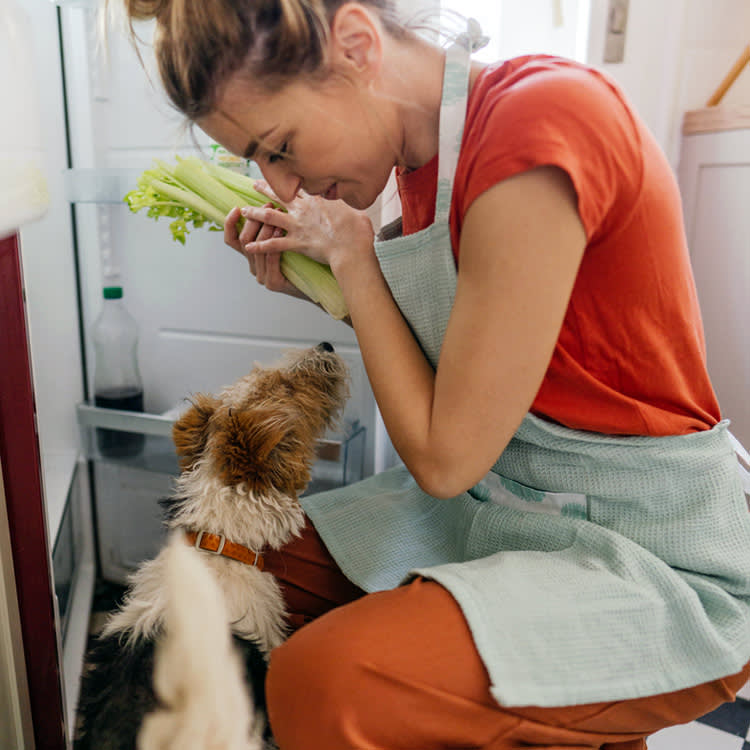
Most “can my dog eat this” articles try to talk celery up as if it were secretly nutritious. It is not, really, and pretending otherwise misses why celery is actually a smart thing to hand your dog. Celery is close to nutritionally empty: about 95 percent water, roughly 14 calories a cup, almost no protein or fat. That sounds like a knock. It is the whole selling point.
For a dog who begs at every snack and could stand to lose a pound or two, a treat that is basically cold crunchy water is close to ideal. You get the ritual of giving a treat, your dog gets the satisfying crunch, and almost nothing lands on their waistline. So think of celery not as a health food you are adding, but as a low-stakes way to say yes.
What celery gives your dog (and what it doesn’t)
Let’s be honest about the nutrition, because it is thin. Celery brings a little potassium, calcium, vitamin K, and folate, plus some antioxidants in the form of flavonoids. All of that already shows up in adequate amounts in a complete dog food, so whatever a stalk of celery adds is a rounding error, not a boost.
What celery does bring in a way that matters is fiber and water. It has both soluble and insoluble fiber, which support digestion and add bulk that helps a dog feel full without calories. And at 95 percent water, it is genuinely hydrating on a hot day. Those two traits, fullness and hydration with almost no energy attached, are the entire reason a vet might nod at celery for a heavier dog.
The best thing about celery for dogs is how little it does. It fills the treat-shaped hole in the day without the calories, so I’ll suggest it for dogs on a weight plan who still want to feel like they’re getting something.
The real cautions, none of them scary
Celery is safe, but “safe in moderation” earns the second half of that phrase. A few things to keep in mind:
- Fiber can backfire in bulk. The same fiber that makes celery useful can cause gas, bloating, or diarrhea if a dog who isn’t used to raw veggies eats a lot at once. Start with a small piece.
- Cut it down to size. Whole stalks and long strings are tough to chew and can be a choking hazard, especially for small dogs. Chop celery into small, bite-sized pieces.
- Skip the seed extract. The stalk, leaves, and even the seeds are non-toxic, but concentrated celery seed essential oil is a different thing entirely and can irritate a dog’s skin, gut, or airway. Keep essential oils away from your dog.
- Watch what it’s riding on. Celery itself is fine. “Ants on a log” is not, because raisins are toxic to dogs, and celery dragged through garlic-and-onion dip is not either. If you share your snack, share plain celery.
The smart way to use it
Because celery is so low-calorie, it is one of the few treats you can be a little generous with, within reason. Use it as a training reward when you want to run through a lot of reps without loading your dog with calories. Break a stalk into pea-sized bits and reward a string of sits, downs, or place cues. On a hot afternoon, a few cold celery pieces double as a hydrating snack. You can even chop it fine and stir a spoonful into dinner as a low-cal topper for a dog cutting back.
The one thing celery should never be is a meal or a nutrient source. It does not have the energy or the protein and fat a dog needs, so a dog filling up on celery is a dog missing out on real food. Keep it in its lane, which is a treat, and celery is one of the more sensible ones in the crisper.
What newer research adds
Celery’s appeal makes more sense against the backdrop of how many dogs are carrying extra weight. The Association for Pet Obesity Prevention’s recent surveys estimate that a large majority of dogs score in the overweight-to-obese range, and in 2024 far more owners than the year before recognized their own dog was heavier than ideal. That shift in awareness is exactly why low-calorie, high-crunch treats keep coming up in vet conversations.
The current thinking hasn’t changed the fundamentals, though. Weight comes off through smaller portions, fewer calorie-dense treats, and more movement. Swapping a biscuit for a few pieces of celery is a small, real move inside that plan, not a shortcut around it.
The bottom line
Celery is safe, it is hydrating, and it is close to calorie-free, which is precisely why it earns a spot in the treat rotation for a dog who needs to eat lighter. Keep the pieces small, keep it plain, and don’t ask it to be nutritious. Ask it to be a guilt-free yes, and it delivers.
References
- What Nutrients Are Essential for My Pet? — Cummings School of Veterinary Medicine, Tufts University
- 2024 Pet Obesity Survey Results — Association for Pet Obesity Prevention
Common questions
How much celery can a dog eat?
Keep celery and all treats under 10 percent of your dog's daily calories. Since celery is nearly all water, that is easy, but too much fiber at once can cause gas or loose stool, so start small.
Can dogs eat celery leaves and stalks?
Yes, the whole stalk and the leaves are safe. Avoid concentrated celery seed extract or essential oil, which can irritate a dog's skin and gut.
Why does my dog like celery?
Many dogs enjoy the loud crunch and the cold, juicy texture. Plenty of dogs also turn their nose up at the smell, and that's fine too.
Not a substitute for your vet. Our guidance is educational. For urgent symptoms, contact a vet or emergency clinic right away. Editorial standards
Dr. Mehta is a board-certified veterinary nutritionist who evaluates pet food formulations, ingredient quality, and the science behind dietary trends. He writes and reviews all nutrition content at The Pet Times, including our food rankings and feeding guides.
Meet our experts ↗Keep reading
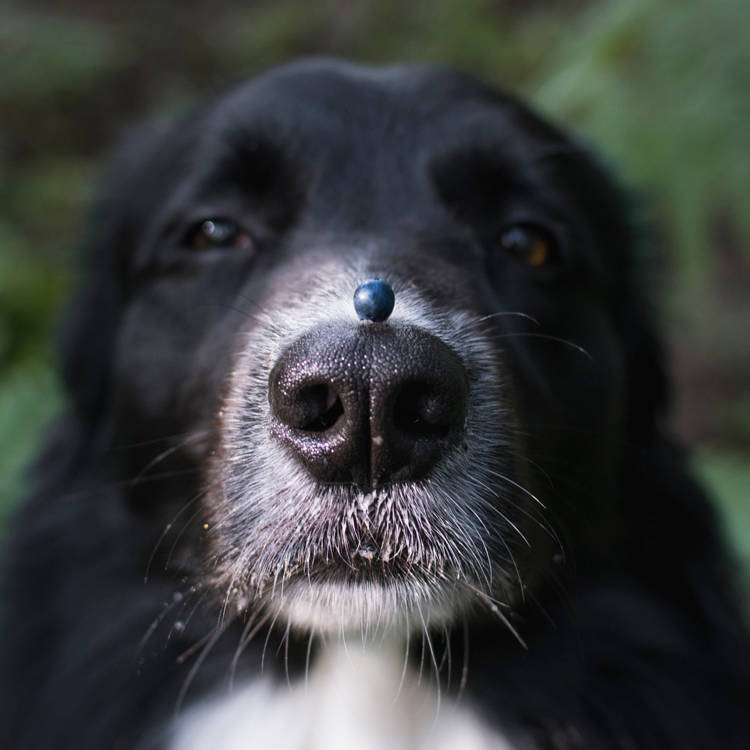 FoodBlueberries Are the Rare 'Superfood' Your Dog's Aging Brain Actually UsesDr. Priya Nair · 5 min
 FoodCinnamon Isn't the Problem for Your Dog. What's Next to It IsDr. Lena Park · 5 min
 FoodStrawberries Are the One Fruit Treat Even a Dieting Dog Can KeepDr. Priya Nair · 5 min
 FoodThat Lemon Face Your Dog Makes Is a 40,000-Year-Old Survival TrickDr. Lena Park · 6 min
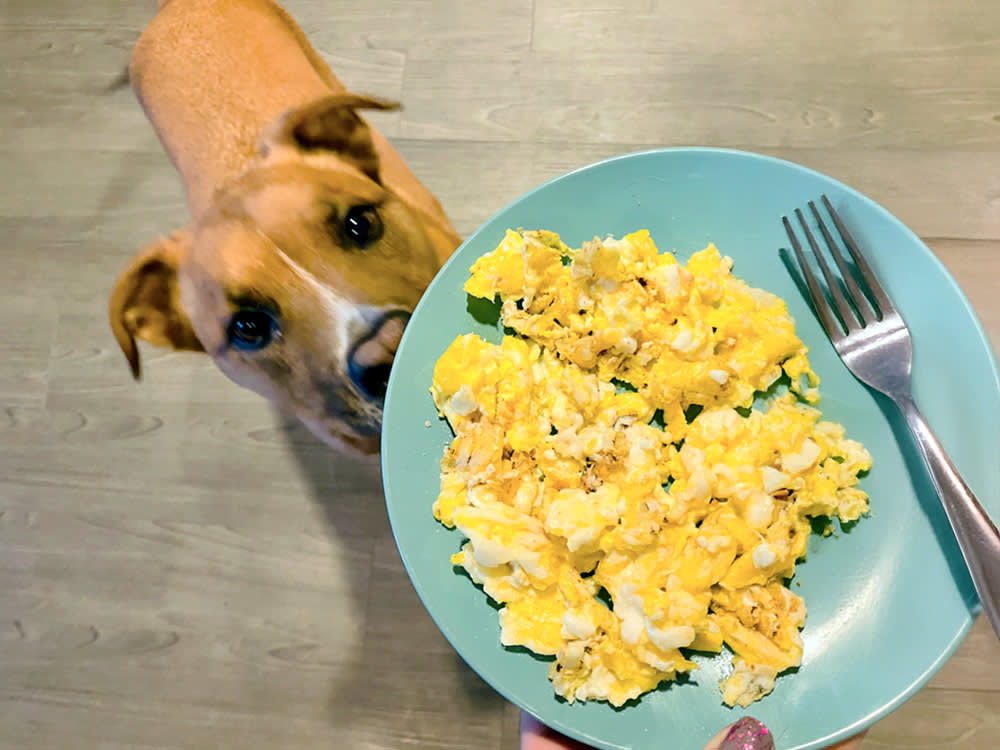 FoodScrambled Eggs Are Great for Dogs. Your Skillet Is the Problem.Dr. Mara Chen · 6 min
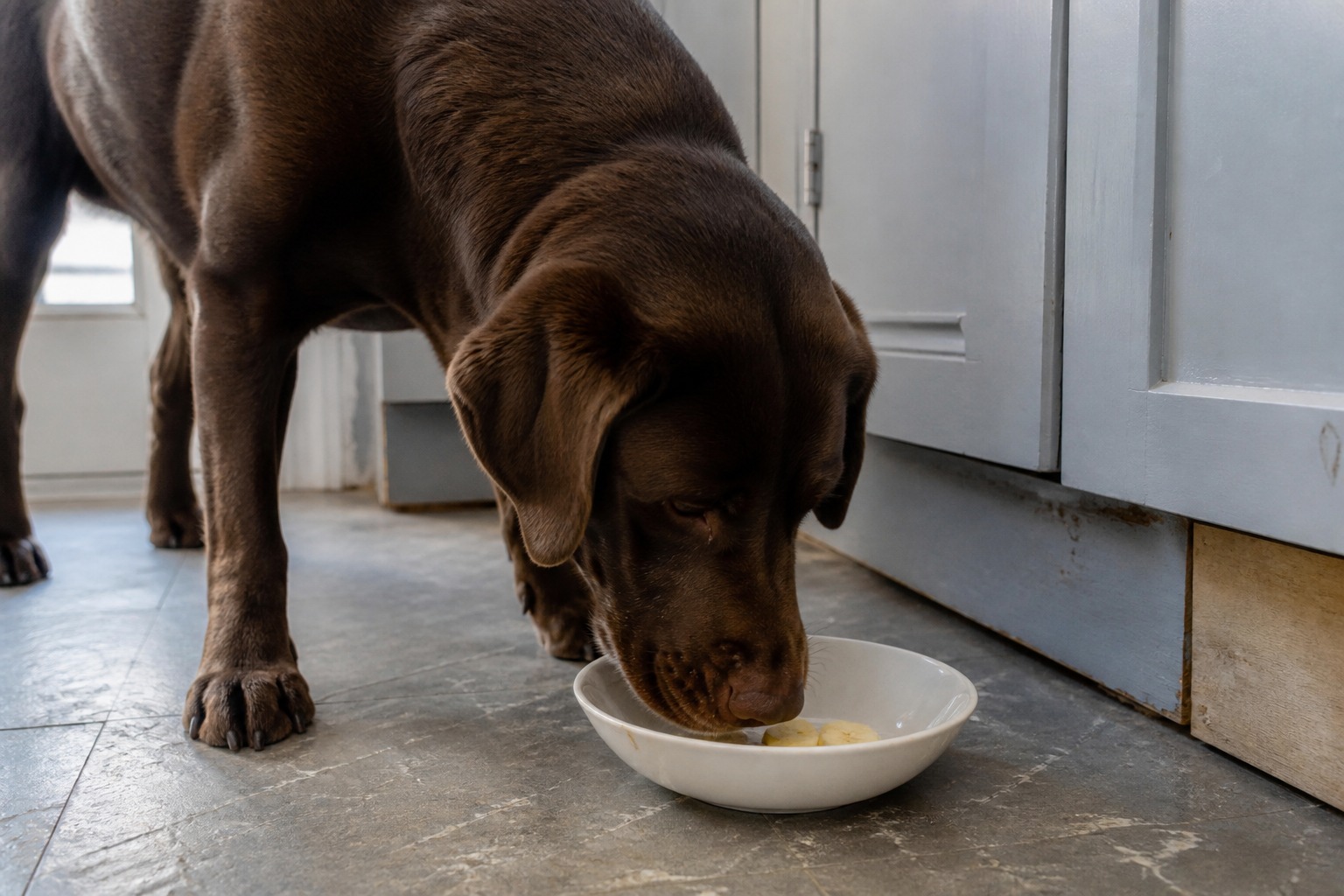 FoodBananas Are Basically Dog Candy. That's Exactly Why They're UsefulDr. Lena Park · 5 min