


Your Cat's Name Was Picked by a Celebrity. You Just Don't Know Which One
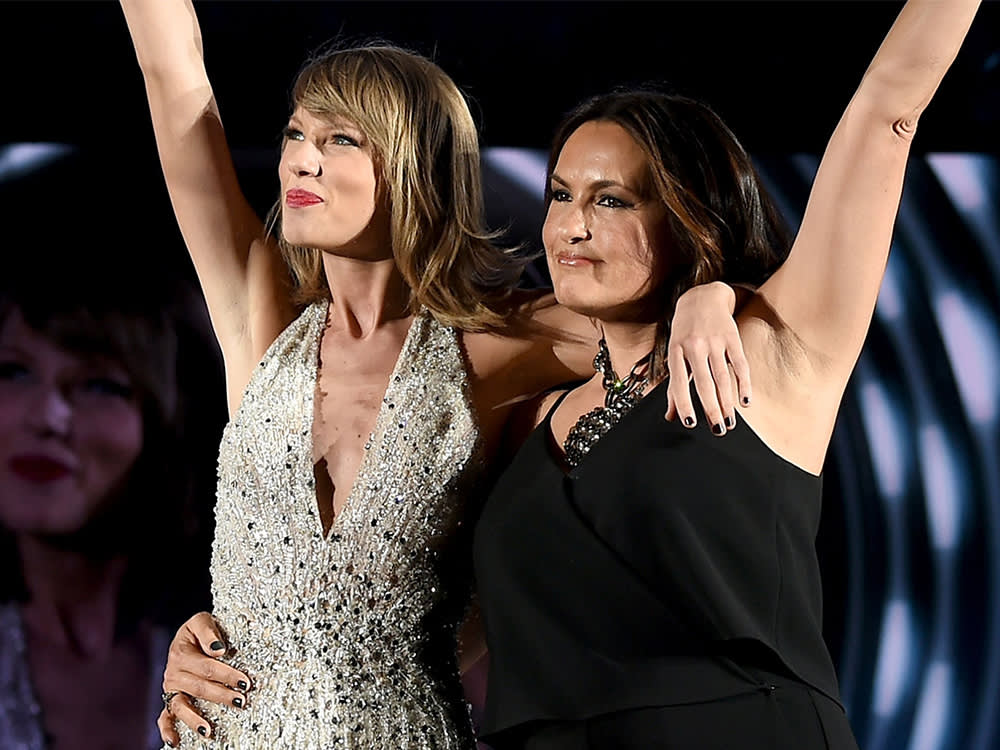
Taylor Swift named her cat after Mariska Hargitay's character. Hargitay named hers after a Swift lyric. It reads as pure celebrity trivia, and it is actually the clearest illustration of the single biggest force in American pet naming.
Consider the loop.
In 1999, Mariska Hargitay began playing a fictional detective named Olivia Benson on Law & Order: Special Victims Unit. Some years later, Taylor Swift acquired a Scottish Fold and named her Olivia Benson, after the detective. That cat became famous enough to have her own Wikipedia page, which is a sentence that should probably be examined by somebody.
Then, in late 2023, Hargitay got a new cat of her own and named her Karma, after a line in a Swift song from Midnights about karma being a cat that purrs in your lap because it loves you. She announced it on Instagram, tagged Swift, and stacked the caption with lyric-derived hashtags in the manner of a woman who knows exactly what she is doing.
So: an actor plays a cop, a pop star names a cat after the cop, the pop star writes a lyric comparing karma to a cat, and the actor names her cat after the lyric. The snake has eaten its tail, and the internet reacted the way you would expect, which is to say one commenter called it inception with cats and everybody agreed.
It is a delightful piece of nonsense. It is also a remarkably clean demonstration of how most cats in this country get their names, and that part is not nonsense at all.
Entertainment is the engine
Pet naming feels like the most personal decision in the world. You look at the animal, you sit with it, something comes to you. It arrives as intuition.
The aggregate data says the intuition has a source, and the source is your screen.
When Rover surveyed pet parents about where cat names come from, entertainment came in first, cited by 33 percent, ahead of breed at 20 percent, humor at 17 percent, nature or space at 16 percent, and food at 12 percent. A third of the names in America are downstream of something somebody watched or listened to. Not a plurality of the weird names. A third of all of them.
And you can watch it happen in close to real time. The name Wednesday jumped by roughly 1,400 percent after the Netflix series landed. Loki has been riding the Marvel wave for years. Luna, currently the most popular cat name in the country, and also the most popular dog name, did not become the most popular anything by accident.
“People describe naming a pet as something that just came to them, and I believe them, but nothing just comes to anybody,” says Sara Lim. “You spend a hundred hours a year with a piece of culture and then a small animal shows up and needs a two-syllable name that feels warm and slightly funny. Of course the name comes from the culture. The pet is just where it lands.”
Why the Swift-Hargitay version is the perfect specimen
Most celebrity naming influence is one-directional and a little embarrassing. A show is popular, a character is beloved, ten thousand kittens get the same name, the shelter intake sheets fill up with them.
What makes this particular loop worth pausing on is that it ran both ways between two people who then became actual friends, which almost never happens and is the reason the whole thing is charming rather than parasocial.
The friendship predates the cats. They met at the Met Gala. They ran into each other again at an Ingrid Michaelson concert, where Hargitay and her husband found themselves stranded without a ride afterward and Swift drove them home, an anecdote Hargitay has told on late-night television with the delight of a person who cannot quite believe it either. Hargitay then turned up in the Bad Blood video, cast under the code name Justice, which was a wink at the two decades she has spent as television’s most reliable dispenser of it, and she said afterward that her cool factor with younger people went up considerably.
In 2015, Swift filmed the moment Hargitay met the cat named after her, narrating the introduction of Olivia Benson to Olivia Benson. In 2023, Hargitay closed the circuit from the other side.
That is not a naming trend. That is two people making each other laugh in public for a decade. But the reason a million people saw it is the same reason a million cats are named Luna, and the mechanism underneath is identical.
The useful part, if you are naming a cat
None of this is a reason to feel unoriginal. Being influenced by a thing you love is not a failure of imagination, it is what culture is for.
There are, though, two entirely practical things worth knowing before you commit.
A name is a training tool. Cats respond best to short names, one or two syllables, ideally ending in a bright vowel or a sharp consonant that carries across a room. This is a real acoustic point and not a superstition. Sir Reginald Fluffington is a wonderful name and you will be calling him Reggie by Thursday, which is fine, so long as you have chosen the nickname on purpose rather than discovering it by accident.
Names age. The name you pick from the show you are watching this month will be attached to a creature who will still be in your house in 2040. This is where the loop above is instructive again, oddly: Hargitay named a cat after a lyric, and Swift named a cat after a character, and both names were durable because both referred to something the namer had loved for years rather than something she had watched last week. That is a decent test. If the reference will make you wince in a decade, keep looking.
For what it is worth, the naming data suggests almost nobody follows this advice, and the country remains full of very happy cats named after whatever was on.
References
- Rover, 2025 Pet Name Report
- Newsweek, “America’s Most Popular Cat Names in 2025 Have Been Revealed”
- Wikipedia, Olivia Benson (cat)
Jordan Ellis is a certified professional dog trainer with a decade of experience working with rescue organisations and private clients. They specialise in anxiety, reactivity, and positive reinforcement methods, and review all training and behaviour content at The Pet Times.
Meet our experts ↗Keep reading
 LivingThat Head Bump Isn't a Kiss. It's a Signature.Dr. Nina Kohl · 6 min
 LivingHe Fostered Six Kittens. Two Died in His Hands. He Kept Fostering.Dr. Amara Solis · 8 min
 LivingThe Viral Cat Essay's Real Failure Was Confusing a Feeling With a ChoiceDr. Mara Chen · 8 min
 LivingYour Cat Notices the Empty Spot. Whether to Call It Grief Is the Hard PartDr. Nina Kohl · 6 min
 TrainingYour Cat's Trust Isn't Affection. It's a Threat Assessment You Keep Passing.Dr. Lena Park · 8 min
 LivingMy Cat Has Never Once Felt Awkward. I'm Taking Notes.Sasha Ford · 5 min