

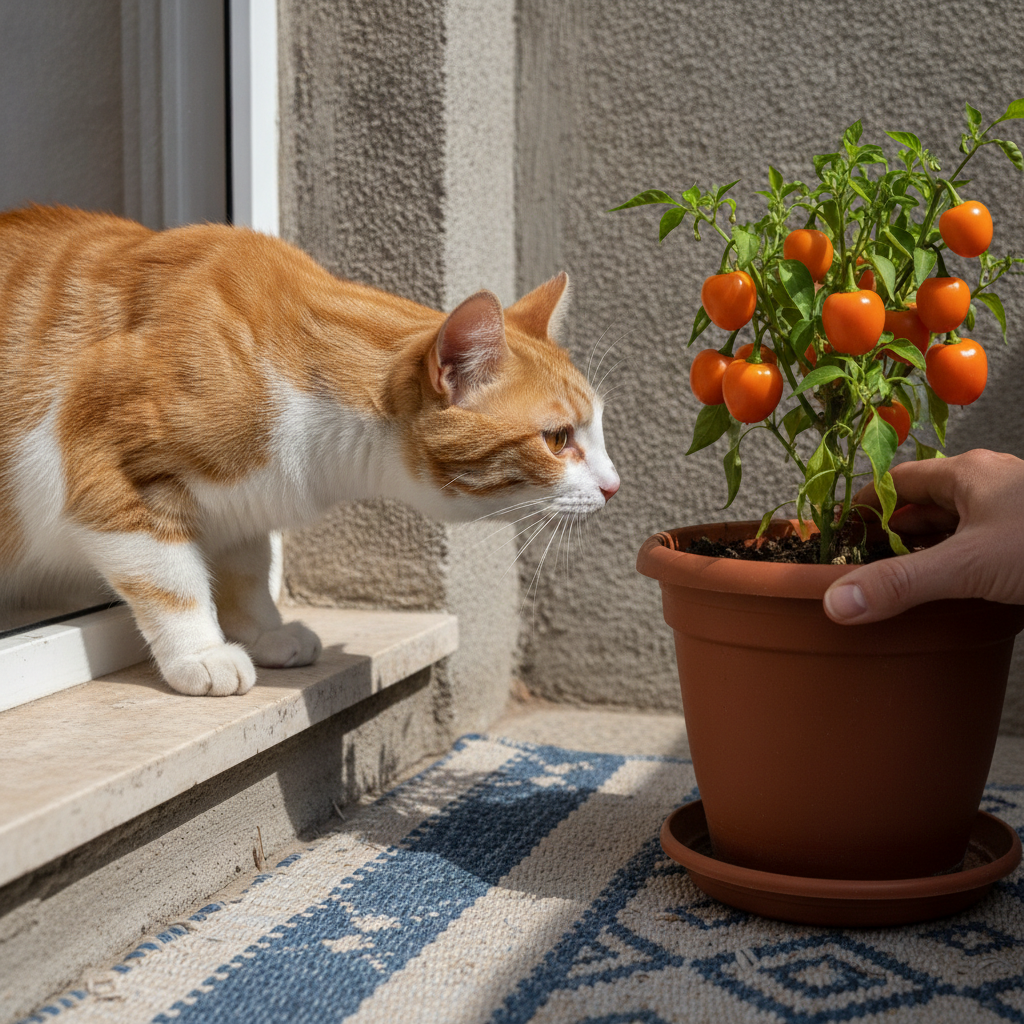
Picture giving a cat a flake of chili. They are not going to savor it, wince, reach for water, and decide it was worth it the way a human heat-seeker would. They cannot have that experience. A cat’s sense of taste is built so differently from ours that the entire concept of “enjoying spicy food” does not translate. And that mismatch is the key to the whole question, because it means the reasons to keep spicy food away from your cat are not the reasons you would assume. The heat is unpleasant for them, yes. But the thing most likely to actually hurt a cat is hiding in the recipe, not in the pepper.
Let’s take the taste biology first, because it reframes everything.
A cat tastes almost nothing of what you taste
When you eat something spicy, a whole orchestra plays: sweetness, savoriness, the heat, the aromatics, the slow build. A cat hears almost none of it. Two facts explain why.
First, cats have very few taste buds, fewer than 500, compared with roughly 9,000 in humans. Their palate is, in flavor terms, low-resolution.
Second, and more striking, cats are genetically blind to sweetness. The gene for the sweet taste receptor, Tas1r2, is a broken pseudogene in cats, switched off deep in their evolutionary past when the cat lineage became strict meat-eaters. A cat is as indifferent to sugar as you are to ultraviolet light, the receptor simply is not there. What cats can taste well is umami, the savory, meaty flavor, which is exactly what you would expect from an obligate carnivore.
So when a cat encounters a spicy dish, they miss most of its flavor. Here is the catch: they do not miss the burn. Cats have the same capsaicin receptors we do, the ones responsible for the heat and the little jolt of pain. So a cat eating something spicy gets the discomfort of the heat without any of the flavor payoff that makes humans tolerate or even chase it. It is, for them, mostly downside. No wonder most cats sniff a spicy dish and walk away.
What capsaicin actually does to a cat
Capsaicin is the compound that makes peppers hot, evolved by the plants precisely to deter animals from eating them. In a cat, triggering those receptors causes immediate irritation and a touch of pain in the mouth, and that irritation can carry through the digestive tract. The result is the familiar short list of stomach-upset signs: vomiting, diarrhea, abdominal pain, decreased appetite, and sometimes drooling, pawing at the mouth, or trouble swallowing. Most cats who sneak a single bite are uncomfortable for a day or two and then fine.
That is real, and it is reason enough to keep spicy food off the menu. But on its own, a one-time taste of plain heat is rarely an emergency. The genuinely dangerous part is usually somewhere else in the bowl.
The hidden danger: it’s the aromatics, not the heat
Think about what actually goes into spicy food. Curry, salsa, chili, hot stir-fries, jerk seasoning, buffalo sauce, almost all of them are built on a base of onion and garlic, plus sometimes chives or shallots. And onions and garlic are toxic to cats. They damage red blood cells and, in enough quantity, can cause a life-threatening anemia. This is the threat that turns “my cat licked some curry” from a stomachache into a vet emergency, and it has nothing to do with the chili at all.
This is the reframe worth holding onto: when people ask whether spicy food is safe for cats, they are usually picturing the burn. But the capsaicin tends to cause a passing tummy upset, while the onion and garlic that ride along in nearly every spicy recipe are the ingredients that can do serious harm. A spicy dish is rarely just spicy; it is spicy and full of allium aromatics, and the second part is the one that lands cats at the clinic.
Signs your cat ate something spicy, and when to call
If a cat gets into spicy food, watch for drooling, vomiting, diarrhea, pawing at the mouth, or a skipped meal. With plain heat, these usually pass within a day or two.
Call your veterinarian if the symptoms are severe, if they last more than a couple of days, or, importantly, if the dish contained onion or garlic in any amount, because the signs of allium toxicity (weakness, pale gums, lethargy, reddish or dark urine) can develop over the following days, after the stomach upset has faded. When in doubt about a dish with onion or garlic in it, do not wait, call your vet or a pet-poison hotline.
“Owners tend to panic about the chili and shrug off the curry sauce, when it’s exactly backwards,” says Dr. Mara Chen. “The pepper gives them a bad night. The onion and garlic are what I actually worry about, because the damage can show up days later.”
Better things to offer instead
Cats truly need nothing beyond a good complete cat food, but if you want to give your begging cat a taste of what you are eating, reach for plain, unseasoned options rather than anything off your spicy plate:
- Lean, cooked meats (chicken, turkey)
- Cooked fish
- Cooked egg
- Carrot
- Cucumber
- Green beans
- A small piece of apple or banana
Keep these to treat-sized portions, and serve them plain, no seasoning, oil, skin, peels, or seeds. Wash produce well. The point is a safe, savory little bonus, not a second dinner.
So, can cats taste when something is spicy?
In a word: barely. A cat’s sense of taste is basic enough that they miss most of the flavor of spicy food, registering the heat and irritation without the experience that makes spice appealing to people. That is precisely why most cats avoid it on their own. Trust that instinct, keep the spicy plate to yourself, and be far more vigilant about the onions and garlic in the dish than about the chili. The heat is the part your cat will refuse; the aromatics are the part you have to refuse for them.
Frequently asked questions
Can cats taste spicy food?
Not the way we do. Cats have very few taste buds and cannot taste sweetness at all, so they miss most of the flavor of a spicy dish. But they do have the receptors for capsaicin, so they can feel the heat and irritation, just without the reward.
Is spicy food dangerous for cats?
The capsaicin can irritate a cat’s mouth and digestive tract, causing drooling, vomiting, diarrhea, and pain. But the bigger danger is usually the onion and garlic in most spicy dishes, which are toxic to cats and can damage red blood cells.
What should I do if my cat ate spicy food?
A small taste usually causes a day or two of mild stomach upset that resolves on its own. Call your vet if symptoms are severe or last more than a couple of days, or if the dish contained onion or garlic in any amount.
Why would a cat eat spicy food at all?
Most cats avoid it, put off by the smell. The ones who try it are usually just curious about something you’re eating, and most stop after a single bite once the heat hits.
References
- Li et al. “Pseudogenization of a Sweet-Receptor Gene Accounts for Cats’ Indifference toward Sugar.” PLOS Genetics, 2005.
- “Umami taste perception and preferences of the domestic cat (Felis catus), an obligate carnivore.” Chemical Senses, 2023.
- ASPCA Animal Poison Control Center: Onions, Garlic, Chives (allium toxicosis in cats).
- Cleveland Clinic: The Health Risks of Eating Extremely Spicy Foods (capsaicin and gastrointestinal irritation).