


Your Nose Can Tell You Something Is Wrong. It Can't Tell You What.
Strong-smelling dog pee is a real signal, but it's a low-resolution one. Here's what the smell narrows down, what makes it an emergency, and why a bad-smelling sample doesn't automatically mean antibiotics.

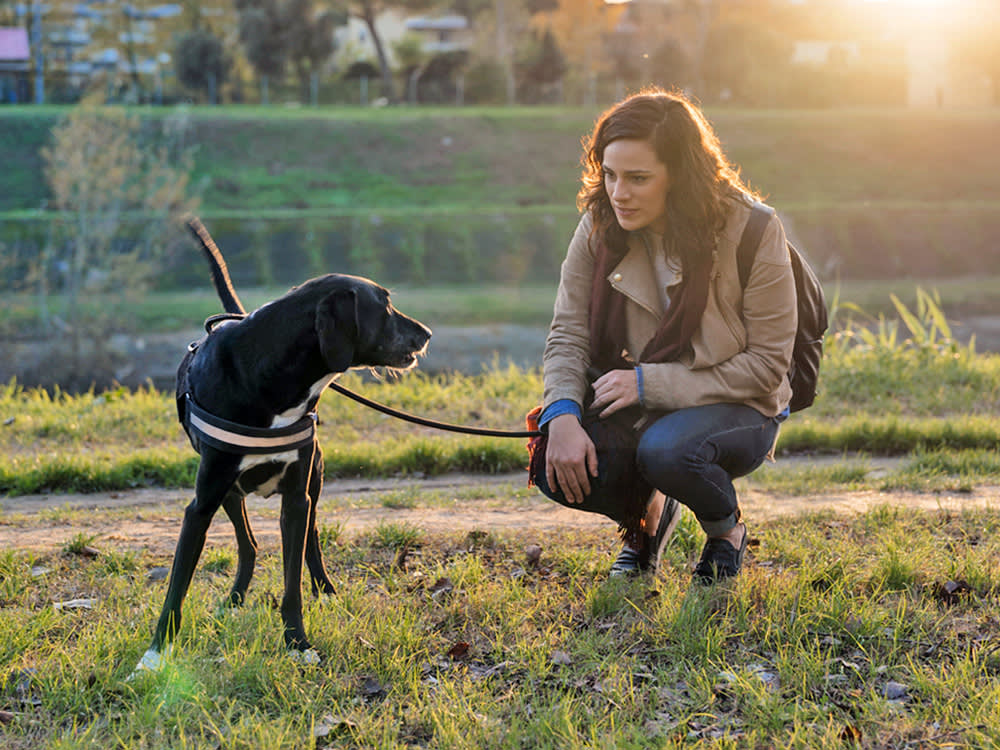
Owning a dog means having opinions about their bodily functions that you would never have volunteered for. You know their schedule. You know the texture. And you absolutely know when the pee suddenly smells like it could strip paint.
That smell is worth paying attention to. What it is not worth is a diagnosis. Urine odor is a genuinely useful alarm and a genuinely terrible detective, because almost everything that changes urine odor does it through the same two mechanisms: the urine got more concentrated, or something is growing in it. Both of those have half a dozen causes underneath, and the only tool that separates them is a urinalysis.
So here is the honest version of this article. The smell tells you to look. What you find when you look is what actually matters.
What “concentrated” really means
Most of the time you never notice your dog’s urine, because normal urine is not strongly odorous. Concentration is what turns the volume up. When there is not enough water in the body, the kidneys claw back everything they can, and what comes out is a small volume of dark, intense, strong-smelling urine.
That is why the morning pee is the loudest one. Your dog has just gone eight hours without food or water, and the first sample of the day is the most concentrated one they will produce. This is normal and it is not an illness.
Dehydration stops being normal when it has a cause. Fluid is lost through vomiting, diarrhea, heavy drooling, or a runny nose, and if a dog is not eating and drinking enough to keep up, they fall behind. Hot weather and hard exercise without enough water do the same thing. As dehydration deepens, the trips outside get rarer, the puddles get smaller, and what comes out is darker and more pungent each time. Severe dehydration is a medical emergency, and at the far end of it a dog stops producing urine at all. That is an immediate-care situation, not a wait-until-Monday one.
Which brings us to the part of this article that actually deserves your attention.
The signals that outrank the smell
Odor by itself is a nudge. Odor plus any of the following is a phone call.
Straining with nothing coming out. A dog posturing to pee repeatedly and producing little or no urine is an emergency. It can mean swelling, a bladder stone lodged in the urethra, or a tumor in the bladder or urethra. Complete blockage is life-threatening within hours.
A completely dry day. A dog who has produced no urine in eight hours or more needs to be seen today, not tomorrow.
Blood, cloudiness, or a dark brown or red color. Blood or pus in the urine changes its appearance, and it changes the urgency.
Sudden accidents in a house-trained dog. Inflammation in the urinary tract creates urgency and frequency, and even a rigorously house-trained dog will not make it to the door.
Obsessive genital licking, whimpering, hiding, or avoiding people. Urinary problems hurt, and dogs express pain in ways that look like behavior problems.
Drinking and peeing far more than usual. This points away from a simple infection and toward kidney disease or diabetes, both of which are covered below.
The causes underneath, sorted by how they change the urine
Infection in the urinary tract
Urinary tract infections are one of the most common reasons a dog’s pee changes, and they are usually bacterial. What is easy to miss is that a UTI is often the symptom, not the disease. Bladder stones, diabetes, congenital malformations, and chronically dilute urine all make infection more likely, which is why a dog with a UTI, and especially a dog with repeated UTIs, deserves a full workup rather than a refill.
Kidney disease
Kidney infection (pyelonephritis) puts bacteria in the urinary tract and directly produces a bad odor. Chronic kidney disease does it more indirectly: as kidney function falls, the kidneys lose the ability to reabsorb water and concentrate urine, the urine becomes dilute, and dilute urine is an easier place for bacteria to thrive.
What else you would expect to see with failing kidneys:
- Thirst that has gone up noticeably, because water is being lost in the urine and has to be replaced.
- Bigger, clearer, more frequent puddles.
- A dog who has stopped bothering with play and activity.
- Vomiting, once waste products such as urea start accumulating and irritating the gut.
- A shrinking appetite, which then makes the dehydration and the weight loss worse.
Diabetes
Undiagnosed or poorly controlled diabetic dogs spill sugar into dilute urine, and some people with sensitive noses can smell the difference. The bigger issue is that sugary, dilute urine is an ideal bacterial culture medium, so diabetic dogs get UTIs, and the infection is what makes the smell truly foul. The rest of the diabetes picture: relentless thirst and urination, a dog who seems ravenous and is losing weight anyway (without insulin the cells cannot take up sugar, so the body starts burning muscle and fat instead), and cataracts that arrive suddenly. Those may hit one eye or both, and without surgery to restore vision, they can end in blindness.
Reproductive disease
The urinary and genital anatomy overlap, and so do the symptoms. In female dogs, vaginitis, a uterine infection called pyometra, and reproductive tract tumors all cause bad odor, discomfort, and interference with normal urination. In males, prostate infection or an enlarged prostate changes both the urine and the act of urinating. Many of these conditions are prevented outright by spaying and neutering.
Holding it too long
Urine that sits in the bladder for hours gets more concentrated and smells worse. Usually the reason is boring, an overnight stretch or a long gap between walks. Sometimes it is not: spinal or nerve damage affecting the tail, hind legs, or bladder can leave a dog unable to fully empty. So can painful conditions that make posturing difficult, medications such as opioids, and physical blockage. Most healthy adult dogs should get the chance to urinate every six to eight hours, adjusted for age and health.
Diet
What goes in shapes what comes out. Salt and protein levels change the composition of urine and can change its smell. Oxalates, compounds found in certain foods, can predispose some dogs to bladder stones, which in turn invite infections and foul-smelling urine. Dogs with a history of stones often need a prescription diet to prevent new ones, and dogs with kidney disease or diabetes may need a therapeutic diet. That is a conversation with your vet, not a swap you make at the pet store.
What the workup looks like
Expect a hands-on exam first, then bloodwork and a urinalysis. The urinalysis is the cheap, fast test that does what your nose cannot: it measures concentration, looks for sugar, protein, blood, crystals, and white cells, and tells your vet whether the story is dehydration, infection, kidney, or something else. Further tests follow from what it finds.
The nose is a smoke alarm, not a fire investigator. It tells you to go look. Every dog I see for foul urine gets the same first step, which is a urine sample, because the smell is the one piece of information that cannot distinguish a thirsty dog from a diabetic one.
What’s new since this was written
There is one shift in veterinary practice that changes what you should expect at the clinic, and most owners have never heard of it.
For years, the reflex was simple: bacteria in the urine meant antibiotics. Current guidance from the International Society for Companion Animal Infectious Diseases says otherwise. Dogs can have bacteria in their urine without being sick from it, a state called subclinical bacteriuria, and it shows up in roughly 2 to 12 percent of dogs. The guidance is that subclinical bacteriuria generally should not be treated, even when there are white cells in the sample, unless there is a specific clinical reason to worry.
Practically, that means two things for you. First, a positive-looking urine sample from a dog with no symptoms is not automatically a prescription, and a vet who declines to reach for antibiotics is following the evidence, not cutting corners. Second, it makes the symptoms you report matter more than ever. The straining, the accidents, the licking, the drinking: those are what separate an infection that needs treating from bacteria that are just along for the ride.
The short version
- Foul urine is a real signal, and it should send you to a vet rather than to a search engine.
- You cannot prevent every urinary problem. You can stack the deck: water always available, a balanced diet, frequent chances to empty the bladder, and spaying or neutering.
- Straining without producing urine is an emergency. Everything else is an appointment.
References
- Weese, J.S., et al. “International Society for Companion Animal Infectious Diseases (ISCAID) guidelines for the diagnosis and management of bacterial urinary tract infections in dogs and cats.” The Veterinary Journal, vol. 247, 2019, pp. 8-25.
- Yadav, S.N., et al. “Urinalysis in dog and cat: A review.” Veterinary World, vol. 13, no. 10, 2020, pp. 2133-2141.
- Granger, N., et al. “Bladder and Bowel Management in Dogs With Spinal Cord Injury.” Frontiers in Veterinary Science, vol. 7, 2020.
- Van Vertloo, L. “Renal Dysfunction in Dogs and Cats.” Merck Veterinary Manual, 2025.
Common questions
Does a bad smell mean my dog has a UTI and needs antibiotics?
Not on its own. Odor is not a diagnosis, and current veterinary infectious disease guidance is explicit that bacteria in the urine without clinical signs generally should not be treated with antibiotics. A urinalysis, and often a culture, is what decides.
When is smelly urine an emergency?
If your dog is straining to pee and little or nothing comes out, that is an emergency, full stop. So is a dog who has not urinated at all for more than eight hours, or one who is severely dehydrated and has stopped producing urine.
Not a substitute for your vet. Our guidance is educational. For urgent symptoms, contact a vet or emergency clinic right away. Editorial standards
Dr. Nair is a veterinarian focused on diet and feeding. She covers everyday nutrition, treats, and the many "can they eat this?" questions owners ask, grounding each answer in what is actually safe and sensible for dogs and cats.
Meet our experts ↗Keep reading
 Health & WellnessBig Dogs Die Younger, Everyone Knows. The Surprise Is What Small Dogs Are HidingDr. Ravi Mehta · 5 min
 Health & WellnessThat Crusty Nose Isn't the Problem. It's the ReceiptDr. Amara Solis · 8 min
 Health & WellnessThe Biggest Dog Cancer Study Ever Run Found Something Better Than a CureDr. Ravi Mehta · 10 min
 Health & WellnessThe Thyroid Test That Puts Healthy Dogs on Lifelong MedicationDr. Lena Park · 9 min
 Health & WellnessThat New Lump Feels Like Nothing. That's Exactly the Problem.Dr. Mara Chen · 7 min
 Training8 Disgusting Things Your Dog Does. Only 3 Are Worth Worrying About.Dr. Ravi Mehta · 9 min