


Yellow Cat Vomit Usually Means an Empty Stomach. Sometimes It Means More.
That puddle of yellow liquid is almost always bile from a stomach that's gone too long without food, and often the fix is as simple as a bedtime snack. Here's how to tell the harmless version from the kind that needs a vet.

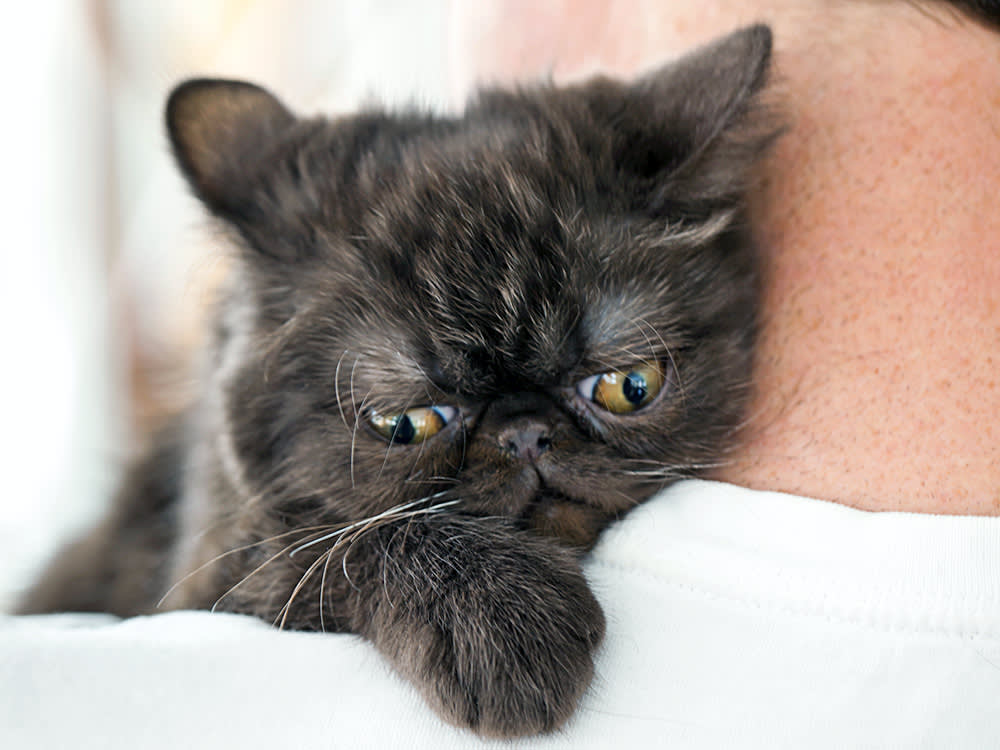
There is a specific sound every cat parent learns to fear: the rhythmic, full-body heave from the next room, usually before dawn. You arrive to find a small puddle of yellow liquid and a cat looking mildly betrayed by their own body. The good news is that yellow vomit is, most of the time, one of the more explainable things a cat can do. The better news is that the most common version often has a simple fix.
But “most of the time” is doing real work in that sentence, so let’s walk through what the yellow actually is, why the empty-stomach version is so common, and where the line sits between a puddle you can shrug off and one that needs a phone call.
What the yellow actually is
The yellow is bile. Bile is a digestive fluid your cat’s liver makes to help break down fat. Normally it gets released when your cat eats, and the incoming food acts as a buffer, giving the bile something to work on so it never directly assaults the stomach lining.
The trouble starts when there is no food to buffer it. On an empty stomach, bile has nothing to do but sit there and irritate, and an irritated stomach does what stomachs do: it sends the contents back up. That is why yellow vomit and an empty stomach go together so reliably.
Bile is genuinely caustic, it’s supposed to be, that’s how it breaks down fat. When there’s a meal in the stomach, that’s fine, the food takes the hit. On an empty stomach it just sits against the lining and irritates it, and up it comes. The color is basically a receipt telling you the stomach was running on empty.
Why it so often happens at dawn
The empty-stomach pattern has a name, bilious vomiting syndrome, and a signature schedule. Cats who have it tend to throw up yellow liquid first thing in the morning, because overnight is the single longest stretch they go without eating. Twelve hours with an empty stomach is plenty of time for bile to build up and make its displeasure known.
If your cat’s yellow vomit clusters around the early morning and they are otherwise bright, hungry, and normal, this is very likely what you are dealing with. It looks alarming and is usually one of the more manageable causes.
The other reasons for yellow vomit
Empty stomach is the headline, but it is not the only cause. Bile can also show up mixed into vomit for reasons that have nothing to do with meal timing:
They ate something yellow. Sometimes the simplest answer is real. A chewed crayon, a bit of yellow packaging, even certain pigments in commercial cat food can tint vomit. Worth a glance at the label and the floor before assuming the worst.
They ate something they shouldn’t have. Indigestible objects can irritate the tract or, worse, lodge and cause an obstruction, both of which can bring up bile. This is the version that can turn serious.
Hairballs. A cat overwhelmed by swallowed fur can bring it back up, and there is often some yellow bile riding along with the wet hairball.
Food allergies or sensitivities. When a cat’s gut objects to an ingredient, vomiting is a common protest, sometimes with yellow liquid, often alongside diarrhea, belly pain, or itchy skin.
A GI or organ problem. Infection, inflammation, obstruction, pancreatitis, and disease of the liver or gallbladder can all show up as yellow vomit. So can diabetes and kidney disease, often because the cat feels too lousy to eat, which loops back to, you guessed it, an empty stomach.
When to call the vet
Here is the practical test. Yellow vomit once or twice, in a cat who is otherwise acting completely normal, eating, drinking, playing, using the box, usually does not need a visit. Keep an eye on them and see if it recurs.
Call your vet if you see:
- More than two episodes in 24 hours, or a pattern that keeps repeating over days
- Lethargy or hiding
- Loss of appetite or refusing food
- Diarrhea
- Belly pain, or a cat who resents being picked up around the middle
- Yellowing of the skin, gums, or the whites of the eyes (a sign of a liver or gallbladder issue)
- Increased thirst and urination alongside the vomiting
“One puddle in a cat who’s otherwise their usual menace, I’m not worried about,” Dr. Chen says. “What changes the math is company. Yellow vomit plus a cat who’s gone quiet, stopped eating, or looks jaundiced is a different animal, sometimes literally. That’s the version I want to see.”
What the vet will do
Expect a hands-on exam and a set of questions: when it started, what else you have noticed, whether you have changed anything, and your cat’s overall health history. Depending on the picture, bloodwork and imaging check organ function and rule out an obstruction. Treatment follows the cause, supportive care and fluids for a simple irritated stomach, anti-nausea medication, antibiotics for infection, a diet change for food sensitivity, a hairball remedy where fur is the culprit, and, for a true blockage or a tumor, surgery.
How to head it off
If an empty stomach is the trigger, your kitchen is the pharmacy. A small snack right before bed gives the overnight bile something to work on. An automatic feeder set to deliver a tiny early-morning portion does the same job while you sleep. More broadly, splitting the daily ration into smaller, more frequent meals keeps the stomach from ever sitting fully empty for long.
Beyond meal timing, the usual good habits help: keep small swallowable objects picked up and out of reach, secure the trash, brush your cat regularly to cut down on swallowed hair, and consider a limited-ingredient or novel-protein diet if food sensitivity is in the mix. And keep up with routine vet visits, which catch the quiet problems while they are still small.
What’s worth knowing now
The reassuring headline holds up: for most cats, yellow vomit is bile on an empty stomach, and the fix lives in the feeding schedule, not the medicine cabinet. What has sharpened over time is the awareness that “always throws up bile in the morning” is worth solving rather than tolerating. The bedtime-snack fix is genuinely effective for the empty-stomach version, and if it does not work, that failure is itself useful information, it tells you and your vet the cause is something other than a long overnight fast, and points you toward looking a little deeper.
The through-line: yellow is usually a timing problem, not a tragedy. But a cat who keeps producing it despite a full stomach, or who produces it alongside any other symptom, has stopped talking about breakfast and started talking about health.
References
- Johnson, Tony, DVM. “Bilious Vomiting Syndrome in Cats and Dogs.” Veterinary Partner, 24 Sept. 2024. https://veterinarypartner.vin.com/default.aspx?pid=19239&catId=254092&id=12296225
- Gibson, Thomas, DVM. “Gastrointestinal Obstruction in Small Animals.” Merck Veterinary Manual, Sept. 2024. https://www.merckvetmanual.com/digestive-system/diseases-of-the-stomach-and-intestines-in-small-animals/gastrointestinal-obstruction-in-small-animals
Common questions
Should I worry about yellow cat vomit?
A single episode in an otherwise happy, hungry, normal cat usually isn't cause for alarm. Worry if it happens more than twice in 24 hours, keeps recurring, or comes with lethargy, not eating, diarrhea, belly pain, or yellowing of the skin or eyes. Those combinations mean call the vet.
How do I stop my cat from throwing up bile in the morning?
If an empty overnight stomach is the trigger, a small snack right before bed or an automatic feeder that delivers a tiny early-morning meal often solves it. Splitting the day's food into smaller, more frequent portions helps too. If it continues despite this, have your vet check for an underlying cause.
Not a substitute for your vet. Our guidance is educational. For urgent symptoms, contact a vet or emergency clinic right away. Editorial standards
Dr. Chen is a small-animal veterinarian who leads health and safety coverage at The Pet Times. She writes and reviews the bulk of our illness, condition, and safety content, translating clinical guidance into clear, practical advice owners can act on at home.
Meet our experts ↗Keep reading
 Health & WellnessThat 'Hairball' Cough Might Be Asthma. Here's How to TellDr. Ravi Mehta · 9 min
 Health & WellnessCats Get Their Own 'Parvo.' The Cat Version Is Often Deadlier.Dr. Mara Chen · 6 min
 TrainingThat Belly Is Not an Invitation. It's a Sentence.Dr. Nina Kohl · 6 min
 TrainingYour Cat Isn't Attacking You. You Live on a Hunting Route.Dr. Amara Solis · 9 min
 Health & WellnessThat Scaly Patch on Your Cat Could Be Yours NextDr. Nina Kohl · 7 min
 Health & WellnessCat Anal Gland Leaks Are a Symptom, Not the DiseaseDr. Lena Park · 8 min