


That 'Hairball' Cough Might Be Asthma. Here's How to Tell
A cat coughing without producing a hairball is often mistaken for a harmless gag. It can be feline asthma, heart disease, or worse. A vet breaks down what the cough is really telling you.

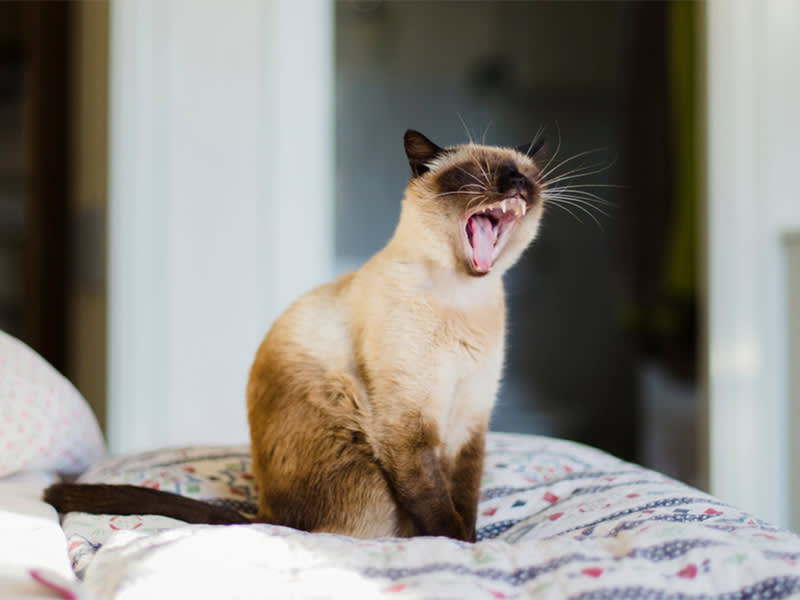
Most cat coughs get filed under “hairball” and forgotten. That instinct is understandable and, a lot of the time, wrong. A hairball is a specific, self-resolving event that ends with something on your rug. A cough is a reflex that clears the airway, and when a cat coughs and coughs and nothing comes up, the cause is usually not in the stomach at all. It is in the lungs, the airways, or the heart.
That single distinction, cough versus hairball, is where a worried owner should start, because it points you toward the right worry. Get it wrong and you wait out a genuine problem thinking it is a grooming quirk.
Hairball or cough? Learn the difference first
A hairball comes from grooming. Cats swallow hair, most of it passes, and now and then a wad has to come back up. The event is loud and unpleasant, involving a run of full-body retching, and it ends with a hairball. Then it is over. Your cat does not do it again three times a day.
A cough is different. It is the body clearing an irritant from the airway, and it can repeat, dry or wet, without ever producing anything. If your cat is hacking on and off, especially in a low, stretched-out posture with the neck extended, and no hairball ever appears, you are looking at a cough. That reframe matters, because a “hairball problem” gets home remedies while a cough gets a diagnosis.
Wet cough versus dry cough
Not all coughs sound alike, and the sound is a clue.
A wet cough sounds moist and phlegmy, and may bring up mucus or fluid. You might hear a rattle deep in the chest. A dry cough is more of a hacking or gagging without anything produced, sometimes with a wheeze as the cat pulls for air. Neither type is something to self-diagnose, but noticing which one you are hearing gives your vet a useful head start.
What is actually causing the cough
Here are the culprits, from the everyday to the serious.
Feline asthma. One of the most common reasons a cat coughs, and the one most often missed. Also called feline allergic bronchitis, it happens when allergens inflame the airways, trigger spasms, and ramp up mucus. Besides coughing, you may see wheezing or a winded look after activity. Triggers can be seasonal, like spring pollen, or environmental, like smoke, dust, mold, potpourri, essential oils, and household sprays.
Chronic bronchitis. Close cousin to asthma, but without the acute triggers. Both are inflammatory airway diseases, so treatment aims at the same goals: calming the immune response, sometimes with corticosteroids or bronchodilators, and clearing any secondary infection.
Upper respiratory infections. Plenty of viruses and bacteria cause respiratory infections in cats, and many have vaccines. Whether it is a cold-like bug or something more severe, an infection can drive a cough. Look for sneezing, a runny nose, and watery eyes alongside it.
Parasites. Heartworms (yes, cats get them) and lungworms can inflame the lungs and set off a cough. Parasites often stay quiet until there are a lot of them, which makes treatment harder, so year-round prevention is worth discussing with your vet.
Pneumonia. Here the airways inflame and fill with fluid, making breathing genuinely difficult. It can come from a viral, fungal, or bacterial infection, or from inhaling food or liquid. Pneumonia can escalate fast, so it needs prompt veterinary care.
Cancer. As in people, tumors can start in the lungs or spread there from elsewhere, and the irritation can cause coughing and labored breathing.
Heart disease. The heart and lungs are neighbors, and problems in one spill into the other. Certain heart conditions cause fluid to back up into the lungs, which produces a cough.
Foreign objects. Cats eat things they should not, and strings, rubber bands, or small objects can lodge in the esophagus or airway, prompting a cough as the body tries to clear it.
Hairballs and allergies. Yes, a true hairball can cause a coughing fit right before it comes up. And allergies alone, without full-blown asthma, can irritate the airways enough to trigger a cough alongside sneezing and watery eyes.
When the cough comes with other signs
The company a cough keeps helps narrow things down.
Cough plus sneezing points toward an upper respiratory infection or allergies, often with watery or crusty eyes, a runny nose, and a smaller appetite. Cough plus wheezing is the classic signature of feline asthma, with the airways deeper down struggling to move air, sometimes alongside fast or labored breathing. Cough that ends in a hairball is exactly what it sounds like, dramatic but usually benign, unless your cat retches repeatedly and nothing comes up.
When to worry, and when to move fast
A single, one-off cough is usually nothing. These are the moments to act.
Labored breathing is an emergency. Heavy or labored breathing, open-mouth breathing, exaggerated movement of the chest or belly with each breath, or gums and tongue that look pale or bluish mean you go to the vet or the emergency clinic immediately, even at 2 a.m.
The sign I never want owners to sit on is open-mouth breathing. A cat panting like a dog is not cooling off, it is a cat in respiratory distress, and that is an ER visit measured in minutes, not hours. When in doubt, drive.
A chronic cough gets checked. Even if your cat seems otherwise fine, a cough lasting more than two weeks deserves a vet visit.
Lethargy is a red flag. Cats hide illness by nature, so a cat that has stopped hiding how bad it feels is usually pretty sick. Subtle or intermittent problems still deserve a look.
How vets figure it out
If the cough is dragging on or getting worse, professional care is the move. One genuinely useful thing you can do first: record an episode on your phone. Cats rarely cough on cue at the clinic, and a video shows your vet what is actually happening at home.
From there, a physical exam, chest X-rays, bloodwork, and a heartworm test are common first steps. Early diagnosis is often the difference between a manageable condition and a crisis.
Treatment depends on the cause
Once your vet has an answer, treatment follows it. Some fixes are simple, like medication for an infection or parasite. Others are lifelong management. Asthma, bronchitis, and allergies usually mean reducing airborne irritants at home plus medication to open the airways and calm inflammation. Heart disease calls for long-term medication to control fluid buildup. Cancer may involve surgery or chemotherapy. Foreign objects need removal, and troublesome hairballs may respond to supplements or a diet change.
What you can do at home
Assuming your cat is not in distress, you can lower the irritant load in your home while you work with your vet. Skip the cigarettes near your cat; smoke is brutal on feline lungs. Ditch the potpourri, incense, essential oils, and heavily scented products. Keep dust down, switch to a low-dust litter, and consider an air purifier. Staying current on preventive care and keeping your cat at a healthy weight heads off plenty of preventable disease.
What’s new since this was written
The big shift in feline asthma care is that many cats are now managed the way people with asthma are: with an inhaler. Vets increasingly prescribe inhaled corticosteroids and bronchodilators delivered through a cat-sized spacer and mask (the AeroKat is the widely used one). The appeal is real, because inhaled steroids act right at the airways and largely sidestep the body-wide side effects of long-term oral or injectable steroids, which is a meaningful benefit for a disease a cat may live with for years. It takes some patient training to get a cat comfortable with a mask, but many tolerate it well, and it has become a mainstay rather than a novelty.
The other current emphasis is on getting an actual diagnosis rather than treating “the cough” blindly. Chest imaging and, where appropriate, airway sampling help separate asthma from heart disease and infection, because the treatments diverge sharply and guessing wrong wastes time a sick cat may not have. If your vet reaches for a diagnostic workup instead of a quick cough suppressant, that is the current standard of care, not overkill.
References
- Cornell Feline Health Center. “Diagnosis: Heart Disease.” Cornell University College of Veterinary Medicine.
- American Heartworm Society. “Heartworm in Cats.” heartwormsociety.org.
- Trzil, J.E. “Feline Asthma: Diagnostic and Treatment Update.” Veterinary Clinics of North America: Small Animal Practice.
- American Association of Feline Practitioners. “Feline Asthma and Chronic Bronchitis.” catvets.com.
Common questions
How do I tell a cough from a hairball?
A hairball is a short, dramatic event that ends with something coming up. A true cough is a repeated, dry or wet hack that produces nothing. If your cat is hacking regularly with no hairball to show for it, treat it as a cough and call your vet.
Why does my cat cough after eating?
Often it's just eating too fast, so food irritates the airway on the way down. If it keeps happening, food sensitivities, dental problems, or another health issue could be behind it, and it's worth a vet visit.
My cat coughs but never brings up a hairball. Is that bad?
A cough with nothing produced is more likely to be respiratory, cardiac, or allergic than a hairball problem. Because those causes range from mild to serious, a persistent dry cough should be checked.
Not a substitute for your vet. Our guidance is educational. For urgent symptoms, contact a vet or emergency clinic right away. Editorial standards
Dr. Mehta is a board-certified veterinary nutritionist who evaluates pet food formulations, ingredient quality, and the science behind dietary trends. He writes and reviews all nutrition content at The Pet Times, including our food rankings and feeding guides.
Meet our experts ↗Keep reading
 Health & WellnessVets Are Done Calling Frequent Vomiting 'Normal' for CatsDr. Lena Park · 9 min
 Health & WellnessYour Cat Doesn't Have to Eat the Lily. The Vase Water Will Do.Dr. Amara Solis · 9 min
 Health & WellnessGarlic and Cats: The Toxin That Hides in Plain Sight on Your PlateDr. Amara Solis · 6 min
 Health & WellnessYour Cat's 'UTI' Probably Isn't One. Here's What's Really Going OnDr. Lena Park · 8 min
 Health & WellnessCats Are America's Most Rabid Pet. The Indoor Ones Aren't Exempt.Dr. Ravi Mehta · 8 min
 Health & WellnessYour Cat Hides Pain by Design. These Signs Mean Go NowDr. Ravi Mehta · 7 min