


Vets Are Done Calling Frequent Vomiting 'Normal' for Cats
A cat who throws up every week is not just a cat with a sensitive stomach. Here's how to tell the harmless one-off from the pattern that means something, and why the old 'cats just vomit' line is falling out of favor.

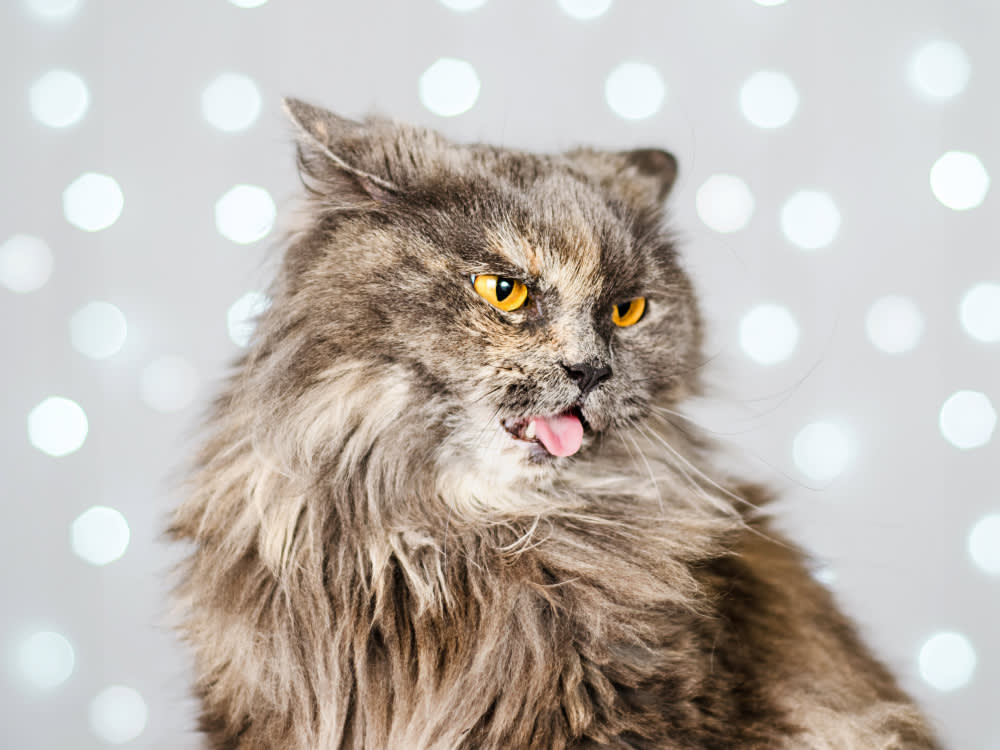
Your cat throws up. You clean it, you sigh, you move on, because everyone knows cats just do this. A hairball here, a foamy puddle there, the classic 3 a.m. hurk from somewhere down the hall. It is so woven into the experience of living with a cat that we have stopped treating it as information.
That instinct is exactly the problem.
The single most useful shift you can make as a cat parent is to stop sorting vomit into “gross” and start sorting it into “one-off” and “pattern.” A cat who throws up once after bolting dinner is a cat with a full stomach and bad table manners. A cat who throws up every week is telling you something, and the veterinary field has spent the last several years getting much less comfortable waving that away.
The one-off versus the pattern
Here is the frame that matters. Almost every cause of vomiting sorts into two buckets: the isolated incident and the recurring pattern. They look identical in the moment. They mean completely different things.
An isolated incident is a single episode, after which your cat acts totally normal. They eat, they drink, they jump on the counter you told them to stay off. This is the hairball, the too-fast meal, the one weird thing they licked. It usually needs nothing from you but a paper towel.
A pattern is vomiting that repeats, even if each episode seems minor and even if your cat seems fine between them. Once a week for a month is a pattern. Twice a week is a louder pattern. This is the category that used to get filed under “sensitive tummy” and increasingly gets filed under “let’s actually look.”
The line I hear most is ‘oh, she’s always been a pukey cat.’ And I get why, it’s usually been going on for years so it feels like who they are. But a cat who vomits routinely isn’t built that way, something is driving it. Chronic vomiting is a symptom with a cause, and the cause is findable more often than people expect.
What actually makes cats throw up
Causes split roughly by where the trouble starts: inside the digestive tract, or somewhere else in the body that the gut is reacting to.
Trouble inside the gut
Hairballs. Real, common, and mostly benign, especially in long-haired cats and heavy groomers. The catch: hairballs should be occasional. A cat producing them constantly may be over-grooming because something itches or hurts, which is worth a look on its own.
Eating too fast. A cat who inhales a meal can bring it right back up, undigested, minutes later. A slow feeder or a puzzle feeder fixes a surprising number of these.
Foreign objects and obstruction. This is the dangerous one. Yarn, string, tinsel, hair ties, and small toys can lodge in the stomach or intestines. Linear objects like string are especially serious because they can saw through the gut wall. If you ever see thread hanging from your cat’s mouth or rear, do not pull it, go straight to an emergency vet.
Food intolerance or inflammatory bowel disease. When the gut chronically reacts to something in the diet, or inflames for its own reasons, vomiting becomes recurrent. This is a leading driver of the “pukey cat” and a big reason the casual dismissal has fallen out of favor.
Ulcers and infections. Gastric ulcers, intestinal parasites, and viral infections all irritate the tract. Parasites and viruses especially show up in kittens.
Trouble from outside the gut
Kidney and liver disease. Both cause nausea and vomiting, and both are common in middle-aged and senior cats. Recurrent vomiting in an older cat is a reason to check organ function, not a reason to shrug.
Pancreatitis. An inflamed pancreas brings vomiting, belly pain, and a cat who stops eating.
Endocrine disease. Hyperthyroidism and diabetes, both frequent in older cats, can drive vomiting along with weight and appetite changes.
Toxins. Lilies, antifreeze, certain human medications, and household chemicals can cause vomiting as an early sign of something far worse. Lilies in particular are a feline emergency, even a small nibble or the pollen can trigger kidney failure.
How to read what you’re seeing
You are the best diagnostic instrument your vet has, because you are there when it happens. A few observations turn a mystery into a lead.
Watch the frequency and timing. Is it once and done, or on a schedule? Right after meals, or randomly? Look at what comes up: undigested food soon after eating points to speed or regurgitation; yellow liquid points to bile on an empty stomach; foam points to an empty or irritated stomach; blood, whether bright red or dark specks, always earns a call. And watch the cat, not just the mess. A cat who vomits once and then eats, plays, and uses the box normally is in a very different situation than one who vomits and then hides, skips meals, or goes quiet.
One distinction trips people up: vomiting versus regurgitation. Vomiting is active and dramatic, with heaving and abdominal contractions. Regurgitation is passive and quiet, food or liquid just falls out, often undigested, with no warning. They have different causes, so it is worth telling your vet which one you saw.
When it’s an emergency
Call or go in promptly if you see any of these:
- More than three vomiting episodes in a single day
- Vomiting that continues past 24 hours
- Inability to keep down even water
- Blood in the vomit, red or coffee-ground dark
- Lethargy, hiding, weakness, or collapse
- Not eating or drinking
- Straining to urinate (in male cats, a possible urinary blockage, which is a true emergency)
- Known or suspected string, foreign object, or toxin
- Pale gums, or signs of dehydration like sunken eyes and tacky gums
When in doubt with a small animal that hides illness by instinct, err toward calling. Cats are extraordinarily good at masking how bad they feel until they are quite sick.
What the vet will do
Expect questions first: does your cat still want to eat, can they hold down water, how soon after eating does it happen, what does the vomit look like, are they acting normal otherwise, and do they chew on things they shouldn’t. Then, depending on the picture, testing. X-rays rule out obstruction and can show masses. Bloodwork screens organ function and infection and shows how dehydrated your cat has become. For kittens, a fecal exam and viral test come first. Persistent cases may need an abdominal ultrasound. Repeated vomiting causes dehydration, so IV fluids are common, and treatment ranges from a diet change to medication to, rarely, surgery for a true obstruction.
Home care for the mild, one-off case
If your cat has vomited once or twice in under 24 hours, has no other symptoms, and is otherwise bright and normal, a gentle reset at home is reasonable while you keep an eye on things:
- Rest the stomach by withholding food for about 12 hours (only four to six hours for kittens, who can’t safely fast long)
- Offer small amounts of water so they stay hydrated without overfilling
- Reintroduce food with a small, bland meal, plain boiled chicken and rice, in frequent tiny portions
- Transition back to the regular diet over a day or two
- For a fast eater, switch to a slow or puzzle feeder
- For a bile-in-the-morning cat, a small bedtime snack often solves it
If vomiting returns, other symptoms appear, or your cat just seems off, stop the home experiment and call. Home care is for the clearly minor case, not for buying time on a sick cat.
What newer thinking adds
The biggest change is not a new drug or test, it is a change of attitude. For a long time, chronic vomiting in cats got a cultural pass, “cats just puke” was accepted wisdom in living rooms and, honestly, in some exam rooms. That has shifted. Veterinary specialists increasingly treat frequent vomiting as a real GI signal rather than a quirk, and push to find the driver instead of managing the mess.
Part of what drove the shift is a clearer understanding of how inflammatory bowel disease and a slow-growing cancer called small-cell (or low-grade) gastrointestinal lymphoma overlap in older cats. The two can look nearly identical, chronic vomiting, some diarrhea, gradual weight loss, and they blur into each other, with IBD in some cats thought to progress toward lymphoma over months to years. Small-cell lymphoma tends to show up in genuinely older cats, often around 12 or 13, and it is treatable, frequently well-managed for a long time when caught early. That is precisely why “she’s always been pukey” is a risky thing to accept in a senior cat: the earlier the pattern gets investigated, the better the options.
None of this means a single hairball is a crisis. It means the pattern deserves a look. If your cat has quietly been a weekly vomiter, that is not their personality. It is a question, and it usually has an answer.
References
- Batchelor, D. J., et al. “Mechanisms, Causes, Investigation and Management of Vomiting Disorders in Cats: A Literature Review.” Journal of Feline Medicine and Surgery, vol. 15, no. 4, 2013, pp. 237–265. https://journals.sagepub.com/doi/full/10.1177/1098612X12473466
- Gibson, Thomas, DVM. “Gastrointestinal Obstruction in Small Animals.” Merck Veterinary Manual, Sept. 2024. https://www.merckvetmanual.com/digestive-system/diseases-of-the-stomach-and-intestines-in-small-animals/gastrointestinal-obstruction-in-small-animals
- “Feline Small Cell GI Lymphoma: A Cancer That Overlaps With IBD.” dvm360. https://www.dvm360.com/view/feline-small-cell-gi-lymphoma-a-cancer-that-overlaps-with-ibd
- “Feline Low-Grade Lymphoma.” NC State Veterinary Hospital. https://hospital.cvm.ncsu.edu/services/small-animals/cancer-oncology/oncology/feline-low-grade-lymphoma/
Common questions
When should I take a vomiting cat to the vet?
Go promptly if your cat vomits more than three times in a day, keeps vomiting for more than 24 hours, can't keep water down, has blood in the vomit, or shows other signs like lethargy, not eating, hiding, or straining to pee. Suspected string, foreign object, or toxin is an immediate emergency.
What does the color of cat vomit mean?
Yellow usually means bile on an empty stomach. Clear or white foam often means an empty or irritated stomach. Bright red is fresh blood; dark, coffee-ground specks are older blood. Green can be bile or something they ate. Undigested food soon after eating points to eating too fast or regurgitation. Any blood or repeated concerning color warrants a call.
Why does my cat throw up right after eating?
The two usual suspects are eating too fast, which sends the meal back up almost immediately, and regurgitation, which is passive and effortless rather than the forceful heave of true vomiting. A slow feeder helps with speed. Frequent regurgitation, though, is its own issue and should be checked.
Not a substitute for your vet. Our guidance is educational. For urgent symptoms, contact a vet or emergency clinic right away. Editorial standards
Dr. Park is a board-certified emergency and critical care specialist. She reviews our health and safety content for clinical accuracy and contributes guides on recognising urgent conditions. Her focus is helping owners act quickly and correctly when it matters most.
Meet our experts ↗Keep reading
 Health & WellnessYour Kitten Can't Poop: When It's a Pumpkin Fix and When It's an EmergencyDr. Priya Nair · 7 min
 Health & WellnessYour Cat Peeing on Your Bed Isn't Spite. It's a Symptom.Dr. Priya Nair · 8 min
 Health & WellnessCats Are America's Most Rabid Pet. The Indoor Ones Aren't Exempt.Dr. Ravi Mehta · 8 min
 Health & WellnessMost Cat Colds Are Harmless. Learn the One Kind That Isn't.Dr. Mara Chen · 7 min
 Health & WellnessThat 'Hairball' Cough Might Be Asthma. Here's How to TellDr. Ravi Mehta · 9 min
 Health & WellnessMost 'Toxic' Plants Just Make Your Cat Drool. Two Genera Actually Kill.Dr. Nina Kohl · 9 min