


One Cat Tree Isn't Enough. The Rule Is One Per Room.
Height isn't a preference your cat happens to have. It's an exit. And an exit only works if it's in the room your cat is standing in when they need it.

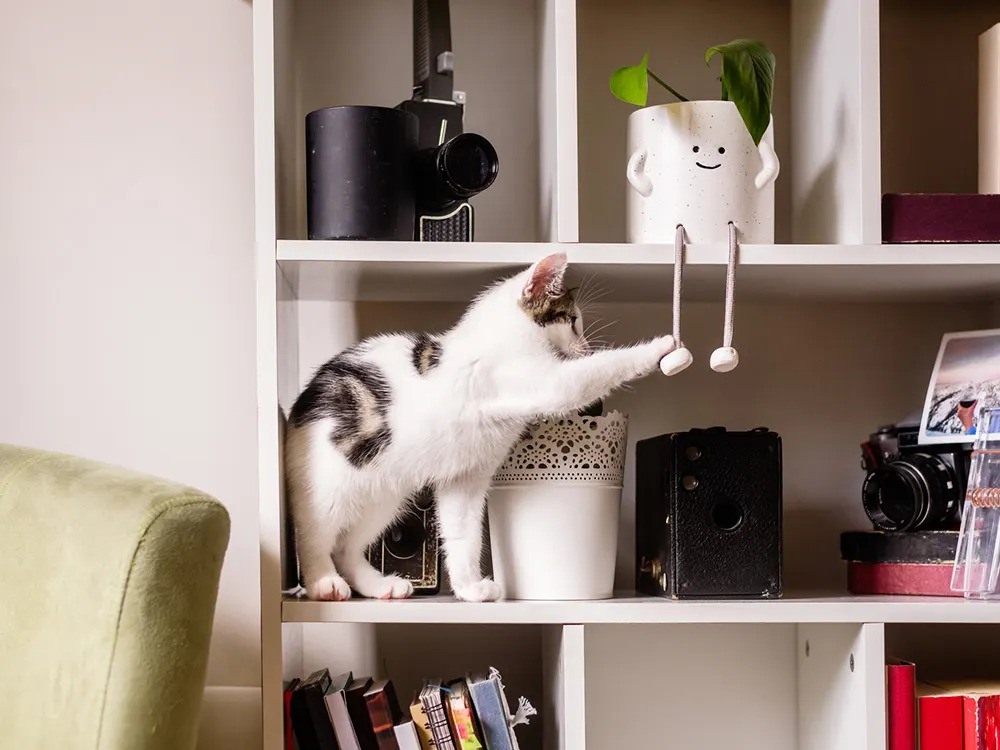
The cat tree in the living room is a good purchase. It is also, on its own, a slightly useless one, and the reason is a piece of geometry nobody explains when they sell it to you.
A cat perches high for a small number of reasons, and almost every one of them is about escape. Escape from a dog who plays too fast. Escape from a toddler with strong opinions about carrying. Escape from the guest who has decided today is the day this cat learns to enjoy being held. Escape from the other cat in a house with one hallway.
An escape route is only an escape route if the cat can reach it from where they are. A single beautiful cat tree in one room means that in every other room of your home, your cat’s only options are the floor, or under the bed.
That’s the argument for the rule: a high option in every room the cat spends time in. Not a bigger tree. More of them.
Height is a strategy, not a mood
Break down what a cat is buying when they go up.
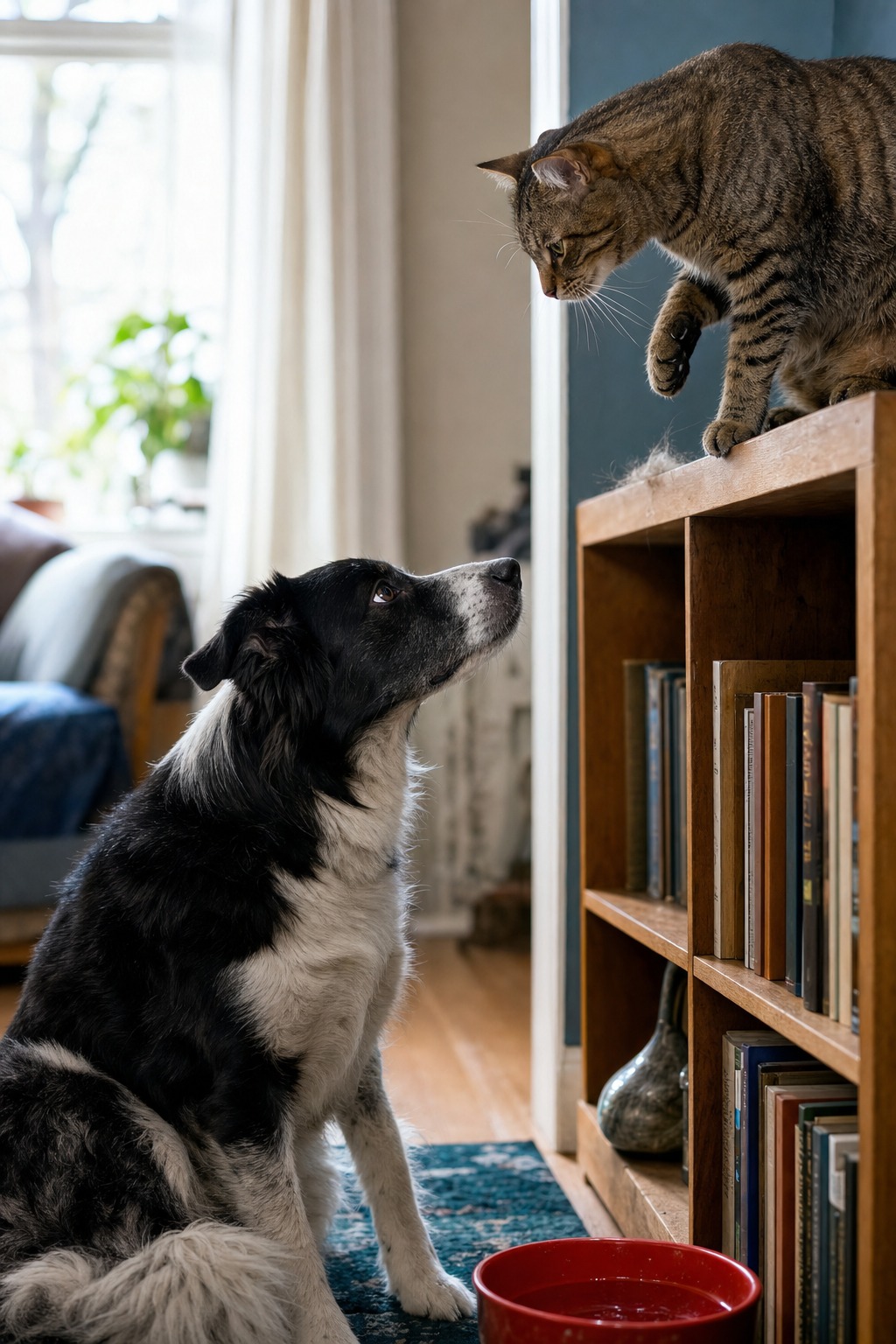
Distance from things that move fast. Being out of reach of a dog, a child, or a stranger is not the same as hiding. Hiding costs the cat the room. A cat under the bed has left the social life of the house. A cat on top of a bookshelf is still in the room, still watching, still part of it, and simply unreachable. That distinction is the whole reason vertical space matters more than a cardboard box.
Advance warning. From above, a cat sees who is coming and how fast, with seconds to spare. Much of what looks like feline anxiety is really a lack of information. Height is information.
Predatory habit. Cats are ambush hunters who work from elevation, and the impulse to survey from a high point is baked in deep. It doesn’t switch off because dinner arrives in a bowl.
A patch of territory that is only theirs. Here’s the subtle one. A high shelf is inaccessible to the dog, the kids, and often the other cat. That means it carries only your cat’s scent. In a home full of overlapping smells, an olfactorily uncontested spot is a rare and calming thing.
Warmth. Heat rises, and a high perch in a sunbeam is the best real estate in the building. This is why the sunny one is always the favorite, no matter how much you spent on the other one.
People buy the cat tree and then wonder why the cat still bolts for the bedroom when the doorbell rings. It’s because the cat tree is two rooms away. The safe place has to be where the scary thing happens, not where you decided the furniture should go.
What actually counts as a perch
Almost anything, which is the good news for anyone who does not want a carpeted tower in every room.
The purpose-built cat tree earns its price when it does more than one job: perching, plus a scratching surface, plus something to climb, plus something to bat. That combination gives you exercise and mental work along with the safe height, which a bare shelf does not.
But a wall shelf works. The top of a bookcase works, provided you clear a landing zone so they aren’t obliged to knock your things off it, which they will otherwise interpret as part of the process. A window perch works and adds the single best television available to a cat. A hammock in a sunny window works. The top of the fridge works, though listen for the compressor hum. The top of a wardrobe works and is often the quietest option in the house.
Two design details are worth getting right. First, cats prefer a perch with something at their back — a wall, a raised edge, a lip — because a spot where nothing can approach from behind is a spot they can genuinely relax on rather than merely sit on. A flat, exposed platform is a lookout; a walled one is a bed.
Second, give them a route up that doesn’t require an athletic leap. Older cats, heavy cats, and arthritic cats want a staircase, not a jump. Arthritis is dramatically underdiagnosed in cats, and one of the earliest signs is a cat who stops going to the high places they used to love. If your cat has quietly abandoned the top of the fridge, that’s not a preference change. That’s a symptom, and it’s worth a vet visit.
The one-per-room audit
Walk your house. In each room your cat uses, ask three questions.
Is there somewhere high they can get to from a standing start, without going through a doorway?
Is at least one of these high spots in a sunny place?
Can the dog, the toddler, or the visitor reach any of them? If yes, it isn’t an escape.
Where the answer is no, you have a gap, and the gap is where the hiding under the bed comes from.
Add one more, in the room where new people arrive. If a guest walks into your living room and your cat has one option — leave — you will keep having the same conversation about how your cat is unfriendly. Give the cat a high spot in that room and the behavior often changes within a couple of visits, because the cat stops having to choose between safety and company.
What newer research adds
The idea that cats need vertical space has moved from folk wisdom to formal guidance. The American Association of Feline Practitioners and the International Society of Feline Medicine publish a set of environmental needs guidelines built on five pillars, and the first pillar is simply: provide a safe place. The guidelines are explicit that this needs to be somewhere the cat can go up as well as away, and that a single one is not enough in a multi-cat or multi-pet home.
Shelter research points the same direction and is unusually persuasive, because shelters are the most stressful housing a cat is likely to encounter. Cats given elevated resting options in their enclosures show lower stress scores, are less likely to develop upper respiratory infection — the classic stress-linked shelter illness — and are adopted out faster. When a change in furniture reduces measurable disease rates, it has stopped being a matter of taste.
The last thing worth saying is that you can help a perch along. Synthetic feline facial pheromone products, the kind marketed under names like Feliway, have reasonable evidence behind them for reducing environmental anxiety in cats, and a puff on a new perch can shorten the time it takes a cat to decide the spot is theirs. It won’t do the work of the perch. It just speeds up the adoption.
References
- AAFP and ISFM Feline Environmental Needs Guidelines — American Association of Feline Practitioners / International Society of Feline Medicine.
- Ellis, S. L. H., et al. “The influence of body region, handler familiarity and order of region handled on the domestic cat’s response to being stroked,” Applied Animal Behaviour Science — 2015.
- Gourkow, N. & Fraser, D. “The effect of housing and handling practices on the welfare, behaviour and selection of domestic cats by adopters in an animal shelter,” Animal Welfare — 2006.
- Degenerative Joint Disease in Cats — Cornell Feline Health Center.
Dr. Solis is a board-certified veterinary dermatologist with over twelve years of clinical experience. She advises on skin conditions, allergies, and grooming practices that affect coat and skin health. All dermatology and allergy content at The Pet Times is reviewed by her team before publication.
Meet our experts ↗Keep reading
 FoodYour Cat Won't Eat Without You. That's Sweet Until It Isn't.Dr. Nina Kohl · 7 min
 LivingYour Cat's Stress Isn't Emotional. It's Sensory.Dr. Mara Chen · 8 min
 TrainingThat Old Sweater Isn't Comforting Your Cat. It's Just Soft.Dr. Mara Chen · 8 min
 TrainingYour Cat Isn't Guarding You in the Bathroom. They Hate the Door.Dr. Nina Kohl · 6 min
 First DaysOne Bad Meeting Can Undo Everything: How to Introduce a Nervous Cat to a DogDr. Lena Park · 9 min
 First DaysHer Cat Hid Under a Dresser for Months. That Was the Adoption Working.Dr. Amara Solis · 7 min