


Your Cat Sleeps in the Litter Box. That's a Message, Not a Quirk
A cat who lies down or sleeps in the litter box is almost always telling you something. Here's how to read the reason, from stress to illness, and what to change.

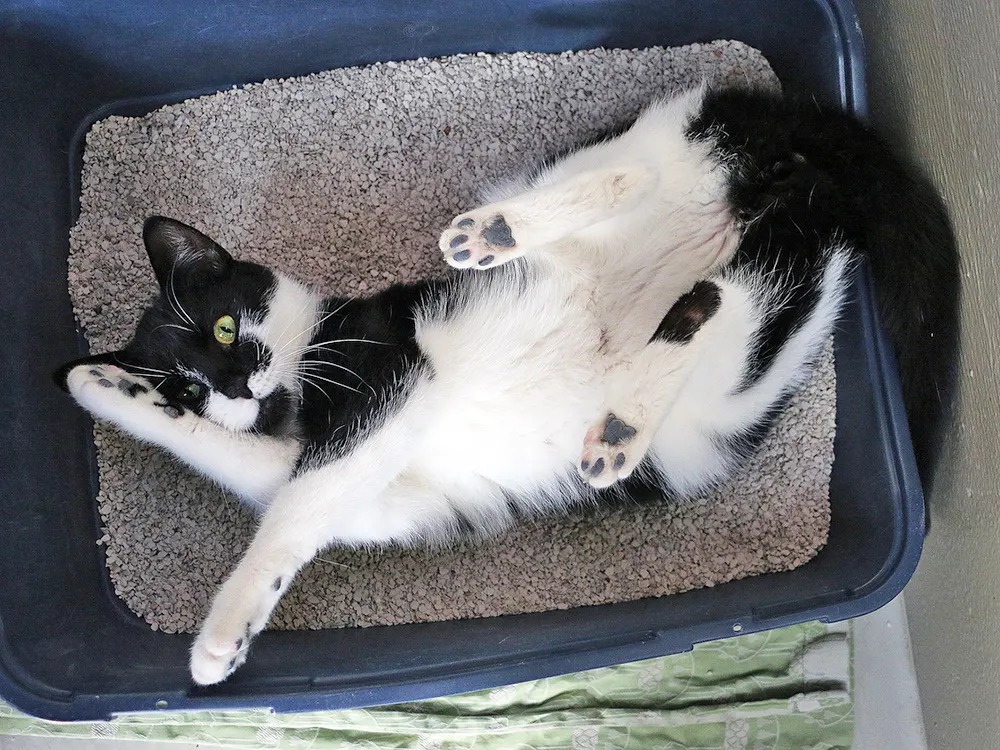
A cat lying in the litter box is one of those sights that stops you cold. This is a fastidious animal who grooms for hours and buries their own waste, now stretched out and napping in the one place that is, by design, dirty. The temptation is to file it under “cats are weird” and move on. Resist that. When a clean animal chooses to rest in the dirtiest spot in the house, they are not being quirky. They are telling you the box has become the safest place they know, and that is worth decoding.
That is the whole frame here. Lying in the litter box is rarely random. It is your cat casting a vote about how safe and how well they feel, and the box wins that vote for a specific reason. Your job is to find the reason, not just stop the behavior.
Why the box, of all places
The litter box is small, enclosed, and saturated with your cat’s own scent. To a stressed or unwell cat, that combination reads as security, not filth. It is a bounded space that smells entirely like them, in a home that may otherwise feel unpredictable.
A cat who retreats to the litter box is usually reaching for the most familiar, self-scented space they have. It is less about the box and more about what the rest of the house suddenly feels like to them. When I hear this, my first question is always what changed.
Once you see the box as a chosen safe-room rather than a strange napping choice, the real causes line up quickly.
Stress and anxiety, the most common driver
By far the most frequent reason a cat lies in the box is stress. An anxious cat wants a secure, familiar-smelling place to retreat to, and the box delivers exactly that. Big changes are the usual triggers: a move, a new pet, a new baby, construction, a schedule upheaval, even a rearranged room. Box-lying that starts right after one of these is often the cat’s way of self-soothing, and it is a signal they need more calm and reassurance in their environment, not less.
A grab for privacy
Sometimes the answer is simpler. The litter box may be the one spot in the home that is unambiguously theirs, off-limits to the other cat, the dog, the toddler, and the vacuum. A cat seeking a few minutes of genuine privacy may pick it for the same reason a kid builds a fort: it is the one place no one else claims.
Marking territory
Less commonly, box-lying is about scent-marking. Cats carry scent glands on their bodies, and lying in the litter lets them blend their own scent into the space to reinforce a claim on it. This tends to show up in multi-cat households, or when a cat feels their turf is under threat from a newcomer or a neighbor cat visible through the window.
Not feeling well
This is the one that raises the stakes. A cat who feels sick often wants a small, quiet, safe place to hunker down, and they may tolerate the box’s smell when they normally would not. If box-lying arrives alongside any change in appetite, thirst, energy, or bathroom habits, treat it as a possible health flag rather than a behavior quirk. Cats with urinary trouble in particular may camp in or near the box because they feel a constant urge to go.
What to change
Start with the cause, because that determines the fix. If it looks like stress, lower the temperature of the whole environment: reduce noise, add hiding spots and vertical perches, keep routines steady, and consider a pheromone diffuser. Then give your cat a better offer than the box. Set up cozy, enclosed alternatives nearby, a covered cat bed, a blanket-lined box, a cardboard hideaway, so the appeal of a small safe-smelling nook is met somewhere cleaner. Regular play and predictable attention help a stressed cat far more than scolding ever will.
And if anything about your cat’s eating, drinking, or litter habits has shifted, or you simply cannot find a stress trigger, get a vet involved. Ruling out a medical cause is not overkill; it is the responsible first move when a healthy behavior turns strange.
When to call your vet
Box-lying by itself is a monitor-it situation. Box-lying plus other changes is a call-the-vet situation. Watch for shifts in eating or drinking, changes in the amount or frequency of urine and stool, straining, or repeated trips in and out of the box with little to show for it. That last pattern can mean a urinary tract infection or, in male cats, a life-threatening blockage. When in doubt, a phone call to your vet costs you nothing and can catch a serious problem early.
Frequently asked questions
Why do kittens sleep in the litter box? Kittens do it more than adults, partly because they tire fast and partly because the box smells like the one familiar, safe spot in a big new home. A kitten who is eating, playing, and growing normally and just crashes in the box occasionally is usually fine, but give them a cozier bed nearby and watch that it fades.
Is it normal for a cat to lie in the litter box? It is not typical, and that is the point. Cats are clean animals who generally use the box only as a toilet, so choosing to rest in it signals that something has shifted, usually emotionally and sometimes physically. It is worth paying attention to rather than shrugging off.
When should I call the vet about this? Call if the box-lying comes with any change in eating, drinking, or bathroom habits, or if your cat is straining, going in and out repeatedly, or producing little urine. That pattern can point to a urinary tract infection or blockage, which is an emergency in male cats.
References
- Amat, Marta, et al. “Stress in owned cats: behavioural changes and welfare implications.” Journal of Feline Medicine and Surgery, vol. 18, no. 8, 2016. https://pubmed.ncbi.nlm.nih.gov/26246012/
- Carney, Hazel C., et al. “AAFP and ISFM Guidelines for Diagnosing and Solving House-Soiling Behavior in Cats.” Journal of Feline Medicine and Surgery, 2014. https://catvets.com/guidelines/practice-guidelines/house-soiling
- Cornell Feline Health Center. “Feline Lower Urinary Tract Disease.” Cornell University College of Veterinary Medicine. https://www.vet.cornell.edu/departments-centers-and-institutes/cornell-feline-health-center/health-information/feline-health-topics/feline-lower-urinary-tract-disease
Dr. Chen is a small-animal veterinarian who leads health and safety coverage at The Pet Times. She writes and reviews the bulk of our illness, condition, and safety content, translating clinical guidance into clear, practical advice owners can act on at home.
Meet our experts ↗Keep reading
 Health & WellnessThe Toy Brick Your Cat Swallowed Won't Show Up on an X-RayDr. Mara Chen · 7 min
 Health & WellnessYour Cat Isn't Being Weird. Plastic Bags Smell Like Food.Dr. Mara Chen · 7 min
 Health & WellnessYour Cat Eating Your Shoelaces Isn't a Quirk. It Might Be Pica.Dr. Mara Chen · 7 min
 TrainingYour Cat Isn't Attacking You. You Live on a Hunting Route.Dr. Amara Solis · 9 min
 Health & WellnessYour Cat Isn't Being Spiteful. Almost Every 'Bad Cat' Behavior Is Anxiety.Dr. Priya Nair · 9 min
 LivingYour Cat Isn't Watching You Cook. He's Reading the Room.Dr. Mara Chen · 7 min