


Your Home Is Full of Cat Hazards. Fix the Deadly Ones First.
Cat-proofing checklists treat a toppling bookshelf and a chipped vase as equal problems. They aren't. Here's what to secure in order of how badly it can hurt your cat.

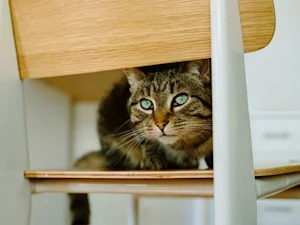
Most cat-proofing guides hand you a flat list of ten tasks and imply they all matter equally. They don’t. A wobbly bookshelf that could crush your cat is not the same kind of problem as a vase your cat might knock over, and treating them as equals is how people spend an afternoon taping down a rug while a vase of lilies sits on the counter. So here is the same job, reorganized the way an emergency vet actually thinks about it: secure the things that can kill your cat first, then the things that can injure them, and only then worry about protecting your stuff.
Do this before your new cat comes home if you can. As one useful reframe puts it, think of it as preparing your house for a new baby, if babies could jump five feet straight up. Kittens of any background are curious, mischievous little troublemakers, and some cats are startlingly clever: certain breeds learn to open doors, and observant cats will watch and copy what you do. Assume yours will get into everything, because they will.
When a cat comes into my ER, it’s almost never because of the chipped heirloom the owner was worried about. It’s a lily, a swallowed hair tie, an open window, a chewed cord. The deadly hazards are quiet and boring-looking, which is exactly why people skip past them to tidy up the obvious mess. Fix the silent killers first.
Tier one: the things that can kill
These are the hazards that turn into an emergency, or a fatality, fast. Handle them before anything else.
Toxic plants. Many common houseplants and flowers are dangerous to cats, and lilies top the list because even a small exposure can cause kidney failure. Irises, poinsettias, and sago palms are also toxic. Get them out of the house entirely rather than merely up high, since cats climb. If you want greenery your cat can nibble safely, orchids and African violets are good, non-toxic options.
Toxic foods and medications. Many human foods are poisonous to pets, including chocolate, grapes, and raisins, so close or lock the kitchen cabinets and don’t let your cat clean your plate. Just as important, and easier to forget, are the medications, vitamins, and supplements in your cabinets. A single dropped pill can be a crisis.
Household chemicals and antifreeze. Chemical cleaners, bleach, and pine- and phenol-based cleaners can poison a cat, so store them sealed and behind cabinet doors. If your cat can get into the garage, be especially vigilant about antifreeze. It smells and tastes sweet to animals and is extremely toxic in tiny amounts.
Essential oils and diffusers. This one is missing from most older checklists and belongs firmly in tier one. Cats lack a liver enzyme that many mammals use to break down certain compounds in essential oils, which makes oils like tea tree, citrus, eucalyptus, peppermint, cinnamon, and pine genuinely dangerous to them. Active diffusers can disperse these compounds into shared air, and concentrated oils or liquid potpourri are worse if licked or spilled on fur and then groomed off. If you diffuse oils, keep it out of any room your cat can access, and store the bottles like you would any other toxin.
String and other linear objects. Cats are drawn to stringy things, which makes them uniquely deadly. Yarn, string, rubber bands, dental floss, hair ties, and ribbon can be swallowed and cause a “linear foreign body,” where the intestine bunches around the string. It is a surgical emergency. Don’t leave any of it lying around, and that includes the tempting drawstring on a hoodie or a gift bag.
Electrical cords. In the same spirit, cats love to chew stringy cords, and an electrical one carries the risk of a serious burn or shock. Tape cords, cables, and phone chargers to the floor or wall with flat vinyl strips, or run them through cord covers so they are not dangling and inviting.
Open windows and blind cords. If you open windows often, install sturdy screens so your cat cannot slip out or fall. Blind cords are a strangulation hazard, so tie them up high or cut them off; window treatments without looped cords are safest in a cat household.
Tier two: the things that can injure
Less likely to be fatal, but very capable of a trip to the vet.
Top-heavy and unstable furniture. Flat-screen TVs, wobbly bookshelves, and anything a cat might try to climb can topple onto them. Anchor these to the wall. A baby-proofing anti-tip kit does the job cheaply.
Receptacles a cat can fall or get shut into. Keep trash cans lidded, washer and dryer doors closed, and toilet seats down, basically anything a cat could jump or tumble into. Plastic trash bags deserve their own mention: some cats love to play with them, and they are a suffocation and ingestion risk, so don’t leave them out after unpacking groceries.
Sharp objects. That magnetic knife rack that makes you feel like a real chef is not safe for a cat prowling the counters at 2 a.m. Put away knives, scissors, and razors rather than leaving them within paw’s reach.
The recliner. It is worth singling out. Cats frequently tuck themselves into the mechanism of a reclining chair and can be badly hurt when it moves. If you have a cat and a recliner, be extremely cautious about operating it, or reconsider keeping it.
Tier three: protecting your stuff
Last, and genuinely least in terms of danger, are the hazards that mostly threaten your belongings rather than your cat.
Breakables. Anything fragile or precious should go into a cabinet until you trust your cat not to swat it off a shelf. This protects your things, and it spares you cleaning up sharp shards a cat could step on.
The couch. To keep your sofa from becoming a scratching post, cover the corners and reinforce them with double-sided sticky tape, then place an actual scratching post right nearby so your cat has a legitimate outlet for the instinct. Redirect, don’t just forbid.
It is a lot, and no home is ever perfectly cat-proof. Fur, spills, hairballs, and the occasional knocked-over glass come with the territory. But if you work the list in this order, deadly first, injurious next, your-stuff last, you spend your energy where it actually protects your cat, and the rest sorts itself out as you learn each other.
References
- “Poisonous Plants.” ASPCA Animal Poison Control Center. aspca.org/pet-care/animal-poison-control/toxic-and-non-toxic-plants
- “Lily Poisoning in Cats.” Pet Poison Helpline. petpoisonhelpline.com/poison/lilies
- Genovese, Dawn W., et al. “Adverse Effects Associated With Essential Oil Exposure.” Overview via ASPCA Animal Poison Control. aspca.org/pet-care/animal-poison-control
- “People Foods to Avoid Feeding Your Pets.” ASPCA. aspca.org/pet-care/animal-poison-control/people-foods-avoid-feeding-your-pets
Common questions
What everyday foods should I keep locked away from my cat?
Chocolate, grapes, and raisins are among the human foods toxic to cats, and medications, vitamins, and supplements are just as dangerous. Keep them behind closed or locked cabinets rather than on counters your cat can reach.
Are essential oil diffusers safe around cats?
Often not. Many essential oils, including tea tree, citrus, eucalyptus, peppermint, cinnamon, and pine, are toxic to cats, who lack a liver enzyme needed to process certain compounds. Active diffusers and any liquid potpourri or concentrated oil should be kept well away from cats, ideally out of shared air entirely.
Dr. Mehta is a board-certified veterinary nutritionist who evaluates pet food formulations, ingredient quality, and the science behind dietary trends. He writes and reviews all nutrition content at The Pet Times, including our food rankings and feeding guides.
Meet our experts ↗Keep reading
 Health & WellnessFading Kitten Syndrome Is a Race Against the Clock. Here's How to Win It.Dr. Mara Chen · 8 min
 First DaysThe Kitten Nursing Clock Is a Lie. Watch the Milestones InsteadDr. Priya Nair · 6 min
 First DaysYour Kitten's Scale Is the Best Early-Warning System You Have. Here's How to Read It.Dr. Amara Solis · 6 min
 First DaysBlanket Sucking Is Adorable. The Day They Swallow It Isn't.Dr. Lena Park · 8 min
 First DaysYour Kitten Is Losing Teeth Right Now and You'll Probably Never See It HappenDr. Priya Nair · 6 min
 Health & WellnessA Kitten Sneeze Is Cute Once. Here's the Line It Shouldn't Cross.Dr. Mara Chen · 8 min