


I Waited Too Long to Spay My Cat. The Week That Followed Made the Case
A cat in heat means nonstop yowling, frantic pacing, and no sleep for anyone. Here is what the heat cycle actually does, why waiting backfires, and the health and population math behind fixing your cat before five months.

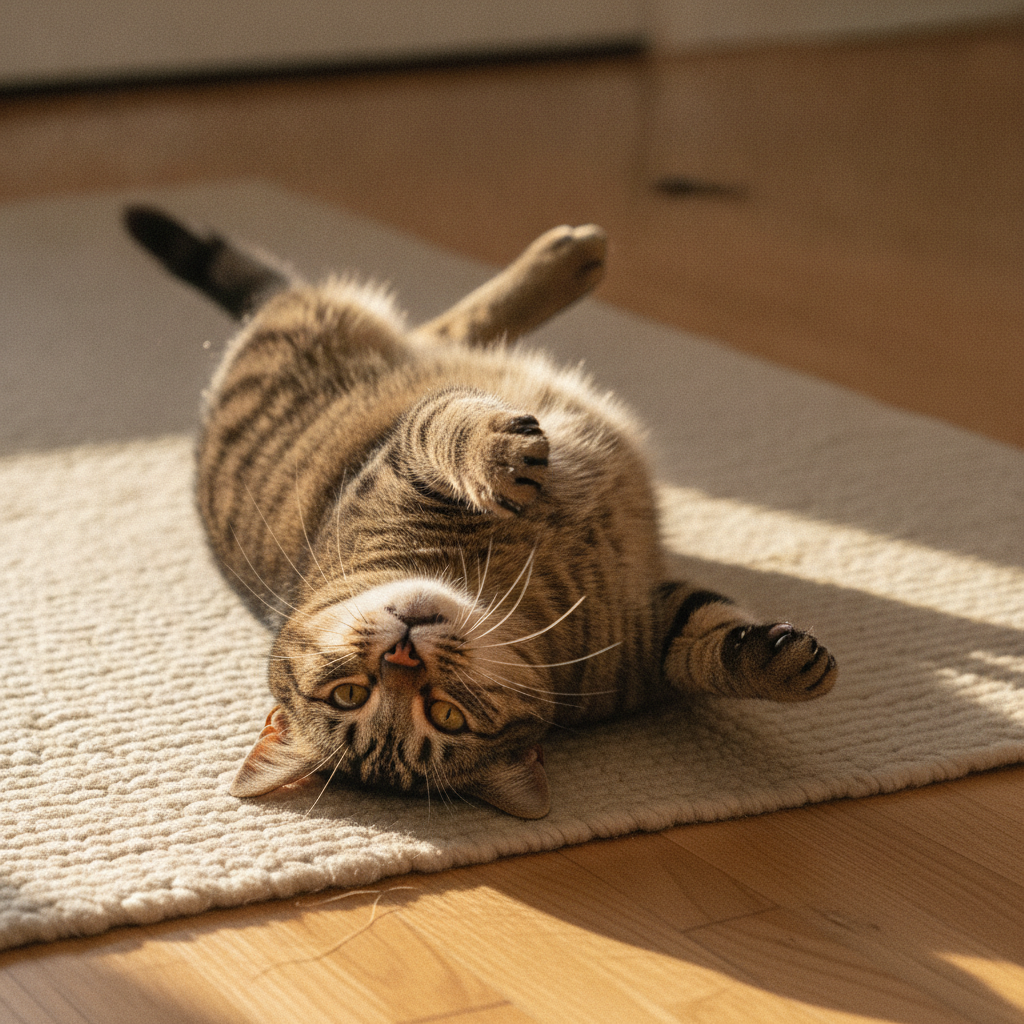
I will be honest about how I ended up here, because my mistake is the whole point. I had kitten fever. I used to daydream about a litter of orange kittens, little carbon copies of my perfect cat, tumbling around the apartment. “I just want more exactly like her,” I would say. My friends were not charmed. One told me our friendship was over if I did not get my cat spayed and rattled off every reason it would be irresponsible not to. I promised I would book it.
Then life happened, the way it does. A pandemic, a cross-country move, and clinics in my new town booked solid for months. A few weeks before her scheduled surgery, it started: frantic yowling that yanked me out of sleep, my cat skidding from window to window, genuinely panicked, making an unholy racket at 3 a.m. She was in heat, at the absolute peak of her fertility, when the drive to mate overrides everything else. That week is the reason I now tell people not to wait.
What a heat cycle actually is (and why it repeats)
The behavior is not random misery; it is a hormonal cycle, and understanding it explains why “I’ll get around to it” is such a trap. Female cats are seasonally polyestrous, which means that during the warmer, longer-daylight months they cycle in and out of heat repeatedly. A single heat lasts about six or seven days, and if the cat does not mate, she can come back into heat every couple of weeks through the season. So an unspayed cat does not have one bad week; she has that week on repeat until she is either bred or spayed.
During each cycle you get the full performance: the yowling, the restless pacing, rubbing and rolling, raised hindquarters, and often escape attempts at the door in search of a mate. Mine paced for a mate that thankfully never showed, but the noise did not stop, day or night. I spent that week apologizing on video calls. “Sorry, my cat is in heat,” I would explain to a row of puzzled coworkers. After about six days it ended, my sweet, normal cat came back, and I got her spayed before the next cycle could start. I have never once second-guessed it.
The timing question has a clear, updated answer
This is where the guidance has firmed up in a way worth knowing.
The consensus now is to spay or neuter kittens by about five months of age, before they reach sexual maturity. That matters because cats can go into heat and get pregnant as young as four months, so waiting until the old ‘six months’ rule of thumb genuinely risks an accidental litter from a kitten. Younger kittens also tend to recover from surgery faster than adults, and fixing them early spares them the distress of a heat cycle entirely.
The point about behavior is the one owners underrate:
“Spaying or neutering reduces the urge to yowl and to bolt out the door hunting for a mate,” Dr. Nair says. “In males, neutering also cuts down on urine spraying and fighting, which are two of the biggest reasons intact toms end up injured or lost.”
The health case is hard to argue with
The behavioral relief is only part of it. The medical reasons should get any owner’s attention.
“When you spay or neuter, you dramatically lower the risk of uterine and testicular infections and cancers, and in females, spaying before the first few heat cycles substantially reduces the risk of mammary tumors, which in cats are usually malignant,” Dr. Nair says. “That often means a longer, healthier life and lower vet bills down the road.”
She is also quick to knock down the old myths. The idea that a fixed cat automatically packs on weight or has a personality transplant does not hold up; weight is about calories and activity, not the surgery. And the notion that a cat has some right to reproduce is a human projection.
“People put their own feelings onto their cats here,” Dr. Nair says. “Cats simply do not care about reproducing the way we imagine they do. What they care about is not spending days on end in the physiological stress of a heat cycle.”
The math that turns one cat into a crisis
Beyond your own cat, there is a community-sized problem, and the arithmetic is what makes it spiral. A female cat can have up to three litters a year, and a male can father countless litters in the same span. From a single breeding pair, that compounds into well over a hundred descendants in just a couple of years, and every one of them strains shelters and community resources.
The scale is already staggering. The exact number of stray and feral community cats is unknown, but in a single large city like New York the outdoor population is estimated in the tens of thousands. The crisis is driven largely by unaltered cats allowed to roam and reproduce, or abandoned outdoors. Volunteers nationwide practice Trap-Neuter-Return (TNR) to slow it, but resources are perpetually stretched, and the problem worsened sharply during the COVID period, when spay and neuter services slowed to a crawl and created a backlog that clinics are still clearing.
“Altering cats is about the most effective, evidence-backed lever we have for shrinking the stray population,” Dr. Nair says. “Every fixed cat is one that won’t send litters into an already overwhelmed shelter system or leave kittens to fend for themselves outside. You’re shutting the problem down before it can start.”
The takeaway, from someone who learned it the hard way
The fantasy of a pile of adorable kittens loses its charm fast against the hundreds of thousands of adoptable cats already waiting in shelters. If cost is your barrier, it is a solvable one: ask your vet or local shelter about low-cost spay and neuter clinics, which most regions now have, often through the same TNR programs working on the community-cat problem. If you take in an unaltered cat, set a surgery date right away, aim for that five-month window, and keep the appointment. I did not, and I spent a sleepless week paying for it. Learn it the easy way instead.
References
Not a substitute for your vet. Our guidance is educational. For urgent symptoms, contact a vet or emergency clinic right away. Editorial standards
Dr. Nair is a veterinarian focused on diet and feeding. She covers everyday nutrition, treats, and the many "can they eat this?" questions owners ask, grounding each answer in what is actually safe and sensible for dogs and cats.
Meet our experts ↗Keep reading
 Health & Wellness8 Reasons Your Cat's Pee Suddenly Smells Worse (a UTI Is Rarely One)Dr. Lena Park · 9 min
 Health & WellnessYour Cat Isn't Hiding That It's Sick. You Just Never Learned Its 'Normal.'Dr. Mara Chen · 6 min
 Health & WellnessThe Hungriest Cat in the House Might Be the SickestDr. Lena Park · 9 min
 Health & WellnessYour Cat's Bad Tooth Doesn't Stay in the MouthDr. Amara Solis · 6 min
 Health & WellnessA Blind, Paralyzed Cat Isn't a Tragedy. It's a Setup Problem.Dr. Nina Kohl · 7 min
 Health & WellnessMost Cat Colds Are Harmless. Learn the One Kind That Isn't.Dr. Mara Chen · 7 min