


The Tuna Recall Your Cat's Snack Habit Just Made Personal
Tri-Union recalled canned tuna in 26 states over botulism risk — and quietly reissued the warning a year later. Here's what to check, what botulism looks like in cats, and why the recall is a good moment to rethink tuna altogether.

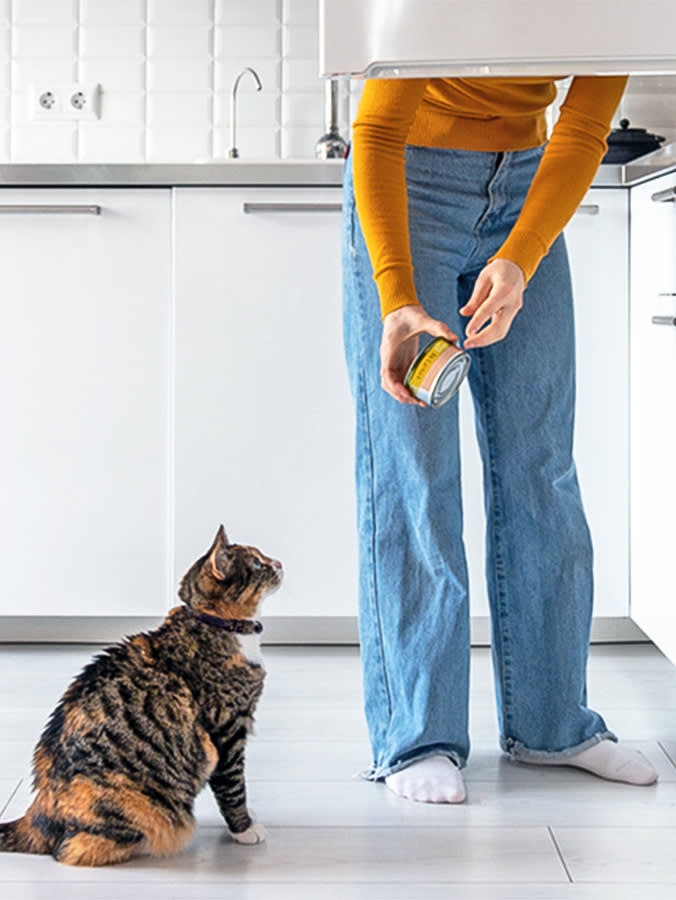
A tuna recall reads like a pantry chore: check the cans, toss the bad ones, move on. But if your cat is one of the millions who materializes at the sound of a pull-tab, this particular recall is worth a second look — first because it turned out not to be a one-and-done event, and second because it’s a natural prompt to ask a question the recall notice never does: should canned tuna be part of your cat’s life in the first place?
Here’s the situation, what to check, what botulism actually looks like in a cat, and how to think about tuna going forward.
What was recalled, and the twist a year later
In early February 2025, Tri-Union Seafoods voluntarily recalled canned tuna sold in 26 states and Washington, D.C., over botulism concerns, according to the U.S. Food and Drug Administration. The trigger was a manufacturing defect in the “easy-pull” tab on certain cans that could compromise the seal and, in theory, allow Clostridium botulinum contamination. The company acted “out of an abundance of caution.” Notably, no illnesses were ever reported in connection with the recall — this was a prevent-the-problem move, not a response to sickened people or pets.
The twist: it wasn’t over when the headlines faded. In January 2026, Tri-Union cautioned that a third-party distributor had inadvertently released quarantined product tied to the 2025 recall back into limited retail. That’s exactly why a year-old recall still deserves a pantry check today. If you have older cans of the brands below, don’t assume they predate the problem — match the codes.
The recalled products
The products of concern:
- Genova 7 oz. canned tuna from Costco in Florida and Georgia.
- Genova 5 oz. canned tuna from Harris Teeter, Publix, H-E-B, Kroger, Safeway, Walmart, and independent retailers in Alabama, Arkansas, Arizona, California, Florida, Georgia, North Carolina, New Jersey, Tennessee, and Texas.
- Trader Joe’s-label canned tuna in Delaware, Illinois, Indiana, Iowa, Kansas, Kentucky, Maryland, Michigan, Minnesota, Missouri, Nebraska, New Jersey, New York, North Carolina, Ohio, Pennsylvania, Virginia, Wisconsin, and Washington, D.C.
- Van Camp’s-labeled tuna at Walmart and independent retailers in Pennsylvania, Florida, and New Jersey.
The specific lots and UPC codes:
- Genova Solid White Tuna in Olive Oil 5.0 oz.: UPC 4800000215
- Genova Yellowfin Tuna in Olive Oil 5.0 oz.: UPC 4800013265
- Genova Yellowfin Tuna in Olive Oil 5.0 oz., four-pack: UPC 4800073265
- Genova Yellowfin Tuna in Olive Oil 7.0 oz., six-pack: UPC 4800063267
- Genova Yellowfin Tuna in Extra Virgin Olive Oil with Sea Salt 5.0 oz.: UPC 4800013275
- Van Camp’s Seafood, 5.0 oz.: UPC 4800025015
- Van Camp’s Solid Light Tuna in Oil 5 oz., four-pack: UPC 4800075015
- Trader Joe’s Solid Light Yellowfin Tuna in Olive Oil: UPC 51403
- Trader Joe’s Solid White Tuna in Olive Oil: UPC 99287
- Trader Joe’s Solid White Tuna in Water: UPC 99285
- Trader Joe’s Solid White in Water, Low-Sodium: UPC 95836 and UPC 99284
- Trader Joe’s Solid White in Water, No Salt Added: can codes S90N D1M and S90N D2N
- H-E-B Solid White Tuna in Water 5.0 oz., four-pack: UPC 4122043345
The FDA notes the recall does not include other Tri-Union Seafoods products.
What to do if you have it
If any of these products are in your home, don’t wait — throw them out, and don’t taste them to “check.” A botulism-contaminated can may look, smell, and taste normal, though you should also discard any can that is bulging, leaking, or has a damaged tab regardless of brand. For a refund or replacement, contact Tri-Union at support@thaiunionhelp.zendesk.com or 833-374-0171.
If your cat already ate some: what botulism looks like
Botulism is, in the words of the Centers for Disease Control and Prevention, “a rare but serious illness” caused by a toxin that “attacks the body’s nerves and causes difficulty breathing, muscle paralysis, and even death.” It’s uncommon in cats, but because the recalled product was food a cat might realistically be given, it’s worth knowing the pattern.
The signs follow a distinctive, ascending path:
- Weakness that starts in the hind legs. Over roughly 24 hours, it climbs to the front legs, then the muscles of the head and face.
- A mentally normal but physically failing cat. The cat stays alert and aware but may develop an inability to swallow, increased salivation, constipation, and eye inflammation from decreased tear production and an inability to blink.
- In severe cases, paralysis of the diaphragm, which can be fatal.
If your cat ate any recalled tuna, call your vet as a precaution — and treat any of the signs above as an emergency. (If you ate any of it, contact your own doctor right away.)
How botulism in cats is treated
If a vet diagnoses botulism — typically through bloodwork, urinalysis, stool, blood, or vomit samples, and X-rays — they can administer a botulinum antitoxin. Timing is everything: once paralysis has set in, the antitoxin can no longer help, and treatment shifts to intensive supportive care, often including hospitalization, to carry the cat through until nerve function recovers. That narrow treatment window is the real reason not to “wait and see” with a cat showing early weakness.
The bigger question: should tuna even be on the menu?
A recall is a good moment to notice a habit. If your cat gets human canned tuna regularly, the recall is not the main risk — the routine is. Here’s what vets actually weigh:
Mercury adds up fast in a small body. Tuna is a predatory fish that accumulates mercury, and a cat is tiny relative to the dose. Per FDA testing, canned albacore (“white”) tuna averages about 0.350 ppm of mercury, while skipjack (usually sold as “chunk light”) averages about 0.144 ppm — less than half. Over time, excess mercury can cause neurological signs like loss of coordination and weakness. If you do offer tuna, chunk-light beats albacore.
It isn’t balanced nutrition. Tuna is missing nutrients cats need and can crowd out complete food if a cat starts holding out for it. Some cats become genuine “tuna junkies,” refusing their balanced diet.
Thiamine is less of a worry with canned than raw. Raw fish contains thiaminase, an enzyme that destroys vitamin B1, which cats cannot make themselves. The good news: canning and cooking deactivate thiaminase, so canned tuna is far less of a thiamine risk than raw — one point in canned tuna’s favor.
The practical guideline vets tend to give: keep tuna to an occasional treat, well under 10 percent of daily calories — realistically a teaspoon of flaked tuna once or twice a week at most — and choose tuna packed in water rather than brine or oil. Better still, reach for cat-specific tuna treats or complete tuna-flavored cat foods, which are formulated with feline mercury and nutrition limits in mind.
The simplest move right now is still the most important one: check your cans, and when in doubt, throw it out. The longer-term move is quieter — treat tuna as a garnish, not a food group.
References
- “Tri-Union Seafoods Issues Recall of Select Genova, Van Camp’s, H-E-B and Trader Joe’s Tuna Cans Due to Clostridium Botulinum Risk.” U.S. Food and Drug Administration, 7 Feb. 2025, https://www.fda.gov/safety/recalls-market-withdrawals-safety-alerts/tri-union-seafoods-issues-recall-select-genovar-van-campsr-h-e-b-and-trader-joesr-tuna-cans-due.
- “Tri-Union Seafoods Identifies Additional Quantities of Recalled Genova Tuna at Limited Retailers Due to Inadvertent Distribution of Previously Recalled Product.” U.S. Food and Drug Administration, Jan. 2026, https://www.fda.gov/safety/recalls-market-withdrawals-safety-alerts/tri-union-seafoods-identifies-additional-quantities-recalled-genovar-tuna-limited-retailers-due.
- “About Botulism.” Centers for Disease Control and Prevention, https://www.cdc.gov/botulism/about/index.html.
- “Botulism in Cats.” VCA Animal Hospitals, https://vcahospitals.com/know-your-pet/botulism-in-cats.
- “Is It Safe to Give Canned Tuna to Cats as a Treat?” Tufts University, Cummings School of Veterinary Medicine, https://now.tufts.edu/2014/01/27/concerns-about-mercury-poisoning-it-safe-give-canned-tuna-cats-treat.
Common questions
The recall was in early 2025. Why does it still matter?
Because it wasn't fully over. In January 2026, Tri-Union warned that a third-party distributor had inadvertently released quarantined product tied to the original recall back into limited retail. So it's still worth checking UPC codes on any older cans in your pantry.
How can I tell if a can is affected?
Match the UPC code and lot against the recall list below. The concern is with specific Genova, Van Camp's, Trader Joe's, and H-E-B lots. Also inspect any can for bulging, leaking, or a broken 'easy-pull' tab, and never taste-test to check.
Should I be feeding my cat canned tuna at all?
Only as an occasional treat, if at all. Human canned tuna isn't a balanced cat food and carries mercury; vets generally suggest keeping tuna treats under about 10 percent of daily calories — think a teaspoon of flaked tuna once or twice a week at most. Cat-specific tuna products are formulated more safely.
What are the first signs of botulism in a cat?
Weakness that starts in the hind legs and moves forward to the front legs, then the head and face, usually over about 24 hours. The cat stays mentally alert but may struggle to swallow, drool, and have trouble blinking. This is an emergency — call your vet.
Not a substitute for your vet. Our guidance is educational. For urgent symptoms, contact a vet or emergency clinic right away. Editorial standards
Dr. Solis is a board-certified veterinary dermatologist with over twelve years of clinical experience. She advises on skin conditions, allergies, and grooming practices that affect coat and skin health. All dermatology and allergy content at The Pet Times is reviewed by her team before publication.
Meet our experts ↗Keep reading
 Health & WellnessYour Cat Isn't Being Weird. Plastic Bags Smell Like Food.Dr. Mara Chen · 7 min
 Health & WellnessYour Indoor Cat's Food Bowl Is the Bird Flu Risk Nobody Warned You AboutDr. Mara Chen · 6 min
 Health & WellnessThe Benadryl Trap: Why the Go-To Cat Remedy Usually Fails, and What WorksDr. Mara Chen · 9 min
 Health & Wellness"Keep Cats Indoors" Is Only Half the Bird Flu Advice. The Other Half Is the BowlDr. Nina Kohl · 4 min
 Health & WellnessThe Word 'Kennel Cough' Is Why Cat Owners Miss ItDr. Lena Park · 6 min
 Health & WellnessGarlic and Cats: The Toxin That Hides in Plain Sight on Your PlateDr. Amara Solis · 6 min