


Your Indoor Cat's Food Bowl Is the Bird Flu Risk Nobody Warned You About
The cats getting bird flu aren't the ones hunting birds outside. They're indoor cats eating raw food and raw milk. Here is what changed and how to protect yours.

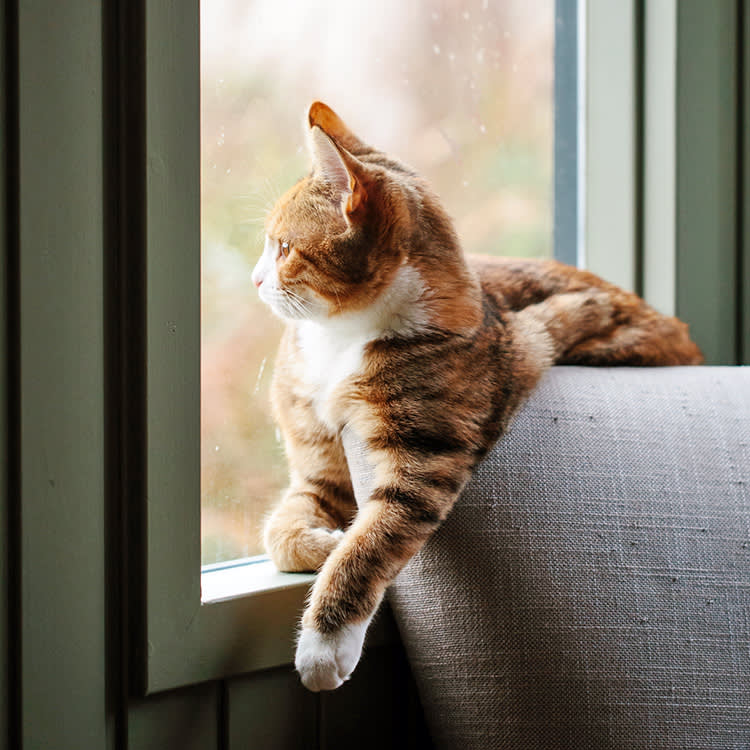
For a year, the story everyone told about bird flu and cats was a story about the outdoors. Cats hunt birds, birds carry H5N1, so keep your cat inside and the problem stays on the far side of the window. It was tidy, intuitive, and increasingly wrong. The cats turning up sick across the country are not, for the most part, barn cats and backyard hunters. A striking share are strictly indoor cats who never touch a wild bird, and the thing they have in common is sitting in their food bowl.
That reframing matters because it changes what you actually have to do. “Keep your cat indoors” was never bad advice, but for an indoor cat it was already done, and it offered false reassurance. The exposure that is driving most confirmed feline cases is dietary: raw meat, raw poultry, and unpasteurized milk. The single most protective decision a cat parent can make right now is not about the back door. It is about what goes in the bowl.
The number that reset the conversation
Since the U.S. dairy-cattle outbreak began in March 2024, the count of infected domestic cats has climbed from a handful into the dozens and then past it. Over the 2025 calendar year, public-health and veterinary surveillance logged more than 70 confirmed H5N1 infections in domestic cats across at least 19 states, according to tracking summarized in the veterinary and infectious-disease literature. Many were tied to raw-food diets or dairy exposure. A meaningful subset were indoor-only cats whose route of exposure was never fully pinned down.
The U.S. Department of Agriculture’s Animal and Plant Health Inspection Service maintains the running list of mammal detections, and the case clusters tell a consistent story. In Los Angeles County, the health department traced a group of feline infections to contaminated commercial raw pet food and unpasteurized milk; some of those cats died. Product recalls followed for multiple raw cat-food brands after batches tested positive for the virus, with genetic matching in at least one case confirming the food as the source. This is not a fluke of one bad lot. It is a pattern.
“The cases that surprise people are the indoor ones, but they shouldn’t, once you look at the diet,” says Dr. Priya Nair, a veterinarian who consults for The Pet Times on infectious disease. “A cat that has never left the apartment can still eat a raw poultry topper or lick up a few drops of raw milk. The virus does not need to walk through the door if it can ride in on dinner.”
What raw actually means here, and what it doesn’t
The distinction worth holding onto is between raw and cooked, not between store-bought and homemade. Heat is what neutralizes the virus. Pasteurizing milk and thoroughly cooking meat or poultry inactivate H5N1; leaving them raw does not. That is true whether the raw food is a boutique frozen patty marketed as “biologically appropriate,” a freeze-dried topper, or a saucer of farm-fresh milk a neighbor swears by.
This is genuinely new ground for a lot of cat parents who switched to raw diets for reasons that have nothing to do with bird flu. The trade-off has shifted. A raw diet that was a defensible choice in 2023 now carries a specific, documented infectious risk in a way it did not before, and the cats paying that price are dying of a fast, neurologic illness. Cooked commercial diets, gently cooked fresh diets, and standard kibble or canned food do not carry this exposure.
The litter box is part of the picture now
Here is a detail that did not exist in the early coverage and changes the household calculus. A 2025 study in the CDC’s Emerging Infectious Diseases journal isolated live, infectious H5N1 virus from the urine of cats that had ingested contaminated raw milk, not just viral fragments, but virus capable of infecting. Researchers had assumed respiratory secretions were the main concern; finding viable virus in urine means a sick cat’s litter box is a plausible source of exposure for the people cleaning it.
For an indoor-cat household, that reframes the protective steps. If your cat is showing any signs of illness and bird flu is on the table, the litter box is not a neutral chore. Wear gloves, wash your hands, and do not let a sick cat’s waste sit.
What we now know about cats passing it to people
The earlier reassurance, repeated everywhere through 2024, was that there had been no documented case of a cat giving bird flu to a person in this outbreak. That is no longer true, and it is the most important update in this whole story.
In May 2026, the CDC confirmed the first known case of cat-to-human H5N1 transmission in the current outbreak: a veterinary professional in Los Angeles County developed serologic evidence of infection after handling an infected domestic cat in late 2024. The detailed investigation was published in the CDC’s Morbidity and Mortality Weekly Report.
It is essential to read that correctly, because the risk is real but narrow. This was a single case, in a person with close, prolonged, hands-on contact with a sick cat, exactly the high-exposure situation the CDC had already flagged as the most plausible route. The CDC continues to rate the risk to the general public as low. What changed is that “theoretically possible” became “documented once,” which is the appropriate moment to take the precautions seriously rather than wave them off.
“For the average household this is not a reason to panic, it is a reason to use gloves and good hygiene around a sick cat,” Dr. Nair says. “The people who need to be most careful are the ones with the most contact: vets, shelter staff, and anyone nursing a cat through a respiratory or neurologic illness at home.”
The symptoms that should send you to the vet
H5N1 in cats is not a sniffle. It tends to be sudden and severe, and it frequently involves the nervous system as well as the lungs. Get your cat to a veterinarian right away if you see:
- Fever, lethargy, or a sudden loss of appetite
- Labored or rapid breathing, coughing, or a runny nose
- Red, squinty, swollen, or goopy eyes (conjunctivitis)
- Tremors, seizures, stumbling, circling, or other neurologic signs
- Disorientation or unusual confusion
Tell the clinic before you arrive that bird flu is a possibility, especially if your cat eats any raw food, has any dairy-farm connection, or lives where outbreaks have been reported. That lets the staff protect themselves and test appropriately.
A protection plan that matches the real risk
The honest version of “how to keep your cat safe” looks different now than the indoor-versus-outdoor advice of a year ago:
- Stop feeding raw. No raw meat, raw poultry, or unpasteurized milk or cheese, even from premium brands. Cook it or buy it cooked. This single change removes the dominant documented exposure.
- Keep outdoor cats from hunting and scavenging where you can, and keep all cats away from sick or dead birds and from livestock.
- Treat a sick cat’s body fluids as potentially infectious. Gloves, handwashing, and prompt litter-box cleaning if H5N1 is a possibility.
- Don’t panic about your healthy indoor cat. The baseline risk to a cat eating cooked food and never near a farm remains low. The point is to close the one door that has actually been letting the virus in.
Bird flu in cats is rare, but it is no longer hypothetical, and the lesson of the past year is that the threat did not come from where everyone was looking. It came from the bowl.
References
- Detections of Highly Pathogenic Avian Influenza in Mammals — USDA APHIS
- Isolation of Highly Pathogenic Avian Influenza A(H5N1) Virus from Cat Urine after Raw Milk Ingestion, United States — Emerging Infectious Diseases, vol. 31, no. 8, August 2025
- Serologic Evidence of Highly Pathogenic Avian Influenza A(H5N1) Virus Infection in a Veterinary Professional Exposed to an Infected Domestic Cat — Los Angeles County, California — CDC MMWR, vol. 75, 2026
- CDC Confirms Cat-to-Human Transmission of Avian Influenza — American Veterinary Medical Association
- Avian Influenza A (H5N1) in Cats — American Veterinary Medical Association
- H5N1 Confirmed in More Cats as Probe Into Raw Pet Food Widens — CIDRAP, University of Minnesota
Not a substitute for your vet. Our guidance is educational. For urgent symptoms, contact a vet or emergency clinic right away. Editorial standards
Dr. Chen is a small-animal veterinarian who leads health and safety coverage at The Pet Times. She writes and reviews the bulk of our illness, condition, and safety content, translating clinical guidance into clear, practical advice owners can act on at home.
Meet our experts ↗Keep reading
 Health & WellnessCats Are America's Most Rabid Pet. The Indoor Ones Aren't Exempt.Dr. Ravi Mehta · 8 min
 Health & WellnessYour Essential Oil Diffuser Could Be Poisoning Your Cat. Here's the Part Nobody Tells You.Dr. Amara Solis · 6 min
 Health & WellnessThe Bird Flu Blind Spot Isn't Your Cat. It's That Nobody's Watching CatsDr. Mara Chen · 5 min
 Health & WellnessThe Word 'Kennel Cough' Is Why Cat Owners Miss ItDr. Lena Park · 6 min
 Health & Wellness"Keep Cats Indoors" Is Only Half the Bird Flu Advice. The Other Half Is the BowlDr. Nina Kohl · 4 min
 Health & WellnessThe Monarch Bird Flu Cases Were Not a Fluke. They Were a PatternDr. Ravi Mehta · 5 min