


No Single Product Fixes Separation Anxiety. These 7 Stack Up to Something That Works.
The calming vest, the pheromone plug-in, the CBD, the stuffed toy: sold as fixes, they're really ingredients. Here's an honest ranking of what actually moves the needle for a dog who panics alone, and what to expect from each.

Affiliate disclosure. This article contains affiliate links. We may earn a small commission if you buy through a link, at no extra cost to you. How we handle recommendations.

Here is the thing nobody selling calming products will tell you: for a dog with real separation anxiety, no single product fixes it. Not the vest, not the plug-in, not the CBD, not the fanciest stuffed toy. The marketing sells each one as the answer. In practice, the ones that help are ingredients, and the recipe is a layered routine plus, for serious cases, your vet.
That reframe matters, because owners buy one product, watch it fail on its own, and give up on the whole category. The honest version is that a couple of these tools do very little solo and become genuinely useful in combination. Below is a ranking by how much each actually earns its place, roughly worst to best, so you can build the stack instead of gambling on a silver bullet.
A note before the list: separation anxiety is a real behavioral condition, not stubbornness or spite. Products can lower the baseline, but the durable fix is gradual desensitization, teaching a dog that alone-time is safe in tiny, increasing doses, ideally with a certified trainer or behaviorist. Think of everything below as support for that work, not a replacement for it.
A heads-up on links: some of the products below link to Amazon, and purchases through those links may earn us a commission. It doesn’t change what we recommend or what we’re honest about.
The heartbeat companion toy (hit or miss, and often a miss)
Plush “companion” toys such as the Snuggle Puppy come with a warmth pack and a pulsing heartbeat meant to mimic a littermate. For puppies and gently anxious dogs, that can be legitimately comforting. For plenty of others, it simply becomes a very nice thing to chew and does nothing for the panic. There’s no way to know which camp your dog is in until you try it, so treat it as a low-stakes experiment, not a plan.
Best for: puppies and newly adopted dogs adjusting to alone-time. Skip if: your dog treats every soft object as prey.
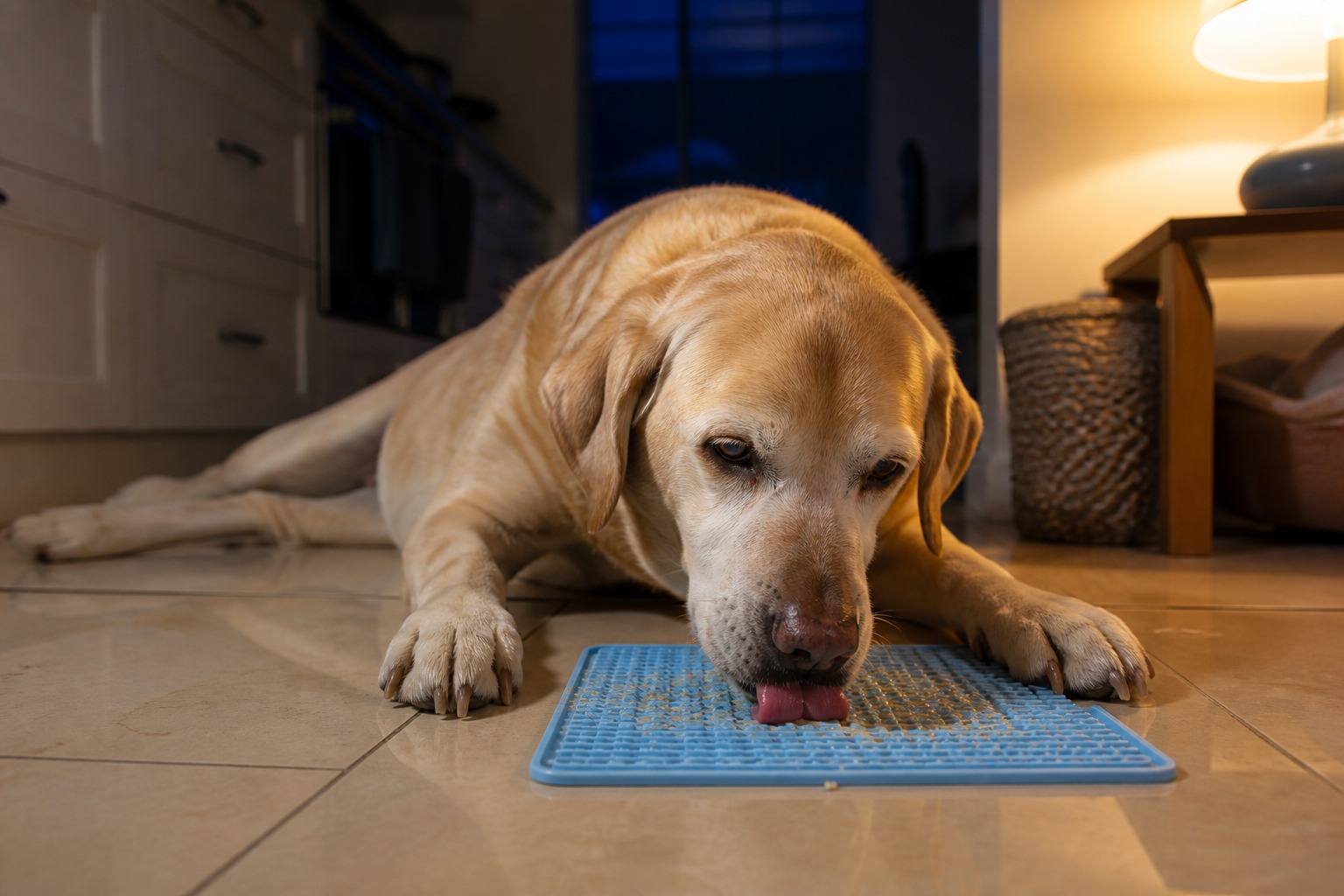
The lick mat (calming, but measured in seconds)
A lick mat smeared with something soft leans on the fact that licking is genuinely self-soothing for dogs. For a dog on the edge, it can buy you a little calm, but for intense separation anxiety that window is often tiny, a minute or two, not an hour. It’s worth owning because it’s cheap and licking has real value as a ritual, but set expectations low if your dog truly comes undone.
Best for: mild cases, or as a departure ritual layered with other tools. Skip if: you’re expecting it to hold a panicking dog for an hour.

The stuffed food toy (fails exactly when you need it most)
A classic frozen, stuffed rubber toy like the KONG Classic is the first thing most experts suggest, and the logic is sound: a high-value food puzzle you only hand over at departure builds a positive association with being left. The catch is a cruel one. A truly anxious dog is often far too wound up to eat while you’re gone, so the exact dog who most needs the distraction can’t use it. If your dog will happily work a stuffed toy alone, it’s great and cheap. If they won’t touch food when you leave, that’s not a product failure, it’s a signal the anxiety is past the level a snack can reach.
Best for: food-motivated dogs with mild to moderate anxiety. Skip if: your dog won’t eat at all when alone.
Dog-specific CBD (works, until it doesn’t, so ration it)
Quality dog CBD is real, and for some dogs it’s genuinely effective at taking the edge off, which puts it a clear notch above the food-based tools. Two honest caveats. First, it is intensely brand-dependent; a reputable, THC-free product formulated for dogs (a well-known example is Super Snouts) is not the same as a random human tincture, which can be dangerous. Second, tolerance is a genuine problem: give it daily and you may need more and more to reach the same calm, until it stops working. Save it for temporary situations or occasional high-stress days, and talk to your vet first, because CBD can interact with other medications.
Best for: occasional acute stress; short-term transitions. Skip if: you’re looking for a daily, indefinite solution, or your dog is on other meds without vet sign-off.
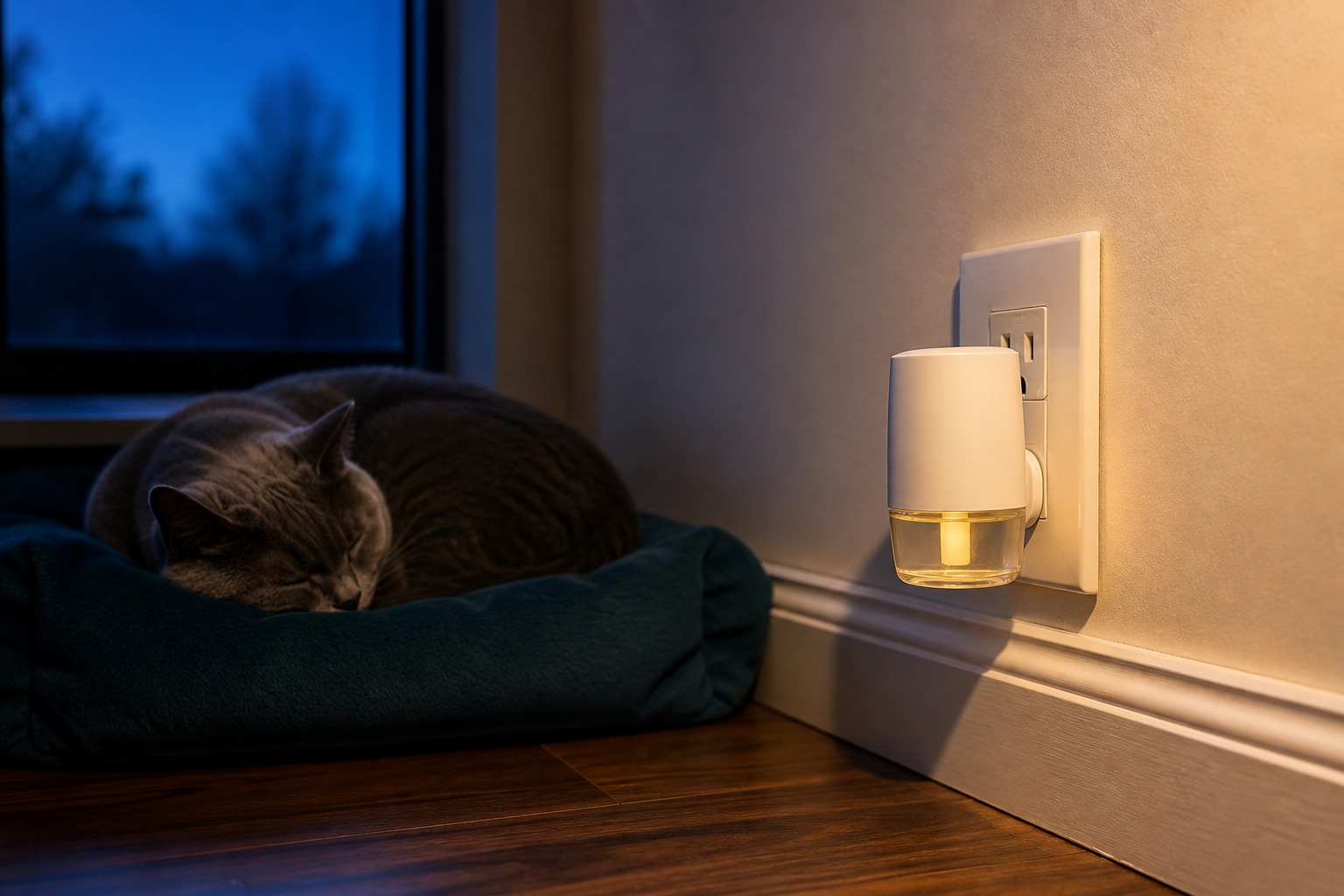
The pheromone diffuser (quiet, steady background help)
A dog-appeasing pheromone diffuser releases a synthetic version of the pheromone nursing mothers give off to reassure their puppies. It’s marketed as odorless; you may catch a faint rubbing-alcohol note, which most people don’t mind. On its own it won’t override a full-blown panic, but it can lower the ambient tension in a room or crate, and it works around the clock without you lifting a finger. As a set-and-forget baseline underneath the more active tools, it earns its keep.
Best for: lowering day-to-day baseline stress; pairs well with everything. Skip if: you need an acute, in-the-moment intervention.
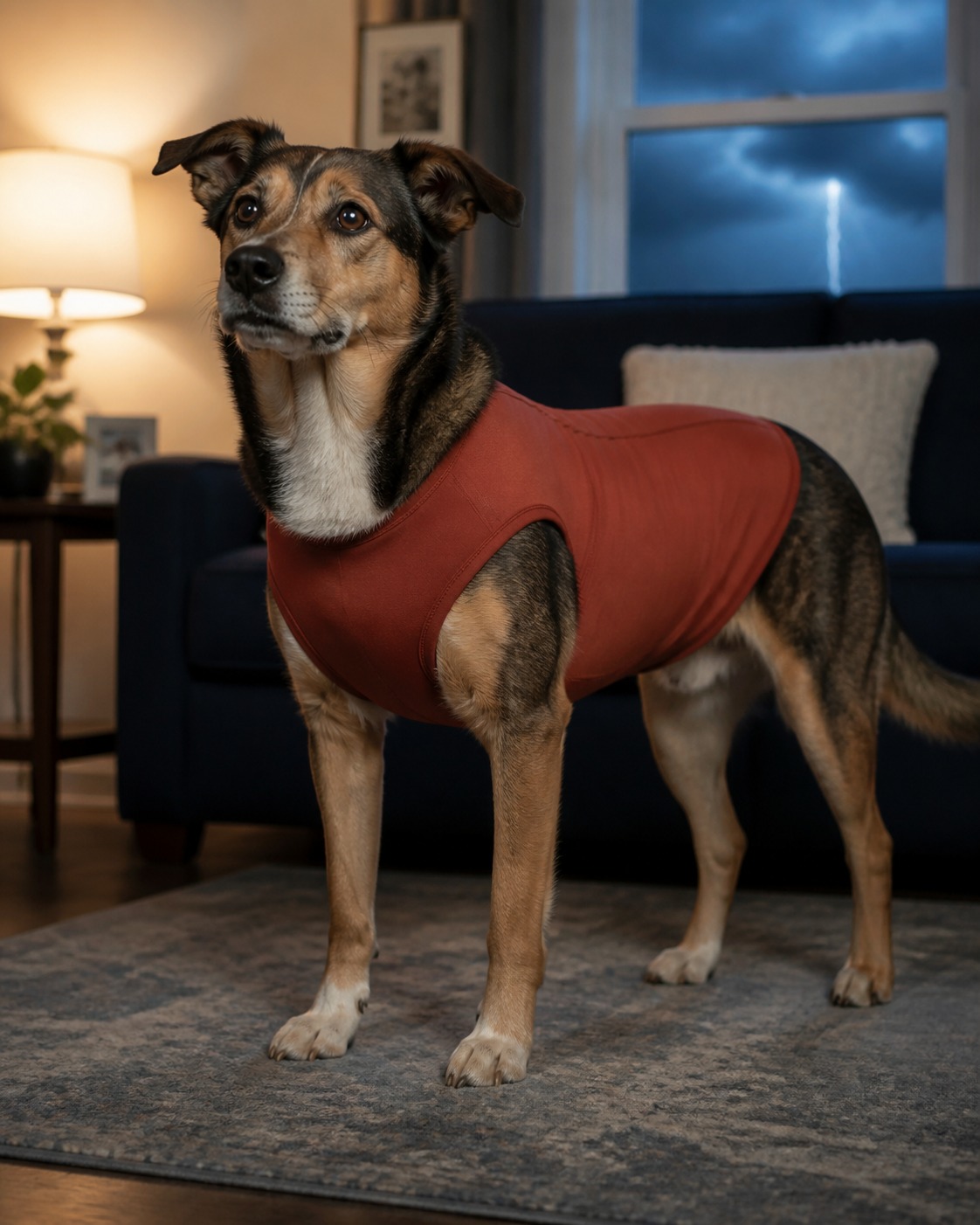
The compression vest (a real contributor once it’s in the stack)
A snug compression garment like the Thundershirt uses gentle, constant pressure to mimic being held, the same principle behind swaddling. In the moment, especially during storms or fireworks, it can visibly settle a dog. Left completely alone, the vest by itself usually isn’t enough, which is why solo trials disappoint people. But layered into a routine, it pulls real weight, and for touch-sensitive dogs it’s one of the strongest non-drug tools here.
Best for: dogs who calm to touch and pressure; strong for noise events. Skip if: your dog resents wearing anything.
The right containment plus a pre-departure wind-down (the free upgrade that beats them all)
This isn’t something you buy, and it may matter more than anything you do. Where you leave your dog changes everything. A wide-open room can feel uncontained and let a frantic dog hurt themselves; an open-topped pen can tempt a jumper into a dangerous leap. For many anxious dogs, a properly sized crate is where they feel safest, provided it’s introduced as a good place, never a punishment. The trick that quietly outperforms most gadgets: settle your dog in that space for a while before you leave, so they’ve already downshifted while you’re still home instead of spiking the second the door clicks. Free, and consistently the highest-impact change.
Best for: almost every anxious dog, once the crate is a positive space. Skip if: your dog has a true crate phobia, in which case get professional help before forcing it.
What barely moved the needle
Honesty check: in the group above, the food toy, the lick mat, and the heartbeat plush were the weakest performers for a genuinely panicked dog, and any one of them, tried alone, would have looked like proof that “nothing works.” They earned their spots only as small parts of a layered routine. If your budget is limited, start with the crate setup and pre-departure wind-down (free), add a pheromone diffuser and a compression vest, and treat the rest as optional add-ons.
When over-the-counter isn’t enough
Some dogs, especially those who’ve been through real upheaval like losing a home, are beyond what any product can carry. That is not a failure on your part, and it’s not the end of the road.
The moment to stop stacking gadgets and call your vet is when your dog can’t be alone without hurting themselves or coming completely undone, no matter what you try. An as-needed anti-anxiety medication isn’t sedation and it isn’t a personality change. Used correctly, it lowers the panic just enough that the dog can finally absorb the training, which is the part that actually cures the problem.
Prescription options such as an as-needed anti-anxiety medication, used only when appropriate and under veterinary guidance, can give a dog the breathing room to build confidence and let you both stop living hour to hour. The right medication, at the right dose, calms the fear without flattening the dog. If you feel like you’ve tried everything on the shelf and you’re still trapped at home, that’s exactly the conversation to have with your vet.
What newer research adds
The strongest recent shift in how vets treat separation anxiety is away from “try a calming product” and toward treating it as a medical and behavioral condition worth real intervention. There are now FDA-approved medications specifically for canine anxiety, and behaviorists increasingly recommend pairing medication with a structured desensitization plan rather than relying on either alone. Research on the supplement side has grown too: certain calming ingredients (like alpha-casozepine and L-theanine) have some supporting evidence, while the evidence for many over-the-counter products remains thin, which is exactly why the layered, expectations-managed approach above holds up. The other practical change is access: remote consults with veterinary behaviorists have made expert help reachable for people who don’t live near a specialist, which for a housebound owner can be the thing that finally breaks the cycle.
References
Dr. Park is a board-certified emergency and critical care specialist. She reviews our health and safety content for clinical accuracy and contributes guides on recognising urgent conditions. Her focus is helping owners act quickly and correctly when it matters most.
Meet our experts ↗Keep reading
 Product Picks6 Senior-Dog Essentials That Actually Make Old Age EasierSara Lim · 6 min
 Product Picks7 Pieces of Dog Gear That Won't Wreck Your Living RoomSara Lim · 6 min
 Product PicksBefore You Buy Dog Stairs, Settle the Ramp-or-Stairs Question (and the Rise Math)Marcus Webb · 9 min
 Product Picks10 Dog-and-Human Bedding Pairs, Ranked by More Than LooksSara Lim · 6 min
 Product PicksMost Faux Fur Is Just New Plastic in a Nicer Shape. This Dog Bed Isn't.Sara Lim · 6 min
 Product PicksYour Dog's Next Bed Might Be 12 Recycled Soda Bottles. On Purpose.Leila Torres · 6 min