


Before You Buy Dog Stairs, Settle the Ramp-or-Stairs Question (and the Rise Math)
The pretty set is not the safe set. Whether your dog needs stairs or a ramp comes down to its joints and body shape, and a fall usually traces back to one number nobody checks: the height of each step. Here is the decision, the math, and 8 sets worth buying.

Affiliate disclosure. This article contains affiliate links. We may earn a small commission if you buy through a link, at no extra cost to you. How we handle recommendations.
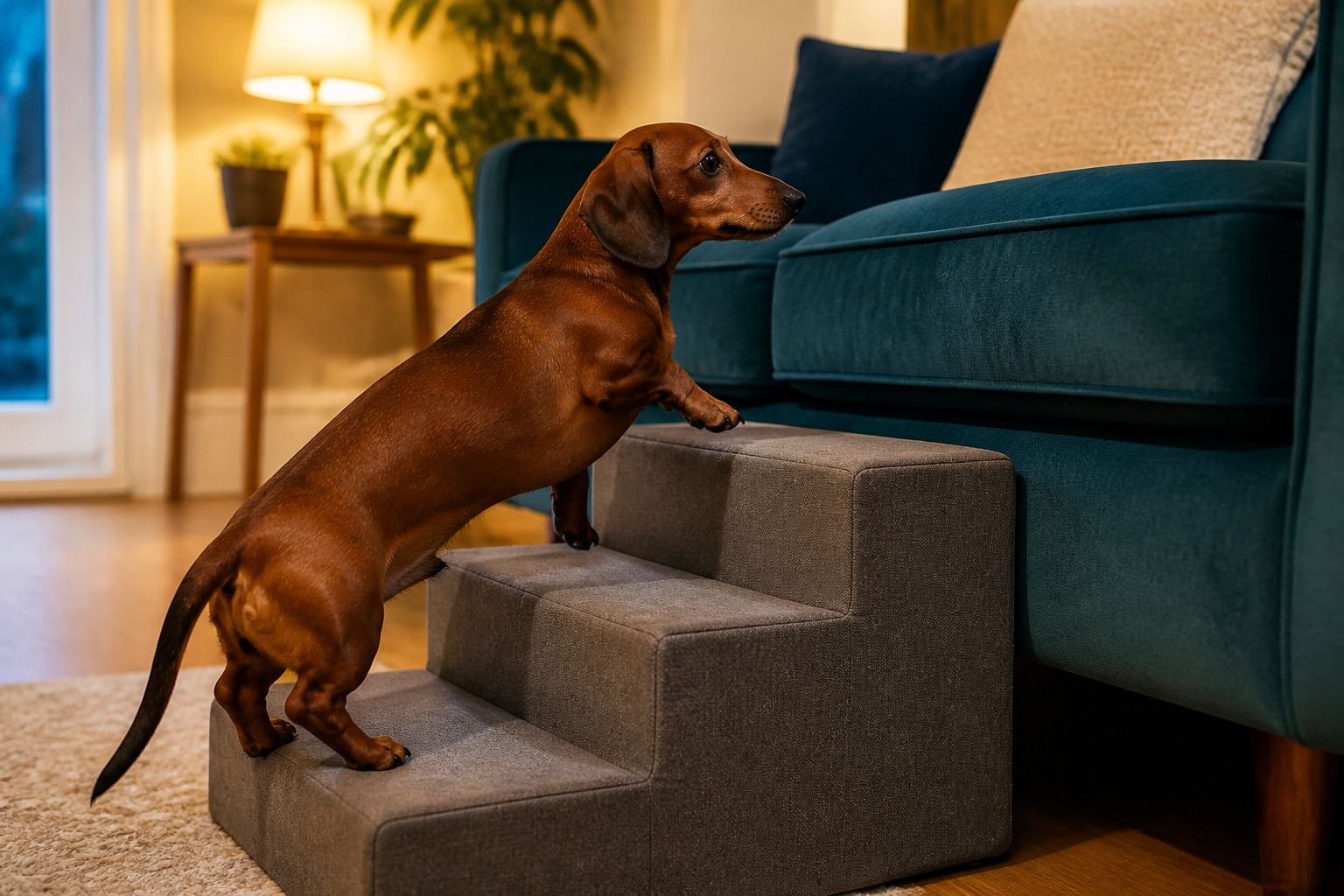
Most dog-stairs roundups sort the options by looks: upholstered, faux leather, spiral, the cute pixel-block set. That is the wrong axis. The set that matches your living room and the set that is safe for your dog are two different questions, and only one of them keeps your dog off the vet’s table. Before you pick a finish, you have two decisions to make that the pretty-pictures lists skip entirely: whether your dog should be on stairs at all or on a ramp, and whether the step height actually fits your dog’s legs.
Get those two right and almost any well-made set works. Get them wrong and you have bought a fall waiting to happen, dressed up as helpful.
Decision one: stairs or a ramp?
This is the fork in the road, and it is decided by your dog’s joints and shape, not by your floor space.
Stairs ask a dog to flex and extend its hips, knees, and hocks with every single step, under its own body weight. For a small dog with healthy joints reaching a low couch, that is no problem. But for a dog with arthritis, hip dysplasia, hind-leg weakness, or a long back, that repeated joint flexion is exactly the motion that hurts. A ramp removes it. Walking up a gentle incline is one smooth, forward motion that loads the joints far less, which is why veterinarians and rehab specialists generally steer arthritic and long-bodied dogs (Dachshunds, Corgis, Basset Hounds) toward ramps over steps. A ramp is also the right call for anything tall, an adult bed or the back of an SUV, where stairs would have to be steep.
Choose stairs if your dog is small, only mildly stiff, and reaching something low. Choose a ramp if your dog is arthritic, long-backed, weak in the rear, or climbing to something high. Plenty of the sets below are built to do both, with a sloped, ramp-like profile, which is the sweet spot for a dog on the edge between the two.
Decision two: the rise-height math nobody checks
Here is the number that causes more refused steps and missed landings than any other, and it is almost never printed on the front of the box: the rise, meaning the height of each individual step.
The rule of thumb is simple. Each step should be low enough that your dog steps up onto it without hopping, roughly no taller than your dog’s own elbow. A four-inch-legged Dachshund on six-inch steps is not climbing stairs; it is doing a series of small jumps, which defeats the entire joint-saving purpose and sets up a tumble. So before you buy, do two measurements: the total height you need the set to reach (floor to cushion, with the top step meeting the surface so there is no leap at the end), and a sanity check that the per-step rise suits your dog’s legs. A set with more, shorter steps is almost always safer for a small or senior dog than a tall set with fewer, bigger ones.
Two more specs round out the fit. Weight capacity should comfortably clear your dog’s weight, not just barely meet it, and be especially skeptical of hollow “storage” stairs claiming high capacities. And material changes the feel underfoot: rigid plastic or wood stays steadier under a heavier dog, while foam is softer and quieter for a small, light one but can feel unstable to a big dog and may not decompress flat out of the box.
The picks, sorted by the dog and the room
With the ramp-or-stairs call made and your measurements in hand, here are eight sets worth buying, each matched to a real situation rather than a finish.
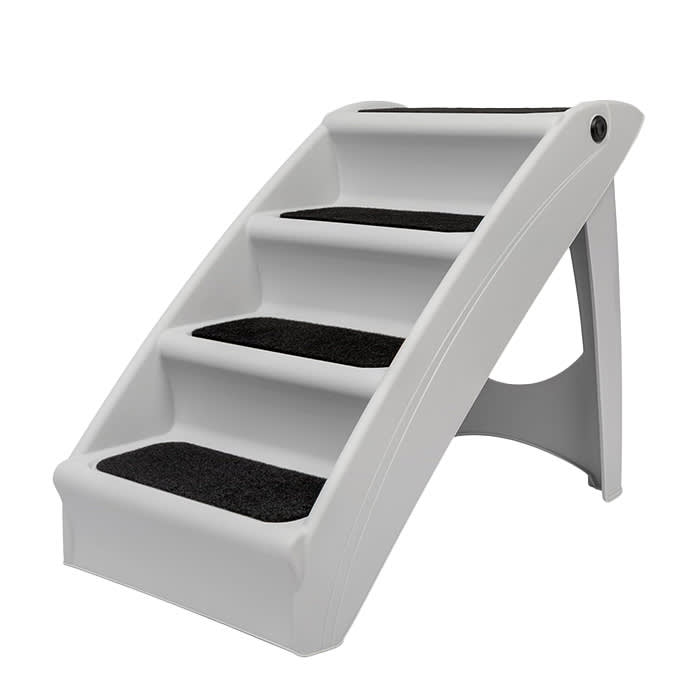
PetSafe CozyUp Folding Dog Stairs
If your dog tops 50 pounds, skip foam and go rigid. The PetSafe CozyUp Folding Dog Stairs are the steadiest mainstream pick, with a sturdy plastic frame, a 150-pound capacity, built-in side rails for confidence, and replaceable non-slip fabric treads that grip both the floor and the paw. More than 60,000 owners back them up. They fold flat to store or travel, and the only honest knock is that they are plain to look at, a fair trade for a set a big dog cannot tip. Review rating: 4.2 out of 5.
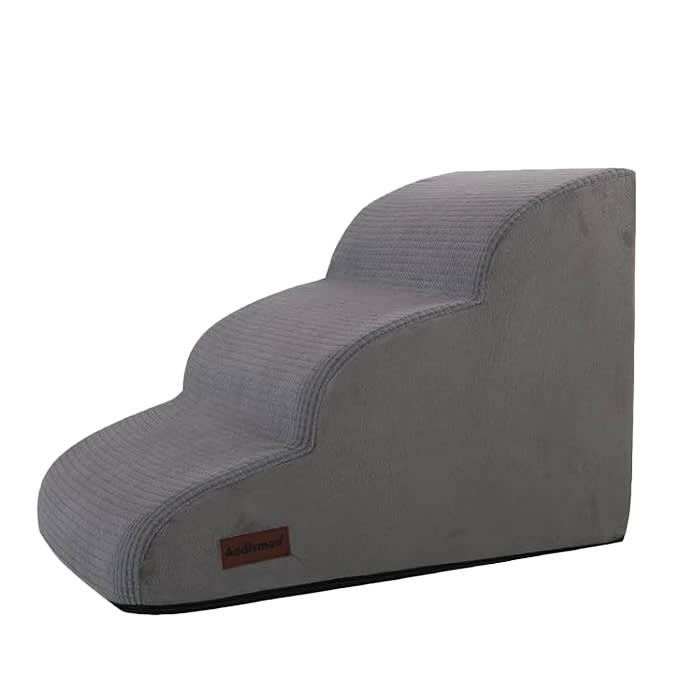
Aodisman 3-Step Dog Ramp and Stairs
This is the rise-height rule made physical. Built for Corgis, Dachshunds, and other long-and-low breeds, the Aodisman set uses a soft, gently sloped profile that splits the difference between stairs and a ramp, so short legs never have to hop. A 50-pound capacity, eight neutral colors, three-to-five-step configurations, and a removable, machine-washable cover. A few owners note it needs a day to fully decompress and is not the sturdiest under a larger dog, which is exactly why it belongs to the little-legged crowd it was designed for. Review rating: 4.5 out of 5.
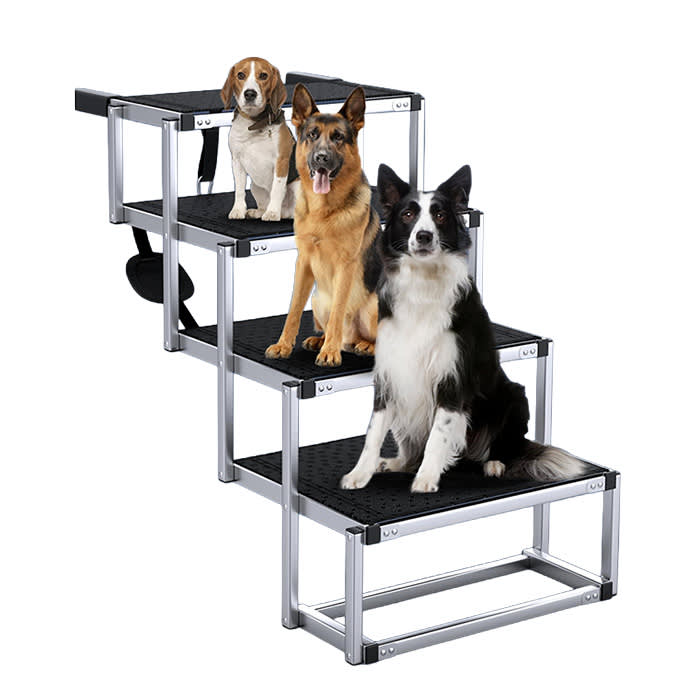
Pet Runa Extra Wide Foldable Dog Stairs
Cars sit higher than couches, so the joint case for help is even stronger. This extra-wide set carries a hefty 250-pound capacity yet weighs only about 13 pounds, folds for the trunk, and, crucially, configures to a high or low angle so you can flatten the climb for a stiff or short-legged dog. The step angle can still be steep at its tallest setting, so use the low configuration for little dogs, and a couple of owners question the aluminum frame’s long-term durability under daily heavy use. Review rating: 4.5 out of 5.
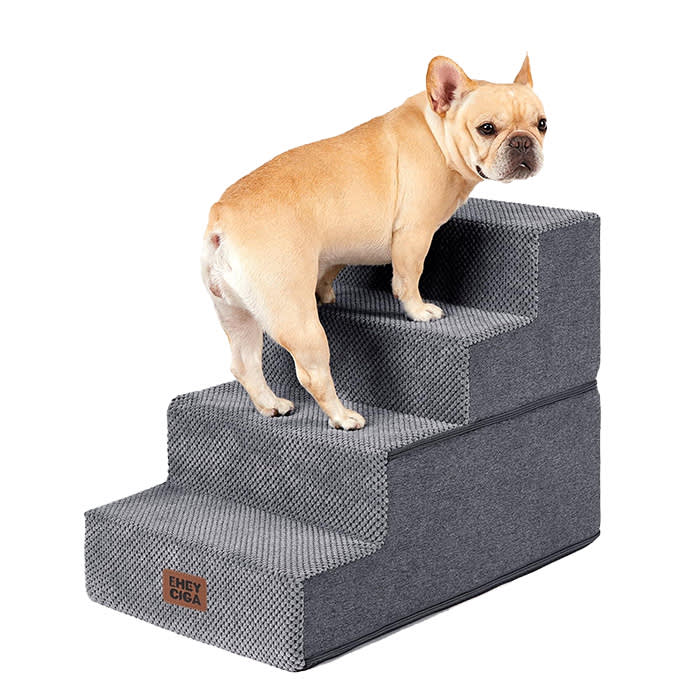
EHEYCIGA Reconfigurable Dog Stairs
The classic upholstered set, angular and supportive, that suits a couch or bed in a room you actually show guests. The trick here is that it reconfigures into a small platform bed, so it earns its footprint twice. A 35-pound capacity (best for small dogs), a high-density foam core, a non-slip base, a carry handle, and a removable, machine-washable cover, in three-, four-, and five-step builds plus an extra-wide option. The common complaint is that the vacuum-sealed foam does not always spring fully back into shape, so give it time to recover. Review rating: 4.4 out of 5.

FunnyFuzzy PU Leather Modular Pet Stairs
If your stairs will meet wet paws, drool, or the occasional accident, a wipeable surface beats fabric. These modular faux-leather steps are waterproof and clean with a baby wipe, reconfigure from two to five steps as your needs change, and come in four colors with a high-density foam core and removable covers. A 45-pound capacity keeps them in small-to-medium territory, and the trade-off for the easy-clean shell is that it is not machine-washable and the faux leather can wrinkle and wear over time. Review rating: 4.8 out of 5.
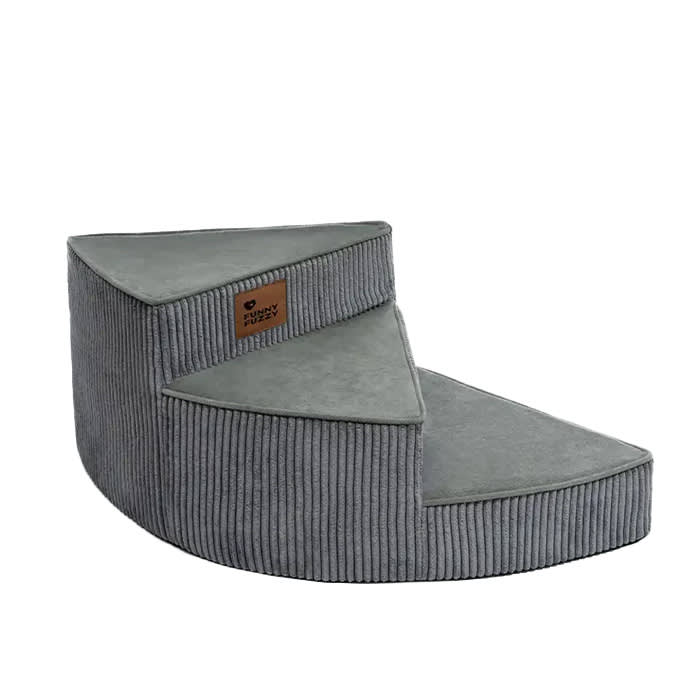
FunnyFuzzy Corduroy Spiral Pet Stairs
When floor space is the constraint, a spiral set climbs in a smaller footprint than a straight run, and it happens to look charming doing it. Joint-friendly foam, grip-enhanced fabric, a removable washable cover, left- and right-facing options, and two-to-four-step heights. Be clear-eyed about one gap: the maker lists no weight capacity, and foam upholstered stairs generally top out around 30 to 50 pounds, so treat these as a small-dog solution and skip them for anything heavier. Review rating: 4.1 out of 5.
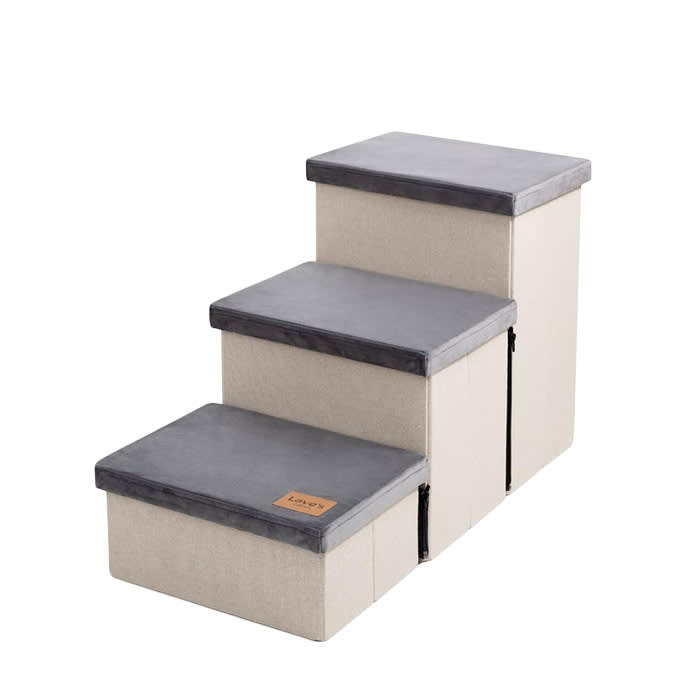
Love’s Cabin Storage Dog Stairs
In a small home, stairs that swallow toys, blankets, or a spare bag of food pull double weight. Each hollow step lifts to store gear, and the modular pieces zip together for stability or stand alone, in eight colors and two-to-four-step builds. The caveat is built into the design: the listed 200-pound capacity is optimistic for hollow upholstered steps, so judge by your dog’s real weight and the zipped-together configuration, not the headline number. Review rating: 4.6 out of 5.
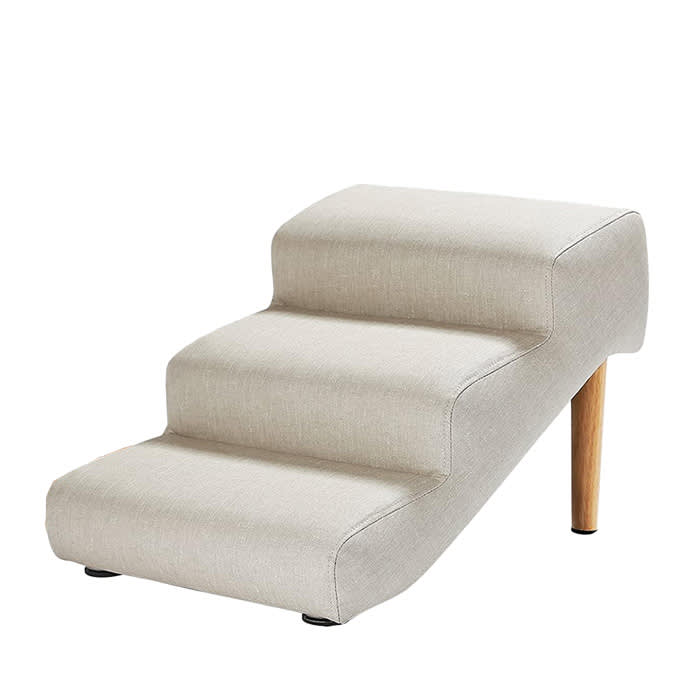
Senneny Imitation Linen Dog Stairs
The set that passes for furniture. It looks like woven linen but is actually printed faux leather, which means it reads as chic and cleans like plastic, the best of both. A 150-pound capacity makes it one of the few style-first picks a medium or larger dog can use safely, in three-, four-, and five-step heights and two colors. The one thing to coach: owners report it feels less stable if a dog veers off the center line on the way down, so place it flush and reward a straight, centered descent. Review rating: 4.4 out of 5.
Set it up so your dog will actually use it
A perfect set your dog refuses is a footstool. Place it flush against the surface with no gap at the top, then introduce it the way you would any new object: let the dog sniff and stand on the bottom step for a treat, lure it up one step at a time without ever lifting or forcing, and spend extra reps on the way down, which spooks most dogs more than the way up. Keep sessions to a few minutes and end on a win. If a dog flatly refuses, suspect the equipment before the dog: a wobble on the first attempt, or steps that are too tall for its legs, will teach it that the stairs are unsafe, and that lesson is hard to undo. Fix the fit, and most dogs come around in a few short sessions.
The bottom line
The finish is the last decision, not the first. Start by asking whether your dog’s joints and body shape call for stairs or a ramp, measure the total height and the per-step rise against your actual dog, demand real stability and non-slip grip on both ends, and only then let color and style be the fun part. A correctly chosen, correctly fitted set protects the very joints you bought it to spare. A pretty one that is too tall, too wobbly, or the wrong type quietly does the opposite.
References
- American Kennel Club. “Does Your Dog Need Dog Stairs or a Ramp?”
- PetMD. “Does My Dog Need Dog Stairs or a Dog Ramp?”
- American Animal Hospital Association. “Osteoarthritis Management Guidelines for Dogs and Cats.”
- Companion Animal Mobility Resources, University of Tennessee College of Veterinary Medicine. “Home Modifications for the Arthritic Dog.”
Common questions
Does my dog need stairs or a ramp?
Stairs suit a small or mildly stiff dog reaching a low surface like a couch. A ramp is the better choice for a dog with arthritis, hip dysplasia, hind-leg weakness, a long back (Dachshunds, Corgis, Basset Hounds), or any dog reaching something tall like a bed or an SUV. The reason is mechanical: stairs force the hips, knees, and hocks to bend and extend with each step, while a ramp lets the dog walk up in one smooth motion that is far gentler on inflamed joints.
What size dog stairs do I need?
Match three numbers to your dog, not just the breed on the box. First, the weight capacity must comfortably exceed your dog's weight. Second, the total height should reach the surface so the top step meets the cushion with no gap to leap. Third, and most overlooked, the rise (the height of each individual step) should be low enough that your dog steps up without hopping, roughly no more than the height of its own elbow. A short-legged dog on tall steps is the classic setup for a fall.
What is the safest type of dog stairs?
Wide, sturdy, and slip-proof on both ends: non-slip feet on the floor and grippy treads under the paws. Stability matters more than any other feature, because a set that wobbles on the first try will scare a dog off for good. A rigid plastic or wood frame is steadier under a heavier dog than soft foam, while foam is gentler and quieter for a small, light dog.
How do I get my dog to actually use the stairs?
Place the set where your dog already wants to go, then lure it up and down one step at a time with treats, never lifting or forcing. Reward calm, deliberate steps. Most dogs learn in a few short sessions, but a fearful dog may need a week of patient, treat-paced practice. A wobbly or too-tall set is the usual reason a dog refuses, so fix the fit before you blame the dog.
Marcus Webb writes about the gear, gadgets, and everyday choices that make life with a pet easier. His coverage runs from product picks to training and the causes worth paying attention to, always with an eye on what actually earns a place in your home.
Meet our experts ↗Keep reading
 Product PicksMost 'Orthopedic' Dog Beds Aren't. How to Read the Spec, Plus 9 That PassMarcus Webb · 14 min
 LivingYour Dog Has Two Beds Because They Have Two Kinds of SleepDr. Ravi Mehta · 7 min
 Product PicksYour Dog Sleeps 12 Hours a Day. These Are the 10 Beds Worth ItLeila Torres · 16 min
 Product PicksShe Left 12 Years in Finance to Make Dog Beds That Don't Look Like Dog BedsLeila Torres · 5 min
 Product PicksYour Dog's Next Bed Might Be 12 Recycled Soda Bottles. On Purpose.Leila Torres · 6 min
 LivingA Furniture Designer Got Fed Up With Ugly Dog Beds. So He Fixed ThemMarcus Webb · 6 min