


Dead Puppies in a Freezer Ended This Vet's Career. One Complaint Is What Did It
A California vet surrendered his license over gruesome clinic conditions and years of malpractice. The case is horrifying, but its real lesson is how long it took, and what a pet owner's complaint can do.

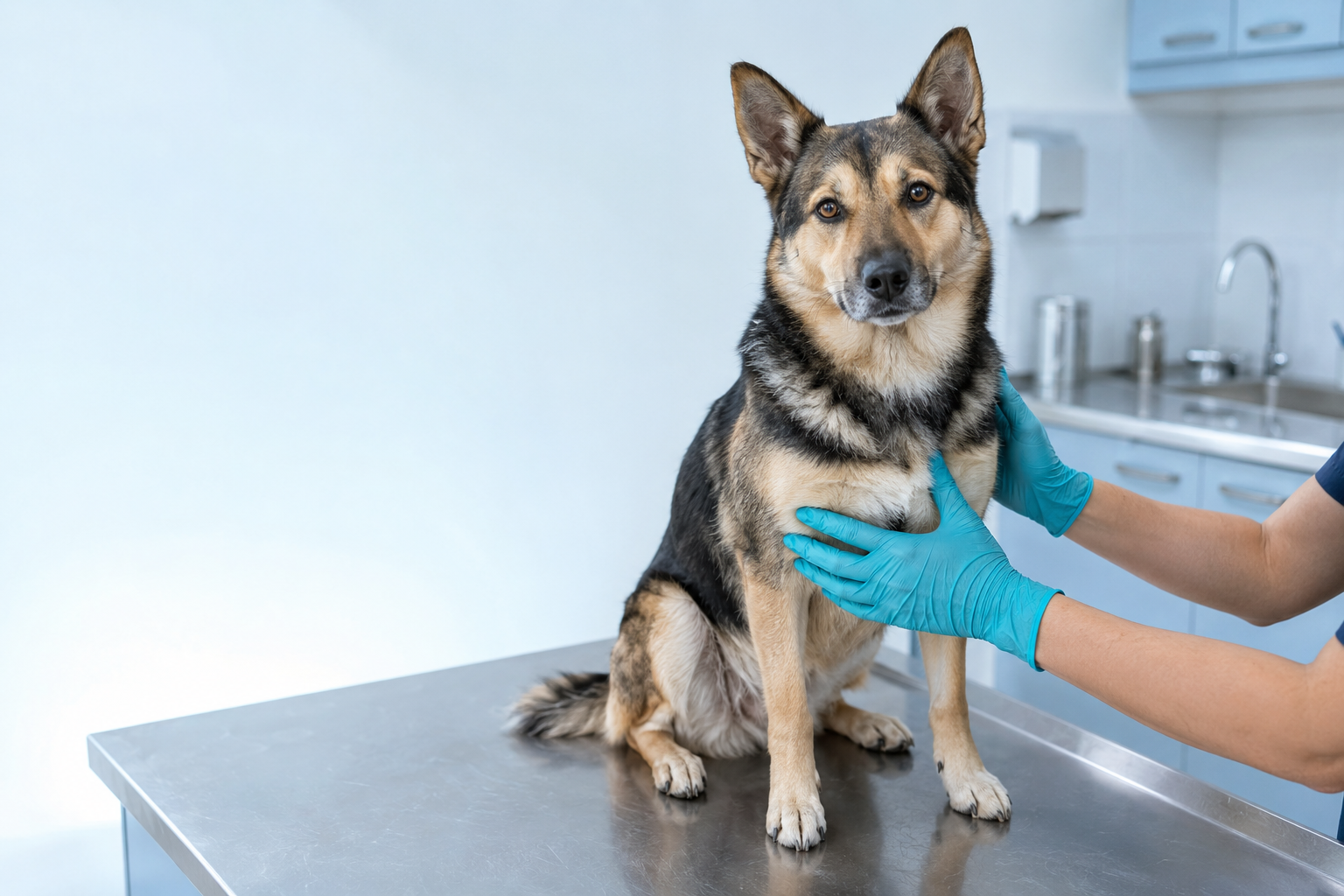
The detail everyone will remember from this case is the freezer: several deceased neonatal puppies stored in five open white buckets, found by state inspectors at a California veterinary hospital. It is the kind of image that ends a career, and it did. But the more useful thing to take from the story of Rodney Ken Hatayama is not the horror. It is the timeline. The conditions that finally pulled his license were documented in 2022. The first formal complaint against him was filed back in 2016. A pet owner saw something wrong, said so, and then waited the better part of a decade for the system to act.
That gap is the real lesson here, and it points to something every pet parent can actually use: how to recognize a dangerous vet, what your complaint sets in motion, and how to check a license before you ever hand over your animal.
What inspectors found
Hatayama, owner of the South County Veterinary Hospital in Selma, California, surrendered his license (number VET 6993) on January 31, 2026, after a Decision and Order from the California Veterinary Medical Board took effect on January 30. The board had filed a formal accusation against him on April 1, 2025, alleging negligence, inhumane treatment, incompetence, and failure to maintain minimum standards.
The conditions were first documented during an August 16, 2022 inspection. According to court records, they included “poor ventilation, deceased animals stored in an unsanitary manner, and unsterile surgical equipment.” Jessica Sieferman, the board’s executive officer, found nearly every room “cluttered, dirty, dusty, unsanitary, and had a foul odor of blood or internal organs,” the surgical room included. Inspectors logged expired and mislabeled medications throughout the facility; per the LA Times, a can of Diet 7-Up sat in the fridge beside vaccines and liquid gabapentin. In all, 25 violations were recorded.
A pattern, not an accident
The squalor was the climax, not the whole story. Hatayama had a documented history of botched care, and the cases share a chilling consistency: procedures he was not qualified to perform, followed by no pain management.
The earliest involved a four-year-old Chihuahua named Mr. Tillman in 2015. The dog had joint pain. Though Hatayama was not a board-certified orthopedic surgeon, he operated, drilling holes into the dog’s bones and wiring them together, and sent him home with no pain medication. A month later, with Mr. Tillman still suffering, his owner Eric Garcia took him to a different vet. “The doctor told me, ‘That is not how you perform this surgery,’” Garcia told the LA Times. Mr. Tillman needed four more operations and has never fully recovered. “He has his good days. On the days that it’s bad, it’s work. I have to stay up with him all night because he can’t sleep,” Garcia said.
The same shape repeats. In 2018, a tabby named Ohno came in congested, wheezing, and swaying; Hatayama diagnosed a central nervous system lesion with no neurological exam and missed a tumor, calling it chronic stomatitis without evidence. He injected a three-year-old Maltese named Zoey with roughly 16 times the recommended dose of an ear medication she did not need. And he performed a spay on a German Shepherd mix named Sol without checking her pre-anesthetic heart or respiratory rate, again prescribing no pain relief afterward.
The owner who wouldn’t let it go
Here is where the story turns from cautionary tale into something close to a civics lesson. Garcia filed his complaint with the California Veterinary Medical Board in 2016. He is openly frustrated that it took so long, and that Hatayama never addressed the families he harmed. But his persistence is part of the chain of events that ended with a surrendered license, and his advice to other pet parents is the most actionable thing to come out of the entire case.
“If you see something that’s concerning, don’t stay silent. Speak up, or ask the doctor what’s going on,” Garcia said.
A complaint to a state veterinary board is not a complaint into the void. It becomes part of a licensee’s record, and a pattern of them is what regulators build an accusation on. The board moves slowly, frustratingly so, but it does not move at all without the people who report.
How to vet your vet
You do not have to wait for a board to act to protect your own animal. A few habits go a long way.
- Check the license before you commit. California’s Veterinary Medical Board, and every state’s equivalent, runs a free online “License Lookup.” Search your vet’s name to confirm the license is current and to see any disciplinary actions on file. Do it for a new clinic the way you would read reviews.
- Ask qualification questions out loud. For anything beyond routine care, especially surgery, ask whether the vet is the right person to do this specific procedure, or whether you should see a specialist. Hatayama’s worst outcomes came from operations he was not certified to perform.
- Treat the absence of pain management as a red flag. Several of these cases share it. A vet sending a dog home from surgery with no plan for pain is a reason to ask hard questions, and to get a second opinion.
- Trust your eyes on the premises. Foul odors, visible filth, expired drugs left in view, these are not cosmetic. If a clinic looks and smells unsanitary, that is information.
- Get a second opinion when something feels off. Garcia’s dog got a real diagnosis only because he took him elsewhere. A second vet caught the first one’s errors. You are allowed to do that, and you should.
The practice, for what it is worth, has been taken over by Hatayama’s daughter, Dr. Stephanie Hatayama. The freezer made the headline. But the part of this story you can carry into your own vet’s waiting room is the quieter one: pay attention, ask questions, check the license, and if something is wrong, file the complaint. It works. It just works slowly, which is all the more reason to be the person who speaks up first.
References
- California Veterinary Medical Board. “Disciplinary Actions” and “License Verification.” https://www.vmb.ca.gov/. Accessed June 2026.
- Los Angeles Times. “Selma Veterinarian Loses License After Unsanitary Facility, Malpractice Allegations.” 5 Feb. 2026. https://www.latimes.com/california/story/2026-02-05/selma-veterinarian-loses-license-unsanitary-facility-malpractice-allegations. Accessed June 2026.
- YourCentralValley.com (CBS47/KSEE24). “‘Buckets of Animal Parts’: Selma Veterinarian Loses License After Unnecessary Procedures.” https://www.yourcentralvalley.com/digital-enterprise/hatayama-veterinarian-negligence/. Accessed June 2026.
Sara Lim leads our Product Picks coverage, testing and comparing the things pets and their owners actually use. From everyday essentials to home-and-style finds, she focuses on honest, useful recommendations rather than hype.
Meet our experts ↗Keep reading
 LivingThe Cruelest Thing in Your Makeup Bag Is Still Perfectly LegalLeila Torres · 5 min
 LivingColorado Just Created a Brand-New Kind of Animal Doctor. Here's What It Means for Your Pet.Marcus Webb · 6 min
 LivingCalifornia Just Attacked the Puppy Mill Supply Chain From Three Sides at OnceDr. Mara Chen · 4 min
 Health & WellnessWashington's Senate Voted 48-0 to Let You Idle for Your Dog. The Bill Died Anyway.Sasha Ford · 6 min
 LivingThe Vet at the Ukrainian Border Treats Animals to Reach the People Holding ThemDr. Amara Solis · 6 min
 LivingA Major Museum Put 130 Pet Photos on Its Walls and Dared You to Call It FrivolousLeila Torres · 6 min