


The Vet at the Ukrainian Border Treats Animals to Reach the People Holding Them
Andrew Kushnir trained for wildlife medicine under open skies. The war in Ukraine sent him to a refugee crossing instead, where a free vet visit for a dog turns out to be care for the human at the other end of the leash.
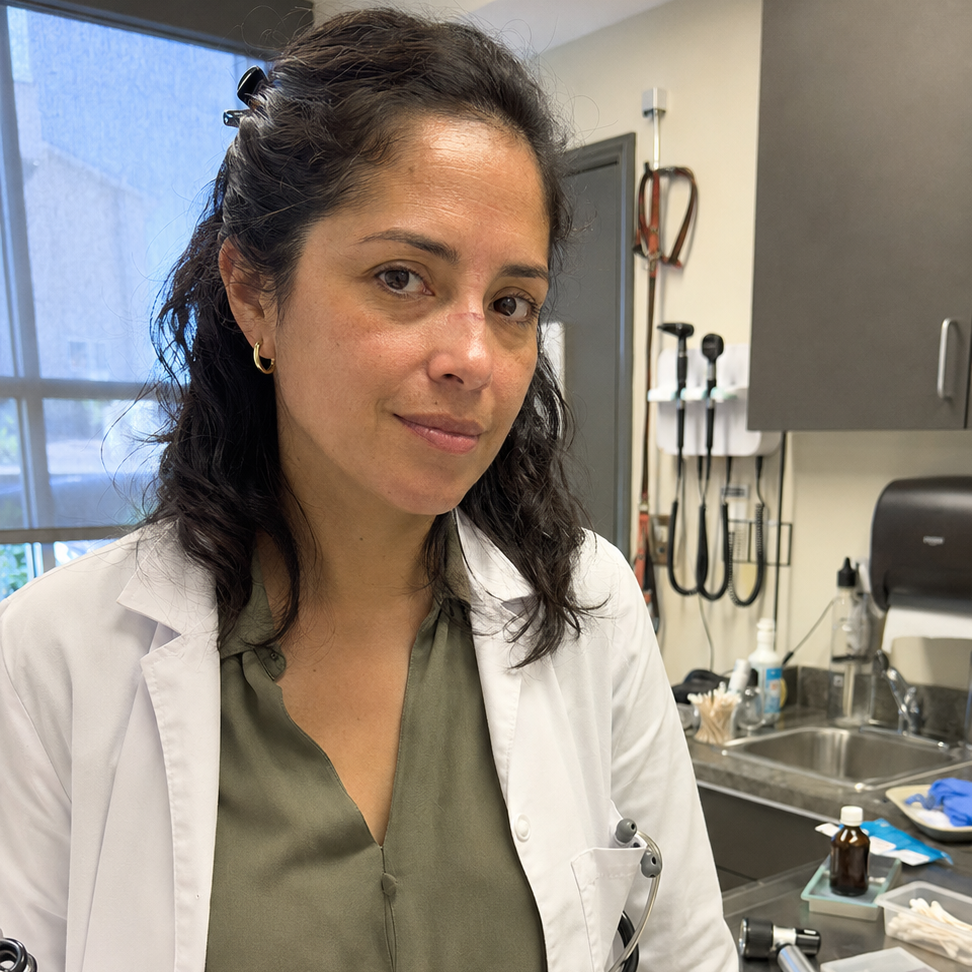
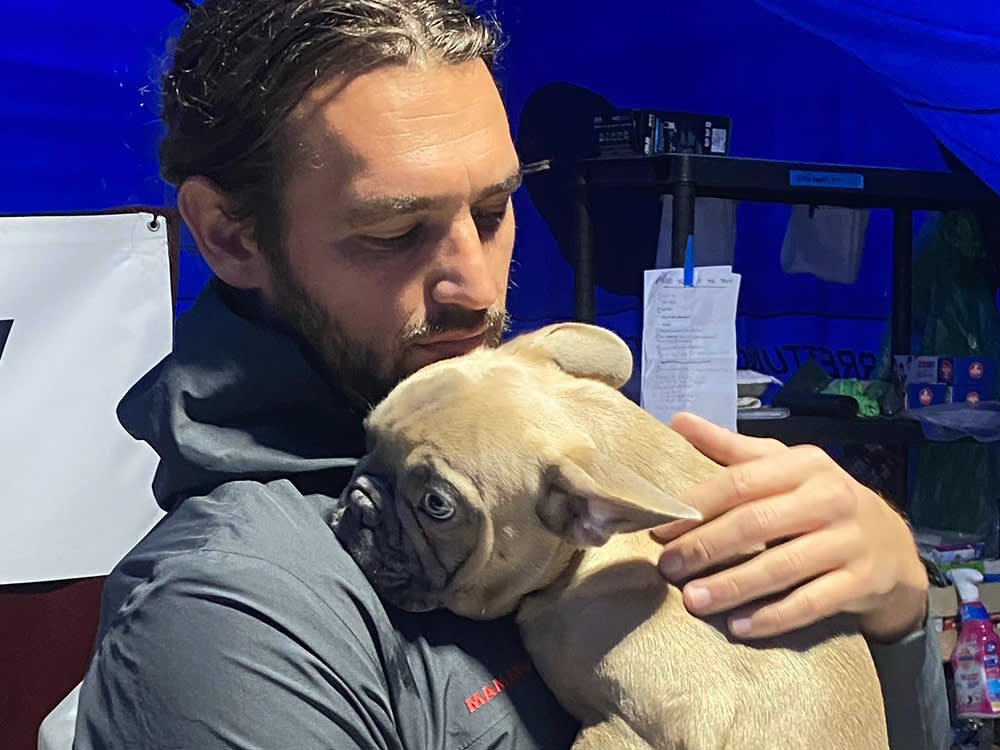
When millions of Ukrainians fled the war, many of them carried a pet through the whole exhausting journey, a cat in a duffel bag, a dog on a length of rope, sometimes more than one. By the time they reached the Polish border, the wait to cross could stretch to 72 hours. They arrived with almost nothing for their animals. That is the gap Andrew Kushnir stepped into, and the way he describes his work flips the usual charity script: he is not really there to treat the animals. He is there to reach the people, and the animal is the door.
“We veterinarians don’t just help animals,” he puts it. “We also help people through animals.” Understanding that one sentence explains why a man who trained to practice medicine on chimpanzees and water buffalo ended up at a refugee camp with a stethoscope and a deworming kit.
A vet who never wanted the clinic down the street
Kushnir, who some followers know as “the Nomad Vet,” never pictured himself in a tidy suburban small-animal practice. Born in San Diego, he grew up obsessed with growing things and exploring wild places, studied ecology and native Southern California ecosystems in college, and even spent several post-college years in a band before deciding science was the life he wanted. He wanted to work with the most vulnerable animals he could find, out under open sky.
The path he built reflects that. Before veterinary school at St. George’s University in Grenada, he shadowed vets and volunteered at a center for street dogs in India. During school summers he lived as a shepherd to Carpathian water buffalo high in the mountains of western Ukraine, and traveled to Uganda to help run annual health checks on roughly 50 chimpanzees on Ngamba Island. After graduating he stacked a shelter-medicine internship on top of a wildlife-medicine internship, worked at a wildlife center in Costa Rica, and was about to start a seasonal wildlife job back in San Diego when the war broke out.
Why a border crossing instead of a wildlife center
The choice to drop everything was not abstract for him. His father and his father’s family were once refugees themselves, fleeing Ukraine during World War Two. That lineage turned a distant crisis into a personal obligation. He started small, sorting and shipping supplies into Ukraine, then realized he could do more on the ground and traveled to the Ukrainian-Polish border, where he linked up with the International Fund for Animal Welfare to provide veterinary support to the pets of refugees while also helping shelters, sanctuaries, and zoos still operating inside the country.
He has spent roughly three months at the crossing across his trips, and he describes the emotional range there as a full kaleidoscope: an endless stream of people who packed their lives into a few bags, met at the border by volunteers from all over the world offering warm food, a smile, and the first assurance in days that they are safe.
What the work actually looks like at the crossing
Here is the part that reframes “free pet care” as something larger. Animals reach the border in every condition: dehydrated, malnourished, some wounded from shelling, some sick, some perfectly healthy but terrified. Kushnir’s station functions, in his words, as a lily pad. Most refugees are not staying; they are pushing onward into another European country. So the job is to stabilize the animal and resupply the family for the rest of the trip: food, a carrier, a leash, a muzzle, flea and tick treatment, dewormer, even clothing.
That bundle of supplies is the quiet genius of the operation. A refugee who can keep their pet healthy and contained on a multi-country journey is a refugee far less likely to be forced into an impossible choice at the next checkpoint. For many of these people, the pet is the last intact piece of home and family they have left. Keeping that bond viable is not a side service. It is the service.
When someone’s whole world has been reduced to what they can carry, the animal they’re still holding is often the thing keeping them upright. Treat that animal well and you are treating the person’s last anchor. It is some of the most efficient humanitarian work there is.
The dog who picked him
Ask Kushnir about his own animal and the intensity gives way to obvious tenderness. Henry, a Boxer, came to him as a patient. Kushnir was doing pre-surgical exams at a shelter when he found a quiet Boxer sitting and looking up at him, and he braced for the breed’s usual burst of energy. It never came. As he knelt to listen to Henry’s heart, the dog stood, tucked his whole head into the crook of Kushnir’s neck, and stayed there. He decided then and there the dog was coming home, a decision he made, surreally, in the middle of neutering him.
Henry, he says, is the calmest, most self-sufficient Boxer he has met, the kind of dog who finds the comfiest spot and sleeps while Kushnir works, or patrols the yard “securing the castle” in a never-quite-successful pursuit of lizards and gophers. Off-leash, Henry never drifts far, constantly checking back to find his person.
The thread that runs through all of it
There is one more piece that ties the wandering vet, the refugee camp, and the loyal Boxer together: music. Kushnir is not sure who he would be without it. He started on the bandura, Ukraine’s national instrument, at five, took up piano at six, and played in bands from age 13 to 25. The night before he left for a year in India ahead of vet school, a friend gave him a small ukulele, and it has come along on long trips ever since. He often has one with him at the border, and he plays for Henry at home. By his own account, music is among the strongest currents running through his life, and it is hard not to read his whole career as a version of the same instinct: showing up where the need is rawest and offering comfort in whatever form the moment allows.
How to help
The outpouring of support for Ukraine has been, in Kushnir’s telling, genuinely staggering at the camp, with organizations and volunteers arriving from around the world. If you want to back the kind of on-the-ground work he describes, several groups he has seen operating at the crossing include Sauveteurs sans Frontières, Siobhan’s Trust, Humanity First, United Sikhs, and IFAW.
References
- International Fund for Animal Welfare. “Ukraine Crisis Response.” ifaw.org.
- United Nations High Commissioner for Refugees. “Ukraine Refugee Situation.” Operational Data Portal, data.unhcr.org.
- “The Nomad Vet.” Instagram, @thenomadvet.
Dr. Solis is a board-certified veterinary dermatologist with over twelve years of clinical experience. She advises on skin conditions, allergies, and grooming practices that affect coat and skin health. All dermatology and allergy content at The Pet Times is reviewed by her team before publication.
Meet our experts ↗Keep reading
 LivingThe Photographer Who Kept Finding Cats Inside Refugees' CoatsNina Vasquez · 6 min
 LivingYour Dog Isn't a Sofa. Pennsylvania's House Just Voted to Say So.Claire Sutton · 4 min
 LivingThe Unlikely Shelter Marketing That Works: Kids With PaintbrushesLeila Torres · 5 min
 LivingShipping Your Dog Overseas Can Cost $10,000. The Military Finally Started Paying.James Okafor · 7 min
 LivingThe Biggest Study Ever on Pets and Mental Health Is Funded by a Pet-Food CompanySara Lim · 7 min
 LivingYou Don't Have to Adopt a Dog to Get the BenefitClaire Sutton · 6 min