


California Tried to Stop Making Unhoused People Choose a Roof or Their Pet. Newsom Said No
AB 1215 would have funded shelters to keep unhoused people and their pets together. It passed the legislature and was vetoed. Here's what the bill would have done, and why the bond it protected keeps people out of shelters.

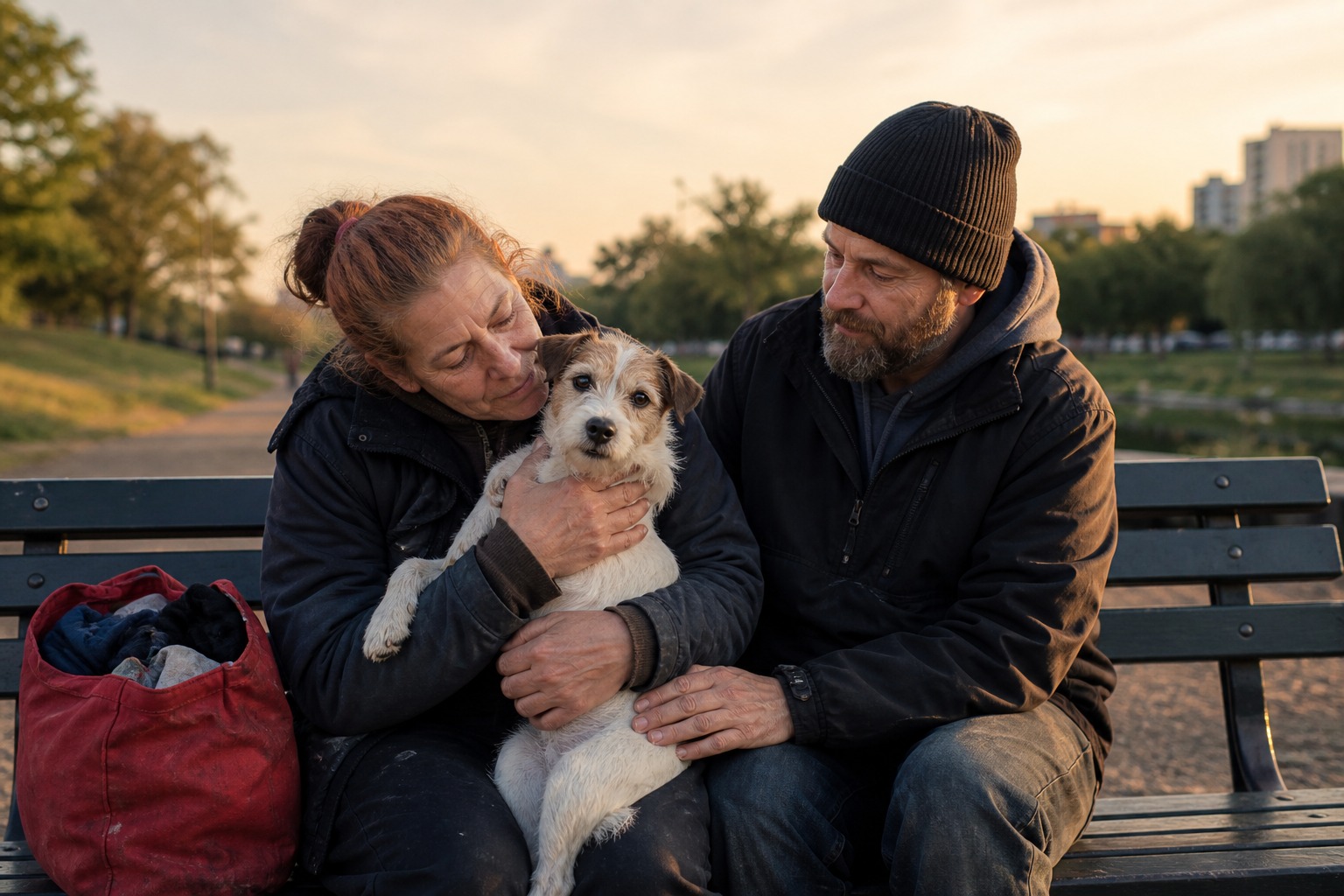
For thousands of unhoused Californians, “get inside” comes with an impossible asterisk: only if you abandon the animal that may be the steadiest relationship in your life. Most shelters do not take pets. So people stay outside, in the cold and the danger, rather than give up a dog or cat. A 2023 bill called AB 1215 set out to remove that cruel either-or by paying shelters to take the pets too. It cleared the California legislature. Then Governor Gavin Newsom vetoed it.
That ending is the reason this story still matters, and it is the part the optimistic early coverage could not have known. The fight over AB 1215 is worth understanding not as a bill that triumphed but as a near-miss, because the problem it tried to solve did not go away with the veto, and the human-animal bond it was built around is exactly what keeps the policy question alive.
What AB 1215 would have done
Earlier in 2023, People Assisting the Homeless (PATH) partnered with the Los Angeles Homeless Services Authority (LAHSA) and state assembly member Wendy Carrillo to introduce the bill. It is rare for shelters to allow pets; PATH is an exception. AB 1215 would have re-established ongoing state funding, through a Pets Assistance With Support (PAWS) grant program, to help homeless shelters and domestic violence shelters across California accommodate animals, covering pet food and basic veterinary services.
The structural fix it offered was permanence. An earlier program, Pet Assistance and Support (PAS), had provided only one-time funding. AB 1215 would have made that money recurring, the difference between a pilot and a policy.
Carrillo put the stakes plainly. “As California looks for solutions for unhoused people across the state, we should not force individuals experiencing homelessness to choose between keeping their animal companion and obtaining urgent access to shelter,” she said. She framed the funding as a way to make seeking help feel possible: “AB 1215 is a local solution that directly addresses a hurdle to thousands when seeking temporary housing.”
The numbers behind the need
The scale is not marginal. Per Los Angeles Daily News reporting, LAHSA estimates that five to 10 percent of the roughly 70,000 unhoused people in Los Angeles County have a pet, meaning the bill could have reached thousands turned away from shelters specifically because of an animal. Statewide, the U.S. Department of Housing and Urban Development estimated California’s unhoused population at around 180,000 in 2022. A policy that lets even a fraction of those people come indoors without surrendering a companion is not a small humane gesture; it is a meaningful lever on who actually accepts shelter.
Advocates have always argued that the bond is not the obstacle, the policy is. People will seek help, they say, when seeking help does not require an act of abandonment.
What the funding actually buys
This is not abstract for PATH, which has run a version of it on the earlier one-time money. “Previous state funding through the Pet Assistance and Support program allowed PATH to provide care supplies and veterinary services for pets of our participants in our interim housing sites across the state,” Tyler Renner, the organization’s director of media, told us by email. In practice that meant collars, leashes, flea and tick medication, and other essentials, plus covered veterinary care “so everyone in the shelter, human and animal, stays healthy.” AB 1215 would have turned that proof of concept into a standing program other shelters could draw on.
There was a second, quieter benefit. Letting people keep their pets indoors eases the strain on animal shelters, which have been filling faster than they empty. After the 2020 adoption surge, intake outpaced adoptions again, and during disasters, like the Norfolk Southern derailment in East Palestine, Ohio, animals get left behind when owners evacuate. Keep people and pets together and fewer animals land in an already overcrowded shelter system.
The veto, and what comes next
Despite passing the legislature, AB 1215 was vetoed, and a planned attempt to reconsider the governor’s veto was struck from the calendar in early 2024. The PAWS grant program it would have made permanent did not take effect. For the thousands of pet-owning Californians the bill was written for, the underlying choice, your animal or a roof, remains exactly where it was.
That is the sober note this story now ends on. But the case the bill’s advocates made did not lose its force with the veto. The reasoning, that no one should have to abandon a companion animal to escape the street, that recurring funding works where one-time grants only pilot, that keeping pets and people together relieves the shelter system on both ends, is still sitting there, intact, waiting for the next bill. Renner’s hope reads, in hindsight, less like a victory lap than a marker laid down for the future: “Our hope is that more providers will see the value in supporting pets, that the state will continue to provide funding, and that people experiencing homelessness will embrace services.” The veto answered one bill. It did not answer the question.
References
- California Legislature. “AB-1215 Pets Assistance With Support Grant Program: homeless shelters: domestic violence shelters: pets.” https://leginfo.legislature.ca.gov/faces/billNavClient.xhtml?bill_id=202320240AB1215. Accessed June 2026.
- LegiScan. “CA AB1215 2023-2024 Regular Session (Vetoed).” https://legiscan.com/CA/text/AB1215/id/2841847. Accessed June 2026.
- U.S. Department of Housing and Urban Development. “2022 Annual Homelessness Assessment Report (AHAR) to Congress, Part 1.” https://www.huduser.gov/portal/sites/default/files/pdf/2022-AHAR-Part-1.pdf. Accessed June 2026.
Marcus Webb writes about the gear, gadgets, and everyday choices that make life with a pet easier. His coverage runs from product picks to training and the causes worth paying attention to, always with an eye on what actually earns a place in your home.
Meet our experts ↗Keep reading
 LivingIn a Colorado Divorce, Your Dog Is Legally a Toaster. A Bill to Fix That Just DiedClaire Sutton · 5 min
 LivingThe Internet's Favorite Grief Metaphor Just Got a Real AddressNina Vasquez · 4 min
 LivingPeople Don't Surrender Pets Because They Stopped Loving ThemLeila Torres · 8 min
 LivingThe Unlikely Shelter Marketing That Works: Kids With PaintbrushesLeila Torres · 5 min
 LivingA Dam Broke and the Dogs Went to the Rooftops. Three Years Later, the Water Is Still the Story.Jordan Ellis · 8 min
 LivingThe Biggest Study Ever on Pets and Mental Health Is Funded by a Pet-Food CompanySara Lim · 7 min