


The Rescue Dog Who Wrote an Album: Bully on Grief, Mezzi, and Making It Through
Alicia Bognanno waited her whole life for a dog, then built a record around losing one. A conversation about a rescue Husky mix, a bipolar diagnosis, and the bond that carried both.

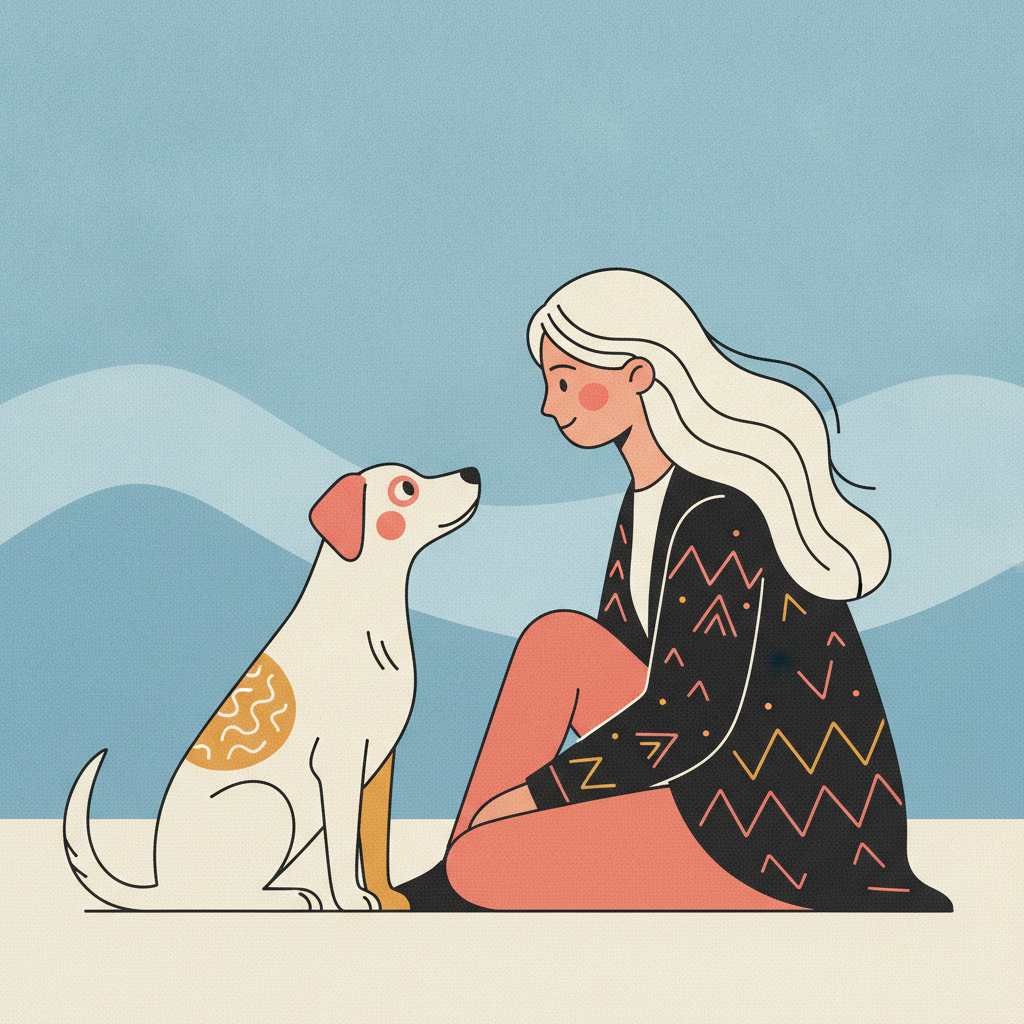
Plenty of musicians have written a song about a pet. Far fewer have built an entire record around the loss of one, and fewer still would tell you, plainly, that the dog was the most important relationship of their life. Lucky for You, the 2023 album from alt-rock artist Bully, is that rare thing: a full-length work of grief for a rescue dog, and a frank account of what that dog did for a person living with mental illness. Talking to us, Alicia Bognanno, the woman behind the band, did not soften any of it.
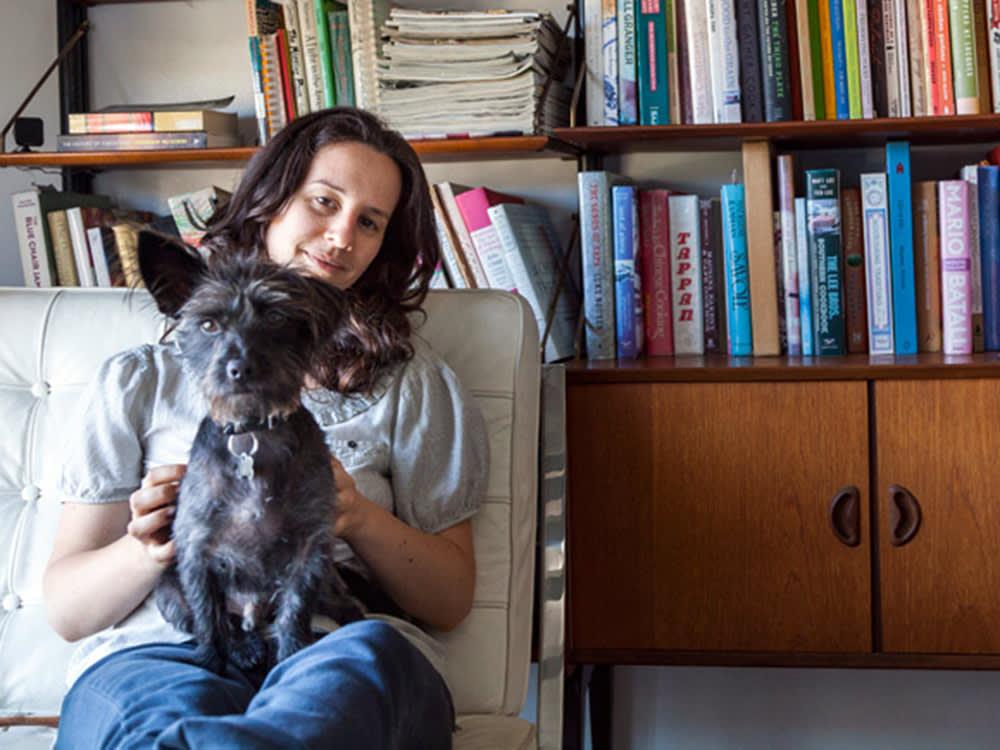
Ever since Bognanno, the alt-rock front woman known as Bully, was little, she knew she needed a dog.
“But there was four of us kids, and we were all kind of close in age. Getting an animal just wasn’t really in the cards. I had waited my whole life for Mezzi,” she says of her late rescue, a Husky mix.
(She named her after mezzaluna, a type of ravioli, because she was working at an Italian restaurant at the time.)
Her latest album, Lucky for You, is a love letter to Mezzi, her dog of 13 years, who recently passed away and devastated the Nashville-based musician.
“I didn’t know at the time when I was younger, but I have bad emotional things. I’m also neurodivergent and really struggled with school,” she recalls. “When I was around dogs and animals, I felt this unconditional love and acceptance that I wasn’t getting from anywhere else in my life.”
The minute Bognanno rented her first apartment in college, she got Mezzi.
“We grew up together. The most pivotal moments in my life were with her. Mezzi was the best thing that’s ever happened to me. I learned to love and in a way that I didn’t even know existed.”
We caught up with Bognanno, who is currently on tour, to dig into her emotionally charged album (released June 2) and how she is still forging ahead after losing her best friend.
Let’s start with Lucky for You, and how songs like “Days Move Slow” and “A Wonderful Life” were inspired by Mezzi. I read that this was the longest it’s ever taken you to make an album. Is that why?
I had a few things written. We would take breaks, or I would tour. Shortly after Mezzi passed, most of my writing kind of twisted from there because I ended up writing a lot more songs relevant to the way that I was feeling. She was, like, my soulmate. I live alone. It was the two of us. Every time I wrote, she was right by my side. She traveled with me. She toured with me. She was my rock. A year before she passed, she got diagnosed with cancer. Anytime we would go outside, I would just kind of look at her and start tearing up. It was hugely influential to my writing this record. She was my whole world.
So you write “Days Move Slow,” or at least start it, and then Mezzi dies. How did you rework the song to reflect where your head was?
That was the first thing that I really did after she passed. I spent so much time staring out the window, and I felt like I couldn’t really do anything. Everything felt like such a chore. And I was really avoiding writing, because she’s usually sitting down right next to me. Eventually, I wrote that and “A Wonderful Life” in the same day. It felt like it was all that I could do. I really didn’t tweak the lyrics for the couple of songs that happened before either, because they still applied. Everything is more or less about this idea of death and permanence.
Is that why the album took longer?
Oh, no. It was just a different process. I sat down with a producer, JT Daly, and the two of us played everything and did everything. And we lived close by, so we didn’t have a deadline. We had sat down and started working together a little bit before Mezzi passed, and then everything kind of changed from there. The record was definitely taking a different turn because it was just all about her.
Has it been hard to discuss this and put it out into the world?
Yeah, definitely. I think about that all the time. The most difficult part is having to explain the songs. But I knew that I was gonna have to release it and talk about it. She’s all I talked about before she died.
You’ve been open about your bipolar diagnosis. How did Mezzi help you through that?
The trial-and-error process for medication is, like, horrible. But Mezzi was always there for me. I’m bipolar type II. So that means my mania, to me, feels like I’m euphoric: “I’m so happy! This is the best!” And then my depression is the worst. I would get to my very, very, very lowest point where I was like, “What is the point? What am I doing here?” I would look at Mezzi and be like, “This is what I’m doing here. I cannot leave Mezzi.” So anytime I was having an episode, I would just hold her, and she would be there for me. One time a tour manager was crashing at my house, and I was working on my computer in the kitchen. He was like, “I don’t think you know this. But while you’re working, you just look at Mezzi and start smiling and go back to work.” She just calmed me down.
Do you still feel her presence ever?
I had this experience a few months ago, where I was by the ocean and looking off a dock, and a manatee swam right up to me. It just looked at me, dead in the eyes. My immediate thought was, “That was Mezzi. For sure that was Mezzi.”
Lucky for You is driven by grief. But how would you describe the album’s theme as a cohesive piece?
Just this overall feeling of accepting impermanence, grappling with that and the idea that so many things are completely out of our control. Everything is going to change at some point. I spend a lot of time thinking about that, because it’s kind of a hard pill to swallow. But I think it’s really important to consider, because it is reality.
Do you reconcile any of that? How does it end after you finish the album?
It’s still unsettling. I think I’m constantly figuring it out and working on it. But it’s very important to write about something that is personal and that means a lot to me because I know I’m gonna have to play it live every night for years. It’s like an hour-long therapy session. There is a lot of peace that comes with that.
You actually have another dog, Papa.
I was fostering him when I had Mezzi, when COVID happened. I ended up adopting him, because they got along so well. They’re very different. He’s like, “I don’t care about you. I want to be under your blanket all day.”
How often do you foster?
Well, I travel a lot. So I’m basically fostering when I can be here, at least for two weeks. After Mezzi passed, I kind of started fostering again. Honestly, I really needed big comfort dog energy. But also, I’m not ready for another dog. Every time I think I might be, I realize it’s too scary for me to commit. I’m still grieving Mezzi, and I have this weird fear that if I commit to another dog, I’ll forget about her or something. I think it’s just a weird part of grieving. I thought Papa would maybe love it, too. But Papa doesn’t give a shit. It was like, “I want to be left alone at all times. I want to take your bed, and I want to try whatever treats that are gonna come. And then just leave me alone.”
Is he there when you record?
He’ll be like, “Huh?” But yeah, he’s not very interested in anything. If anything, he’ll leave the room. I don’t think he’s a Bully fan.
What stays with you after talking to Bognanno is not the album mechanics but the shape of the bond underneath it: a kid who found unconditional acceptance in animals before she found it anywhere else, an adult who credits a rescue dog with getting her through the lowest stretches of a bipolar diagnosis, and an artist who turned that loss into something she will sing back to herself every night on tour. It is the most ordinary story in the world, a person and their dog, told with unusual honesty about how much weight that relationship can carry.
References
- Pitchfork. “Bully: Lucky for You.” https://pitchfork.com/reviews/albums/bully-lucky-for-you/. Accessed June 2026.
- National Alliance on Mental Illness. “Bipolar Disorder.” https://www.nami.org/about-mental-illness/mental-health-conditions/bipolar-disorder/. Accessed June 2026.
Nina Vasquez writes about life at home with pets and the relationships at the heart of it. Her work covers day-to-day living, people-and-pet stories, and the products that fit into a real household, with a warm, grounded take on everyday pet ownership.
Meet our experts ↗Keep reading
 LivingShe Was Supposed to Be Elliot Page's DogSasha Ford · 7 min
 LivingAdopting a Look-Alike Dog Isn't the Risk. Expecting the Same Dog IsLeila Torres · 8 min
 LivingA Layoff, a Pregnant Street Dog, and 4,500 Rescues LaterLeila Torres · 5 min
 LivingThe Artist Who Couldn't Draw Herself Found a Workaround: an 8-Pound ChihuahuaLeila Torres · 5 min
 Living"I'm Too Busy for a Dog" Is Almost Never TrueLeila Torres · 6 min
 LivingA Comment on Instagram Got a Two-Legged Street Dog a Mercedes WheelchairJames Okafor · 5 min