


Breast Cancer in Dogs Is Mostly a Timing Story. One Decision Sets the Risk
Mammary cancer is one of the most common cancers in female dogs, but the odds are set largely by a single choice made early in life. Here are the numbers, the warning signs, and a two-minute home check that catches it sooner.

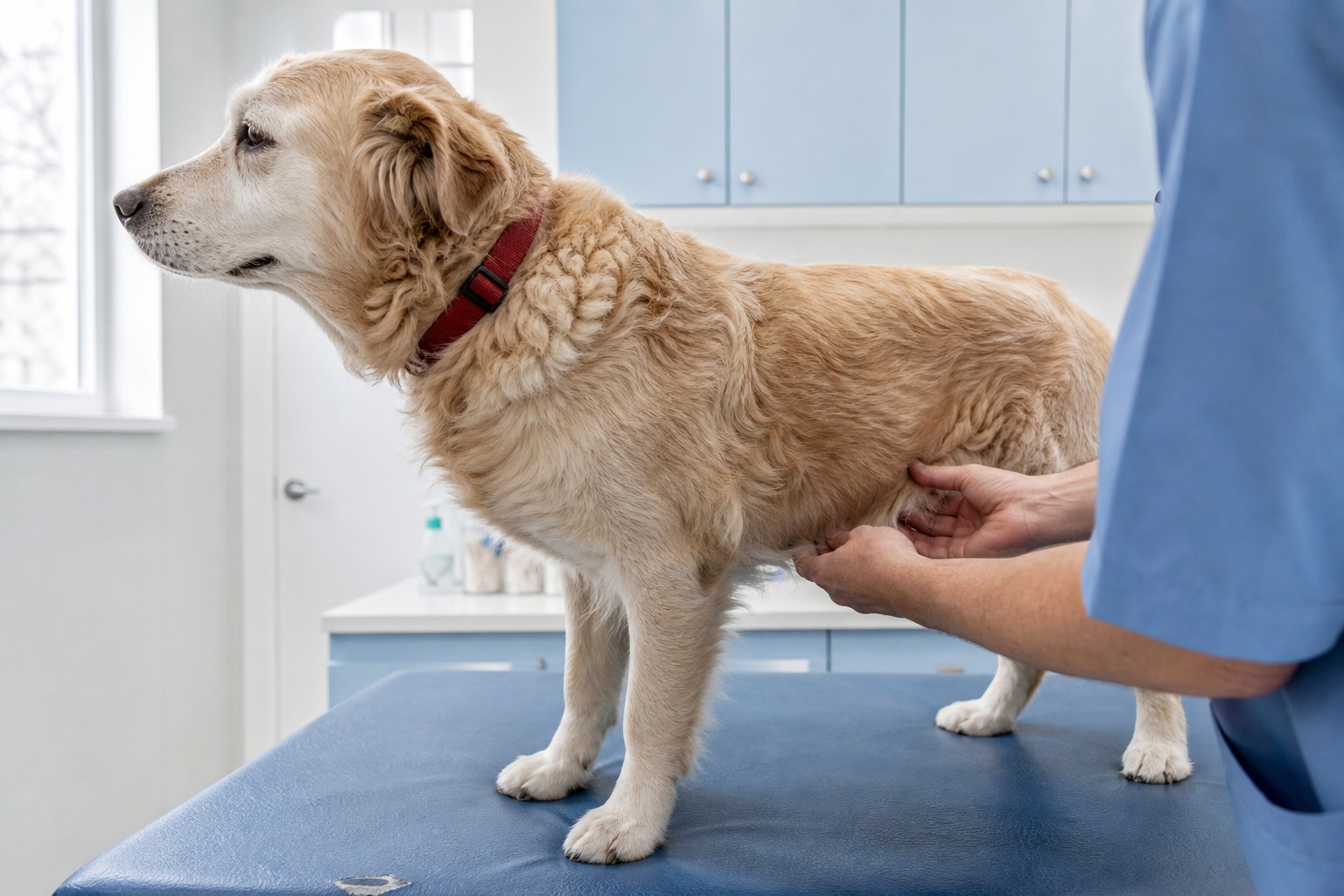
Most cancers feel like bad luck. Mammary cancer in dogs is unusual because its odds are set, to a striking degree, by one decision made early in a dog’s life. That is the genuinely empowering part of an otherwise scary topic: this is one of the few common canine cancers where the math is largely in your hands. So we are going to start where the leverage is, with prevention, and then cover how to catch it early if it shows up anyway.
The number that reframes everything
The most useful fact about canine breast cancer is not a symptom, it is a risk curve, and it bends on the timing of spaying.
A female dog spayed before her first heat carries a lifetime mammary-tumor risk of roughly 0.5 percent. Let her go through one heat first and that risk jumps to about 8 percent. After a second heat, it climbs to roughly 26 percent. Those are not small differences; they span from “vanishingly rare” to “one in four.” The reason is hormonal: these tumors are fueled by the estrogen and progesterone exposure that comes with each heat cycle, so each cycle a dog goes through nudges her risk upward.
This is why “spaying helps prevent cancer” undersells the reality. Spaying before the first heat does not just help, it all but takes mammary cancer off the table. Timing is the dial.
A caveat worth stating plainly: spay timing is a whole-dog decision, not only a cancer decision. For some large and giant breeds, vets weigh early spaying against joint and other considerations, so the right age is a conversation to have with your vet rather than a one-size rule. But on the specific question of mammary cancer, earlier is dramatically protective.
Spaying still matters after a tumor appears
Even if a dog was not spayed early, the hormone connection means spaying can still help once a tumor is present.
“Roughly one in two canine mammary cancers is hormone-responsive: the tumor cells carry docking sites for estrogen and progesterone, so the dog’s own hormones keep feeding the growth,” explains Dr. Lena Park. “That is why we still recommend spaying even after a tumor has developed. Research following dogs after surgery found meaningfully longer survival when the spay happened alongside the mass removal or within the couple of years leading up to it.”
In other words, removing the hormone supply is part of the treatment, not just the prevention.
The two-minute check that finds it early
Early detection changes the outlook more than almost anything else, and you do not need a clinic to start. Once a month, when your dog is calm, run your fingertips gently along both rows of mammary glands, from the chest down to the groin, on each side. You are feeling for anything new: a lump, a firm spot, a sore that has not healed. Pick a consistent day so it becomes routine, the way the body check during a belly rub can be.
Tumors vary. Many grow quickly and take on an irregular shape, and some bleed or ulcerate, but a small, quiet lump that has sat unchanged for a while can also turn aggressive without warning. So the rule is simple: a new lump is a vet visit, not a wait-and-watch. About half of mammary tumors turn out benign, but there is no upside to guessing.
Beyond the mammary chain, these broader signs warrant a check:
- Growing lumps, or sores that will not heal
- Sudden changes in appetite or weight
- Unpleasant odors
- Bleeding or discharge from any opening
- Trouble chewing or swallowing
- Reluctance to exercise
- Ongoing lameness or stiffness
- Difficulty breathing, urinating, or having a bowel movement
What treatment looks like
A biopsy is the starting point. It tells your vet the tumor type, its size, whether it has spread, and how fast it has been growing, and all of that shapes the plan.
Malignant tumors are usually treated surgically, with either the single tumor removed or the affected mammary chain taken along with nearby lymph nodes. There is one anatomical advantage on the canine side: a dog’s mammary glands sit outside the muscle wall, so the surgery tends to be less invasive than the human equivalent. Chemotherapy and radiation are used less often in dogs, because they generally prove less effective than they do in people, which is one more reason early surgical removal, while a tumor is small and local, matters so much.
Diet is the supporting actor
Weight and diet round out the picture. Dogs carrying extra weight or eating a high-fat diet have a higher mammary-cancer risk, so keeping your dog lean on a quality food is a real, if smaller, lever alongside the big one. It will never outweigh spay timing, but it stacks in the right direction.
The throughline: this is a cancer where you hold unusual influence. Decide spay timing with your vet, do the two-minute check every month, and treat any new lump as a same-week appointment. Those three habits move the odds more than worry ever could.
References
- American College of Veterinary Surgeons, “Mammary Tumors.”
- Cornell University Riney Canine Health Center, “Mammary Cancer.”
- Brooks, Wendy, DVM, DABVP, “Mammary Tumors and Cancer in Dogs,” Veterinary Partner / VIN.
- Morris Animal Foundation, “Mammary Cancer in Dogs and Cats: What Every Pet Owner Should Know.”
Common questions
How common is breast cancer in dogs?
Mammary tumors are the most common tumor in unspayed female dogs, showing up most often between ages five and 10. Roughly one in four unspayed dogs is affected over her lifetime, and about half of those tumors are malignant.
Can I check my dog for mammary tumors at home?
Yes. Once a month, with your dog relaxed, run your fingers gently along both rows of mammary glands from the chest to the groin, feeling for any new lump, firmness, or sore. It takes about two minutes and is the single best way to catch a tumor while it is small.
Can male dogs get breast cancer?
Yes, though it is uncommon. When it does occur in males it tends to be aggressive, which makes any lump in the chest or belly area worth a prompt vet visit.
Not a substitute for your vet. Our guidance is educational. For urgent symptoms, contact a vet or emergency clinic right away. Editorial standards
Dr. Chen is a small-animal veterinarian who leads health and safety coverage at The Pet Times. She writes and reviews the bulk of our illness, condition, and safety content, translating clinical guidance into clear, practical advice owners can act on at home.
Meet our experts ↗Keep reading
 Training8 Disgusting Things Your Dog Does. Only 3 Are Worth Worrying About.Dr. Ravi Mehta · 9 min
 Health & WellnessThe 'Mystery Dog Illness' Wasn't a Mystery. Here Are 8 Ways to Keep Your Dog Out of It.Dr. Mara Chen · 7 min
 Health & WellnessCherry Eye in Dogs: The One Rule That Protects Your Dog's Vision for LifeDr. Lena Park · 6 min
 Health & WellnessYour Dog's Yeast Infection Won't Surrender to Coconut OilDr. Priya Nair · 7 min
 Health & Wellness"Kennel Cough" Isn't a Disease. That's Why Every Outbreak Feels Like the End of the World.Dr. Ravi Mehta · 8 min
 FoodRice Isn't a Superfood for Dogs. It's Something More Useful.Dr. Nina Kohl · 8 min