


Why BlendVET Bets on Ten-Year-Olds to Fix Vet Medicine's Diversity Gap
Most diversity programs start with hiring. BlendVET starts with childhood, on the theory that you cannot become what you have never seen. Here is how its youth pathways and clinic certification aim to remake who cares for America's pets.
There is a TIME magazine story that captures veterinary medicine’s diversity problem better than any statistic. A mother whose dog needed care went looking for a Black veterinarian, someone who could be a role model for her young children. The search dragged on. The one clinic she found was too far away. Eventually she gave up. The pet got care; the kids never got the role model.
That gap, between the vets who exist and the vets a child can actually see, is the specific thing BlendVET is trying to close. And its central bet is unusual. Most efforts to diversify a profession start at the hiring end, with recruitment and retention. BlendVET works that end too, but its founders put their deepest energy somewhere earlier and stranger: with elementary and middle schoolers, on the theory that a person cannot grow up to be something they have never once seen. Understanding why they start that young is the key to understanding the whole organization.
The numbers that define the problem
First, the scale of it. According to the U.S. Bureau of Labor Statistics, about 91 percent of veterinarians are white, while white workers make up roughly 77 percent of the overall labor force. Fewer than one percent of veterinarians are Latinx, and only about two percent are Black. For a profession that cares for the pets of an entire, diverse country, the people doing the caring look strikingly uniform, and they have for a long time.
BlendVET, a national diversity, equity, inclusion, and belonging (DEIB) curriculum led by veterinary professionals, was built to change that on two fronts at once: the clinics that employ vets today, and the children who might become vets tomorrow.
The bet on childhood: “you cannot become what you cannot see”
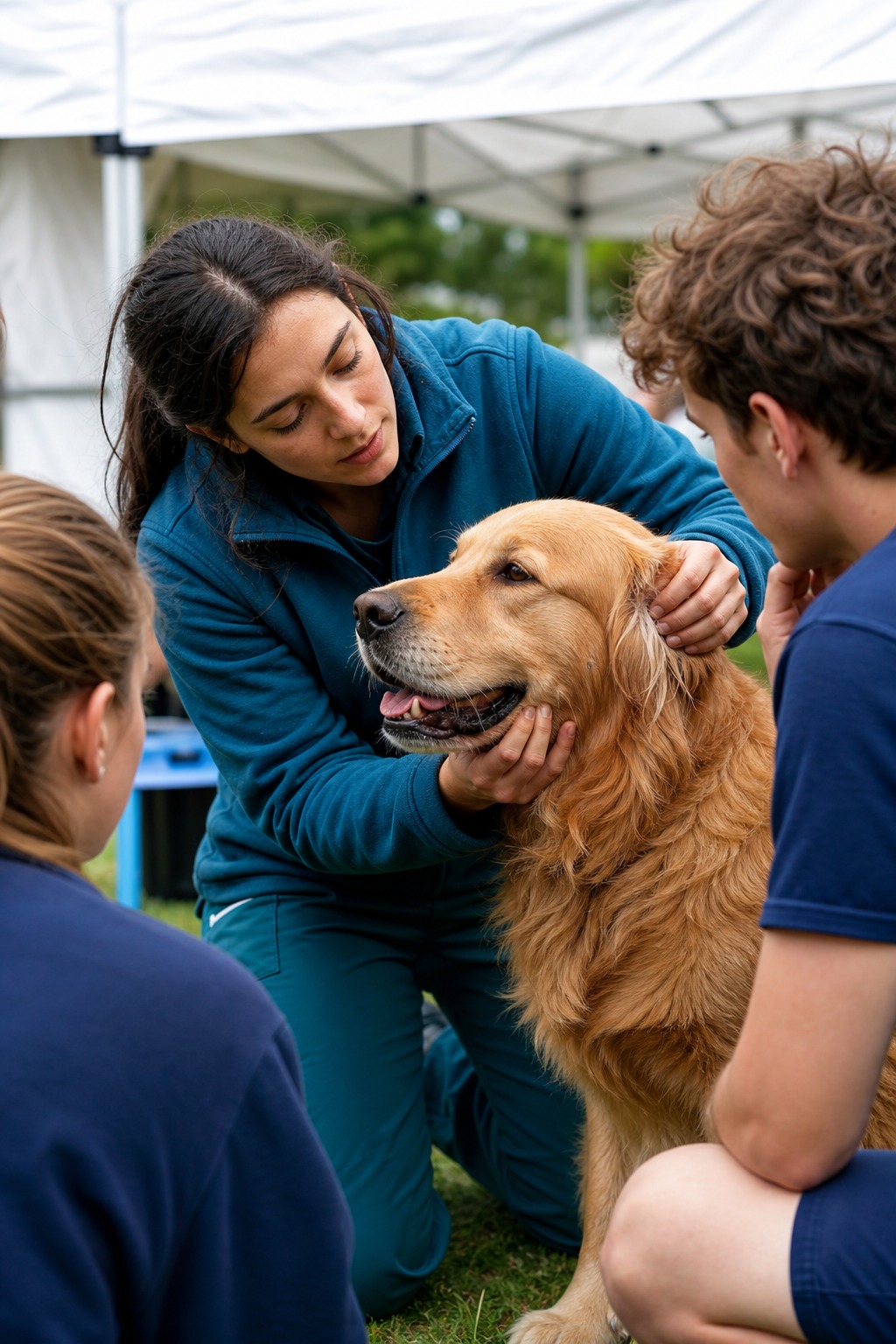
The piece the organization’s leaders are proudest of is the youth work, and it has grown sharply. Through its pathway programming, run in partnership with groups including the American Animal Hospital Association and the North American Veterinary Community, BlendVET brings kids from underserved communities face to face with the profession. Students spend the day rotating through specialty stations, getting hands-on with everything from shelter medicine to zoo medicine to dermatology, while the program also coaches parents on how to support a child who says, out loud, that they want this.
The newest expansion makes the childhood bet concrete. Under a youth initiative themed “Believe and Belong in Veterinary Medicine,” BlendVET set out to develop a dozen programs across the United States over two years, with a goal of reaching more than 1,000 students. The point is representation a child can touch: a vet who looks like them, doing the job, in the same room. As BlendVET’s chief operating officer, Dr. Genine Ervin-Smith, has put it, she is often the only woman of color in her leadership roles, and changing that narrative for the kids coming up behind her became her purpose. The pathway work, she has said, is what she is most proud of, because it lets the organization pour into children, and re-energizes the veterinarians who volunteer by reconnecting them to why they entered the field.
The bet on clinics: certification you can walk into
The second front is the workplace. BlendVET offers individual and clinic-level certification in DEIB, designed to build cultural awareness, strengthen workplace culture and staff retention, and equip people to be a resource for one another. In 2022, the organization launched what it describes as the first veterinary-curated, RACE-approved DEIB educational curriculum, and it has since brought training to veterinary schools and national conferences.
The certification is built to mean something to a pet owner, not just an HR department. A clinic earns it only after its staff completes the training modules, performs community service, and makes an internal change to how the hospital operates. The payoff is meant to be tangible at the front desk: walk into a BlendVET-certified hospital, and the promise is that you and your pet will be cared for by professionals who have done real work on cultural competence and come from a wider range of backgrounds.
The founder’s story, and why it started in 2020
BlendVET grew directly out of its founder’s life. Dr. Niccole Bruno felt drawn to animals as a child in New York, feeding strays with food bought from her own allowance even though her apartment complex banned pets. When her parents finally let her sneak a Siamese cat into the apartment at age 12, her path was set. She studied at Tuskegee University, earned her veterinary degree from Cornell University’s College of Veterinary Medicine, and went on to serve as a hospital medical director, all while navigating the daily realities of racism and misogyny that, by the organization’s own account, left her increasingly disengaged from a profession she had loved.
The turning point came in 2020, when Dr. Bruno led a DEIB presentation for a group of veterinary professionals and students. The response, especially from students who thanked her for explaining why representation matters in medicine, convinced her that lived experience needed to become structured academic work. That presentation, in Dr. Ervin-Smith’s telling, planted the seed for BlendVET: a program meant to refocus veterinary medicine on the people in it, and to reignite their passion for serving their communities and the animals they care for.
Why it matters beyond the profession
The throughline connects both bets. Certifying clinics improves care for the pet owners who walk in today. Investing in children widens the pool of who becomes a vet tomorrow, which is the only durable fix for a workforce that has looked the same for decades. The mother in that TIME story could not find a role model for her kids. BlendVET’s whole structure is an argument that the way to make sure the next mother can is to start with the kids themselves, long before anyone fills out a job application.
If you are a veterinary professional, you can begin BlendVET’s DEIB training and bring its framework into your own workplace through the organization, and you can volunteer with the pathway programs to open a door for students in your community.
References
- “Bridging Worlds: blendVET’s Innovative Approach to Diversifying Veterinary Medicine,” California Veterinary Medical Association.
- “Labor Force Characteristics by Race and Ethnicity, 2022,” U.S. Bureau of Labor Statistics.
- “blendVET’s DEIB Focus Inspires the Next Generation of Veterinarians,” American Animal Hospital Association NEWStat.
- BlendVET, official program site.
Leila Torres leads our Living coverage, from home life and travel to the products and rescue stories that come with sharing a life with animals. She edits and writes across the section, with a soft spot for pieces about the bond between people and their pets.
Meet our experts ↗Keep reading
 LivingCalifornia Just Attacked the Puppy Mill Supply Chain From Three Sides at OnceDr. Mara Chen · 4 min
 LivingThe Texas Flood Pet Rescue You're Picturing Is the Wrong OneNina Vasquez · 5 min
 LivingYour Team's Most Valuable Rookie This Year Might Be a Shelter DogJames Okafor · 8 min
 LivingAfter You Sign the Petition: How Puppy-Mill Bans Actually Become LawLeila Torres · 5 min
 LivingA Vet's License Was Supposed to Protect These 110 Animals. It Hid the NeglectNina Vasquez · 4 min
 Health & WellnessDead Puppies in a Freezer Ended This Vet's Career. One Complaint Is What Did ItSara Lim · 5 min