


Stop Shopping for a Training Collar. Pick the Right Tool for Your Dog's Neck First
The best 'training collar' is often not a collar at all. A trainer explains how to match flat collars, martingales, head halters, and harnesses to your dog, and why the expert consensus now rejects shock collars outright.

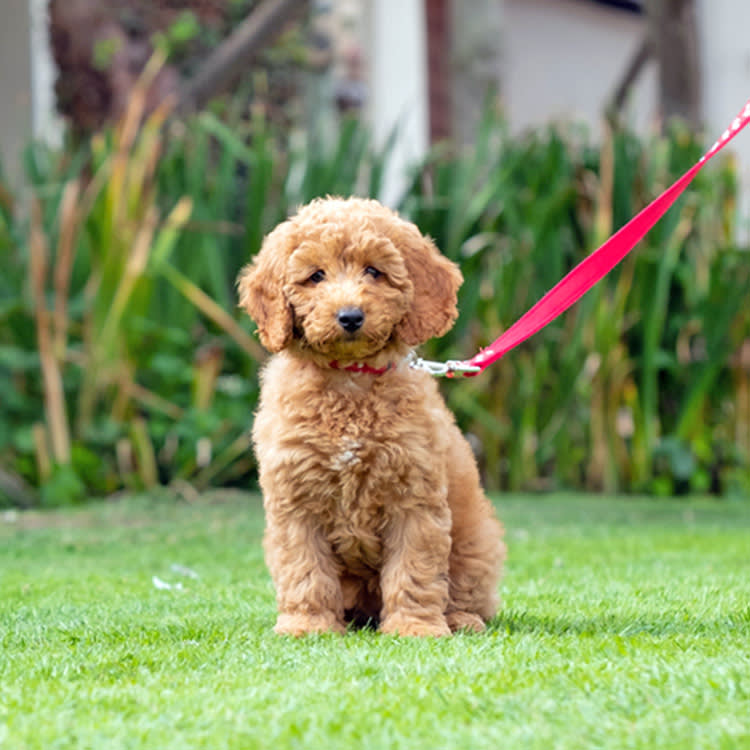
Most people start dog training by searching for the best training collar, and that search is the first wrong turn. It treats the collar as the thing that does the training, when the collar is just the handle. The actual question, the one professionals ask, is narrower and more useful: given this dog’s body and this dog’s habit, what tool keeps a leash connected without hurting a neck? Sometimes the answer is a collar. Often it is a harness. It is never a shock.
So this guide is not a ranking. It is a decision: pick the tool category that fits your dog’s neck and behavior, fit it correctly, and let reward-based training do the heavy lifting. No piece of gear fixes a behavior on its own.
First principle: protect the neck
A dog’s trachea, spine, and the dense bundle of nerves in the head and snout are not built to absorb repeated yanking. That single fact rules a lot in and out. The tools below are organized by how they handle pressure on those structures, from “fine for a calm walker” to “redirects a hard puller without choking.”
“A dog’s neck is not a horse’s neck, and it is not a handle,” says Dr. Mara Chen. “There are nerves running from the nose to the eyes, and a windpipe sitting right where a flat collar pulls. When I see a dog hauling its full weight against a collar on the trachea, I’m not thinking about manners, I’m thinking about the damage you can’t see. Get the pressure off the throat and half the problem solves itself.”
The four tools, and the dog each one is for
Flat collar — for ID, and for dogs who already walk politely
The standard buckle collar everyone pictures. It is the right home for ID tags and a microchip-backup, and it is fine on a leash for a dog who does not pull. Its weakness is also its design: every bit of leash tension lands directly on the trachea, so it is the wrong primary tool for a dog who lunges or hauls.
Martingale — for moderate pullers and narrow-headed breeds
A martingale looks like a flat collar but adds a smaller loop that gently tightens when the dog pulls and releases when they ease off. Crucially, it can only tighten so far, unlike a slip collar, so it discourages pulling without choking. It is also the answer for the classic escape artists, sighthounds like Greyhounds and Whippets whose heads are no wider than their necks and who back straight out of a normal collar.
Head halter — powerful, polarizing, and easy to misuse
A head halter (you’ll see “gentle leader” or “halti”) loops around the muzzle and behind the ears, so when the dog pulls, its head turns back toward you. It gives a small handler real control over a large, strong dog. But it is borrowed from the horse halter, and not every trainer likes it, precisely because of the neck-and-nerve concerns above: a hard sideways yank can wrench a dog’s neck or press on sensitive facial nerves. If you use one, introduce it slowly, never jerk it, and check with a reward-based trainer and your vet first.
Harness — the default for pullers, puppies, and most training
For a lot of dogs, the honest answer to “which collar?” is “a harness.” A well-fitted harness spreads pressure across the chest and off the throat and spine entirely. For pullers, a front-clip (no-pull) harness gives you the leverage to interrupt a forward charge by turning the dog rather than choking it. For a dog who plants and lags behind, often the opposition reflex, leaning into whatever pulls them, a back-clip harness can work better. Either way, keep a collar with ID tags on the dog too.
I reach for a harness more often than not, no-pull or otherwise, just because it keeps the pressure off a very gentle structure and saves a lot of wear on the spine. With puppies especially, the early work isn’t even about walking. It’s getting them comfortable being handled, having gear put on and taken off, and pairing all of that with something good, so they’re not squirming away every time the leash comes out.
Matching the tool to the problem
- Puppies: a harness for leash work plus a flat collar for ID. Spend the first weeks just making gear and handling pleasant, paired with treats, before you worry about polished heeling.
- Moderate pullers: a martingale teaches “ease off and the pressure stops.”
- Hard or large pullers: a front-clip no-pull harness, or a carefully introduced head halter, to redirect the lunge off the neck.
- Draggers and lag-behinds: a back-clip harness interrupts the dig-in reflex without straining the throat.
- Narrow-headed breeds (sighthounds): a martingale or a harness, because they slip standard collars.
Why the experts now reject shock collars, flatly
Search “training collars” and you immediately hit electronic collars that beep, vibrate, or shock. The narrow, defensible uses are the non-shock ones: a vibration cue for a deaf dog, or a beep recall for a hunting dog working off-leash at distance. The shock function is a different matter, and the professional consensus on it has hardened, not softened.
The American Veterinary Society of Animal Behavior’s 2021 position statement on humane dog training recommends reward-based methods for all training and behavior work and advises that aversive tools, electronic (shock) collars, prong collars, and choke chains, should not be used in any context, regardless of the trainer’s experience. A 2020 study in Frontiers in Veterinary Science found training without electronic collars was at least as effective as training with them, undercutting the main argument shock-collar advocates make, that they work faster.
The law is starting to follow the science. England moved to ban electronic shock collars; Colombia enacted a ban on e-collars and prong collars in 2025; and several U.S. states, including New York, New Jersey, Massachusetts, and Rhode Island, have introduced bills to restrict or ban them, with the Massachusetts proposal explicitly requiring training plans to follow AVSAB principles and excluding electric, prong, and choke collars. The practical takeaway for an owner has not changed, it is just better supported now: you can solve the overwhelming majority of leash and behavior problems with a humane tool and positive reinforcement, no shock required. If a trainer or a product page tells you otherwise, look for a trainer who advertises force-free or reward-based methods.
The training that makes any tool work
Pulling is stubborn partly because dogs get conditioned to need that feeling of tension to move forward. Reward-based leash training both prevents and unwinds it. Start somewhere boring with zero distractions, a hallway or living room, and make staying near you genuinely rewarding with treats, praise, or a toy, whatever your dog values most.
“You want to add value to walking beside you, and food is usually the low-hanging fruit,” Okafor says. “It’s a great way to show the dog that walking at your side, with no pressure on the leash, pays off. Over time you fade the food, but early on, be generous.”
Build up gradually to busier places. Correcting an adopted dog who has already practiced pulling for years takes more patience, but with consistency and the right humane tool, a front-clip harness or a carefully used head halter, you get there. The collar was never going to do it alone. The training does. The gear just keeps everyone safely attached while it happens.
How to fit it right
A collar should admit two fingers underneath, comfortably, no more and no less. A harness should clear the armpits without rubbing and should hold even when a startled dog tries to reverse out of it. And whatever you put on the dog for walking, keep current ID tags and microchip information on them, because the best-fitted gear in the world occasionally still gets away.
References
- “AVSAB Position Statement on Humane Dog Training.” American Veterinary Society of Animal Behavior, 2021, avsab.org/resources/position-statements.
- China, Lucy, et al. “Efficacy of Dog Training With and Without Remote Electronic Collars vs. a Focus on Positive Reinforcement.” Frontiers in Veterinary Science, vol. 7, 2020, doi.org/10.3389/fvets.2020.00508.
- “Head Halter Training for Dogs.” VCA Animal Hospitals, vcahospitals.com/know-your-pet/head-halter-training-for-dogs.
Common questions
Is a harness or a collar better for training?
For most dogs who pull or are still learning leash manners, a well-fitted harness is the safer training tool because it keeps pressure off the trachea and spine. A flat collar still earns its place for everyday ID tags. Many trainers recommend running both: a harness for the leash, a collar for identification.
How do I know a collar or harness fits correctly?
For a collar, you should be able to slip two fingers underneath comfortably, no more, no less. One finger is too tight; three is too loose and risks slipping off. For a harness, check that it does not rub the armpits and that your dog cannot back out of it when startled.
Are shock collars effective for training?
The expert consensus says no, not in a way worth the cost. A 2020 study found reward-based training at least as effective as electronic collars, and the American Veterinary Society of Animal Behavior advises against shock, prong, and choke collars in any context. Beep or vibration cues have narrow, humane uses; the shock function is the part to avoid.
James Okafor covers rescue, adoption, and the causes shaping animal welfare. His work follows the people and organisations working to give more pets a home, and the issues owners and advocates care about most.
Meet our experts ↗Keep reading
 TrainingYour Dog Isn't Being Bad. The Couch Is Just the Best Bed in the House.Dr. Nina Kohl · 6 min
 TrainingThe Freedom Paradox: A Dog With Boundaries Gets to Do MoreClaire Sutton · 6 min
 TrainingYou've Been Walking Your Dog WrongMarcus Webb · 8 min
 LivingRenaming Your Rescue Won't Confuse Her. Keeping a Poisoned Name Might.Dr. Amara Solis · 6 min
 LivingEvery Trail Closed to Dogs Was Closed Because of a Dog OwnerMarcus Webb · 8 min
 TrainingYour Dog Isn't Being Bad at the Door. They're Winning a Game You Keep Playing.Dr. Nina Kohl · 6 min